Rado Matterhorn 11918: the vintage buyer's guide
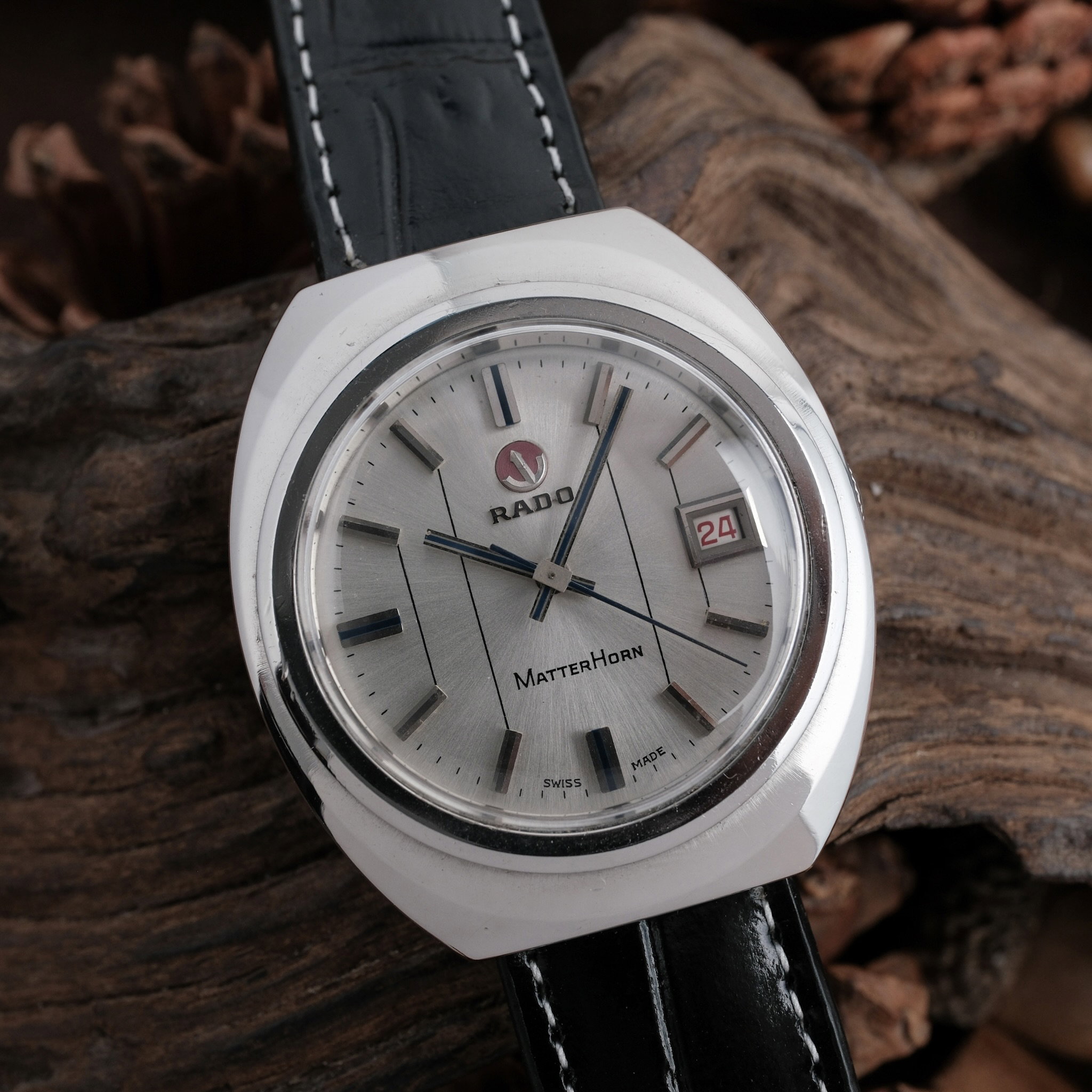
Buy the Rado 11918 for a clean dial and sharp cushion case, choosing the silver crosshair Matterhorn over an oxidised or softened example.
We auction more than 100 vintage watches a week.
Get first access: new Rado 11918 drops and alerts before auctions end.
Browse 24 live Rado auctionsThe Rado Matterhorn 11918 belongs firmly to the 1970s: a stainless-steel cushion case, a 25-jewel automatic movement and a vertically textured dial place it within that decade's geometric watch design. The 36-37 mm case excludes the crown, giving the watch useful presence without relying on a wide diameter.
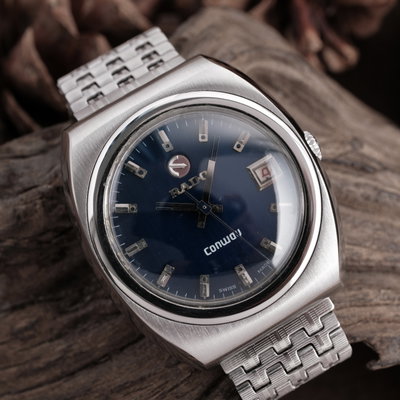
The same reference has also been sold under the Conway name, including a deep blue dial, while Matterhorn examples have silver frosted or vertically brushed dials. That naming overlap matters because the reference number alone does not settle the model wording or dial colour. For the clearest expression of the reference, take the silver crosshair Matterhorn with sharp case lines over the blue Conway or a heavily oxidised silver example.
Reference
11918
Production period
1970s
Known model names
Matterhorn and Conway
Case size
36-37 mm, excluding the crown
| Case material | Stainless steel |
| Case form | Cushion case |
| Movement | Swiss automatic |
| Jewel count | 25 jewels |
| Known dial variants | Silver frosted, silver vertically brushed crosshair and deep blue vertically brushed |
| Dial furniture | Applied indices and rotating anchor logo |
The model landscape
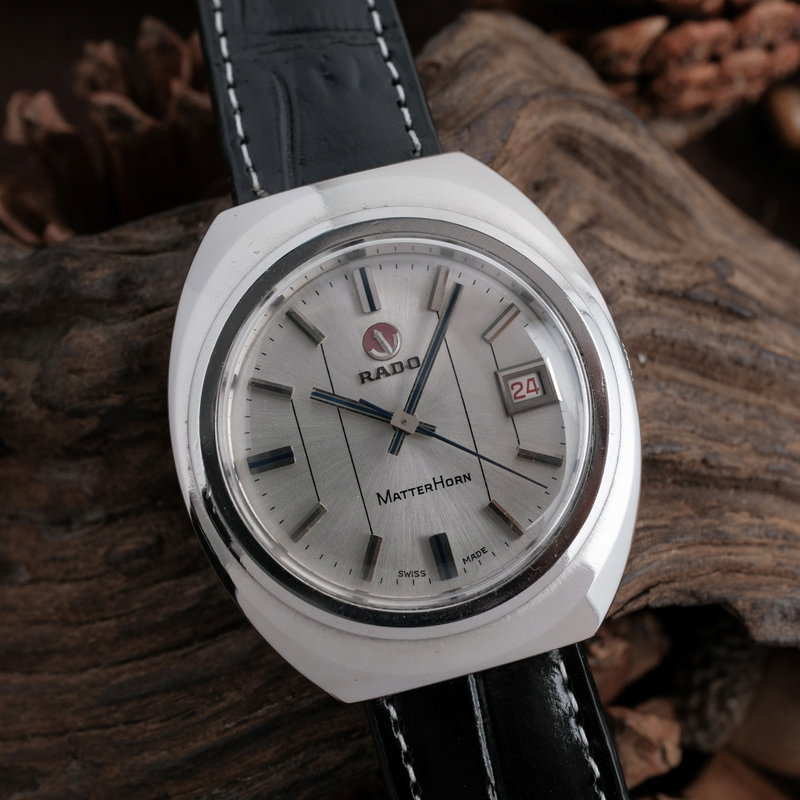
The strongest Matterhorn configuration pairs a silver vertically brushed dial with a black crosshair, applied faceted rectangular indices and the rotating anchor below 12 o'clock. Another silver version uses a frosted texture with vertical linear printing, while the Conway variant brings a deep blue vertically brushed dial and applied block indices. Those are meaningful variants, not interchangeable descriptions of one dial.
Reference 11918 therefore needs to be judged as a complete configuration. A blue Conway dial is not automatically evidence of a franken watch, because that pairing has occurred on the reference, but loose combinations of the known hands, indices and dial furniture still require caution. Between the established variants, the silver crosshair Matterhorn gives the most legible identity and the safest starting point.
On the wrist
At 36-37 mm excluding the crown, the steel cushion case occupies more wrist than a round watch of the same diameter because its broad corners carry the shape outward. The vertically brushed or frosted silver surface keeps the applied furniture readable, while the deep blue Conway dial changes more noticeably as its brushing catches light. The case remains compact enough for a cuff, although no thickness measurement is established here.
The automatic movement and 25-jewel specification make the 11918 mechanically conventional beside its more assertive case. Service history is unknown unless supported by paperwork, and the jewel count says nothing about present accuracy or wear. Buy the case and dial first, then budget for mechanical assessment rather than treating an unverified service claim as added value.
What goes wrong
Heavy oxidation on the applied indices is the most visible fault among the silver examples, and ageing can also mark the hands on the blue Conway dial. Neither should be relabelled as attractive patina when the metal surface is corroded. A clean dial with coherent furniture deserves a premium because replacement parts can preserve function while weakening the configuration.
Polishing removes the cushion case's geometric advantage first. Sharp case lines remain visible on stronger examples, while repeated refinishing softens the corners and transitions permanently. Redials are the other expensive mistake: the vertical texture, crosshair and printed elements must agree, and a smooth or crudely recreated surface changes the watch more than ordinary case wear.
The safest purchase is the silver crosshair Matterhorn with an intact textured surface, matching applied furniture and defined cushion-case edges. Choose that against a brighter but refinished dial, a heavily oxidised set of indices or a rounded case. Without documentation, the service history and replacement history remain unknown, so no broader originality claim is justified.
What to check before you buy
- Dial configuration: Reference 11918 is known with silver frosted or vertically brushed Matterhorn dials and a deep blue vertically brushed Conway dial. Colour alone does not prove a franken watch, but the texture and furniture must form a coherent known configuration.
- Dial print and surface: On the silver crosshair version, the black crosshair must belong naturally to the vertically brushed surface rather than sitting over a smooth refinish. Crude printing or lost vertical texture is stronger evidence of a redial than ordinary ageing.
- Hands and applied indices: Known examples use applied faceted rectangular or block indices, with the rotating anchor below 12 o'clock. Heavy oxidation is documented on silver-dial furniture, while visible ageing occurs on blue-dial hands, so damage must not be mistaken for proof of originality.
- Case geometry: The stainless-steel case should retain a recognisable cushion outline at 36-37 mm excluding the crown. Soft corners and blurred transitions indicate polishing, while sharper lines preserve the architecture seen on stronger examples.
- Movement specification: The established specification is a Swiss automatic movement with 25 jewels. A different jewel count or movement type conflicts with the handled configuration and raises the possibility of a married or franken watch.
- Caseback and crown limits: The available evidence does not establish one definitive caseback engraving pattern or crown design for every 11918. Without stronger comparative evidence, neither component should be declared original solely from its appearance.
Other 11918 examples we auctioned
4 Rado 11918 auctioned


More Rado references
Related pages
Frequently asked questions
Ready to hunt for your own?
More than 100 vintage watches go under the hammer every week.