Rado 11984 Green Gazelle: What to Know Before Buying
Rado reference 11984 is a compact 1970s Green Gazelle whose strongest configuration combines a clean brushed dial, intact emblem and signed bracelet.
We auction more than 100 vintage watches a week.
Get first access: new Rado 11984 drops and alerts before auctions end.
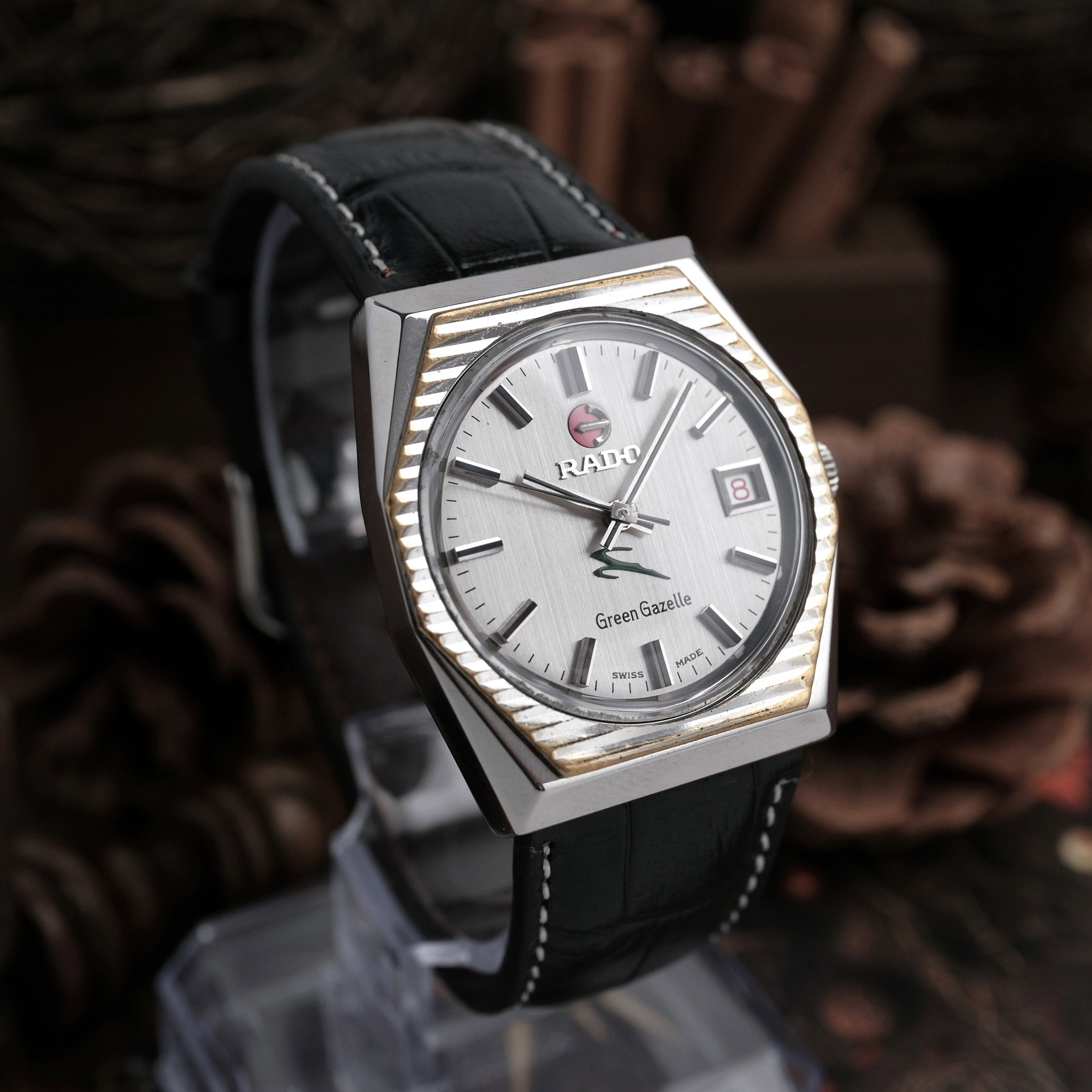
Browse 8 live Rado auctionsThe Rado 11984 Green Gazelle belongs to the brand's angular 1970s period, with a faceted bezel framing a vertically brushed silver dial. At 33 mm excluding the crown, the case is compact, but the geometric bezel and applied faceted indices occupy more visual space than the diameter suggests. The green gazelle emblem gives the reference its identity rather than merely naming it.
A used Rado 11984 can have a stainless-steel case or a stainless-steel case with a gold-plated bezel. Dial details also vary: examples may carry a contrasting red date wheel, while the rotating anchor at twelve remains central to the design. The more convincing watch keeps the brushed dial clean, the black index inserts intact and the emblem sharply defined.
Reference
11984
Model
Green Gazelle
Production period
1970s
Case size
33 mm excluding the crown
| Case materials | Stainless steel; stainless steel with gold-plated bezel |
| Movement | Automatic |
| Known calibers | 2789, 2797 and ETA 2783 |
| Dial | Vertically brushed silver with applied indices |
| Display | Date at three o'clock |
| Bracelet | Rado-signed bracelet |
The model landscape
Reference 11984 is less uniform than its single number suggests. Automatic calibers 2789, 2797 and ETA 2783 are all found in Green Gazelle watches we have handled, so a different caliber is not automatically evidence of a franken watch. The gold-plated bezel changes the character more decisively than the movement designation because worn plating is visible whenever the watch is worn.
The strongest configuration pairs the vertically brushed silver dial with intact applied indices, a clear green gazelle emblem and the signed bracelet. A red date wheel adds contrast at three o'clock, but it should not outrank dial preservation. Between a vivid date display on a refinished dial and a quieter date display on a clean period dial, the latter carries the safer value.
On the wrist
The 33 mm case wears as a compact 1970s watch rather than a conventional round dress model. Its angular outline and faceted or grooved bezel spread the design toward the edges, while black baton hands and dark index inserts keep the silver dial legible. The integrated visual line of the signed bracelet is part of the reference's intended geometry, so a generic replacement changes more than the fastening.
Bracelet condition materially affects wear. Excess play between the links lets the head move independently and can make the small case feel less settled, while shortened bracelets may not offer enough usable length. No bracelet length or service history can be established from the reference number, and without documentation we prefer not to speculate beyond the watch itself.
What goes wrong
A refinished dial is the most expensive mistake because the vertical brushing, printed text and green emblem must all survive together. Damage also concentrates at the case: polishing softens the angular bezel edges, and wear on a gold-plated bezel can expose the metal beneath. Bracelet stretch and lost links are separate faults, neither corrected by servicing the movement.
Running does not establish mechanical health. Two watches we timed were losing roughly a minute or slightly less per day, which is enough to demand a service allowance rather than an accuracy claim. The service history is unknown unless invoices accompany the individual watch, and caliber variation across reference 11984 means authentication must rest on the complete configuration, not one movement stamp.
What to check before you buy
- Dial construction: The silver dial should retain a vertical brushed grain, applied faceted indices with black inserts and a distinct green gazelle emblem. Flat refinishing, blurred printing or an inaccurately recreated emblem indicates a redial rather than honest ageing.
- Anchor and date layout: Reference 11984 places the rotating Rado anchor at twelve and the date aperture at three o'clock. A red date wheel is correct for a known configuration, but its absence alone does not establish that another example is wrong.
- Case and bezel: The angular case should retain defined transitions around its faceted or grooved bezel. Rounded geometry indicates polishing, while the gold-plated bezel version must be checked for exposed base metal along the most frequently contacted edges.
- Movement consistency: Calibers 2789, 2797 and ETA 2783 are all established in reference 11984, so authentication cannot depend on one caliber number. A movement outside that known group is not supported by the watches handled here.
- Bracelet fitment: Known Green Gazelle examples use a Rado-signed bracelet whose fit continues the case geometry. An unsigned replacement may still secure the watch, but it does not confirm the period configuration and changes the intended case-to-bracelet line.
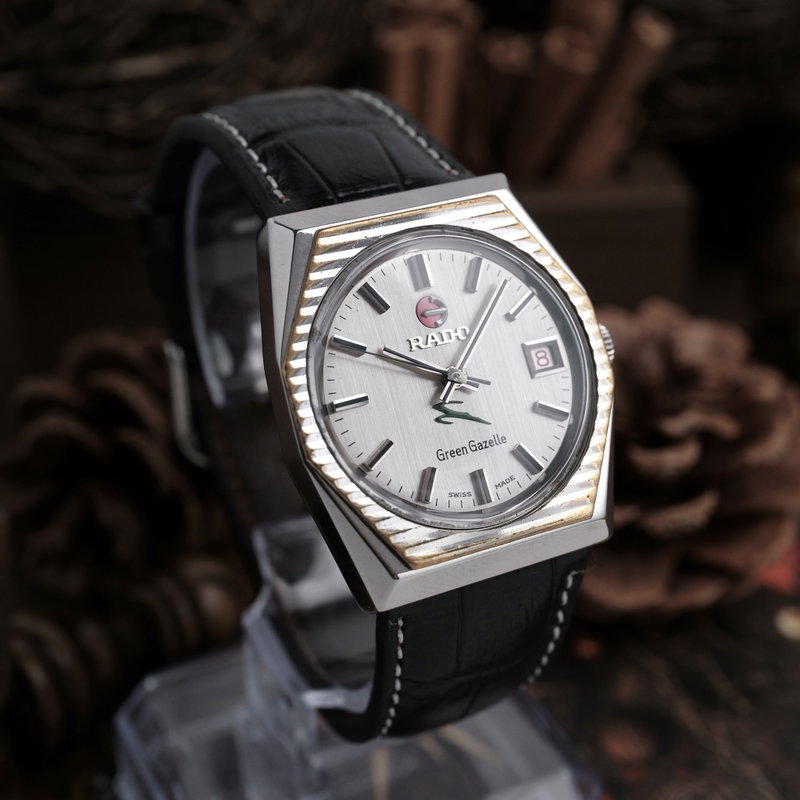
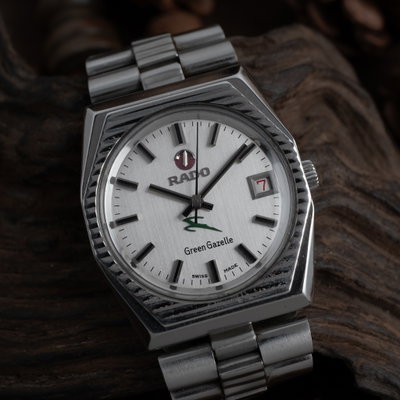
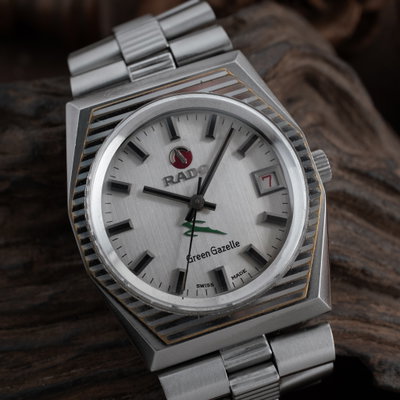
Other 11984 examples we auctioned
More Rado references
Related pages
Frequently asked questions
Ready to hunt for your own?
More than 100 vintage watches go under the hammer every week.