Rado Balboa: hardmetal, faceted crystal and the dial that decides the watch
Buy the Rado Balboa for its intact faceted crystal and honest dial first, then choose between ETA 2797 and ETA 2824 examples by condition.
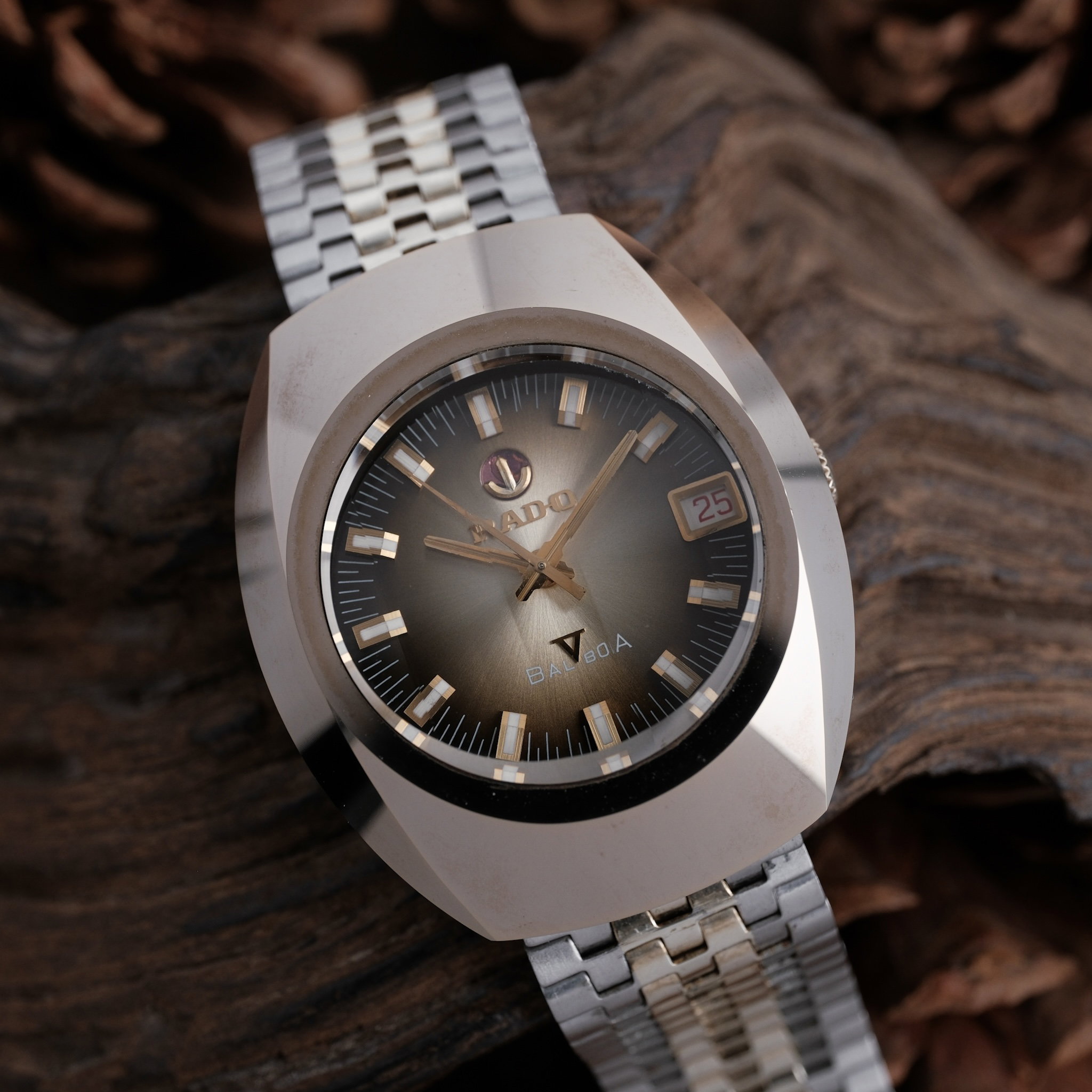
The Rado Balboa belongs squarely to the 1970s, when its hardmetal and stainless-steel construction was paired with a faceted crystal and automatic movement.
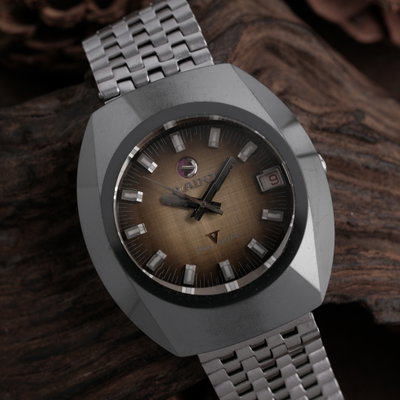
The decisive choice is the dial. Brown sunburst and brown gradient fumé versions shift tone across the facets, the red stardust dial adds pronounced texture, and the vertically brushed silver dial is quieter. A refinished dial costs more in lost character than ordinary case wear, while a damaged faceted crystal removes the optical effect that makes a used Rado Balboa worth choosing over a conventional round automatic.
Production period
1970s
Case sizes handled
34 mm, 35 mm and 36 mm, excluding crown
Case materials
Hardmetal tungsten carbide and stainless steel
Movements handled
Automatic ETA 2797 and ETA 2824
| Jewel count | 25 jewels |
| Crystal | Faceted crystal |
| Dial treatments | Brown sunburst, brown gradient fumé, red stardust and vertically brushed silver |
| Known references | 74047731A, 74116263, 74037356A, 92877, 74041891A, 74116555, K694425, 74023796, 74020404 |
What it was built for
The Balboa was built as a durable 1970s automatic with a tungsten-carbide hardmetal exterior and stainless-steel components. That material pairing resists ordinary surface scratching better than a conventional polished steel case, but it does not make the watch indestructible. Hardmetal can chip at an edge, and a replacement case component may preserve shine while breaking the watch's period coherence.
The faceted crystal is not decorative trim. It bends the view of the brown sunburst, gradient fumé, red stardust or vertically brushed silver dial as the wrist moves. Applied faceted indices continue that geometry beneath the crystal, while some brown examples carry the rotating anchor logo associated with Rado. The result is a dress-oriented automatic whose visual identity depends on intact surfaces rather than case bulk.
Where the value sits
Value sits first in an honest dial, then in the crystal and hardmetal case. The brown treatments reward even colour and clean applied indices; the red stardust version needs its granular texture intact; the silver version should retain its vertical brushing. A redial can imitate the colour family but loses the factory surface, and a service dial may be genuine without being original to that individual watch.
Case diameter creates less of a premium than preservation. A 34 mm ETA 2797 Balboa with an intact crystal and undisturbed silver dial is the stronger purchase than a larger example with chipped facets or refinished printing. The 35 mm and 36 mm watches offer more dial area, but the spread in value follows dial honesty and sharp geometry more closely than the extra millimetres.
Where to start
Start with a complete brown-dial example if the goal is the clearest expression of the Balboa. Brown sunburst and gradient fumé finishes make the faceted crystal easy to read, while applied markers keep the dial structured. Reference 74116263 pairs the brown sunburst treatment with caliber 2797, and reference 92877 pairs a brown gradient fumé dial with ETA 2824.
The red stardust dial is the more assertive alternative, while the vertically brushed silver dial is easier to place with restrained clothing. Movement condition outranks the choice between ETA 2797 and ETA 2824 once dial, crystal and case are comparable. Service history is unknown without documentation, so neither caliber designation should substitute for a current mechanical assessment.
What to check before you buy
- Match reference, movement and dial configuration: Reference 74116263 has been handled with caliber 2797 and a brown sunburst dial, while reference 92877 has been handled with ETA 2824 and brown gradient fumé. A different combination is not automatically false, but it needs evidence before acceptance.
- Distinguish factory texture from a redial: The red stardust surface should retain visible granular texture, the silver dial should show vertical brushing, and brown sunburst or fumé dials should react directionally to light. Flat paint or printing laid over the surface is a redial warning.
- Assess the faceted crystal and hardmetal together: The crystal facets should produce a coherent angular view over the dial, and the hardmetal exterior should meet the stainless-steel components cleanly. Chipped edges, mismatched shine or poor junctions can indicate damage or replacement parts.
- Confirm the dial furniture as a complete set: Applied faceted indices must suit the dial treatment, and brown caliber 2797 examples may include luminous plots, silver-tone hands and a rotating anchor. Period-correct parts are not proof that every component left the factory together.
- Separate service parts from a franken watch: A replaced crown, crystal or gasket is a consumable change and should not support an all-original claim. A service dial is a genuine factory replacement, while a franken combines parts that did not ship together and a married watch joins case and movement from different watches.
Recent Rado results
Rado · Balboa · K694425
Rado · Balboa · 74023796
Rado · Balboa · 92877
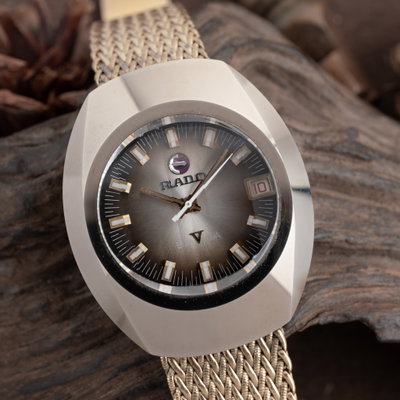
Rado · Balboa · 74037356A
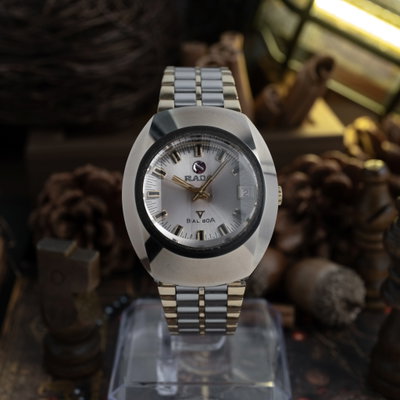
Rado · Balboa
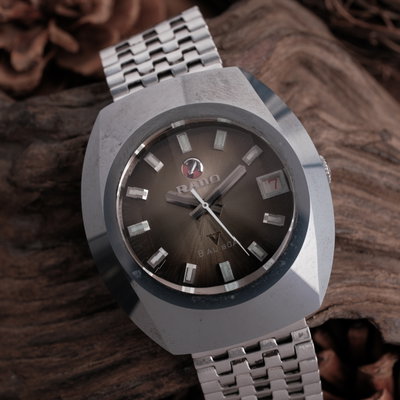
Rado · Balboa · 74116263
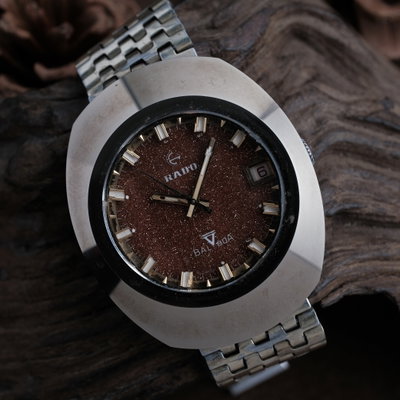
Rado · Balboa
Rado · Balboa · 74116555
More Rado references
Related pages
Frequently asked questions
Ready to hunt for your own?
More than 100 vintage watches go under the hammer every week.