Rado Marco Polo 11837 - What to Know Before Buying
The Rado Marco Polo 11837 is worth buying for its clean silver dial and cushion case, but dial quality matters more than surviving gold plate.
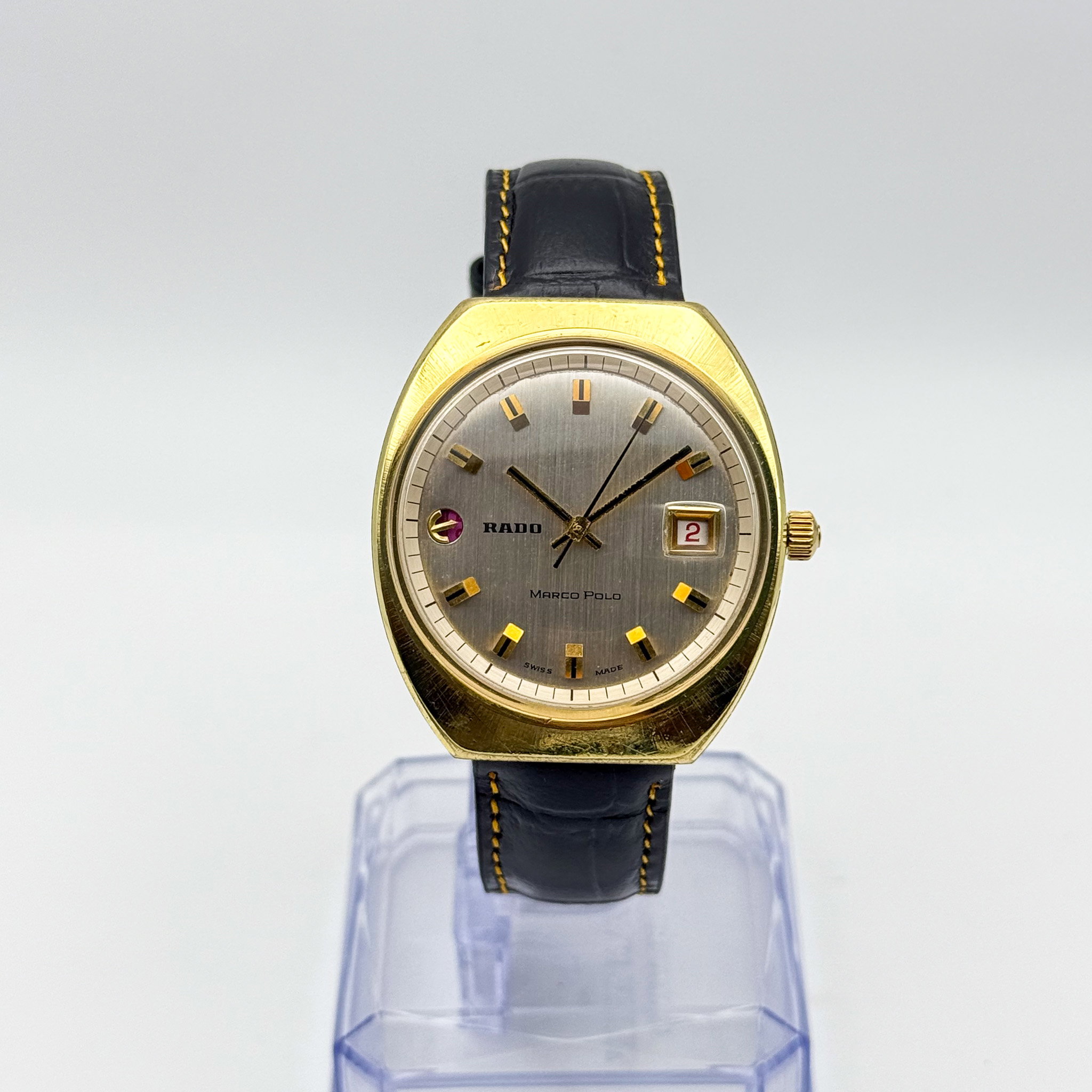
The Rado Marco Polo 11837 puts its 1970 design on full display: a gold-plated cushion case, a silver dial and the rotating anchor at nine o'clock. It is more assertive than a conventional round dress watch, yet its 36 mm case keeps the proportions controlled.
For a vintage Rado Marco Polo, buy the dial before the case shine. Clean factory-finish dials survive beside cases with heavy oxidation or plating wear, so an honest worn case with crisp printing is preferable to a bright case surrounding a refinished dial. The used Rado Marco Polo market rewards that contrast when the components still belong together.
Reference
11837
Model
Marco Polo
Known production year
1970-1970
Case diameter
36 mm excluding the crown
| Case shape | Cushion |
| Case material | Gold-plated stainless steel with stainless steel caseback |
| Movement | Automatic, 25 jewels |
| Dial | Silver sunburst or vertically brushed finish |
| Display details | Rotating anchor at nine o'clock and date at three with red numerals |
The model landscape
Reference 11837 is defined by a silver dial, applied faceted gold-tone indices and a date at three o'clock with red numerals. The rotating anchor sits at nine, giving the layout an intentional left-right balance. Dials can read as sunburst or vertically brushed depending on the surface and light, but heavy spotting is damage rather than patina.
The strongest version has an intact factory-finish dial and a case whose wear is fully visible. Among the Marco Polo watches we have handled, clean dials have survived even when the gold-plated case edges were heavily oxidized. That makes dial quality the main value separator, while remaining plate adds a premium only when the underlying case shape is still clear.
On the wrist
The 36 mm case is measured without the crown, but the cushion profile gives it more presence than the number suggests. Its broad case shape and silver dial suit a relaxed cuff better than a narrowly proportioned formal watch. The faceted indices remain legible against the brushed surface, while the red date numerals add color without dominating the display.
Gold-tone baton hands with black central stripes keep the dial readable when reflections cross the silver finish. The watch is automatic, so it avoids the daily winding routine, but no assumed service history should influence a purchase. Without dated documentation, the movement's condition must stand on its current performance and physical state.
What goes wrong
Plating loss is the first problem to accept. The gold finish wears through at case edges and lugs, while oxidation can turn exposed areas brown or purplish, and no service can replace that material without refinishing the case. Aggressive polishing creates a different fault by softening the cushion outline and making the case look swollen rather than sharply defined.
Dial damage costs more than case wear. Watch for moisture spotting across the silver surface, broken printing and refinishing that removes the original brushed character. Replaced hands, an incorrect date display or a movement and case from different watches can create a franken or married example even when every individual part is genuine.
The rotating anchor should remain at nine o'clock, opposite the date at three, and the applied indices should retain their faceted form. A clean dial is not automatically a service dial or redial - several examples retain crisp factory finishes despite substantial case wear. The service history is unknown unless dated paperwork establishes it, and a claimed service without a receipt adds no value.
What to check before you buy
- Dial layout and finish: The silver dial should carry applied faceted gold-tone indices, the rotating anchor at nine o'clock and the date at three. A flat refinished surface or broken printing conflicts with the handled factory-finish dials.
- Hands and date display: Gold-tone baton hands with black central stripes belong with the silver dial, while the date uses red numerals. Incorrect hands or a plain replacement date display can indicate a franken assembly.
- Case construction: Reference 11837 uses a 36 mm gold-plated cushion case with a stainless steel caseback. Wear through the plating is credible, but polishing that softens the cushion outline permanently removes defining case geometry.
- Movement specification: The movement should be automatic and marked for 25 jewels. The available evidence does not establish a caliber number, so any more specific movement claim needs independent support from the watch itself.
Other 11837 examples we auctioned

More Rado references
Related pages
Frequently asked questions
Ready to hunt for your own?
More than 100 vintage watches go under the hammer every week.