Rado 11817: Golden Horse and Marco Polo Buying Guide
Rado reference 11817 is a 1970s automatic found as both Golden Horse and Marco Polo, with the dial and case pairing deciding which example to buy.
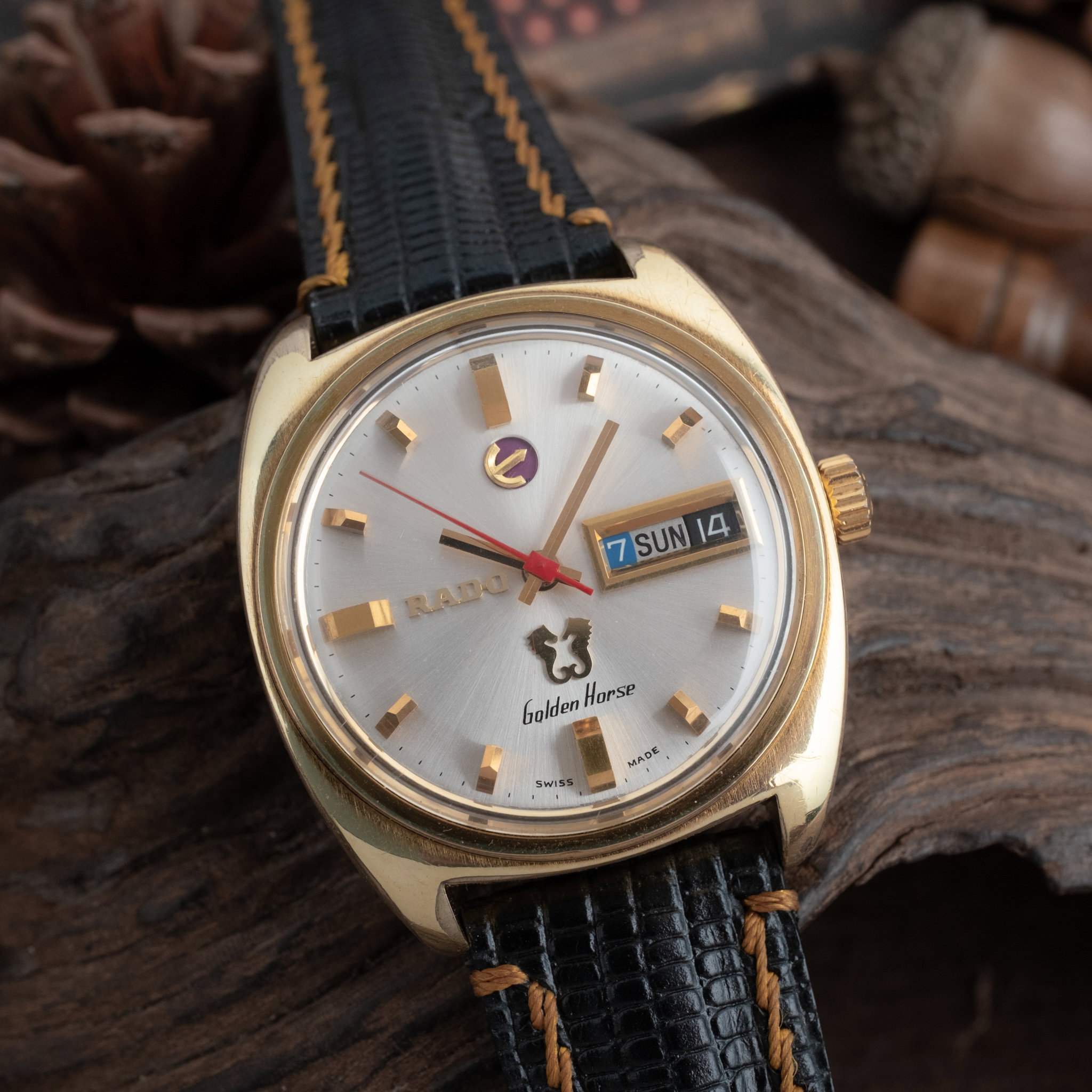
Reference 11817 does not resolve into one uniform watch. The 1970s examples handled under this number include both Golden Horse and Marco Polo names, with silver sunburst or vertically brushed dials and cases measuring from 34 to 36 mm. That variation makes the complete dial, case and movement pairing more important than the number alone.
The safer purchase is the coherent example, not the brightest one. A Golden Horse with its rotating anchor, applied gold-tone furniture and correct dial emblems has a stronger case than a refinished dial with sharper-looking printing. Marco Polo examples add a cushion case and vertically brushed dial, so their value sits in preserving that more specific combination rather than borrowing Golden Horse parts.
Reference
11817
Model names
Golden Horse and Marco Polo
Production period
1970s
Case sizes
34 mm, 35 mm or 36 mm, excluding the crown
| Movement type | Automatic |
| Named calibers | 2789 and AS 1859 |
| Jewel count | 25 jewels |
| Dial finishes | Silver sunburst or silver vertically brushed |
| Case materials | Gold-tone; gold-plated stainless steel documented, with stainless steel caseback also documented |
What it was built for
The Rado 11817 belongs to the brand's 1970s automatic dress-watch range, but its identity is broader than one case design. Golden Horse examples use a silver sunburst dial, while the Marco Polo takes a bolder cushion case with vertical brushing across the dial. Both use the freely rotating anchor at 12, making the watch recognisably Rado without relying on case size alone.
Automatic movements and gold-tone cases put reference 11817 firmly in daily dress-watch territory. The Golden Horse is the restrained option, especially with its applied indices and red sweep seconds hand. The Marco Polo carries more visual weight through its 36 mm cushion case and faceted furniture, so it suits the buyer who wants a specifically 1970s shape rather than a conventional round watch.
On the wrist
Golden Horse examples measure 34 or 35 mm without the crown, giving the dial furniture and slim gold-tone hands most of the visual space. The red sweep seconds hand adds contrast without making the watch sporty. Between otherwise equal examples, the 35 mm case offers slightly more presence, but an honest 34 mm dial is preferable to a larger watch with refinished printing.
The Marco Polo reaches 36 mm and spreads that dimension through a cushion case, so it wears broader than the number suggests. Its vertically brushed silver dial also reads differently from the brighter sunburst Golden Horse. Choose it against the smaller round version when case shape matters more than discreet proportions, not merely because it is the largest 11817 recorded.
What goes wrong
Plating wear is the first permanent fault to price into a used Rado 11817, particularly where the lugs and case edges meet skin and straps. Polishing can then soften the case outline, while replacement crowns can disturb an otherwise coherent exterior. No service returns missing plating or restores crisp case geometry.
The dial carries the greater penalty. A redial can imitate silver and still lose the sunburst or vertical grain that identifies the correct variant, while misplaced anchor and seahorse emblems can signal a franken assembly. Hands also oxidise and spot, and the known Golden Horse examples use both baton and dauphine forms, so hand shape must agree with the rest of that watch rather than a single template.
Mechanical condition varies even within outwardly similar examples. Reference 11817 has been found with caliber 2789 and AS 1859, both automatic and specified with 25 jewels, so one caliber cannot authenticate every watch. Service history is unknown unless paperwork accompanies the individual example, and a timegrapher result records one moment rather than proving maintenance.
What to check before you buy
- Match the name to the complete design: A Golden Horse should align its silver sunburst dial with the rotating anchor and appropriate emblems. A Marco Polo should retain the 36 mm cushion case, vertically brushed silver dial and faceted gold-tone indices.
- Treat the movement as one part of the pairing: Known 11817 examples use automatic caliber 2789 or AS 1859, both specified with 25 jewels. Either can fit the reference, so the caliber must agree with the case and dial rather than settle authenticity alone.
- Read the dial finish before the printing: Sunburst grain supports the Golden Horse configuration, while vertical brushing supports the Marco Polo. A flat repaint, uneven silver surface or incorrectly placed anchor and seahorse emblems raises the risk of a redial or franken watch.
- Compare hand style with the dial furniture: Handled Golden Horse examples use gold-tone baton or dauphine hands, and light oxidation can be consistent with age. Bright unmatched hands against aged indices suggest replacement, although hand shape alone is not conclusive.
- Assess plating and case geometry together: Gold-tone surfaces can wear through at the lugs and edges, while polishing softens the original outline. On the Marco Polo, a rounded cushion form with blurred transitions deserves more caution than honest, localised plating wear.
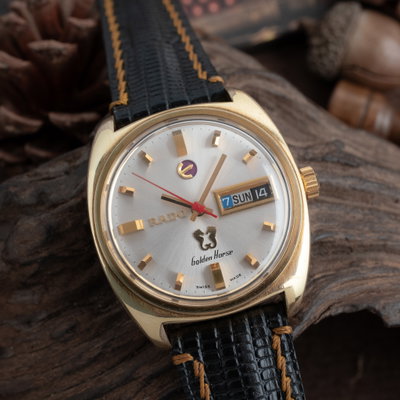
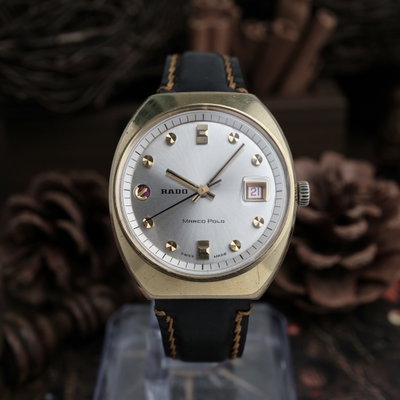
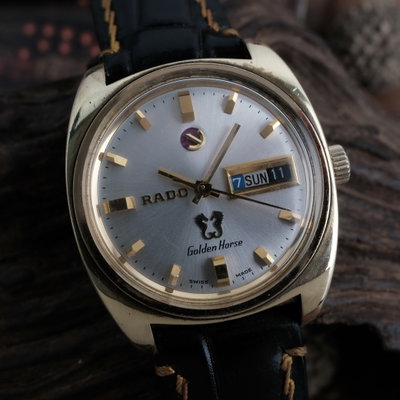
Other 11817 examples we auctioned
More Rado references
Related pages
Frequently asked questions
Ready to hunt for your own?
More than 100 vintage watches go under the hammer every week.