Vintage Rado Berg: What to Know Before You Buy
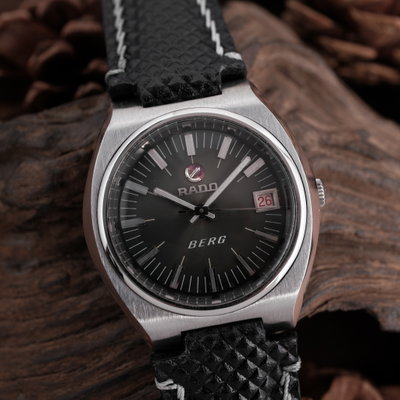
The Rado Berg is a bold 1970s automatic whose value rests on its coloured dial, sharp tonneau case and complete integrated bracelet.
We auction more than 100 vintage watches a week.
Get first access: new Rado watch drops and alerts before auctions end.
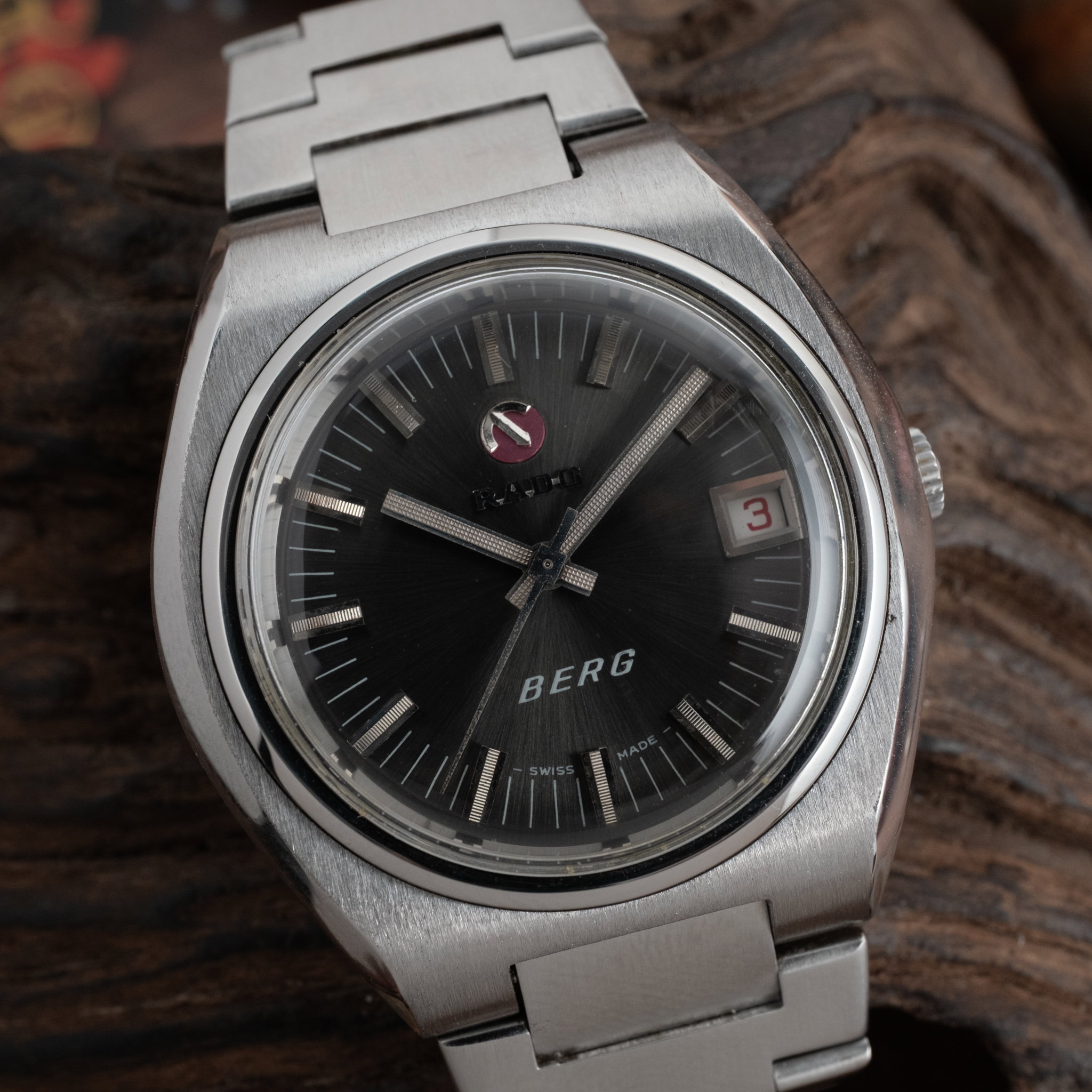
Browse 8 live Rado auctionsThe Rado Berg belongs unmistakably to the 1970s. Its shield-shaped or tonneau stainless steel case, faceted crystal and integrated bracelet make it a complete design rather than a conventional round watch placed on a metal band. Coloured dials do much of the work, ranging from vertically brushed emerald and purple to burgundy, blue-grey and grey sunburst finishes.
The version to want is a 36 mm automatic with a clean coloured dial, crisp case chamfers and its integrated bracelet. A 35 mm emerald example offers a slightly tighter alternative, but the difference matters less than dial condition and bracelet completeness. A refinished dial costs more in lost value than minor hand oxidation or evenly aged lume.
Period
1970s
Case material
Stainless steel
Handled case sizes
35 mm and 36 mm, excluding the crown
Movement type
Automatic
| Named caliber | ETA 2824 |
| Jewel count | 25 jewels on specified ETA 2824 examples |
| Case forms | Shield-shaped and tonneau |
| Dial finishes | Vertical brushing, textured matte and sunburst |
| Bracelet style | Integrated bracelet on specified examples |
| Crystal details | Etched or horizontally faceted on specified examples |
The model landscape
The Berg is not defined by one dial treatment. Ref. 950955 pairs a 35 mm shield-shaped steel case with vertically brushed emerald green, while ref. 11060 uses a 36 mm tonneau case and has appeared with blue-grey texture or grey sunburst finishing. Both layouts rely on applied faceted indices and the rotating Rado anchor to break up the broad dial.
Ref. G1044929A adds a deep burgundy dial beneath a horizontally faceted crystal, while ref. 931100 combines purple vertical brushing with an etched crystal. Red date numerals recur across blue-grey, grey and burgundy examples. The coloured dial is the reason to buy the Berg, but an intact integrated bracelet and sharp polished chamfers determine whether the case still delivers the intended geometry.
On the wrist
At 35-36 mm excluding the crown, the Berg wears larger than the diameter implies because the case and bracelet form one continuous shape. The 36 mm tonneau versions spread their visual weight across the wrist, while the 35 mm shield-shaped case looks more compact without becoming conventional. Applied faceted markers and broad baton hands keep the coloured surfaces readable.
The integrated bracelet suits the Berg better than a substitute strap because it continues the case architecture. Fit matters: stretch changes how the watch sits, and incorrect end links interrupt the line at the lugs. The faceted crystal adds height and reflections, so the watch has more presence than a flat-crystal dress watch of the same measured width.
What goes wrong
The first concern is the dial. Moisture staining, softened printing or a redial damages the Berg's value because emerald brushing, purple brushing and grey sunburst finishing are difficult to reproduce convincingly. A genuine service dial is different from a redial, but it is still a replacement and should be described as such.
Bracelet stretch is the next expensive fault because the integrated fit is part of the design. Polishing can soften the tonneau chamfers or round the shield-shaped case lines, while replacement crystals can lose the etched or faceted details seen on period examples. Hands may show light oxidation, and lume can darken; both are less serious when the ageing is even and consistent across dial and hands.
Movement condition cannot be judged from dial preservation. Berg examples use automatic movements, including the ETA 2824 with 25 jewels, but a present-day rate does not establish a service history. Without invoices, the service history is unknown, and the watch should be assessed on movement condition rather than claims that it was recently serviced.
What to check before you buy
- Dial finish and furniture: A Berg dial should match a known treatment such as emerald or purple vertical brushing, grey sunburst, blue-grey texture or deep burgundy. Applied faceted indices and the rotating Rado anchor must sit coherently with crisp printing.
- Case geometry: The shield-shaped and tonneau steel cases depend on defined lines and polished chamfers. Soft edges or rounded transitions indicate polishing and reduce the architectural effect that makes the Berg distinctive.
- Crystal configuration: Some Berg versions use an etched crystal, while ref. G1044929A has a horizontal faceted effect. A plain replacement may fit physically but removes a version-specific detail, so the crystal must be judged against the exact reference.
- Bracelet fit: The integrated bracelet should meet the case cleanly and continue its profile without obvious gaps. Excess stretch, loose articulation or mismatched end links weaken both wearability and confidence in the watch's assembled configuration.
- Movement and parts consistency: Known examples are automatic, with the ETA 2824 documented in several versions. A different movement, dial or case combination may indicate a franken or married watch and requires evidence beyond a matching signed dial.
Recent Rado results
17 Rado watches auctioned
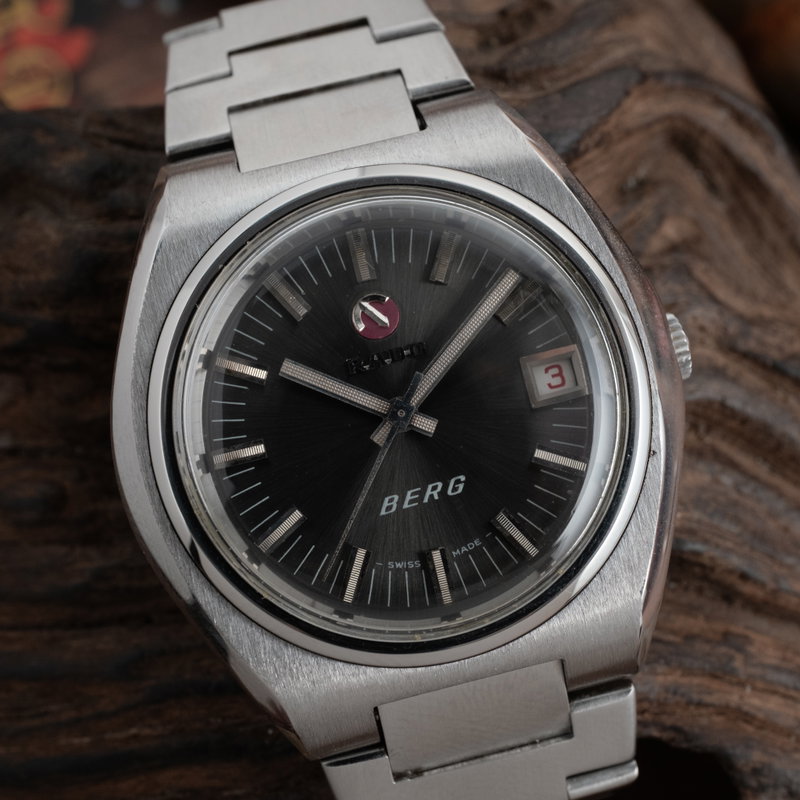
Rado · Berg · 11060
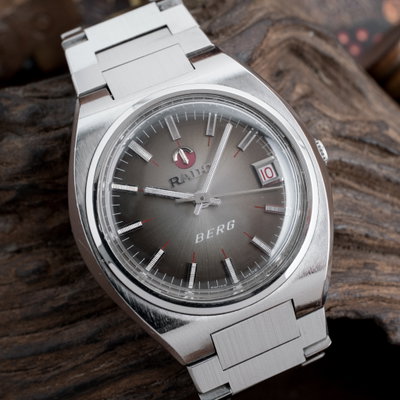
Rado · Berg · G1037119
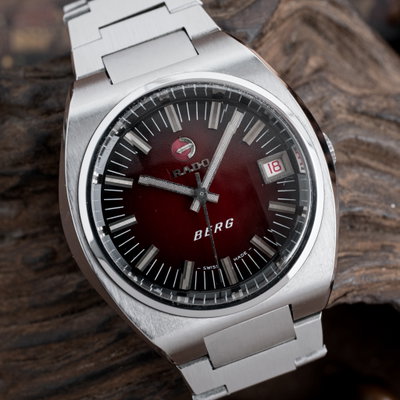
Rado · Berg · G1044929A
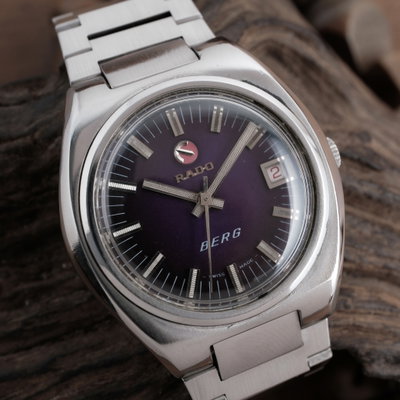
Rado · Berg · 931100
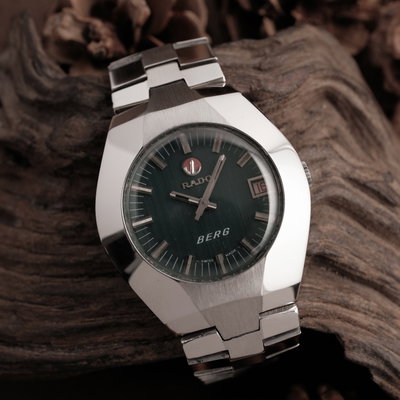
Rado · Berg · 950955
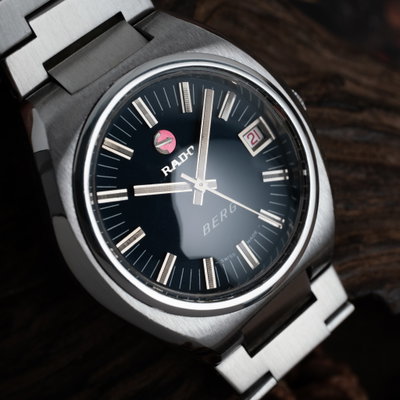
Rado · Berg · 11060
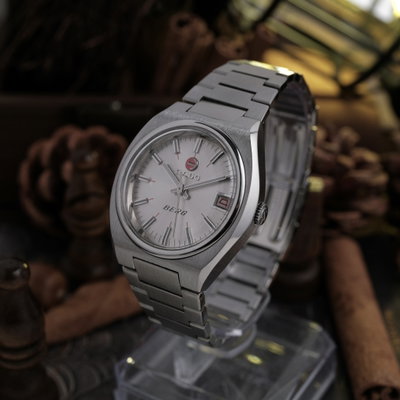
Rado · Berg · G1039182
Rado · Berg · G1031005
More Rado references
Related pages
Frequently asked questions
Ready to hunt for your own?
More than 100 vintage watches go under the hammer every week.