Omega Constellation ST 168 017 SP Reference Guide
The Omega ST 168 017 SP is a compact C-shape Constellation whose strongest buy combines an untouched silver dial, defined case lines and caliber 564.
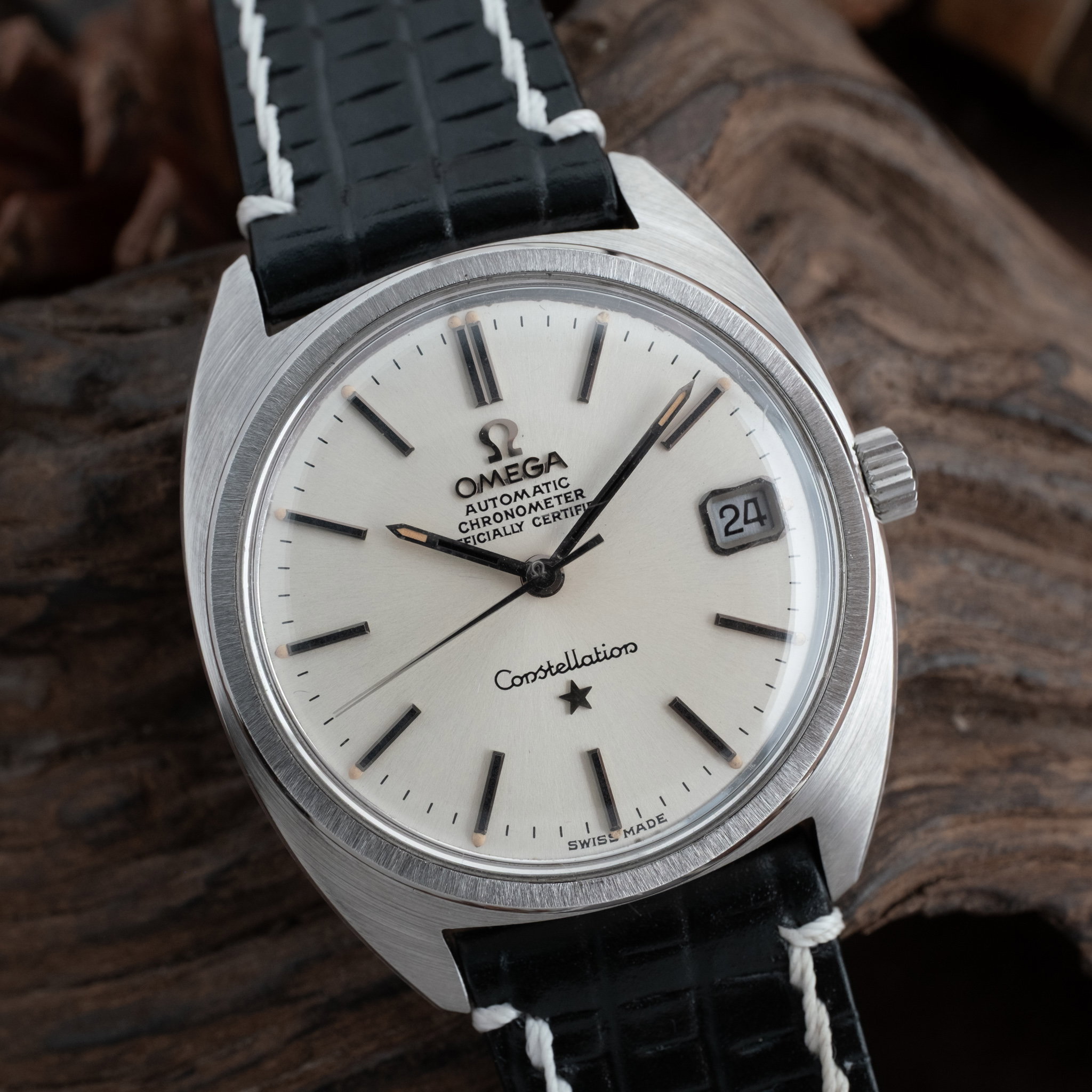
The ST 168 017 SP places Omega's C-shape Constellation design into a 34 to 35 mm stainless steel case, with the automatic chronometer caliber 564 inside. Known examples run from 1968 through 1971, putting this vintage Omega firmly in the period when the case silhouette carried as much identity as the dial.
The buying decision starts with the silver dial and the case around it. Vertical brushing or a sunburst finish, applied black-insert indices, the applied Omega logo and the Constellation star form the reference's visible character. A redial costs more in lost value than light oxidation on the hands or a replaced crystal, while heavy polishing permanently weakens the C-shape geometry.
Reference
ST 168 017 SP
Model
Constellation
Known production years
1968-1971
Case material
Stainless steel
| Case shape | C-shape |
| Case diameter | 34-35 mm excluding the crown |
| Movement | Automatic chronometer caliber 564 |
| Jewel count | 24 |
| Dial finishes handled | Silver vertical brushed and silver sunburst |
| Caseback detail | Observatory medallion |
What it was built for
The ST 168 017 SP was built as a compact automatic chronometer in stainless steel rather than as a conventional round dress watch. Its Gerald Genta-designed C-shape case gives the 1968 to 1971 Constellation a broad, continuous outline, while the observatory medallion on the back identifies its place within the chronometer line.
Legibility comes from contrast rather than scale. Black inserts in the applied indices and matching dark details in the hands stand against the silver dial, while the vertical brushed and sunburst surfaces alter with the light. Caliber 564 and its 24-jewel construction are central to the reference, not interchangeable specifications.
On the wrist
Handled examples measure either 34 or 35 mm excluding the crown, but the C-shape case occupies more visual space than those figures imply. The integrated sweep from case body into the lugs makes the watch read wider than a conventional round case, without turning the silver dial into a large modern surface.
The dial changes character as the wrist moves. Vertical brushing produces a directional shift in brightness, while the sunburst version radiates light from the centre. Black-insert markers keep both versions readable, and the compact diameter suits a cuff better than a modern oversized case, although no thickness measurement is established by the watches considered here.
Where to start
Choose the dial before the year. Both vertical brushed and sunburst silver dials occur among ST 168 017 SP examples, but the available evidence is too narrow to assign either finish exclusively to a particular production year. An even surface, intact printing and correctly seated applied furniture matter more than forcing a 1968 or 1971 preference.
The next priority is a C-shape case with defined transitions and a readable observatory medallion. Polishing softens the case outline, bracelet stretch affects fit, and replacement crystals may lack the Omega etching seen on an earlier example. Hand oxidation and degraded lume should be described separately rather than absorbed into a broad condition label.
Caliber 564 should be present, and its serial should sit plausibly within Omega's approximate chronology. A signed brick-link bracelet has accompanied an example we handled, but it is not sufficient proof that every watch left the factory on that bracelet. The service history is unknown without documentation, and the reference alone cannot establish whether the case and movement have always belonged together.
Dating this watch
| Serial range / caliber | Year | Note |
|---|---|---|
| 26000000 | 1968 | approximate, ±1-3 years |
| 28000000 | 1969 | approximate, ±1-3 years |
| 29000000 | 1970 | approximate, ±1-3 years |
| 33000000 | 1971 | approximate, ±1-3 years |
Dating data comes from our decoder tables; treat years as approximate.
What to check before you buy
- Dial construction: The silver dial should use a vertical brushed or sunburst finish with applied black-insert indices, an applied Omega logo and the Constellation star. Flat paint, disturbed furniture or printing over an altered surface points toward a redial.
- Hands and luminous material: Known examples use baton or stick hands with black inserts and corresponding luminous material. Light oxidation is possible, but mismatched hand shapes, conspicuously fresh lume or uneven replacement work can indicate a relume or later parts.
- Case and caseback: The stainless steel C-shape case should retain defined transitions rather than soft, mushy contours from polishing. The caseback carries an observatory medallion, whose remaining crispness helps show how aggressively the back has been refinished.
- Movement agreement: The established movement is the automatic chronometer caliber 564 with 24 jewels. Its serial should agree broadly with Omega's approximate chronology, although serial dating alone cannot exclude a married case and movement.
- Crystal and bracelet context: An Omega-etched crystal and signed brick-link bracelet are known on handled examples, but both require context. A replacement crystal is a consumable part, while bracelet signature alone does not establish original delivery or rule out later assembly.
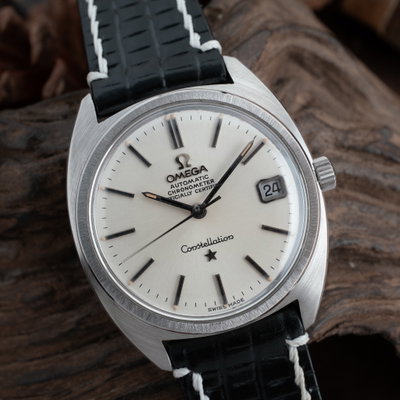
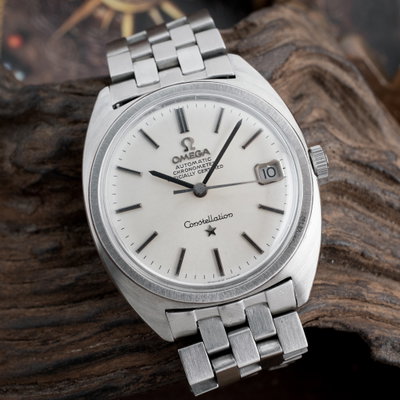
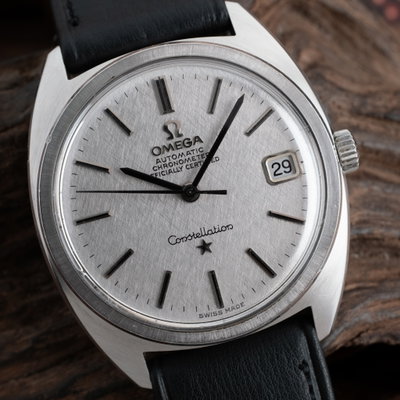
Other ST 168 017 SP examples we auctioned
More Omega references
Related pages
Frequently asked questions
Ready to hunt for your own?
More than 100 vintage watches go under the hammer every week.