Omega 2910-9 SC - Caliber 284 Reference Guide
The Omega 2910-9 SC is a 1958, 34 mm steel manual-wind watch whose value depends chiefly on the dial and case definition.
We auction more than 100 vintage watches a week.
Get first access: new Omega 2910-9 SC drops and alerts before auctions end.
Browse 63 live Omega auctionsThe Omega 2910-9 SC makes sense as a compact 1958 steel watch, not as a modern dress watch reduced in scale. Its 34 mm case and manual-wind Caliber 284 put the emphasis on proportion, a clean dial and the daily ritual of winding.
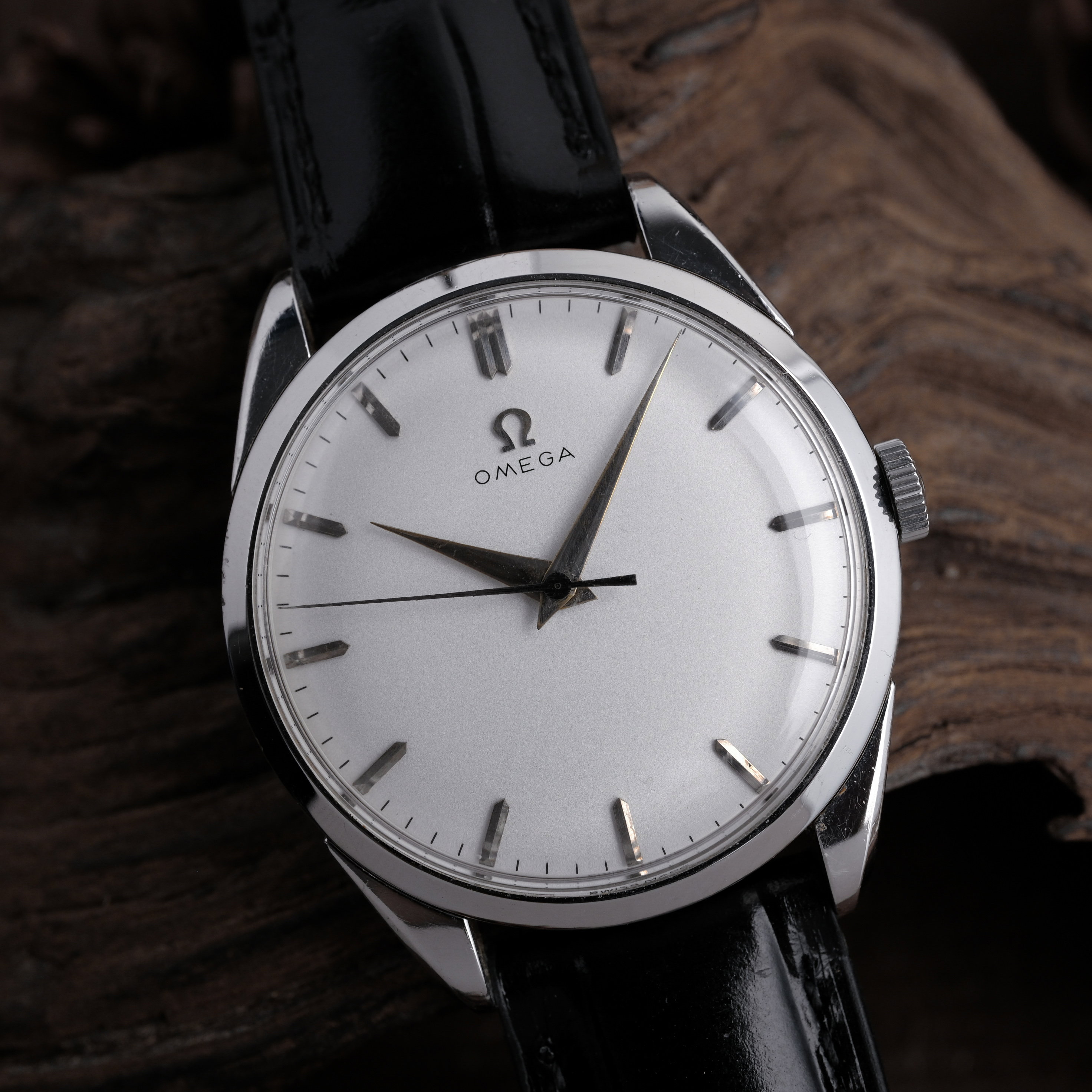
The version to want has the best defensible dial, not the loudest ageing. Silvered and silver satin dials occur with applied faceted indices and an applied Omega logo, while a crosshair variant adds a stronger graphic structure. Heavy widespread spotting is damage rather than patina, and it costs more than ordinary case scratches.
Reference
2910-9 SC
Known production year
1958-1958
Case diameter
34 mm excluding the crown
Case material
Stainless steel
| Movement | Omega Caliber 284 |
| Winding | Manual wind |
| Jewel count | 17 jewels |
| Dial forms | Silvered or silver satin, including a crosshair variant |
The model landscape
Every Omega 2910-9 SC handled here dates to 1958 and pairs a stainless steel case with Caliber 284. The movement is manual wind and has 17 jewels. That narrow specification keeps the buying decision focused on the visible watch rather than on choosing among different metals, sizes or automatic and manual-wind versions.
The meaningful split is on the dial. A silver satin or silvered surface with applied faceted indices gives the reference its restrained form, while the crosshair dial has a more assertive geometry. Between a clean standard dial and a spotted crosshair at the same level, take the clean standard dial. The crosshair deserves a premium only when the surface and printing remain convincing.
On the wrist
At 34 mm excluding the crown, the Omega 2910-9 SC wears compactly and leaves the beefy lugs to supply visual weight. Applied indices and faceted hands catch light against the pale dial, so the watch remains legible without needing a large case. It suits a cuff and works best when its smaller diameter is treated as part of the 1958 design rather than disguised with an oversized strap.
Manual winding changes the ownership rhythm. Caliber 284 asks for regular interaction, and the crown therefore matters mechanically even when a replacement is visually unobtrusive. Water resistance is not established by the reference data, so the steel case should not be treated as evidence of present-day sealing.
What goes wrong
The worst recurring fault is heavy, widespread dial spotting, sometimes joined by discoloration around the outer edge. That is damage, not even patina. Oxidation and spotting can also affect the hands, while a clean dial can coexist with scratches on the case and caseback. The dial carries the larger share of value, but a clean redial is still less convincing than an honest original surface.
Over-polishing softens the beefy lugs and erases the case geometry that gives this 34 mm watch presence. Replacement crowns are another risk, and mismatched hands can turn an otherwise correct watch into a franken assembly. The service history is unknown unless documentation accompanies the individual watch, and a favorable timegrapher reading does not establish what work was performed.
Dating this watch
| Serial range / caliber | Year | Note |
|---|---|---|
| 16,000,000 | 1958 | approximate, ±1-3 years |
Dating data comes from our decoder tables; treat years as approximate.
What to check before you buy
- Dial configuration: The known dial language is silvered or silver satin with applied faceted indices and an applied Omega logo. Crosshair dials also occur, but fresh printing over an aged surface is a redial warning.
- Movement specification: The reference is paired with the manual-wind Omega Caliber 284 and 17 jewels. A different caliber is not supported for 2910-9 SC and raises the possibility of a married or franken watch.
- Case proportion: The stainless steel case measures 34 mm excluding the crown and is known for beefy lugs. Soft, rounded lug definition indicates polishing, even when the remaining case surface looks bright.
- Hands and ageing: Faceted alpha or dauphine-style hands occur in handled examples. Oxidation and spotting should be disclosed plainly, while hands whose ageing conflicts sharply with the dial can indicate replacement or assembly.
Other 2910-9 SC examples we auctioned
4 Omega 2910-9 SC auctioned
More Omega references
Related pages
Frequently asked questions
Ready to hunt for your own?
More than 100 vintage watches go under the hammer every week.