Omega Seamaster 196 1501: calibers, dials and buying priorities
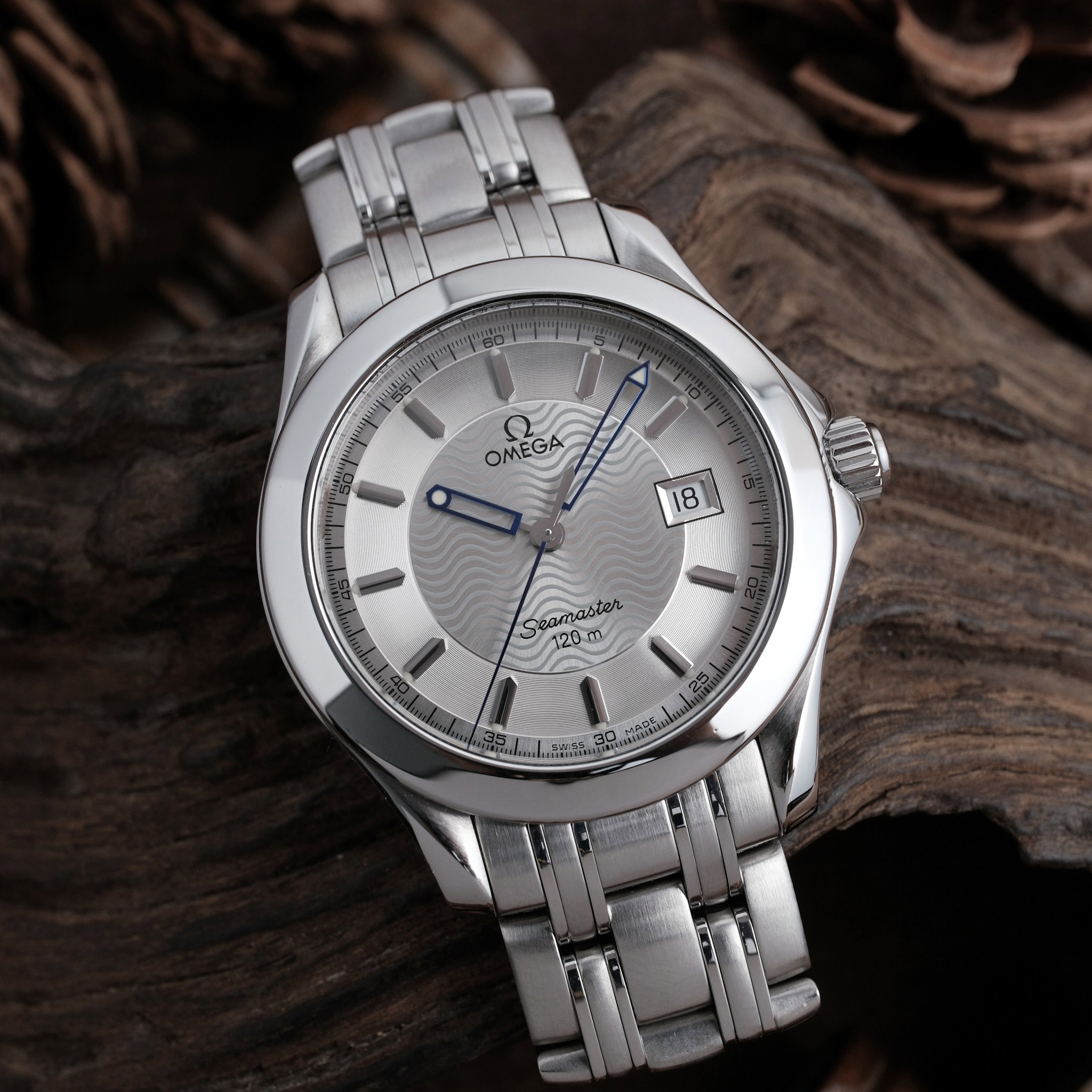
The Omega Seamaster 196 1501 is a compact steel quartz watch whose strongest configuration pairs a clean wave dial with sharp twisted lugs.
Live now
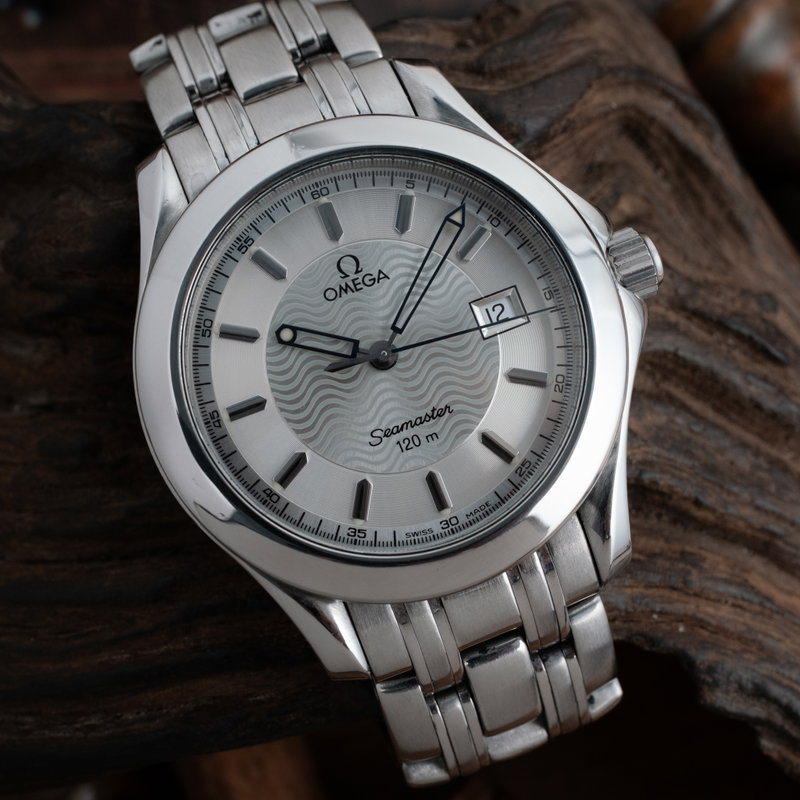
The Seamaster 120M reference 196 1501 belongs to Omega's 1990s steel quartz period, with examples handled from 1993 through 1998. Its identity rests on a compact case, twisted lugs, skeleton hands and a date at three rather than on mechanical nostalgia.
Deep blue examples occur with a plain surface in 1993 and a wave pattern in 1998, while the silver wave dial uses blue skeleton hands. Take the cleaner dial and sharper case over a nominally more appealing color, because refinishing and rounded lugs cost more than the color difference returns.
Reference
196 1501
Model
Omega Seamaster 120M
Known production years
1993-1998
Movement
Quartz caliber 1438 in 1993; quartz caliber 1538 in 1998
| Jewel count | 6 jewels for the documented caliber 1438 example |
| Case material | Stainless steel |
| Recorded case sizes | 36-38 mm excluding the crown |
| Dial configurations | Plain deep blue; blue wave pattern; silver wave pattern |
| Hands | Silver-tone skeleton hands on blue dials; blue skeleton hands on silver wave dial |
| Date | Window at three o'clock |
| Bracelet | Stainless steel multi-link bracelet |
What it was built for
Reference 196 1501 combines quartz timekeeping, a three o'clock date and luminous applied indices in a stainless steel Seamaster case. The multi-link bracelet and skeleton hands make it a practical late-century sports watch, while the polished bezel and twisted lugs keep it usable with a shirt rather than restricting it to casual wear.
The 1993 example uses caliber 1438, while the 1998 watches use caliber 1538. That change matters when judging whether the movement belongs with the dated configuration, but the service history of any individual watch remains unknown without supporting paperwork. A movement number alone does not establish that the rest of the watch left the factory with it.
Where the value sits
The dial carries the largest condition premium. A clean blue or silver wave surface with crisp white printing, intact applied indices and matching hand lume outranks a redial, and a refinished dial costs more than ordinary bracelet wear or light case marks. A genuine service dial is different from a redial, although the available evidence does not establish identifying marks for one here.
Case geometry comes next. Sharp twisted lugs retain the intended contrast between brushed lug surfaces and the polished bezel; repeated polishing softens that transition and cannot be reversed. Bracelet stretch, loose multi-link fit and worn exterior surfaces reduce the spread further, but they do not damage the watch's visual identity as decisively as a compromised dial or mushy lugs.
Where to start
Start with the silver wave dial if the blue skeleton hands are the attraction, or the deep blue wave dial for the more restrained configuration. Against either, the plain deep blue 1993 dial offers a different earlier look rather than an inferior one. Between a wave dial with rounded lugs and a plain dial in a sharper case, the sharper case is the sounder purchase.
Lead any condition assessment with the worst fault. Redial work, corrosion on the skeleton hands, missing or inconsistent lume, rounded twisted lugs and bracelet stretch all have different consequences. The watch should then be checked for the correct reference, a caliber consistent with its dated configuration and a serial range that does not contradict the claimed year. Approximate serial dating carries a margin of several years, so it confirms rather than proves a date.
Dating this watch
| Serial range / caliber | Year | Note |
|---|---|---|
| 1000000 | 1902 | approximate, ±1-3 years |
| 2000000 | 1908 | approximate, ±1-3 years |
| 3000000 | 1912 | approximate, ±1-3 years |
| 4000000 | 1916 | approximate, ±1-3 years |
| 5000000 | 1923 | approximate, ±1-3 years |
| 6000000 | 1925 | approximate, ±1-3 years |
| 7000000 | 1929 | approximate, ±1-3 years |
| 8000000 | 1935 | approximate, ±1-3 years |
| 9000000 | 1939 | approximate, ±1-3 years |
| 10000000 | 1944 | approximate, ±1-3 years |
| 11000000 | 1947 | approximate, ±1-3 years |
| 12000000 | 1950 | approximate, ±1-3 years |
| 13000000 | 1952 | approximate, ±1-3 years |
| 14000000 | 1954 | approximate, ±1-3 years |
| 15000000 | 1956 | approximate, ±1-3 years |
| 16000000 | 1958 | approximate, ±1-3 years |
| 17000000 | 1960 | approximate, ±1-3 years |
| 18000000 | 1961 | approximate, ±1-3 years |
| 19000000 | 1962 | approximate, ±1-3 years |
| 20000000 | 1963 | approximate, ±1-3 years |
| 21000000 | 1964 | approximate, ±1-3 years |
| 22000000 | 1965 | approximate, ±1-3 years |
| 24000000 | 1966 | approximate, ±1-3 years |
| 25000000 | 1967 | approximate, ±1-3 years |
| 26000000 | 1968 | approximate, ±1-3 years |
| 28000000 | 1969 | approximate, ±1-3 years |
| 31000000 | 1970 | approximate, ±1-3 years |
| 32000000 | 1971 | approximate, ±1-3 years |
| 33000000 | 1972 | approximate, ±1-3 years |
| 35000000 | 1973 | approximate, ±1-3 years |
| 37000000 | 1974 | approximate, ±1-3 years |
| 39000000 | 1975 | approximate, ±1-3 years |
| 40000000 | 1976 | approximate, ±1-3 years |
| 41000000 | 1977 | approximate, ±1-3 years |
| 42000000 | 1978 | approximate, ±1-3 years |
| 43000000 | 1979 | approximate, ±1-3 years |
| 44000000 | 1980 | approximate, ±1-3 years |
| 45000000 | 1982 | approximate, ±1-3 years |
| 46000000 | 1984 | approximate, ±1-3 years |
| 47000000 | 1985 | approximate, ±1-3 years |
| 48000000 | 1986 | approximate, ±1-3 years |
| 49000000 | 1988 | approximate, ±1-3 years |
| 50000000 | 1990 | approximate, ±1-3 years |
| 53000000 | 1993 | approximate, ±1-3 years |
| 54000000 | 1995 | approximate, ±1-3 years |
| 56000000 | 1996 | approximate, ±1-3 years |
| 58000000 | 1998 | approximate, ±1-3 years |
| 60000000 | 2000 | approximate, ±1-3 years |
Dating data comes from our decoder tables; treat years as approximate.
What to check before you buy
- Dial and hand configuration: A plain deep blue dial is documented with silver-tone skeleton hands in 1993. The 1998 configurations pair blue wave dials with silver-tone skeleton hands or a silver wave dial with blue skeleton hands.
- Movement against year: The handled 1993 configuration uses quartz caliber 1438 with 6 jewels, while the 1998 watches use caliber 1538. A different pairing is not automatically false, but it needs evidence before being accepted as period-correct.
- Dial printing and luminous furniture: The known dials have crisp white printing, applied luminous indices and a framed date at three. Blurred text, disturbed wave texture or inconsistent lume can indicate refinishing, relume or substituted parts.
- Case geometry: The steel case uses twisted lugs with brushed surfaces against a smooth polished bezel. Soft transitions or rounded lug profiles identify polishing and reduce value even when the dial remains clean.
- Serial and claimed date: Compare the serial with the approximate Omega table and allow a margin of 1 to 3 years. A compatible result supports the claimed date, but it cannot establish that the case, dial and movement have always remained together.
Other 196 1501 examples we auctioned
7 Omega 196 1501 auctioned
Omega · Seamaster · 196 1501 · 1998
Omega · Seamaster · 196 1501 · 1998
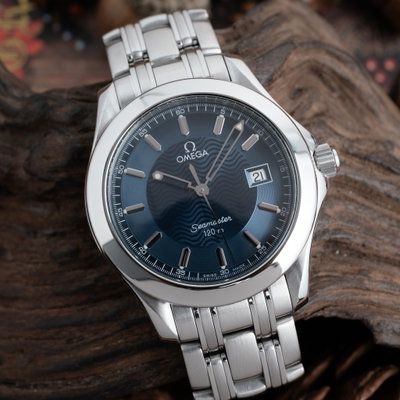
Omega · Seamaster · 196 1501 · 1998
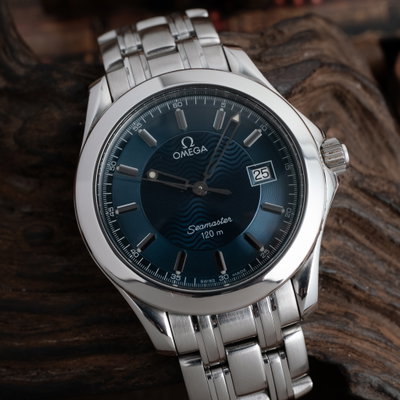
Omega · Seamaster 120M · 196 1501 · 1998
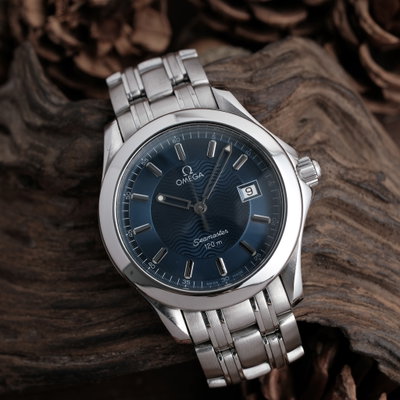
Omega · Seamaster · 196 1501 · 1998
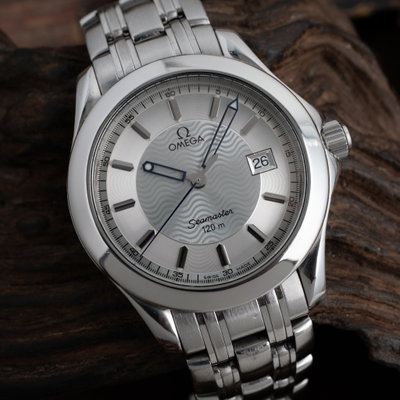
Omega · Seamaster 120m · 196 1501 · 1998
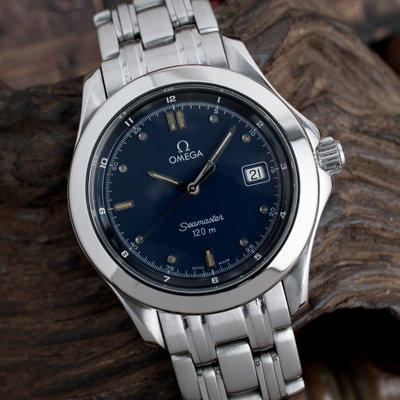
Omega · Seamaster · 196 1501 · 1993
We auction more than 100 vintage watches a week.
Get first access: new Omega 196 1501 drops and alerts before auctions end.
More Omega references
Related pages
Frequently asked questions
Ready to hunt for your own?
More than 100 vintage watches go under the hammer every week.