Omega Speedmaster 175.0083 buying guide
The Omega Speedmaster 175.0083 is a 39 mm steel automatic chronograph whose value depends chiefly on dial condition, case definition and correct caliber 1152.
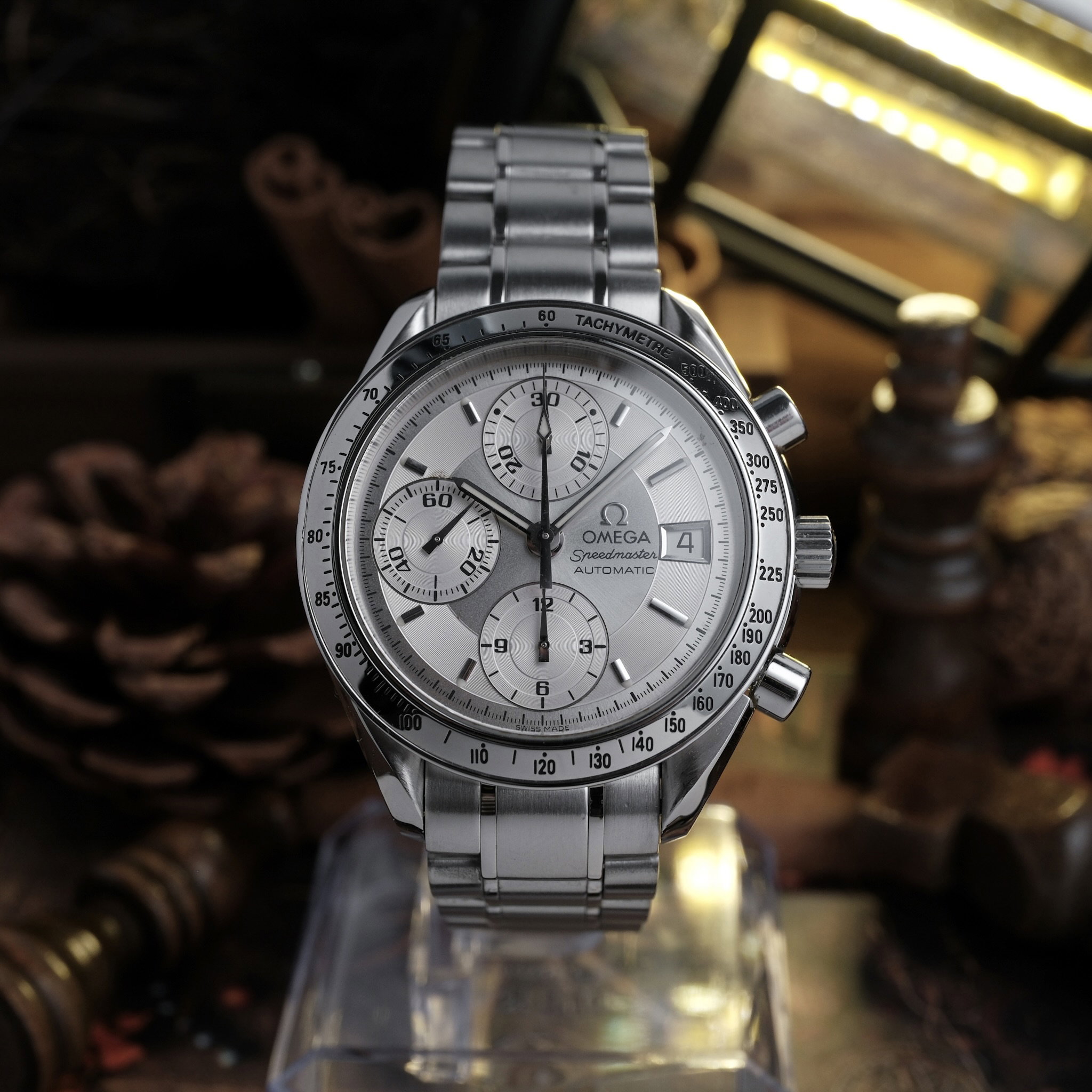
Live now
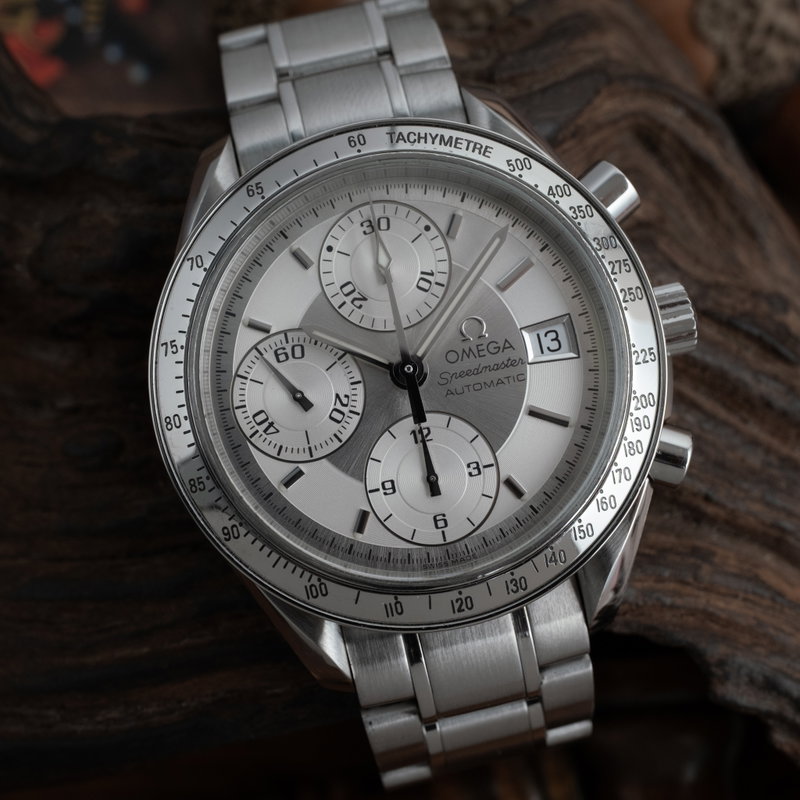
The Omega Speedmaster 175.0083 puts an automatic chronograph and date into a 39 mm steel case. That combination makes this 1998 Speedmaster Chronograph easier to wear daily than a larger manual-wind sports chronograph, without losing the tachymeter bezel and three-register layout.
The real choice is not between automatic and manual winding. It is between the silver sunburst, two-tone silver and grey, and black dial versions found on this reference, then between honest surfaces and cosmetic work. The dial carries the widest value spread, while softened case lines and replacement parts determine whether a used Omega Speedmaster 175.0083 still looks coherent.
Reference
175.0083
Model
Speedmaster
Known production year range
1998-1998
Case size
39 mm excluding the crown
| Case material | Stainless steel |
| Movement | Automatic Omega caliber 1152 |
| Jewel count | 25 jewels |
| Functions | Chronograph and date |
| Dial versions handled | Silver sunburst, two-tone silver and grey, and black |
| Bezel | Steel tachymeter bezel |
The model landscape
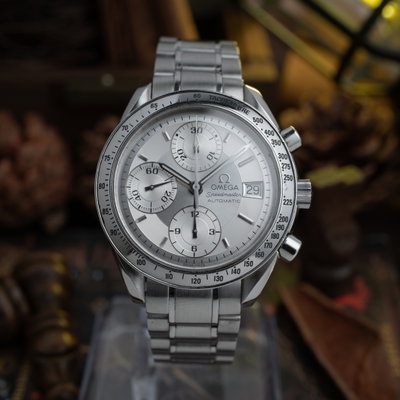
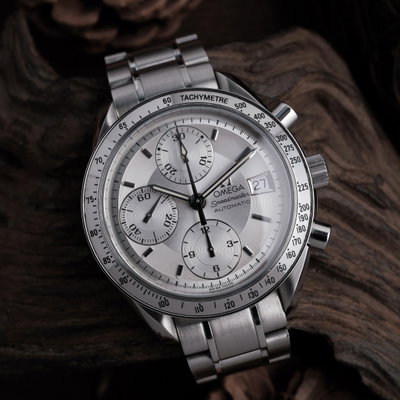
Reference 175.0083 exists with materially different dial presentations. The silver version uses a sunburst surface, applied indices and snailed sub-registers, producing the most monochromatic effect. The two-tone version places a dark grey central sector against a silver outer track and silver registers. Black-dial examples retain applied indices and concentric register texture, giving stronger contrast.
All three sit around automatic caliber 1152, a date complication, stainless steel construction and a steel tachymeter bezel. The premium belongs first to an untouched dial, not automatically to a particular colour. Between a clean silver dial and a spotted two-tone dial at the same level, take the silver watch. Localised oxidation around the central sector cannot be serviced away.
The two-tone dial deserves attention only when its contrasting surfaces remain even. It offers the clearest visual separation within the reference, but spotting makes that contrast work against the watch. The market spread between clean and damaged dials is wider than the spread created by colour alone, so buy condition before chasing the less familiar layout.
On the wrist
At 39 mm excluding the crown, the Speedmaster 175.0083 wears as a compact automatic sports chronograph rather than a small dress watch. The tachymeter bezel gives the case visual width, while the three recessed registers keep the dial recognisably technical. It fits under a cuff more readily than its broad bezel first suggests, although no thickness measurement is established here.
Legibility depends on the dial. Black gives the strongest separation between hands, indices and background, while the silver sunburst changes more with ambient light. The two-tone arrangement divides the timing display clearly, but oxidation or spotting becomes visible because adjacent sectors age differently. For daily use, the black dial is the least demanding and a clean silver dial is the more restrained choice.
What goes wrong
Dial damage is the costliest fault. Localised spotting and oxidation occur on the two-tone layout, and refinishing would remove the factory relationship between its centre, outer track and snailed registers. A service dial is a genuine factory replacement and not a redial, but neither should be priced as the dial that originally left with the watch unless documentation establishes that history.
Case wear comes next. Polishing softens the twisted lug lines and rounds the transitions beside the tachymeter bezel, while deeper handling marks remain visible on broad steel surfaces. Replacement crowns, pushers and bezels can also leave an otherwise coherent watch looking assembled. A franken watch uses parts that never shipped together, whereas period-correct parts merely match what Omega used at the date.
Caliber 1152 needs evidence of present performance rather than vague service language. Without a dated receipt, the service history is unknown. Chronograph reset alignment, date change and automatic winding should all function correctly, but those checks do not establish originality. Between a cosmetically polished example with uncertain mechanics and a sharper case with a clean dial, the sharper watch is the better place to spend the premium.
Dating this watch
| Serial range / caliber | Year | Note |
|---|---|---|
| 1000000 | 1902 | approximate, ±1-3 years |
| 2000000 | 1908 | approximate, ±1-3 years |
| 3000000 | 1912 | approximate, ±1-3 years |
| 4000000 | 1916 | approximate, ±1-3 years |
| 5000000 | 1923 | approximate, ±1-3 years |
| 6000000 | 1925 | approximate, ±1-3 years |
| 7000000 | 1929 | approximate, ±1-3 years |
| 8000000 | 1935 | approximate, ±1-3 years |
| 9000000 | 1939 | approximate, ±1-3 years |
| 10000000 | 1944 | approximate, ±1-3 years |
| 11000000 | 1947 | approximate, ±1-3 years |
| 12000000 | 1950 | approximate, ±1-3 years |
| 13000000 | 1952 | approximate, ±1-3 years |
| 14000000 | 1954 | approximate, ±1-3 years |
| 15000000 | 1956 | approximate, ±1-3 years |
| 16000000 | 1958 | approximate, ±1-3 years |
| 17000000 | 1960 | approximate, ±1-3 years |
| 18000000 | 1961 | approximate, ±1-3 years |
| 19000000 | 1962 | approximate, ±1-3 years |
| 20000000 | 1963 | approximate, ±1-3 years |
| 21000000 | 1964 | approximate, ±1-3 years |
| 22000000 | 1965 | approximate, ±1-3 years |
| 24000000 | 1966 | approximate, ±1-3 years |
| 25000000 | 1967 | approximate, ±1-3 years |
| 26000000 | 1968 | approximate, ±1-3 years |
| 28000000 | 1969 | approximate, ±1-3 years |
| 31000000 | 1970 | approximate, ±1-3 years |
| 32000000 | 1971 | approximate, ±1-3 years |
| 33000000 | 1972 | approximate, ±1-3 years |
| 35000000 | 1973 | approximate, ±1-3 years |
| 37000000 | 1974 | approximate, ±1-3 years |
| 39000000 | 1975 | approximate, ±1-3 years |
| 40000000 | 1976 | approximate, ±1-3 years |
| 41000000 | 1977 | approximate, ±1-3 years |
| 42000000 | 1978 | approximate, ±1-3 years |
| 43000000 | 1979 | approximate, ±1-3 years |
| 44000000 | 1980 | approximate, ±1-3 years |
| 45000000 | 1982 | approximate, ±1-3 years |
| 46000000 | 1984 | approximate, ±1-3 years |
| 47000000 | 1985 | approximate, ±1-3 years |
| 48000000 | 1986 | approximate, ±1-3 years |
| 49000000 | 1988 | approximate, ±1-3 years |
| 50000000 | 1990 | approximate, ±1-3 years |
| 53000000 | 1993 | approximate, ±1-3 years |
| 54000000 | 1995 | approximate, ±1-3 years |
| 56000000 | 1996 | approximate, ±1-3 years |
| 58000000 | 1998 | approximate, ±1-3 years |
| 60000000 | 2000 | approximate, ±1-3 years |
Dating data comes from our decoder tables; treat years as approximate.
What to check before you buy
- Dial configuration: The dial should follow one of the established layouts: silver sunburst, two-tone silver and grey, or black, each with three recessed registers. Uneven typography or a flattened finish points to a redial rather than normal ageing.
- Movement and functions: The case should contain automatic Omega caliber 1152, with chronograph and date functions. Correct caliber alone is insufficient if the movement and case are married or the surrounding components do not form a coherent 175.0083.
- Case geometry: The 39 mm stainless steel case should retain defined twisted lug transitions around the steel tachymeter bezel. Soft, rounded lines indicate polishing, while inconsistent pushers or crown can signal replacement parts.
- Two-tone dial ageing: On the two-tone silver and grey version, compare the central sector, outer minute track and subsidiary dials. Localised spotting and oxidation are known faults, while uniform fresh paint across all zones requires scrutiny for refinishing.
Other 175.0083 examples we auctioned
6 Omega 175.0083 auctioned
We auction more than 100 vintage watches a week.
Get first access: new Omega 175.0083 drops and alerts before auctions end.
More Omega references
Related pages
Frequently asked questions
Ready to hunt for your own?
More than 100 vintage watches go under the hammer every week.