Seiko Crown J14065 - What to Know Before You Buy
The Seiko Crown J14065 is a 1960-1961 manual-wind dress watch whose value rests mainly on dial preservation, sharp case lines and a correct caliber 560.
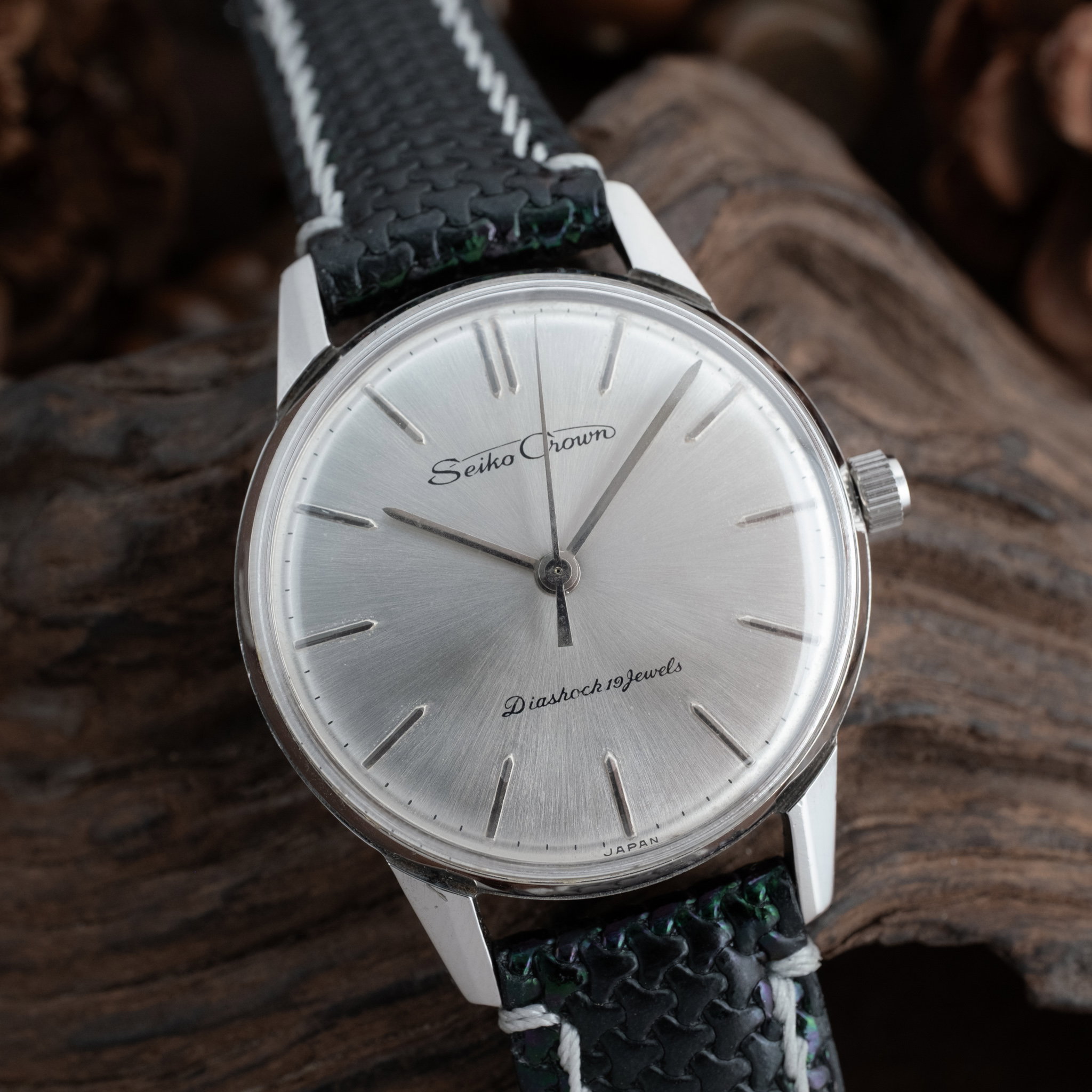
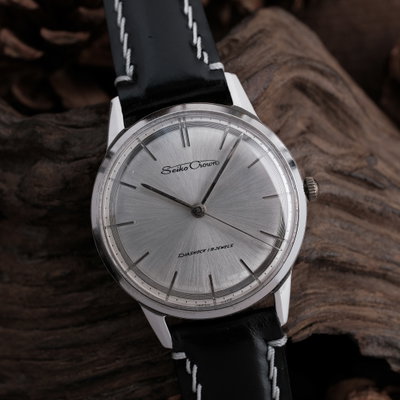
The Crown J14065 is a compact steel dress watch from 1960-1961, powered by the manual-wind Seikosha caliber 560. The 34 mm and 35 mm cases were measured without the crown, so either version keeps the restrained proportions expected of this reference. Its cleanest expression is a silver dial, applied indices and dauphine hands.
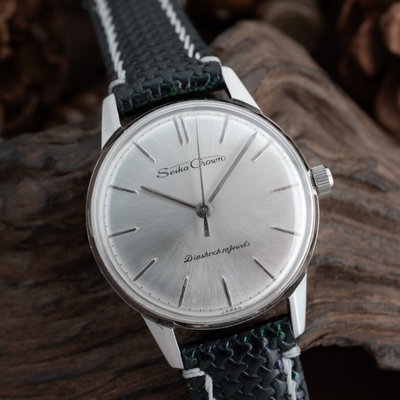
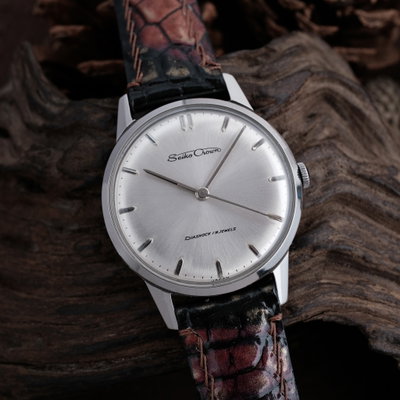
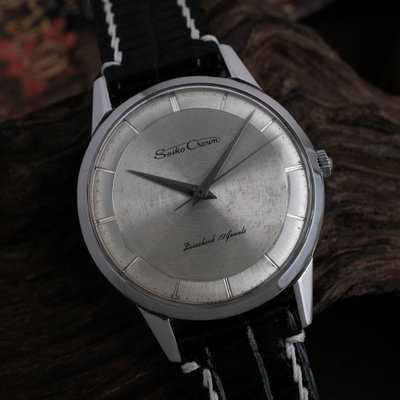
Dial preservation decides the purchase. The J14065 is known with both silver sunburst and concentric textured finishes, and either can be correct for the reference. Clean printing and an undisturbed surface matter more than choosing between those finishes, because spotting, staining or a redial changes the face of the watch and the price buyers will accept.
Brand
Seiko
Model
Crown
Reference
J14065
Known production years
1960-1961
| Movement | Manual-wind Seikosha caliber 560 |
| Case material | Stainless steel |
| Recorded case sizes | 34 mm and 35 mm, excluding the crown |
| Recorded dial finishes | Silver sunburst and silver concentric texture |
| Hour markers | Applied silver-tone indices |
| Hands | Dauphine style |
What it was built for
The J14065 belongs to Seiko's 1960-1961 Crown production and was built as a hand-wound steel dress watch. Its caliber 560, applied indices and dauphine hands place function ahead of complication: a clear time display in a case that slips beneath a cuff. The silver sunburst dial looks quieter indoors, while the concentric texture becomes more obvious as light crosses its circular pattern.
At 34 mm or 35 mm excluding the crown, the watch wears through dial area and narrow mid-century proportions rather than case bulk. The difference between the recorded sizes is modest on the wrist, while softened case lines are immediately visible from above. The strongest example is therefore the one with the cleaner dial and better-defined steel case, not automatically the larger measurement.
Where the value sits
The worst fault is a refinished dial. On a Crown J14065, a redial removes the reference's most visible period detail and costs more than hand oxidation or ordinary case wear. A clean silver sunburst surface with crisp black printing earns a premium, but an honest concentric dial with minor spotting remains preferable to a freshly repainted surface whose printing or index relationship no longer agrees with known examples.
Case definition creates the next spread. Polishing can soften the transitions around the lugs, and repeated work leaves the case visually rounded even when the dial remains strong. Oxidation and spotting on the dauphine hands are easier to accept when their shape remains intact. A service dial is a genuine factory replacement rather than a redial, but the supplied evidence does not establish a service-dial variant for J14065, so no such attribution should be made without documentation.
Where to start
Choose between a cleaner sunburst dial and a more visibly textured concentric dial only after excluding refinishing. At equal money, take crisp printing, evenly seated applied indices and defined case lines over a preferred finish with staining or a heavily polished case. The 35 mm version offers marginally more presence, but the recorded 34 mm example remains fully consistent with this compact dress-watch format.
A used Seiko Crown J14065 should also be assessed as a complete assembly. The steel case, manual-wind caliber 560, silver dial treatment, applied indices and dauphine hands must agree rather than merely look period-correct. Period-correct parts can still make a franken if they never shipped together. Service history is unknown without supporting paperwork, and a timegrapher reading alone cannot establish when the movement was last serviced.
What to check before you buy
- Movement and reference agreement: A J14065 should be paired with the manual-wind Seikosha caliber 560 found in handled examples. Another caliber is not made correct merely because it is old or Seiko-signed.
- Dial configuration: Known J14065 dials are silver with either a sunburst finish or concentric circular texture, combined with applied silver-tone indices. A different finish needs evidence rather than assumption.
- Printing and surface: Crisp black printing can survive on an original J14065 dial, including examples without visible loss. Uneven lettering or a surface that buries age marks can indicate a redial, though photographs alone may not settle it.
- Hands and dial relationship: Dauphine-style hands agree with handled J14065 examples. Oxidation and spotting can be honest ageing, but hands that are conspicuously newer than an aged dial require scrutiny for replacement or a franken assembly.
- Case dimensions and definition: Handled stainless-steel J14065 cases measure 34 mm or 35 mm excluding the crown. Confirm the measurement, then assess whether polishing has softened the lug transitions or rounded the case outline.
Other J14065 examples we auctioned
More Seiko references
Related pages
Frequently asked questions
Ready to hunt for your own?
More than 100 vintage watches go under the hammer every week.