Seiko Crown Special 15021: What Matters Before You Buy
The Seiko Crown Special 15021 is a manual-wind 1960s dress watch whose silver dial, gold-filled case and caliber 341 determine the buy.
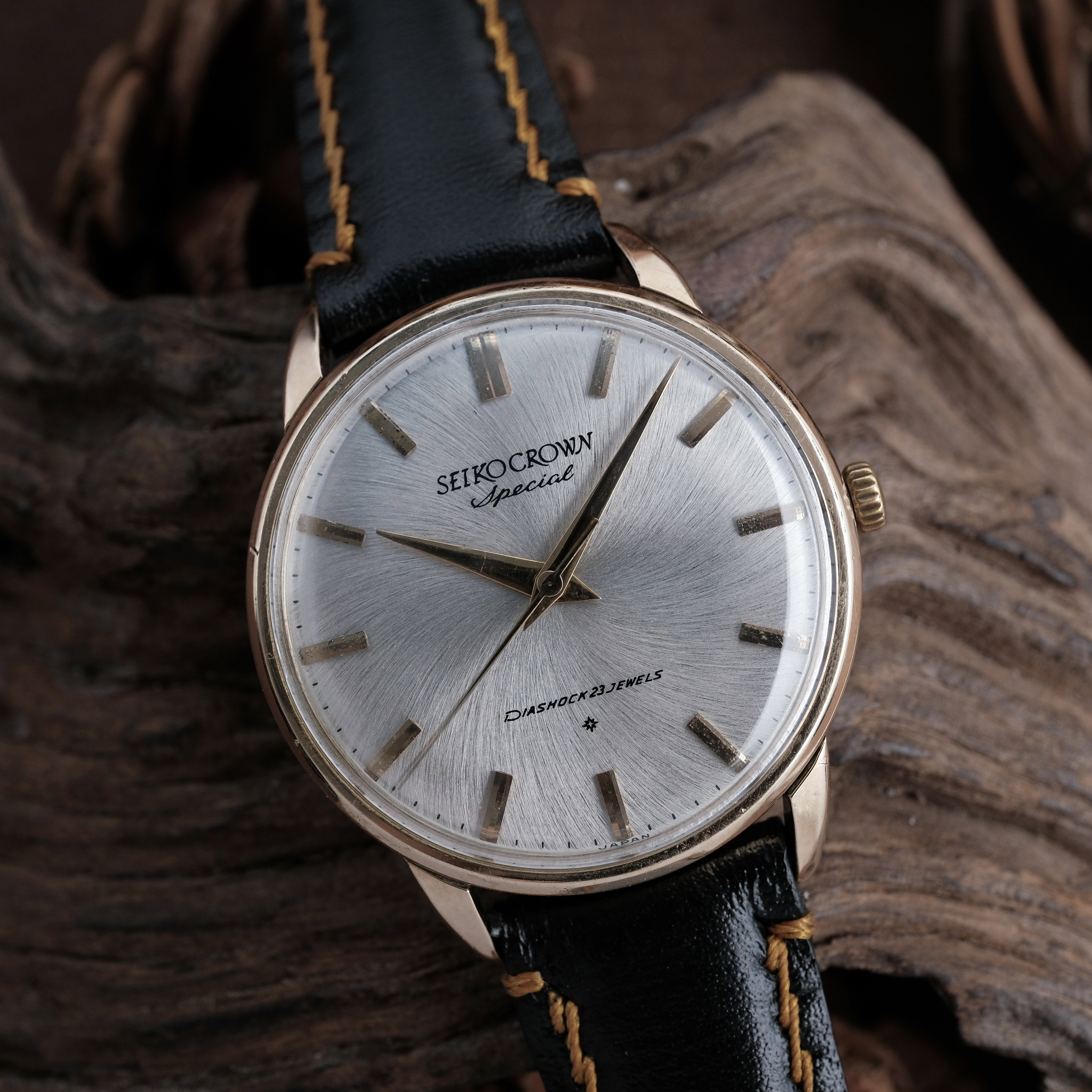
The Crown Special 15021 is a 1960s manual-wind dress watch with a 14K gold-filled case, a silver sunburst dial and Seikosha caliber 341. Its place below the inaugural Grand Seiko matters less to a buying decision than the surviving case and dial: worn gold fill cannot be returned by routine service, while a refinished dial removes the character that separates this reference from an ordinary period dress watch.
Choose the silver dial with intact sunburst grain, crisp black printing and properly seated faceted indices. Some Crown Special 15021 dials carry the SD star above six, denoting solid-gold applied indices, and that is the version to want against a comparable example without the mark. Cases we have handled measure 35 or 36 mm excluding the crown, so the watch wears as a compact mid-century dress piece rather than a modern all-purpose watch.
Reference
15021
Model
Crown Special
Production period observed
1960s, including examples dated 1963
Movement
Seikosha caliber 341, manual wind
| Jewel count | 23 jewels |
| Case diameter | 35 or 36 mm, excluding the crown |
| Case material | 14K gold filled |
| Caseback | Stainless steel |
| Dial | Silver sunburst with applied gold-tone faceted indices |
| Notable dial variant | SD star above six, denoting solid-gold applied indices |
What it was built for
The Crown Special 15021 was built as a premium Seiko dress watch during the 1960s, positioned below the inaugural Grand Seiko. Caliber 341 is manual-wind and has 23 jewels, making daily winding part of ownership rather than an occasional interaction. The silver sunburst dial, gold-tone dauphine hands and faceted applied indices put legibility ahead of complications, while the gold-filled case supplies the formal finish.
The reference makes most sense for careful daily wear or formal use, not as a water-resistant utility watch. Its stainless steel caseback protects the contact surface from the wear visible on a gold-filled exterior, but no water-resistance specification is established by the watches handled. The service history is unknown unless a particular watch has supporting paperwork, and the movement's current rate cannot establish when it was last serviced.
On the wrist
At 35 or 36 mm excluding the crown, the Crown Special 15021 has the compact footprint expected of a 1960s dress watch. The narrow size difference matters less than lug geometry: sharp lugs give the case definition, while repeated polishing leaves them soft and makes the gold-filled shell look rounded. The silver sunburst surface and black printing remain readable in direct light, with the faceted indices adding contrast.
This is a thin-looking, manually wound design, but no case-thickness measurement is established here. That limit matters when comparing straps or judging cuff clearance from a listing alone. Between a sharper 35 mm case and a softened 36 mm example at the same level, take the sharper case. A millimetre of diameter is replaceable in the market; lost case geometry is not.
What goes wrong
Dial damage costs the most. Crown Special 15021 dials can develop minor surface spotting under magnification, and a redial is worse than honest, bounded marks because the original sunburst grain and printed signatures are then lost. The correct hierarchy is an untouched dial with light spotting, then a genuine service dial if clearly disclosed, with a refinished dial last. A service dial is factory-made; it is not another name for a redial.
Gold-fill wear and polishing are the next concerns. Wear-through at the lug edges exposes the underlying metal, while polishing softens the lug geometry and cannot be reversed by service. Caliber 341 condition also varies materially: examples we handled were operational yet showed substantially different daily rates, so running is not the same as serviced. Movement damage, mismatched parts and a married case-and-movement combination require direct comparison with the reference's established configuration.
What to check before you buy
- Dial surface and printing: The silver dial should retain visible sunburst grain with crisp black signatures. Flat paint, inconsistent printing or a surface that looks newly uniform points to a redial rather than honest ageing.
- SD-star dial furniture: On the SD-star version, the star sits above six and denotes solid-gold applied indices. The mark, faceted furniture and surrounding print must belong to the same coherent dial finish.
- Movement identity: Reference 15021 is paired here with the manual-wind Seikosha caliber 341 with 23 jewels. A different movement, or incompatible movement and case fittings, raises a franken or married-watch concern.
- Case construction and geometry: The established case is 14K gold filled, with a stainless steel caseback, and measures 35 or 36 mm excluding the crown. Soft lugs indicate polishing, while wear-through at the edges exposes the base metal.
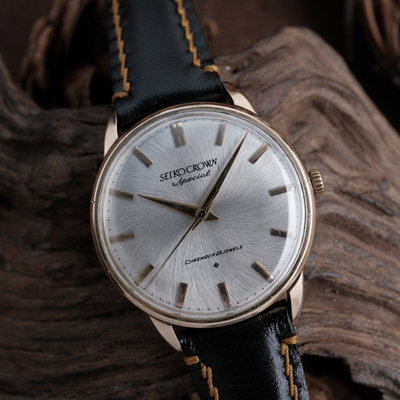
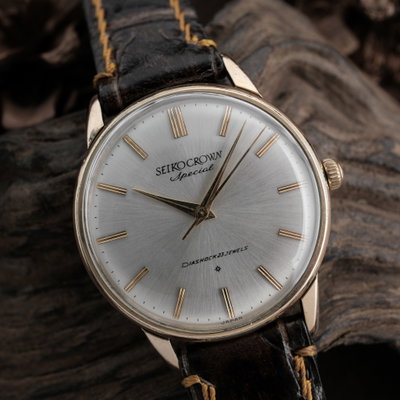
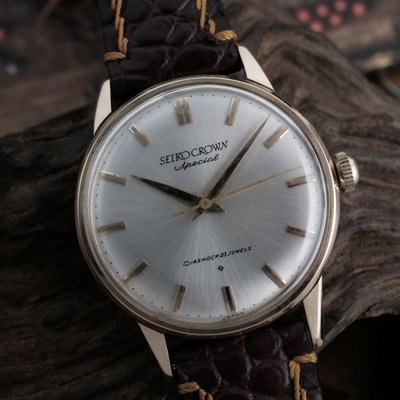
Other 15021 examples we auctioned
More Seiko references
Related pages
Frequently asked questions
Ready to hunt for your own?
More than 100 vintage watches go under the hammer every week.