Seiko Crown 15013: what to know before buying
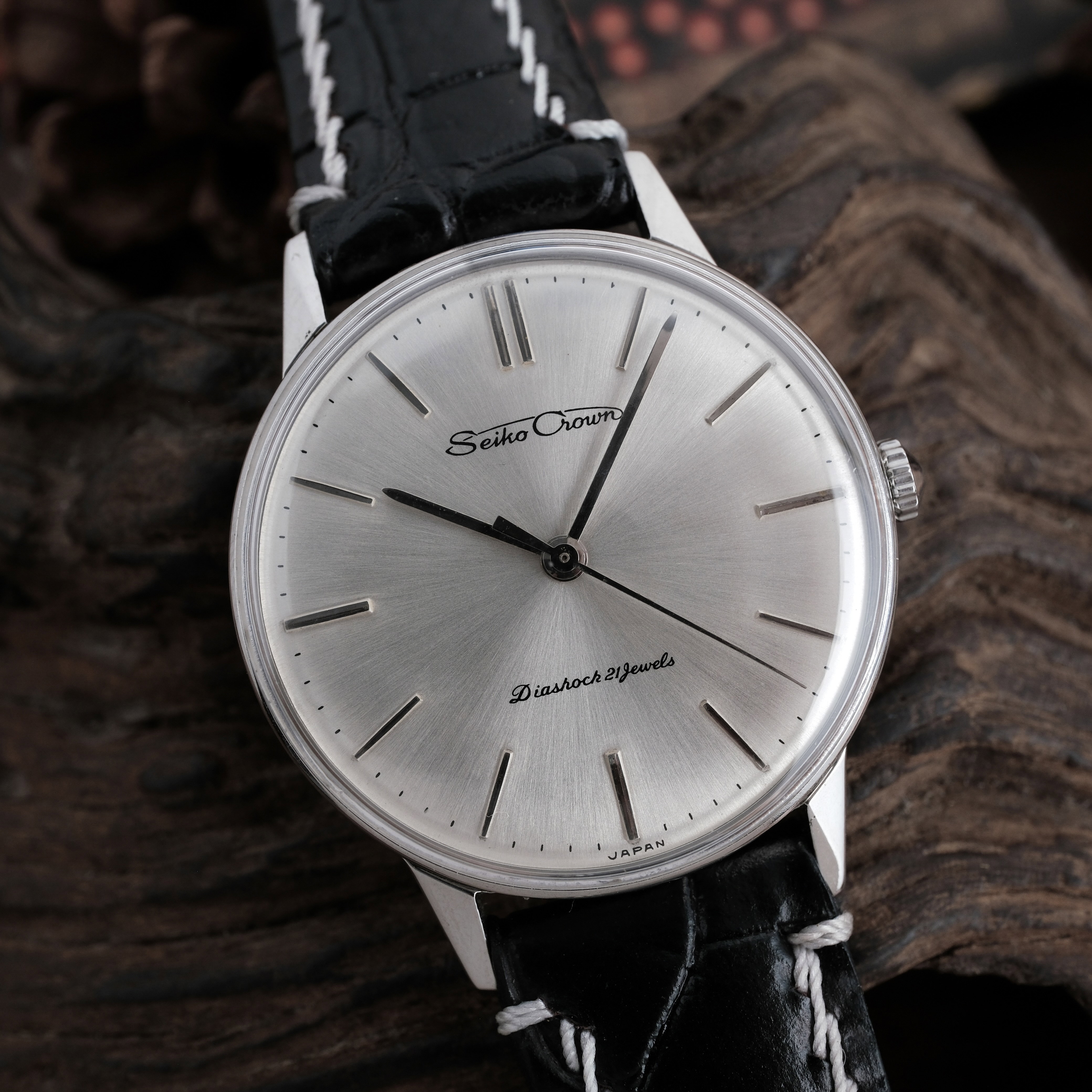
The vintage Seiko Crown 15013 is a 35 mm manual-wind dress watch from 1961-1962, with the strongest value in a clean, correctly configured dial.
We auction more than 100 vintage watches a week.
Get first access: new Seiko 15013 drops and alerts before auctions end.
Browse 28 live Seiko auctionsThe Crown 15013 is a 35 mm manual-wind dress watch from 1961-1962, built around Seikosha movements and mid-century proportions. Stainless-steel and gold-plated cases are both known, so the reference is not defined by one case finish alone.
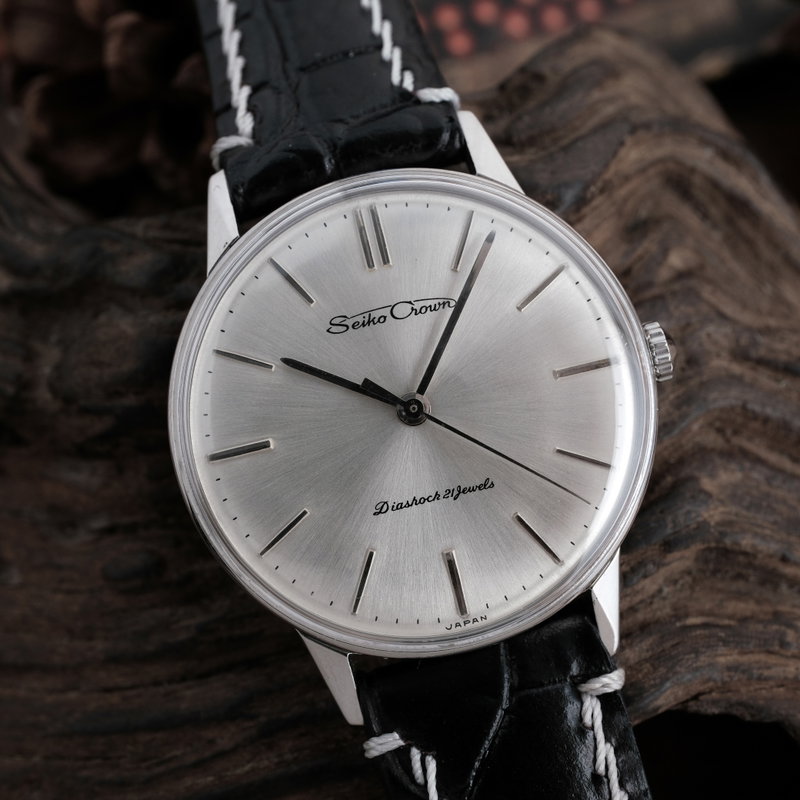
The silver sunburst dial carries most of the value. Applied faceted indices and dauphine hands should form a coherent set, while the crown deserves practical attention because this watch must be wound by hand. A clean dial is worth prioritising over a sharper-looking case with staining or refinished print.
Reference
15013
Model
Crown
Known production years
1961-1962
Case diameter
35 mm excluding the crown
| Case materials | Stainless steel or gold plated |
| Winding | Manual wind |
| Known calibers | Seikosha 560 or 57A |
| Known jewel counts | 19 or 21 jewels |
| Dial configuration | Silver sunburst with applied faceted indices |
The model landscape
The stainless-steel version is the safer place to start. It avoids irreversible plating loss, and its silver-tone indices and hands make a straightforward match with the silver sunburst dial. Gold-plated examples can be equally correct, including dials with gold-tone applied indices, but wear-through at the lug edges cannot be repaired by routine servicing.
Movement configuration is not uniform across the reference. Seikosha caliber 560 is known with both 19 and 21 jewels, while caliber 57A is also documented with 21 jewels. A buyer should not reject a 15013 because its jewel count differs from another example, but movement, dial furniture and case material must make sense together.
The widest premium belongs to an evenly preserved sunburst dial with crisp Crown and jewel-count printing. A refinished dial costs more in lost value than moderate case polishing or a replaced crystal. Between a clean stainless-steel example and a brighter gold-plated watch with worn lug edges, take the steel watch.
On the wrist
At 35 mm excluding the crown, the 15013 has compact dress-watch proportions without becoming difficult to read. The broad silver sunburst surface changes tone under direct light, while the faceted indices and dauphine hands provide the contrast. The size suits a cuff, but its visual presence depends heavily on whether the dial remains clear rather than spotted.
Manual winding changes the ownership routine. The crown is used every day, so a worn, unsigned or poorly fitted replacement matters more here than on an automatic watch. Resistance, slipping or roughness during winding calls for mechanical assessment, and the service history is unknown unless paperwork establishes it.
What goes wrong
Dial damage is the costliest fault. Moisture spotting, staining and softened or uneven printed text should be treated as damage, not patina, while oxidation on the dauphine hands can spoil an otherwise clean dial. A service dial is a genuine factory replacement and is not the same as a redial, but neither should be described as the original dial without evidence.
Cases fail differently by material. Gold plating wears through first at exposed lug edges, while repeated polishing softens the lug shape on both plated and stainless-steel cases. Replacement crowns are another common uncertainty, and a signed crown alone does not prove that every component shipped together.
Movement checks should confirm manual winding and a known configuration: caliber 560 with 19 or 21 jewels, or caliber 57A with 21 jewels. Franken construction means parts from watches that never left the factory together, not merely a replacement crystal or crown. The best used Seiko Crown 15013 is the steel example with the cleanest credible dial, ahead of a more polished watch with weaker printing.
What to check before you buy
- Dial print and finish: The established dial is silver sunburst with applied faceted indices. Crown and jewel-count text should remain crisp; blurred edges, uneven weight or paint over surface damage points toward a redial.
- Hands and dial furniture: Dauphine hands belong with applied indices. Silver-tone sets are known in stainless-steel examples and gold-tone indices occur with a gold-plated case, so coherence matters more than insisting on one colour.
- Movement configuration: Known manual-wind configurations include Seikosha caliber 560 with 19 or 21 jewels and caliber 57A with 21 jewels. A different claim needs evidence, while jewel count alone cannot authenticate the watch.
- Case material and wear: Both stainless-steel and gold-plated cases are established for 15013. On plated cases, inspect the lug edges for exposed base metal; on either material, soft lug outlines disclose repeated polishing.
- Crown and winding: A signed crown is known on the reference, but a crown is a replaceable working part and its presence is not proof of an untouched watch. Poor fit, slipping or rough manual winding requires mechanical attention.
Other 15013 examples we auctioned
4 Seiko 15013 auctioned
More Seiko references
Related pages
Frequently asked questions
Ready to hunt for your own?
More than 100 vintage watches go under the hammer every week.