Seiko Sportsmatic 5 6619-8970 Buyer's Guide
The Seiko Sportsmatic 5 6619-8970 is an early automatic day-date watch best bought with a clean silver sunburst dial and coherent case finish.
We auction more than 100 vintage watches a week.
Get first access: new Seiko 6619-8970 drops and alerts before auctions end.
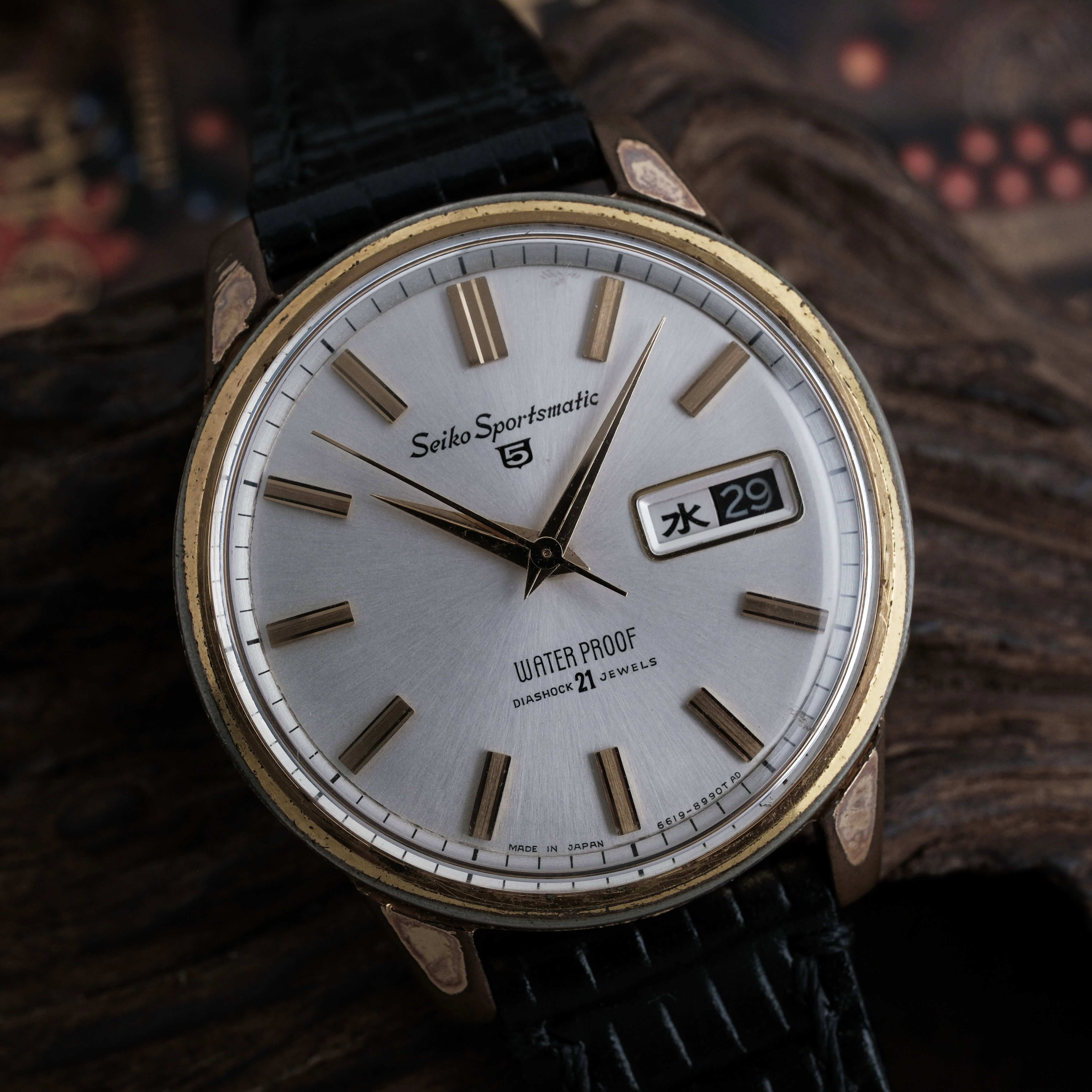
Browse 43 live Seiko auctionsThe Seiko Sportsmatic 5 6619-8970 makes sense as a compact automatic day-date watch from 1964-1965, not as a miniature modern sports watch. Its silver sunburst dial, applied indices and recessed crown at 4 o'clock give it a clean front, while the framed calendar carries the practical emphasis. The 21-jewel caliber 6619A supplies the mechanical basis.
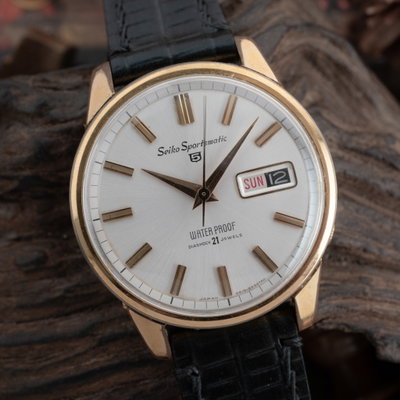
The version to want depends first on the case. Gold-plated examples pair gold-tone indices and dauphine hands with a stainless steel caseback, while stainless steel examples are plainer and avoid irreversible plating loss. Between a bright plated case with a refinished dial and a worn case with crisp printing, take the honest dial. A redial costs more than the visible case wear it disguises.
Reference
6619-8970
Model
Sportsmatic 5
Known production years
1964-1965
Movement
Automatic caliber 6619A
| Jewels | 21 |
| Case size | 36-37 mm excluding the crown |
| Case materials | Stainless steel or gold-plated with stainless steel caseback |
| Dial | Silver sunburst with applied faceted indices |
| Calendar | Framed day-date display |
| Crown position | Recessed at 4 o'clock |
The model landscape
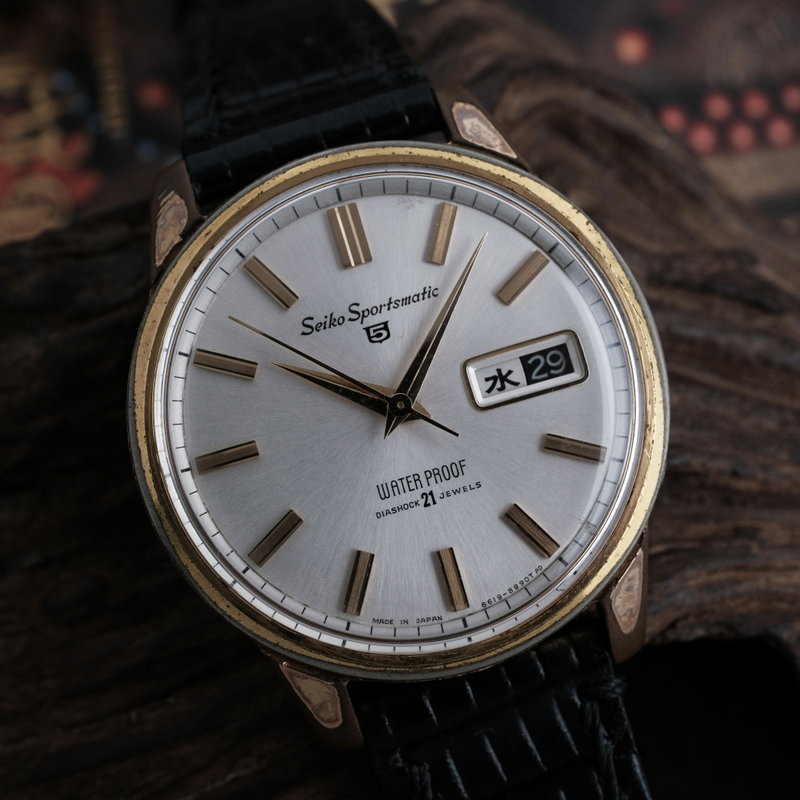
Reference 6619-8970 sits in a narrow known period from 1964 to 1965, but it is not confined to one case treatment. Stainless steel and gold-plated cases both occur, with silver sunburst dials, applied faceted indices and a framed day-date display. Some examples carry a Kanji day wheel. That wheel changes the character without changing the underlying caliber 6619A.
Case measurements run from 36 to 37 mm excluding the crown, and the recessed 4 o'clock crown keeps the outline cleaner than a conventional projecting crown. The gold-plated version reads more like a dress watch because the hands and furniture continue the warm case tone. The steel version is the safer ownership proposition when long-term case wear matters more than period contrast.
Where the value sits
The dial carries the premium on a vintage Seiko Sportsmatic 5 6619-8970. A silver sunburst surface with intact printing, clean applied furniture and no meaningful moisture spotting outranks a sharper-looking case around a redial. A genuine service dial is different from a refinished dial, but neither should be described as the original dial without evidence.
A Kanji day wheel adds period interest, although the available evidence does not establish how much scarcer it is. Case material creates the next split: gold plating supplies stronger visual contrast, while steel removes the risk of worn-through plating. Service history is unknown unless documentation accompanies the watch, and caliber identity alone does not establish when an individual movement was serviced.
What goes wrong
Plating loss is the first fault to price into a gold-plated example, especially where the case meets the lugs and crown recess. No polish or service can replace worn plating without altering the case finish. Over-polishing also softens the lug edges, while scratches on the hands and small oxidation spots remain visible under magnification even when the dial looks clean to the naked eye.
Dial damage matters more. Moisture spotting, broken sunburst texture and blurred printing point away from the clean examples that support this reference's value. The hands should match the applied furniture in tone and period style, but matching colour alone does not prove they left the factory together. A franken watch can contain genuine Seiko parts that never shipped in the same watch, and a married case and movement requires evidence beyond a correct caliber.
Dating this watch
| Serial range / caliber | Year | Note |
|---|---|---|
| 6619 | 1964-1968 | caliber production window |
Dating data comes from our decoder tables; treat years as approximate.
What to check before you buy
- Dial and calendar: The dial should be silver sunburst with applied faceted indices, intact Sportsmatic 5 identification and a framed day-date display. Blurred print or lost sunburst texture supports a redial diagnosis rather than attractive patina.
- Hands and dial furniture: Gold-plated examples are known with gold-tone dauphine hands and matching applied indices. Minor oxidation can be genuine wear, but matching colour alone does not prove originality or exclude period-correct replacements.
- Case and crown: The crown sits recessed at 4 o'clock, a defining part of the reference's outline. Inspect gold-plated cases for wear-through around the lugs and recess, and reject case refinishing that has softened the edges.
- Movement identity: The movement should be the automatic caliber 6619A with 21 jewels. A correct movement is necessary but not sufficient, because a married watch can combine the right caliber with a case from another watch.
- Caseback coherence: Gold-plated examples use a stainless steel caseback, and the reference must be written exactly as 6619-8970. A correct caseback alone does not authenticate the whole watch, because genuine parts can still form a franken assembly.
Other 6619-8970 examples we auctioned
4 Seiko 6619-8970 auctioned
More Seiko references
Related pages
Frequently asked questions
Ready to hunt for your own?
More than 100 vintage watches go under the hammer every week.