Seiko 6619-8090 Sportsmatic 5 Reference Guide
The Seiko 6619-8090 is a 1966 automatic Sportsmatic 5 best bought with a clean sunburst dial, coherent calendar configuration and honest case.
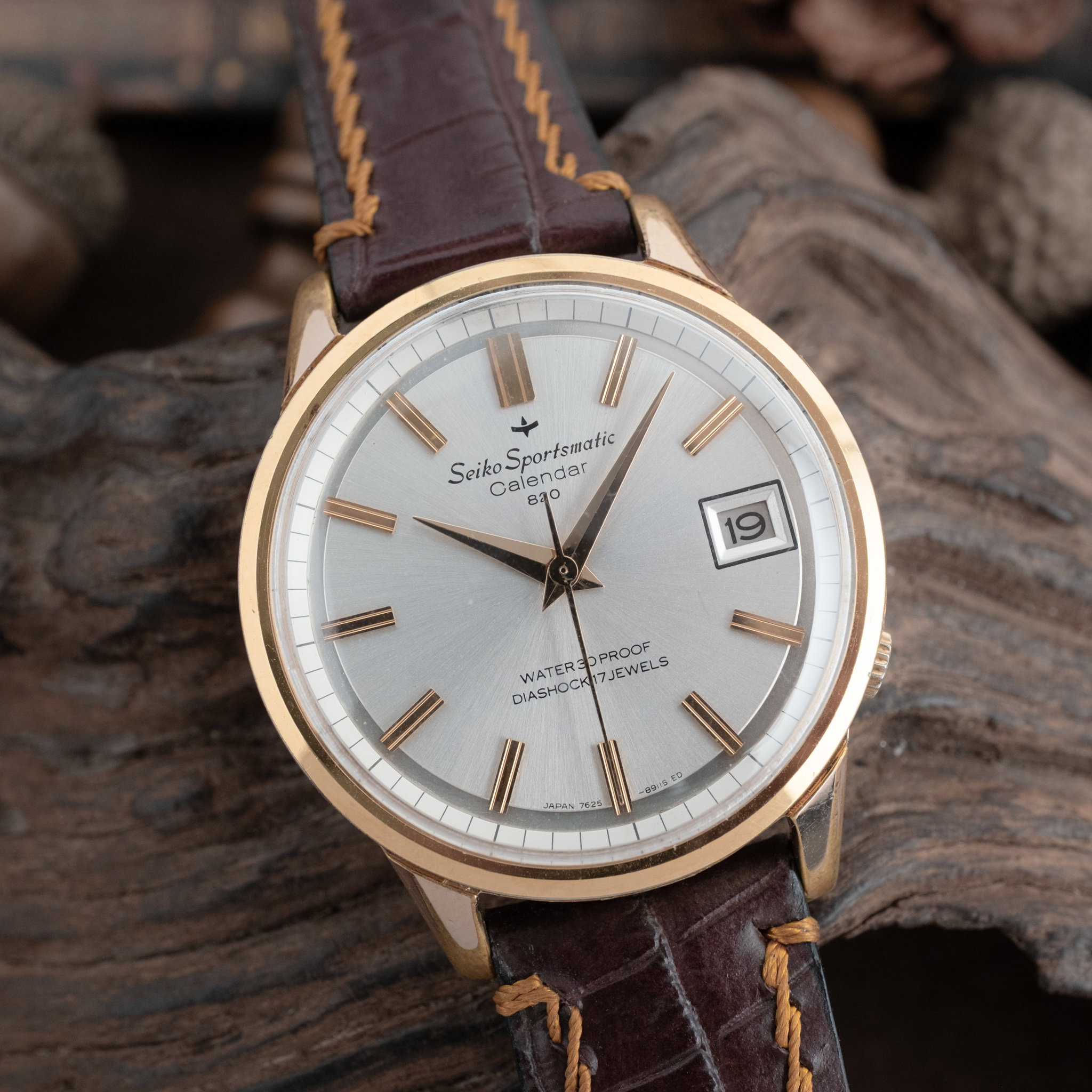
The Seiko 6619-8090 belongs to the practical calendar-watch side of the 1960s Sportsmatic family. In 1966 it appeared as the Seiko 5 Sportsmatic with day-date display, while the Sportsmatic Calendar 820 name also occurs on watches carrying this reference. The recessed crown at 4 o'clock keeps the case profile unusually clean.
The examples we have handled divide into a 36 mm stainless-steel version and a 37 mm gold-plated version, both measured without the crown. Silver sunburst dials, applied indices and dauphine hands establish the shared look, but calendar configuration and caseback coherence matter more than the one-millimetre difference. Buy the dial first, then establish that the parts belong together.
Reference
6619-8090
Known production year
1966-1966
Model names
Sportsmatic 5, Sportsmatic Calendar 820, Seiko 5 Sportsmatic
Movement type
Automatic
| Steel case size | 36 mm excluding crown |
| Gold-plated case size | 37 mm excluding crown |
| Dial | Silver sunburst with applied indices |
| Hands | Dauphine |
| Crown position | Recessed at 4 o'clock |
| Calendar configurations | Day-date and date-only 7625 configuration |
| Steel version detail | Fluted bezel and dolphin motif caseback |
| Case materials | Stainless steel or gold plated |
The model landscape
The stainless-steel Seiko 5 Sportsmatic combines a 36 mm case with a fluted bezel, silver sunburst dial and applied faceted indices. A Kanji day wheel beside the date at 3 o'clock gives this version its strongest period detail, while a dolphin motif caseback can complete the configuration. This is the version to choose over a compromised gold-plated example because scratches remain honest, whereas lost plating cannot be returned by routine service.
The 37 mm gold-plated Sportsmatic Calendar 820 changes the emphasis through applied gold-tone indices and matching dauphine hands. A date-only 7625 configuration has also appeared beneath a replacement caseback associated with a day-date watch. That mismatch does not stop the watch functioning, but it makes the assembly less coherent than a day-date example whose dial, movement and caseback agree.
On the wrist
At 36 mm without the crown, the steel case wears as a compact 1960s automatic rather than a miniature modern sports watch. The recessed crown at 4 o'clock removes the usual projection from the case flank, and the silver sunburst dial keeps the display open. Applied faceted indices and dauphine hands provide the contrast, although oxidation on the hands can reduce clarity when it becomes heavy.
The gold-plated case reaches 37 mm without the crown, but its visual difference comes less from the extra millimetre than from the gold-tone dial furniture. The fluted bezel on the steel version adds a sharper boundary around the dial. Neither supplied description establishes case thickness or water resistance, so without documentation we prefer not to speculate about cuff clearance or safe exposure to water.
What goes wrong
The worst fault is an incoherent calendar assembly. A date-only 7625 configuration paired with a replacement caseback associated with a day-date model is a parts mismatch, even when every component is period-correct and the watch runs. In trade terms, that can make the watch franken rather than fake, and it should sit below a coherent example.
Gold plating can wear through at the lugs and case edges, while steel cases accumulate scratches and small dings on the lugs and flanks. Dauphine hands develop oxidation and spotting, crystals pick up scratches, and over-polishing softens the case geometry or fluted bezel. None of those faults should be hidden behind the word patina.
The dial carries the value. Crisp printing and an even silver sunburst surface matter more than cosmetic work elsewhere, because a redial costs more in collectability than honest case wear. Minor dust or spotting under magnification is less serious than fresh printing, disturbed applied indices or hands whose finish does not match the dial furniture.
Dating this watch
| Serial range / caliber | Year | Note |
|---|---|---|
| 6619 | 1963-1968 | caliber production window |
Dating data comes from our decoder tables; treat years as approximate.
What to check before you buy
- Dial print and surface: The dial should have a silver sunburst finish with crisp printed text and applied indices. Uneven paint, disturbed furniture or printing that conflicts with the aged hands points toward a redial or assembled watch.
- Hands: Dauphine hands belong to the known 6619-8090 configuration. Oxidation and spotting can be honest age, but a finish that conflicts with the applied indices needs explanation rather than being labelled automatically original.
- Calendar configuration: The Seiko 5 Sportsmatic example has Kanji day and date at 3 o'clock. A date-only 7625 configuration must be assessed against its caseback because a day-date back on that assembly is a documented mismatch.
- Caseback: A dolphin motif caseback occurs on the stainless-steel Seiko 5 Sportsmatic. Reference correctness alone is insufficient when the back was sourced from a different calendar configuration, since period-correct does not mean original.
- Crown and case: The crown is recessed at 4 o'clock, so a prominent conventional crown changes the expected profile. On steel cases, softened edges or a blurred fluted bezel indicate polishing; on plated cases, check the lugs and edges for exposed base metal.
Other 6619-8090 examples we auctioned
More Seiko references
Related pages
Frequently asked questions
Ready to hunt for your own?
More than 100 vintage watches go under the hammer every week.