Seiko Seikomatic 6206-8100 Reference Guide
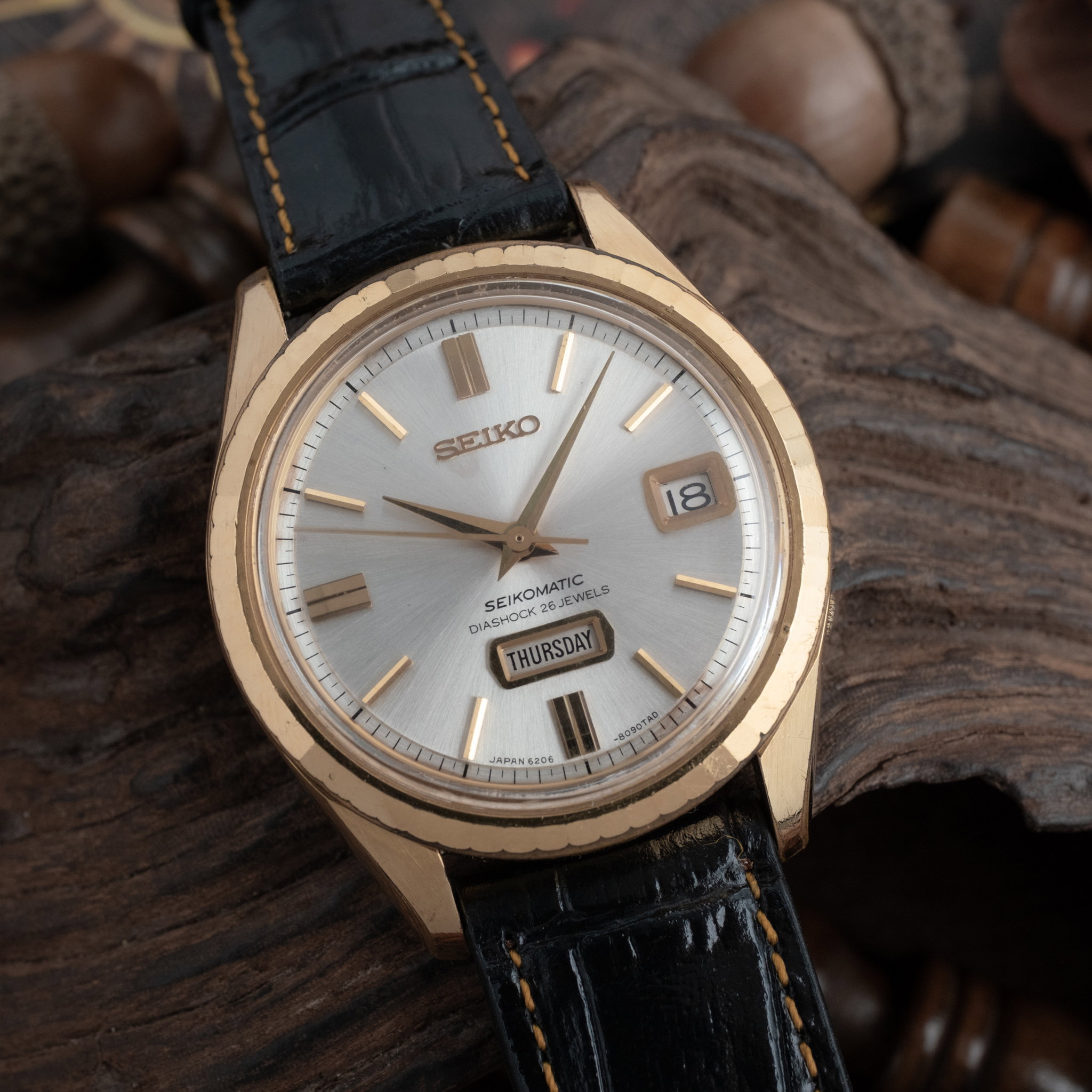
The Seiko Seikomatic 6206-8100 is a steel automatic from 1965-1966, best bought with an honest silver sunburst dial and correct split day-date layout.
We auction more than 100 vintage watches a week.
Get first access: new Seiko 6206-8100 drops and alerts before auctions end.
Browse 27 live Seiko auctionsThe Seikomatic 6206-8100 makes its case through an unusual split calendar: the day sits at 6 o'clock and the date at 3. That arrangement gives the silver sunburst dial a balance absent from a conventional paired day-date display, while the fluted bezel places the watch firmly in Seiko's mid-1960s dress-watch language.
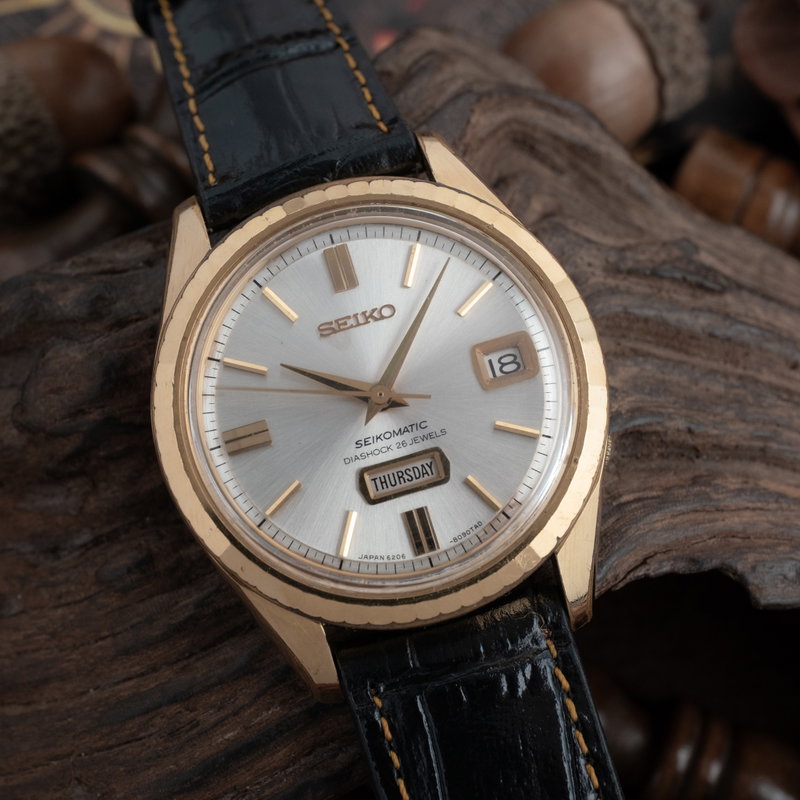
Known examples date from 1965 to 1966 and use a stainless-steel case with an automatic 6206B movement. The version to want keeps the silver sunburst finish, applied faceted markers, dauphine hands and framed calendar apertures intact. Between a bright redial and an aged original dial, take the original dial unless spotting or discoloration has overwhelmed the minute track.
Reference
6206-8100
Model
Seikomatic
Known production years
1965-1966
Case diameter
36-37 mm excluding the crown
| Case material | Stainless steel |
| Movement | Automatic Seiko 6206B |
| Jewel count | 26 jewels on a handled 6206B example |
| Dial layout | Silver sunburst, day at 6 o'clock and date at 3 o'clock |
On the wrist
Handled cases measure between 36 and 37 mm excluding the crown, so the 6206-8100 wears as a restrained dress watch rather than a small modern sports watch. The fluted bezel adds visual diameter, while the silver sunburst surface and applied markers keep the face readable without making it look broad.
The day aperture at 6 o'clock anchors the lower dial, with the framed date at 3 o'clock providing deliberate asymmetry. Red Sunday text and Kanji day printing are known configurations, but the available evidence does not establish every language option or whether all examples used identical calendar discs. Without documentation, it is safer not to speculate beyond the watch itself.
Where the value sits
The dial carries most of the value in a used Seiko Seikomatic 6206-8100. An intact silver sunburst finish, crisp printing and clean applied furniture matter more than superficial case shine, because spotting and discoloration cannot be removed without refinishing the dial. A redial costs more than ordinary case wear, even when the repaint looks cleaner in photographs.
The split day-date layout supplies the reference's clearest distinction, but correctness still outranks novelty. A watch with the 6206B movement, steel case and coherent calendar layout is preferable to one assembled from attractive period-correct parts that never shipped together. Such a watch is franken, and period-correct is not the same as original.
What goes wrong
Heavy dial spotting is the most serious observed fault, especially where discoloration gathers around the outer minute track. Printing can remain legible while the underlying silver finish has already deteriorated, so a clean-looking centre does not cancel damage at the perimeter. Dauphine hands can also oxidise, and mismatched brightness between hands, markers and dial deserves explanation rather than an automatic claim of originality.
Case wear is easier to accept than a refinished dial, but the 36-37 mm measurement should remain coherent with the known steel format. A replaced crown or crystal is possible because both are service parts, yet the available evidence does not establish the factory crown or crystal specification. The service history is unknown unless paperwork accompanies the individual watch, and a timegrapher reading alone does not prove a completed service.
Dating this watch
| Serial range / caliber | Year | Note |
|---|---|---|
| 6206 | 1963-1968 | caliber production window |
Dating data comes from our decoder tables; treat years as approximate.
What to check before you buy
- Dial and calendar layout: A coherent 6206-8100 has a silver sunburst dial with the day aperture at 6 o'clock and a framed date at 3 o'clock. Applied faceted markers and dauphine hands should agree in age and finish.
- Movement identification: The movement should be an automatic Seiko 6206B. The available evidence confirms a 26-jewel example, but movement identity alone cannot prove that the case, dial and movement originally shipped together.
- Case format and dimensions: Known steel cases measure 36-37 mm excluding the crown and use a fluted bezel. A materially different case format falls outside the handled evidence and requires more support than a period-correct appearance.
- Redial and franken tells: Treat lost sunburst texture, altered calendar framing or printing that conflicts with the aged dial surface as redial warnings. Mismatched dial, case and 6206B components can indicate a franken or married watch.
- Crown, crystal and caseback limits: The available examples do not establish a definitive factory crown, crystal or caseback specification. These parts should not be certified as original from this evidence, and crown or crystal replacement alone is not proof of a franken watch.
Other 6206-8100 examples we auctioned
8 Seiko 6206-8100 auctioned
More Seiko references
Related pages
Frequently asked questions
Ready to hunt for your own?
More than 100 vintage watches go under the hammer every week.