Seiko 6206-8990 Seikomatic Weekdater Collector's Guide
The Seiko 6206-8990 is a 1964-1965 automatic Weekdater whose value rests mainly on its silver sunburst dial, coherent calendar layout and case condition.
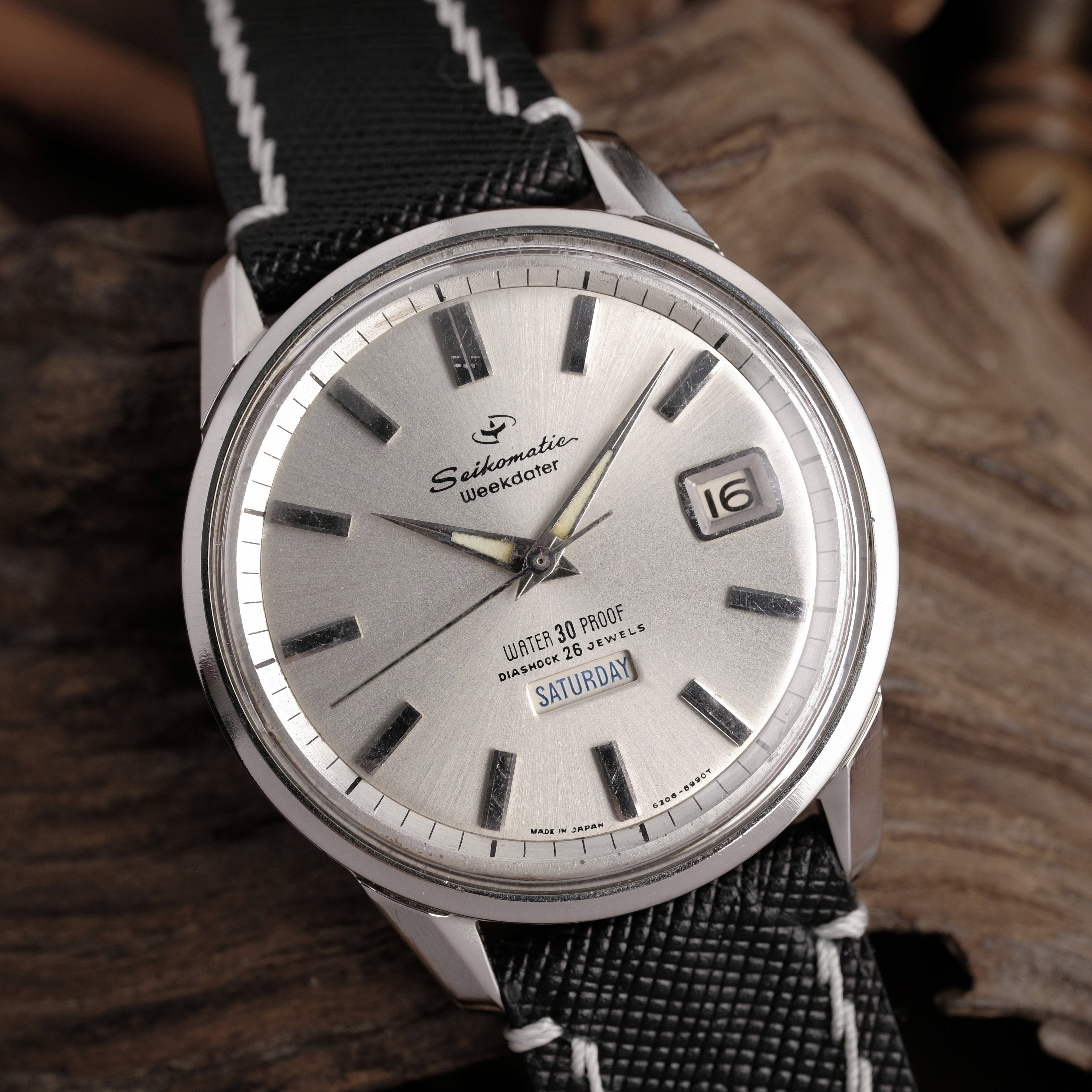
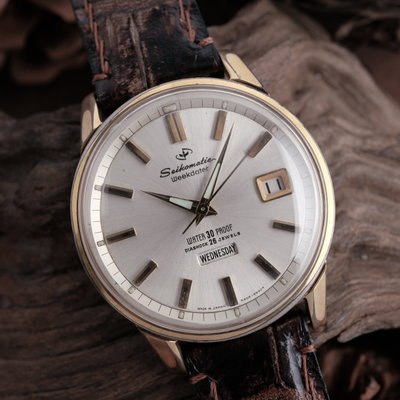
The Seikomatic Weekdater 6206-8990 separates its calendar displays, placing the full day at six o'clock and keeping the silver sunburst dial balanced. Built in 1964-1965 with the automatic caliber 6206A, it belongs to a narrow period when a practical calendar watch could still pass easily as formal wear. Applied faceted indices give the dial enough structure without competing with the day and date.
The version to want is the steel case with the cleanest credible dial and the strongest surviving case lines. Gold-plated EGP examples have their own period character, but exposed base metal at the lugs cannot be corrected by routine servicing. Between a sharper steel watch with light dial spotting and a plated watch with worn-through edges, the steel example is the safer purchase.
Reference
6206-8990
Model
Seikomatic Weekdater
Known production years
1964-1965
Movement
Automatic Seiko caliber 6206A
| Jewel count | 26 jewels |
| Case size | 36-37 mm excluding the crown |
| Case materials | Stainless steel or gold-plated EGP over stainless steel |
| Dial | Silver sunburst with applied faceted indices |
| Calendar layout | Separate day and date displays, with the day at six o'clock |
The model landscape
Reference 6206-8990 occurs in stainless steel and in gold-plated EGP form, paired with silver sunburst dials and applied faceted indices. Case measurements run from 36 mm to 37 mm excluding the crown, a small difference that changes the balance more than the numbers suggest. The steel version reads cleaner and more versatile; the gold-tone version leans more clearly toward a mid-century dress watch.
Value sits first in the dial, then in the case, and only after that in replaceable mechanical work. A lightly spotted factory dial is preferable to a cleaner redial because refinishing removes the surface and printing that define this reference. Sharp lug edges command a premium over rounded cases, while intact gold plating matters because wear-through is permanent. The automatic 6206A must also belong coherently with the case and dial rather than forming a franken or married watch.
On the wrist
At 36-37 mm excluding the crown, the 6206-8990 has more wrist presence than many formal watches from the same period without becoming broad or heavy-looking. The day aperture at six o'clock anchors the lower dial, while the separate date keeps the display readable. Applied faceted indices catch light against the silver sunburst surface, so the watch remains legible even when the dial has developed mild spotting.
The steel case works with everyday clothing and still slips visually into formal use. Gold-plated EGP examples make a stronger period statement, but plating condition becomes visible whenever the wrist turns. No thickness measurement is established here, so cuff clearance should not be claimed from the reference alone. The known measurements establish diameter, not the complete wearing profile.
What goes wrong
Dial damage is the most expensive fault. Silver sunburst surfaces can develop spotting, and refinishing can erase the original texture or leave calendar printing that lacks the crispness of the surrounding typography. A service dial is different from a redial because it is a genuine factory replacement, but it still changes what you are buying. The distinction should be stated rather than hidden behind a blanket claim of originality.
Gold plating wears first on exposed edges and around the lugs, revealing the metal beneath. Steel and plated cases also lose definition when polishing softens the lug edges, and no service can restore removed metal honestly. Calendar faults matter as well: the full day at six and the separate date must advance and align correctly, because a display sitting high or low signals work beyond ordinary timekeeping adjustment.
Replacement crowns, mismatched hands and swapped movements can turn an otherwise convincing watch into a franken or married example. The exact factory crown and hand variants are not established by the available evidence, so certainty on those parts would be speculation. The movement should be marked caliber 6206A with 26 jewels. Service history is unknown unless paperwork accompanies the individual watch, and cosmetic condition cannot establish recent mechanical work.
Dating this watch
| Serial range / caliber | Year | Note |
|---|---|---|
| 6206 | 1963-1968 | caliber production window |
Dating data comes from our decoder tables; treat years as approximate.
What to check before you buy
- Dial configuration and printing: A known 6206-8990 dial is silver sunburst with applied faceted indices and the full day at six o'clock. Flat refinishing, lost sunburst texture or calendar text unlike the surrounding print supports a redial diagnosis.
- Movement identity: The movement should carry the caliber 6206A identity and a 26-jewel specification. Another caliber is not a harmless service substitution and can indicate a franken watch or a movement married to the case.
- Case material and wear: The reference is known in stainless steel and gold-plated EGP over stainless steel. On plated examples, exposed metal at lug edges is wear-through, while rounded edges on either case type indicate material removed by polishing.
- Caseback evidence: A dolphin emblem is documented on a 1964 steel example, but the evidence does not establish one universal caseback state for every watch. Treat the emblem as supporting evidence, not authentication by itself.
- Hands and crown: The available evidence does not establish a single factory hand geometry or crown specification. Matching colour and ageing can support coherence, but neither part should be declared original from shape alone.
- Movement finishing and service history: The caliber and jewel count are established, but a unique finishing pattern and service history are not. Do not convert clean movement surfaces or fresh tool marks into a claim of recent service without documentation.
Other 6206-8990 examples we auctioned
Seiko · Seikomatic Weekdater · 6206-8990 · 1964
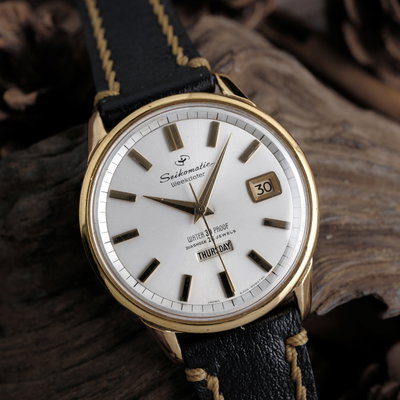
Seiko · Seikomatic Weekdater · 6206-8990 · 1965
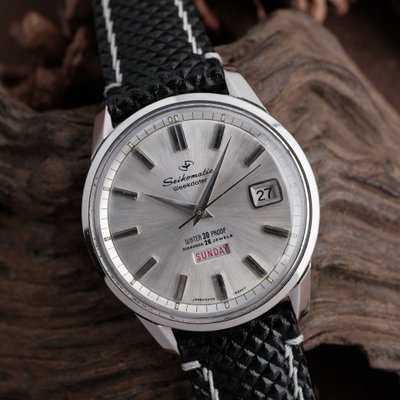
Seiko · Seikomatic Weekdater · 6206-8990 · 1964
Seiko · Seikomatic Weekdater · 6206-8990 · 1964
More Seiko references
Related pages
Frequently asked questions
Ready to hunt for your own?
More than 100 vintage watches go under the hammer every week.