Seiko Seikomatic 6206-8080: what to buy and what to avoid
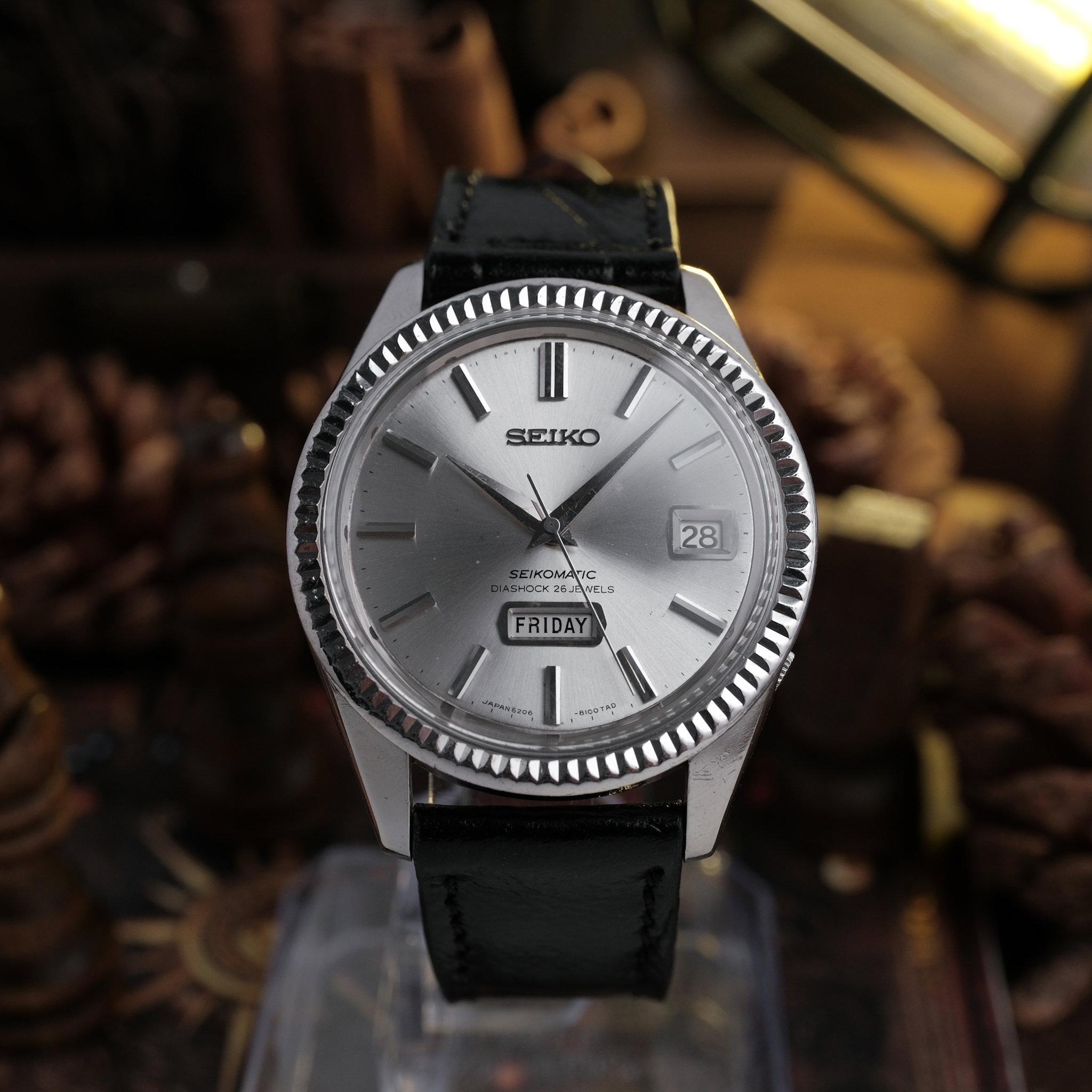
The Seiko Seikomatic 6206-8080 is a 37 mm automatic dress watch whose strongest buy is the cleanest silver sunburst dial in the least worn case.
We auction more than 100 vintage watches a week.
Get first access: new Seiko 6206-8080 drops and alerts before auctions end.
Browse 27 live Seiko auctionsThe Seikomatic 6206-8080 puts the day at 6 o'clock and the date at 3, a calendar arrangement that immediately separates it from more conventional dress watches. Made across 1965-1966, it uses the automatic 6206 family and combines a silver sunburst dial with applied faceted indices and a fluted bezel. The reference belongs to Seiko's more elaborate 1960s automatic dress-watch range rather than its later sports-watch tradition.
At 37 mm excluding the crown, the watch is broad for its period without relying on a sports case or external timing bezel. Stainless-steel and gold-plated versions are known, as are English and Kanji day displays. The dial should decide the purchase: widespread spotting or a redial does more lasting harm than a scratched crystal, while worn gold plating and rounded case edges cannot be reversed by routine service.
Reference
6206-8080
Model
Seikomatic
Known production years
1965-1966
Case diameter
37 mm excluding the crown
| Case materials | Stainless steel or gold-plated |
| Movement | Automatic caliber 6206A or 6206B |
| Jewel count | 26 jewels |
| Dial | Silver sunburst with applied faceted indices |
| Calendar layout | Day at 6 o'clock and date at 3 o'clock |
| Known day displays | English or Kanji |
| Bezel | Fluted |
The model landscape
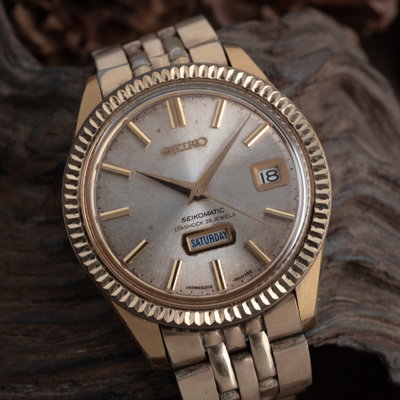
The clearest split is case material. Stainless steel tolerates regular wear without exposing a different base colour, while the gold-plated case can lose plating around the lugs and case edges. Both use the same 37 mm format, but the gold-tone indices and dauphine hands make the plated version visually warmer. Between a clean steel example and a plated one with wear-through, take the steel watch.
Movement variation matters less than dial quality. The reference is found with automatic caliber 6206A or 6206B, both specified with 26 jewels, and the broader 6206 caliber window runs from 1963 to 1968. The reference itself is established here only across 1965-1966. Without dated documentation, the movement suffix should not be used alone to assign a narrower year.
English and Kanji day displays both occur at 6 o'clock, with the date remaining at 3. Neither language display justifies overlooking a damaged dial. A clean Kanji example may attract a premium from buyers who want the Japanese display, but the reference lacks a supplied production breakdown, so no defensible rarity claim can be made for either version.
Where the value sits
Most of the spread sits in the silver sunburst dial. Crisp Seikomatic printing, an undisturbed sunburst surface and clean calendar apertures outrank a polished case with brighter metal. Even spotting can be acceptable when it is uniform and clearly disclosed, but refinishing removes the surface collectors are paying for. A service dial is a genuine factory replacement, not a redial, though the available evidence does not establish a reliable service-dial signature for this reference.
Case material creates the next division. Stainless steel avoids the irreversible wear-through seen on gold-plated examples, while a plated watch needs intact coverage at the lug ends and perimeter to compete. The movement suffix sits lower in the hierarchy than dial and case state. A 6206A should not command an automatic premium over a 6206B, or vice versa, without a documented distinction beyond the suffix.
What goes wrong
Gold plating can wear through at the lugs and case edges, and no movement service repairs that loss. Polishing can also soften the case geometry and blur the transitions around the lugs. On the dial, scattered spotting, oxidation on the dauphine hands and damaged printing are separate faults, not a single blanket description of patina. The crystal is replaceable, so scratches there carry less weight than damage beneath it.
Calendar function and movement state need separate judgments. The 6206A and 6206B are automatic movements, but a running watch does not establish service history or correct calendar operation. Unless receipts accompany an individual example, the service history is unknown. The day at 6 and date at 3 should sit squarely within their frames, while a mismatched caliber, dial layout or case material marking raises the risk of a franken watch.
Dating this watch
| Serial range / caliber | Year | Note |
|---|---|---|
| 6206 | 1963-1968 | caliber production window |
Dating data comes from our decoder tables; treat years as approximate.
What to check before you buy
- Dial and calendar layout: A reference-correct configuration has a silver sunburst dial with applied faceted indices, the day aperture at 6 o'clock and the date at 3. A different calendar arrangement is inconsistent with the handled examples.
- Hands and dial furniture: Known examples use dauphine hands with applied indices, in steel-tone or gold-tone treatment matching the watch's execution. Mismatched hand colour, shape or finish can indicate replacement parts or a franken assembly.
- Movement caliber: The movement should be an automatic 6206A or 6206B with 26 jewels. Both suffixes occur in the reference, but a different caliber conflicts with the known specification and requires explanation that the watch alone cannot provide.
- Case material evidence: Stainless-steel and gold-plated cases are both known. On a plated example, an SGP marking is consistent with one handled watch, while wear-through at the lugs or edges must be described as plating loss rather than patina.
- Redial and service-dial risk: The silver sunburst surface and Seikomatic printing should agree with the calendar frames and applied furniture. A service dial is a genuine replacement, but no conclusive service-dial markers are established here, so certainty beyond visible construction would be speculation.
- Franken warning signs: Reference, case material, dial furniture, calendar positions and movement must form a coherent 6206-8080 configuration. Genuine Seiko components assembled from watches that never shipped together still make the result a franken watch.
Other 6206-8080 examples we auctioned
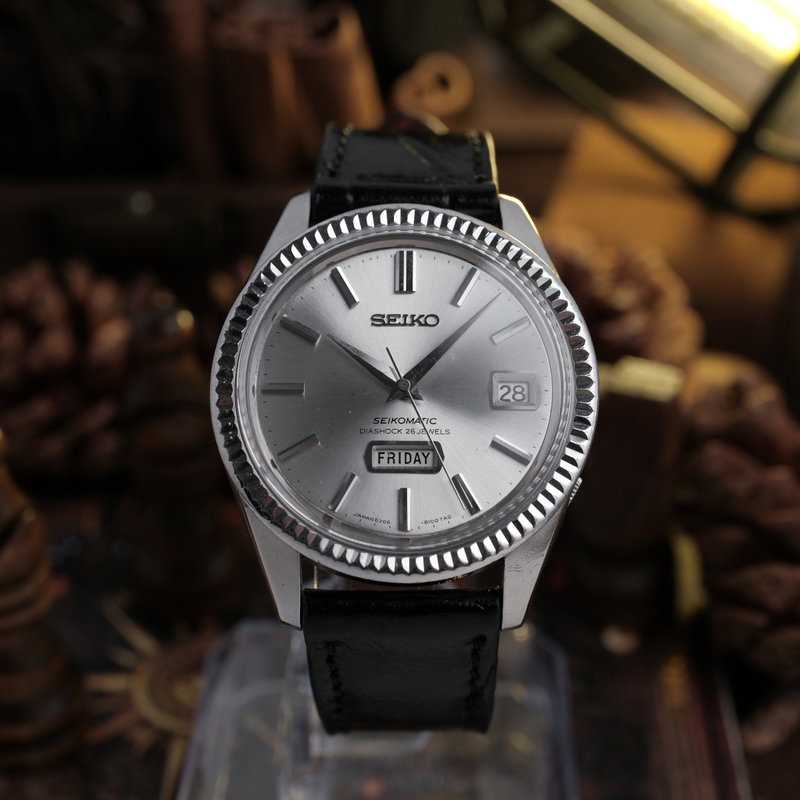
8 Seiko 6206-8080 auctioned

More Seiko references
Related pages
Frequently asked questions
Ready to hunt for your own?
More than 100 vintage watches go under the hammer every week.