Seiko Lord Marvel 5740-1990: What to Know Before Buying
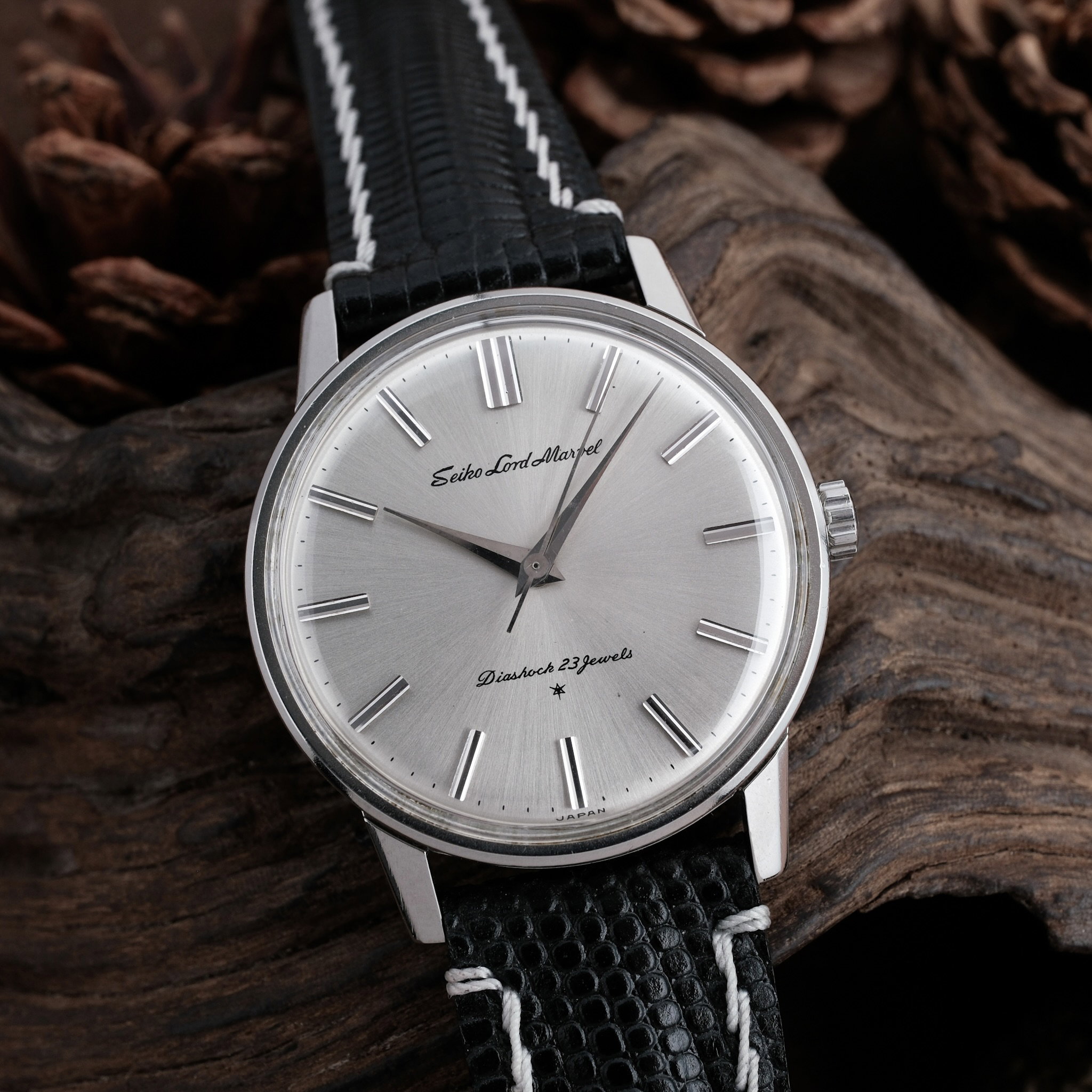
The Seiko Lord Marvel 5740-1990 is a manual-wind steel dress watch whose value rests chiefly on its silver sunburst dial, case definition and correct caliber 5740A.
We auction more than 100 vintage watches a week.
Get first access: new Seiko 5740-1990 drops and alerts before auctions end.
Browse 27 live Seiko auctionsThe Lord Marvel 5740-1990 is a restrained manual-wind dress watch from 1964-1966, with a silver sunburst dial, applied faceted indices and a stainless steel case. Its appeal is concentrated rather than complicated: the dial does the visual work, while caliber 5740A keeps the architecture slim and the daily ritual mechanical.
Buy the dial first. A clean sunburst finish with crisp printing matters more than a polished case or an unsupported claim about servicing, because a redial removes the surface that gives this reference most of its character. Case definition, a signed crown and clear caseback engravings then separate the stronger examples from merely presentable used Seiko Lord Marvel watches.
Reference
5740-1990
Model
Lord Marvel
Known production years
1964-1966
Movement
Manual-wind Seiko caliber 5740A
| Jewel count | 23 jewels |
| Case material | Stainless steel |
| Case size | 35-36 mm excluding the crown |
| Dial | Silver sunburst with applied faceted indices |
| Hands | Dauphine-style |
The model landscape
The 5740-1990 stayed visually consistent across the 1964-1966 examples we have handled: stainless steel, silver sunburst dial, applied faceted indices, dauphine-style hands and manual-wind caliber 5740A. Some dials carry the SD star above six, while the Lord Marvel signature sits at twelve. The star should be treated as a dial configuration to authenticate, not as permission to ignore refinishing elsewhere.
Case measurements fall between 35 mm and 36 mm, excluding the crown. That difference is small on paper, but the larger case gives the dial slightly more presence while retaining dress-watch proportions. Between a sharper 35 mm case with an honest dial and a softened 36 mm example, take the smaller watch. The market premium sits with dial integrity, defined case edges and coherent parts rather than the extra millimetre.
On the wrist
At 35-36 mm without the crown, the 5740-1990 wears as a compact dress watch rather than a reduced modern sports watch. The broad silver sunburst surface and reflective baton indices make the dial read larger in bright light, while the dauphine-style hands preserve clear separation from the hour furniture. Manual winding also keeps ownership deliberate: this is a watch you wind before wearing, not an automatic you leave running between outings.
The stainless steel case makes the Lord Marvel easier to wear regularly than a plated dress watch, since there is no surface layer to wear through at the lugs. Its silver dial suits tailoring but does not depend on it. If you expect contemporary wrist presence, the dimensions may feel restrained; if you want a mid-1960s Seiko that slips into a rotation without dominating it, the proportions are the point.
What goes wrong
A refinished dial is the costliest fault because the silver sunburst finish, printed script and applied furniture carry most of the reference's identity. Uneven brushing, soft or incorrectly formed text, and misplaced dial furniture indicate intervention rather than honest ageing. A genuine service dial is different from a redial, but neither should be described as the watch's original dial without evidence.
Over-polishing softens the case edges, while repeated opening can weaken the clarity of the caseback engravings. Replacement crowns also occur, so a signed crown is worth confirming against the rest of the watch rather than treating it as proof by itself. Hands can develop oxidation or be replaced, and a bright relume would be inconsistent with untouched surrounding surfaces. The service history is unknown unless documentation establishes it, and rate alone does not prove a full service.
A franken 5740-1990 may combine individually genuine Seiko parts that never shipped together; it is not the same thing as a fake. The practical test is coherence across dial configuration, hands, crown, caseback and caliber 5740A. No single signature settles the question. Buy the example whose dial survives scrutiny and whose case still has defined geometry, rather than the shinier watch with unsupported originality claims.
What to check before you buy
- Dial surface and printing: The silver dial should retain a coherent radial sunburst finish with crisp Lord Marvel script and cleanly positioned applied indices. Uneven brushing or soft, malformed printing points to a redial rather than normal ageing.
- Dial configuration: Some 5740-1990 examples carry an SD star above six. The emblem must sit coherently with the surrounding print and furniture, but its presence alone does not authenticate the dial or establish that every example should have one.
- Hands and indices: Dauphine-style hands should visually agree with the silver-tone, faceted applied indices. Oxidation, mismatched surface colour or conspicuously newer hands can indicate replacement parts or a franken assembly.
- Case and caseback: The stainless steel case should retain defined edges, while the caseback engraving should remain legible. Soft case geometry and weak engraving indicate polishing or repeated handling and reduce the premium for preservation.
- Crown and movement: A signed crown supports correctness, but the movement must also be manual-wind caliber 5740A with 23 jewels. A correct crown cannot compensate for a mismatched movement, and a correct movement alone does not prove the watch is not married.
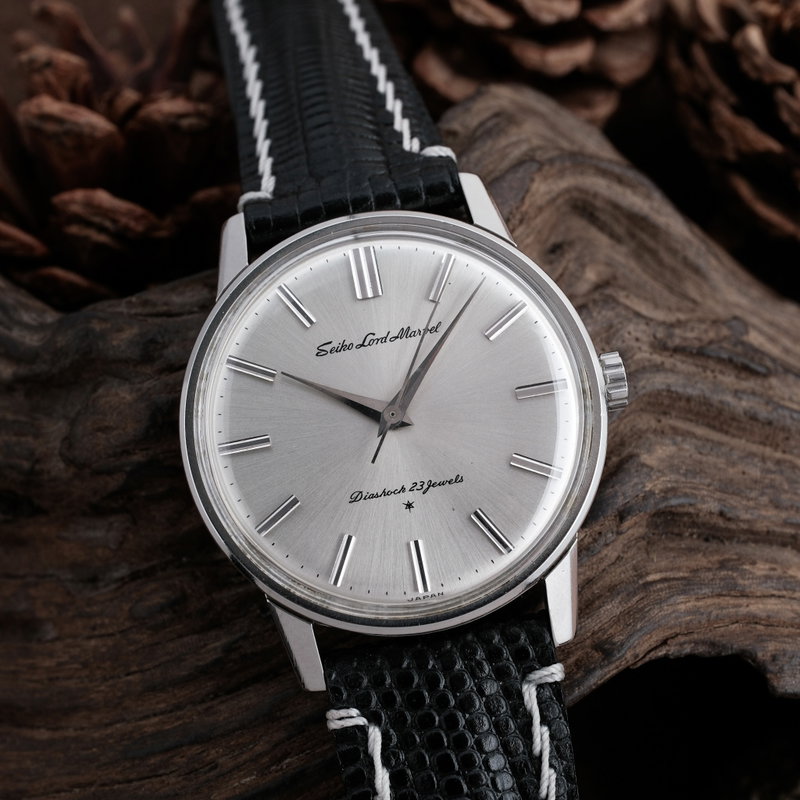
Other 5740-1990 examples we auctioned
More Seiko references
Related pages
Frequently asked questions
Ready to hunt for your own?
More than 100 vintage watches go under the hammer every week.