Grand Seiko 5645-7010: A Collector's Buying Guide
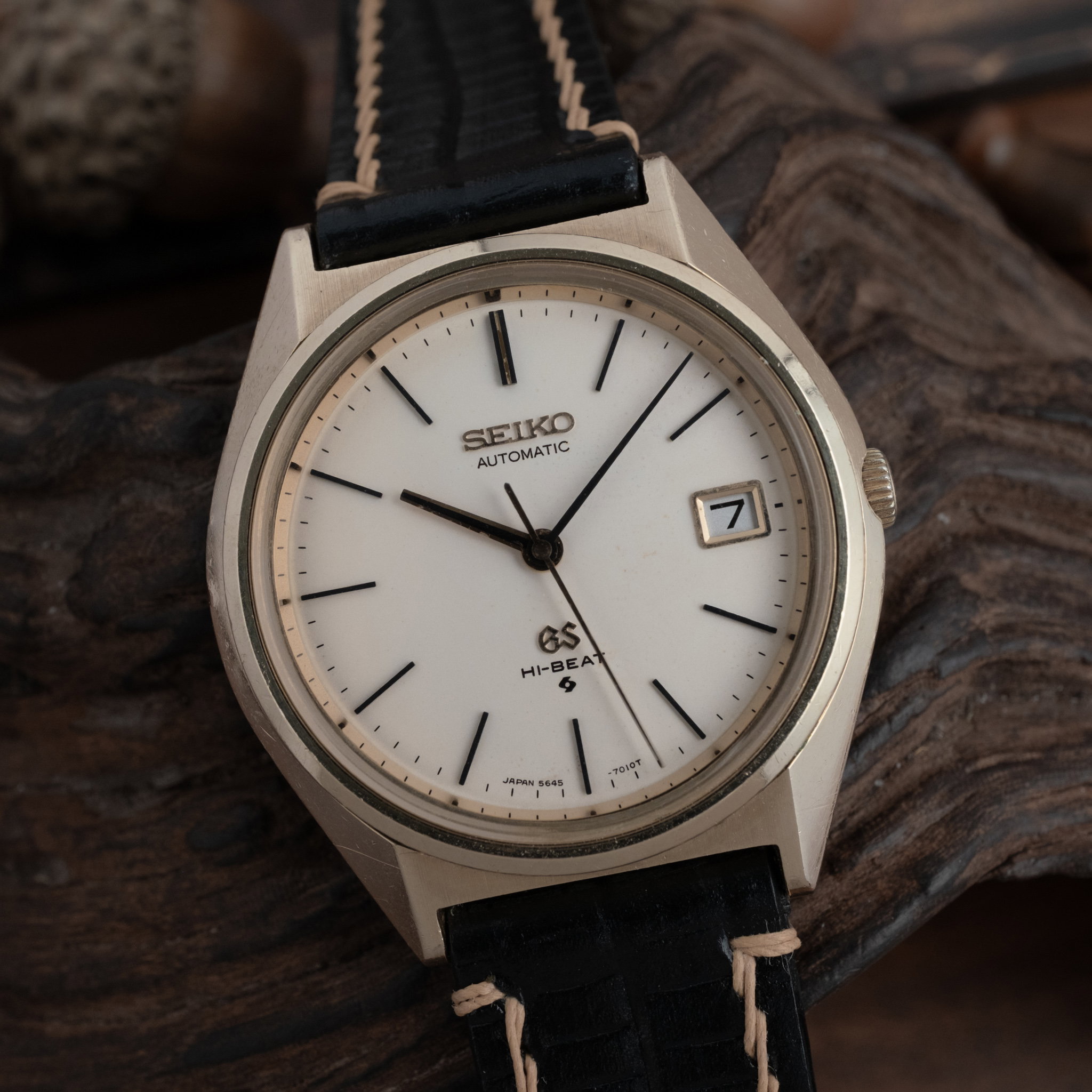
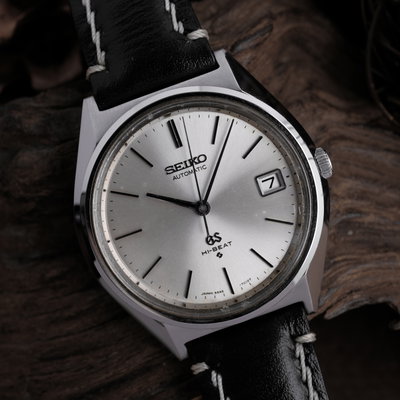
The Grand Seiko 5645-7010 is a compact 1971 automatic best bought in steel, with a sharp faceted case and an honest silver sunburst dial.
We auction more than 100 vintage watches a week.
Get first access: new Seiko 5645-7010 drops and alerts before auctions end.
Browse 27 live Seiko auctionsThe Grand Seiko 5645-7010 makes most sense as a compact, formal automatic from 1971, not as a modern sports watch in miniature. Its faceted case, applied baton indices and dauphine hands rely on clean geometry rather than bulk. Steel examples with a silver sunburst dial give the clearest expression of that design and avoid the irreversible wear that can expose the base metal on a cap gold case.
At 36 mm excluding the crown, the watch wears with more presence than its diameter suggests because the dial is open and the indices are long. Caliber 5645A is automatic and carries the technical interest, but the dial and case determine the harder part of the buying decision. A refinished dial costs more than ordinary movement work, while rounded facets cannot be restored without removing still more metal.
Reference
5645-7010
Model
Grand Seiko
Production year
1971
Case diameter
36 mm excluding the crown
| Movement | Automatic caliber 5645A |
| Jewels | 25 |
| Known case materials | Stainless steel; cap gold with stainless steel caseback |
| Observed dial finishes | Silver sunburst; white and cream |
| Hour markers | Applied multi-faceted baton indices with black central inserts |
| Hands | Dauphine hands with black central stripes |
The model landscape
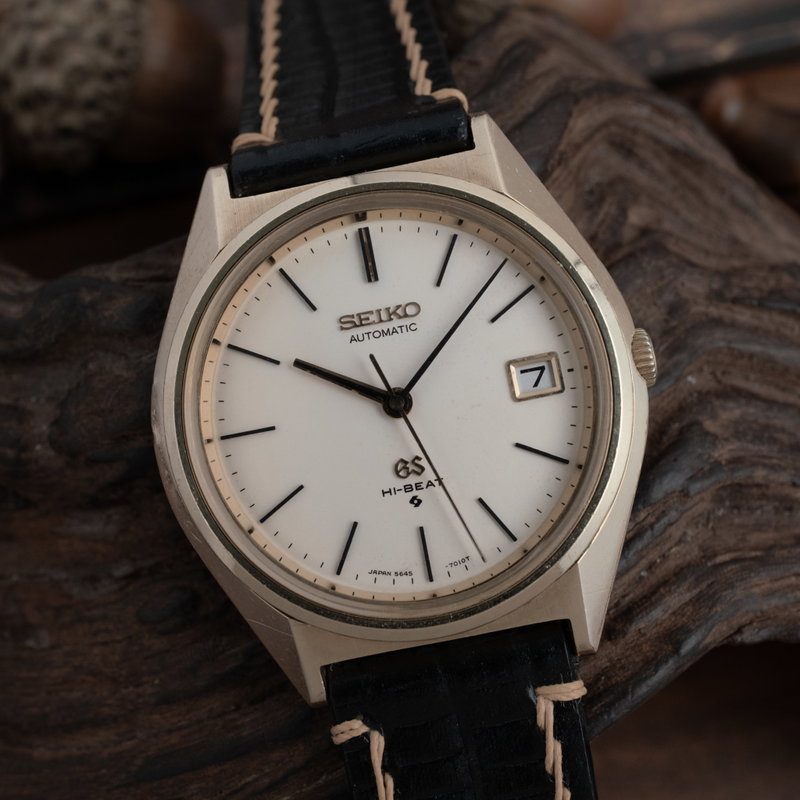
Reference 5645-7010 exists in stainless steel and in cap gold with a stainless steel caseback. The steel version suits frequent wear because scratches can remain honest surface wear without revealing another metal beneath. The cap gold version has a warmer white or cream dial and can retain a gold GS medallion on the back, but worn plating at the lug edges permanently changes the case. Steel is the safer recommendation against cap gold at equal dial quality.
Dial character separates the versions as clearly as case material. The silver sunburst surface changes under direct light, while applied multi-faceted baton indices carry black central inserts and the dauphine hands use matching dark stripes. White and cream dials look quieter, but scattered micro-spotting is easier to see against that surface. The better watch is the one with intact factory printing and coherent ageing, not the brighter dial produced by refinishing.
On the wrist
The 36 mm case sits as a compact dress watch, yet the long applied markers and broad dauphine hands keep the display legible. Black inserts through the indices and dark hand stripes add contrast when polished surfaces catch the light. The proportions work under a cuff and suit a strap better than a bulky modern bracelet. Anyone expecting the stance of a current Grand Seiko should treat the smaller scale as the point, not a compromise.
What goes wrong
Cap gold wear is the costliest case fault because exposed base metal at the lug edges cannot be corrected by routine servicing. Over-polishing is next: it softens the faceted case and turns deliberate planes into rounded transitions. The gold GS medallion also deserves attention, since abrasion removes relief that cannot be recovered without replacement. Surface scratches matter less when the geometry remains readable.
The dial is the largest value risk. Silver sunburst surfaces can lose their radial finish in a redial, while white and cream examples may develop scattered micro-spotting that must be described rather than called patina. Printing should remain sharp, and applied logos and indices should sit cleanly without adhesive residue. Hands with black central stripes are period-correct for watches handled in this reference, but period-correct is not proof that every component left the factory together.
Caliber 5645A should be judged on measured performance and service evidence rather than claims such as recently serviced. The movement is an automatic with 25 jewels, but no service history can be inferred from a clean exterior or a single timing result. Without documentation, the service history is unknown. Budgeting for inspection is more rational than paying extra for an unsupported service claim.
What to check before you buy
- Dial print and surface: The silver dial should retain a radial sunburst finish, while white and cream dials can show bounded micro-spotting. Flat paint, blurred text or lost radial brushing points to a redial.
- Hands and hour markers: Applied multi-faceted baton indices use black central inserts, and the dauphine hands carry matching dark stripes. Correct style is period-correct evidence, not proof of originality.
- Case geometry and material: The case depends on distinct faceted planes. Rounded transitions indicate polishing, while a cap gold example must be checked at the lug edges for plating worn through to the base metal.
- Caseback medallion: A cap gold example can carry a gold GS medallion on its stainless steel caseback. Loss of relief indicates abrasion, while an inconsistent caseback raises the possibility of a franken or married watch.
- Movement: The movement should be signed caliber 5645A and specified with 25 jewels. This must agree with the case and dial, but a correct caliber alone does not establish that all parts shipped together.
Other 5645-7010 examples we auctioned
More Seiko references
Related pages
Frequently asked questions
Ready to hunt for your own?
More than 100 vintage watches go under the hammer every week.