Seiko 5626-7110: What to Know Before You Buy
The Seiko 5626-7110 to buy has a clean silver sunburst dial, crisp faceted steel case, intact gold KS medallion and a properly identified caliber 5626.
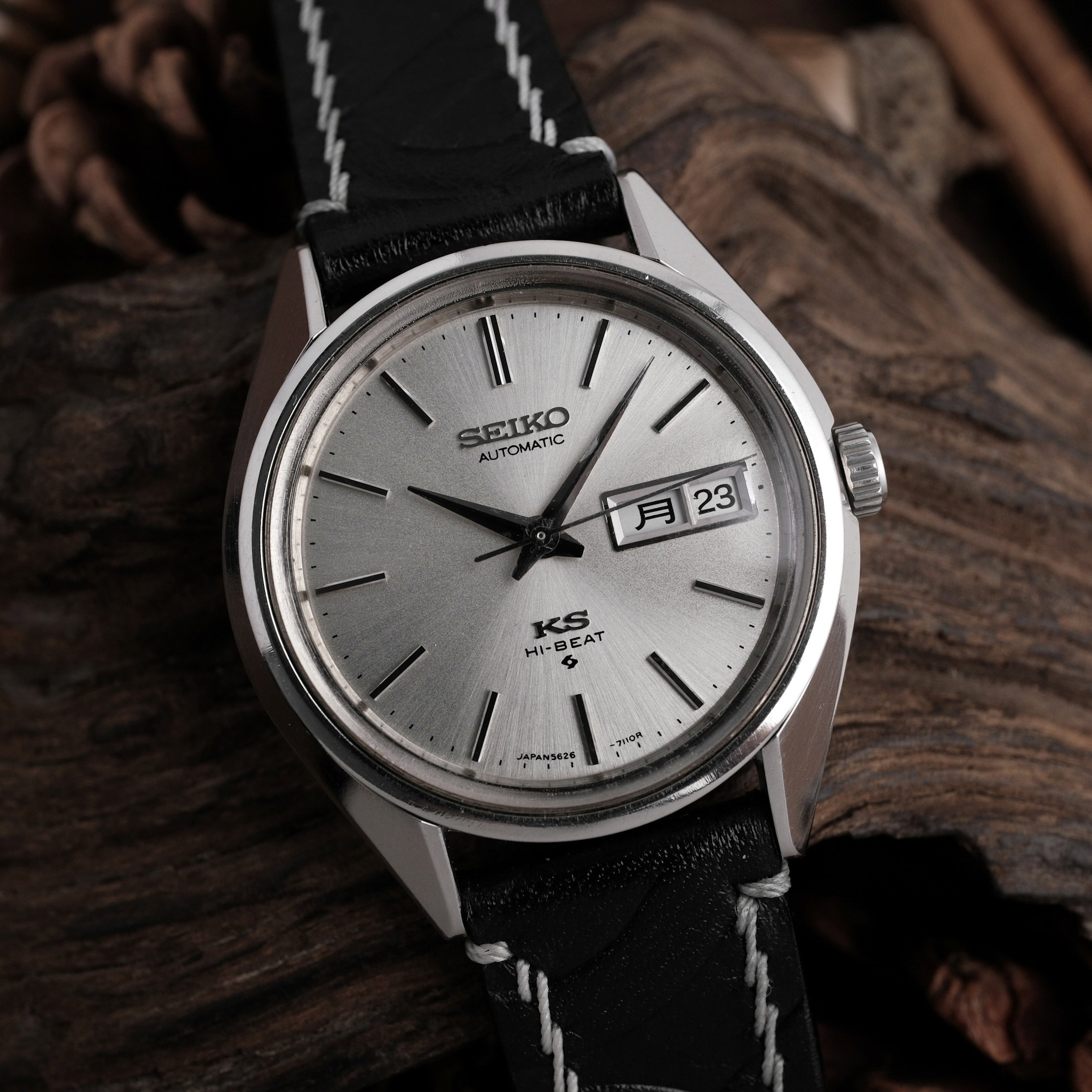
The King Seiko Hi-Beat 5626-7110 is a compact automatic dress watch built around caliber 5626 and a sharply faceted stainless steel case. Known examples run from 1969 through 1972, placing the reference firmly in Seiko's early 1970s design language. Its appeal depends less on complication than on how the silver sunburst dial, angular case and gold KS medallion have survived together.
The version to want is straightforward: a clean silver sunburst dial, crisp case planes and an intact medallion. The 36 mm diameter wears with more presence than the number suggests because the faceted lugs and broad dial opening create visual width. Between a polished example with softened geometry and a sharper watch with ordinary handling marks, take the sharper case. Metal removed from those facets cannot be returned.
Reference
5626-7110
Model
King Seiko Hi-Beat
Known production years
1969-1972
Movement
Automatic caliber 5626
| Case diameter | 36 mm excluding the crown |
| Case material | Stainless steel |
| Dial | Silver sunburst with applied faceted indices |
| Caseback detail | Gold KS medallion |
The model landscape
The 5626-7110 remained consistent across the examples handled from 1969 to 1972: stainless steel, a silver sunburst dial and automatic caliber 5626. Applied faceted baton indices with black central inserts sit alongside polished dauphine hands, applied Seiko lettering and the KS emblem. There is no evidence here for a separate dial or case variant, so condition creates the meaningful hierarchy within the reference.
The caliber 5626 production window extends from 1968 to 1975, but that window dates the movement family rather than decoding an individual watch. A movement from that span does not by itself prove that the case, dial and movement left the factory together. The reference's own known range is narrower, from 1969 through 1972, and any stronger dating claim needs evidence not available here.
On the wrist
At 36 mm excluding the crown, the 5626-7110 sits as a restrained dress watch rather than a modern sports watch. The silver sunburst surface changes with the light, while the black inserts in the applied indices give the hands and markers enough contrast for quick reading. Its angular steel case carries the visual weight, so soft polishing changes the wrist presence more than a shallow scratch does.
The automatic caliber 5626 makes the watch easier to rotate into regular use than a hand-wound dress piece, but age still matters more than the winding system. One handled example recorded a rate of -64 seconds per day, which is enough to demand attention rather than optimistic language. The service history is unknown unless supported by documentation, and a timegrapher result describes current performance, not future reliability.
What goes wrong
The most expensive fault is a refinished dial, because the silver sunburst finish, applied furniture and printed details carry much of the reference's value. Spotting or staining is damage, not patina, while a service dial would be a genuine factory replacement rather than a redial. No service can recreate factory dial work with certainty, so an honest marked dial usually makes a stronger purchase than a cosmetically clean refinish.
Case polishing rounds the faceted edges first, medallion wear removes a defining caseback detail, and poor mechanical rate can turn a seemingly clean used Seiko 5626-7110 into an immediate service project. Fine swirls are less consequential than mushy lugs or an indistinct gold KS medallion. The best balance is a clean dial, legible caseback details and sharp surviving case planes, with mechanical condition assessed separately from appearance.
Dating this watch
| Serial range / caliber | Year | Note |
|---|---|---|
| 5626 | 1968-1975 | caliber production window |
Dating data comes from our decoder tables; treat years as approximate.
What to check before you buy
- Dial print and furniture: The dial should be silver sunburst with applied faceted baton indices, black central inserts, applied Seiko lettering and a KS emblem. Flat paint, lost sunburst texture or disturbed printing supports a redial concern.
- Hands: Known examples use polished dauphine hands that agree with the angular applied indices. A different hand shape or visibly mismatched ageing does not prove replacement alone, but it requires the dial and movement to be assessed together.
- Case geometry: The stainless steel case measures 36 mm excluding the crown and depends on sharp faceted planes. Rounded transitions, soft lugs and a uniformly bright surface indicate polishing that has removed defining geometry.
- Caseback medallion: The caseback carries a gold KS medallion, and stronger examples retain clear medallion detail and legible surrounding engravings. Heavy smoothing or a missing medallion removes an important reference-specific confirmation point.
- Movement identity: The movement must be identified as automatic caliber 5626. A different caliber would not agree with the 5626-7110 specification and would make the watch franken or married rather than merely serviced.
- Crown limits: The evidence available here does not establish a factory crown profile for the 5626-7110. A crown should therefore not be certified as original from shape alone, and a replacement crown must not be used to validate the rest of the watch.
- Movement finishing limits: The evidence confirms caliber 5626 but does not establish decorative finishing details for authentication. Identification should rest on the caliber itself and agreement among movement, case, dial and the 1969-1972 reference range.
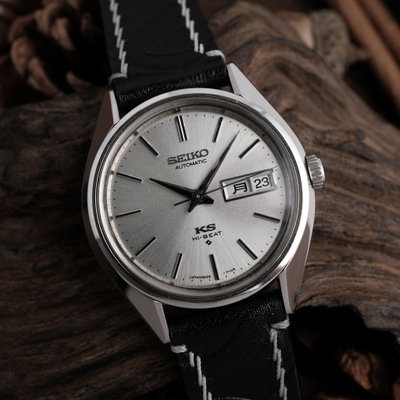
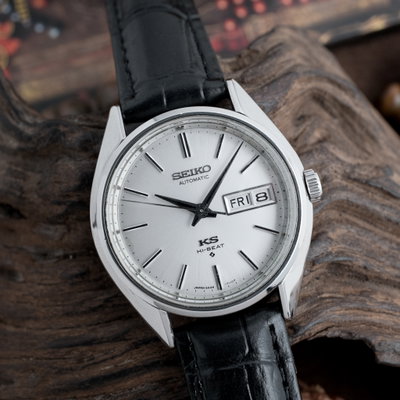
Other 5626-7110 examples we auctioned
More Seiko references
Related pages
Frequently asked questions
Ready to hunt for your own?
More than 100 vintage watches go under the hammer every week.