Seiko King Seiko 5626-7000 Reference Guide
The Seiko 5626-7000 to buy has a clean silver sunburst dial, a correct caliber 5626 and plating wear disclosed without euphemism.
Live now
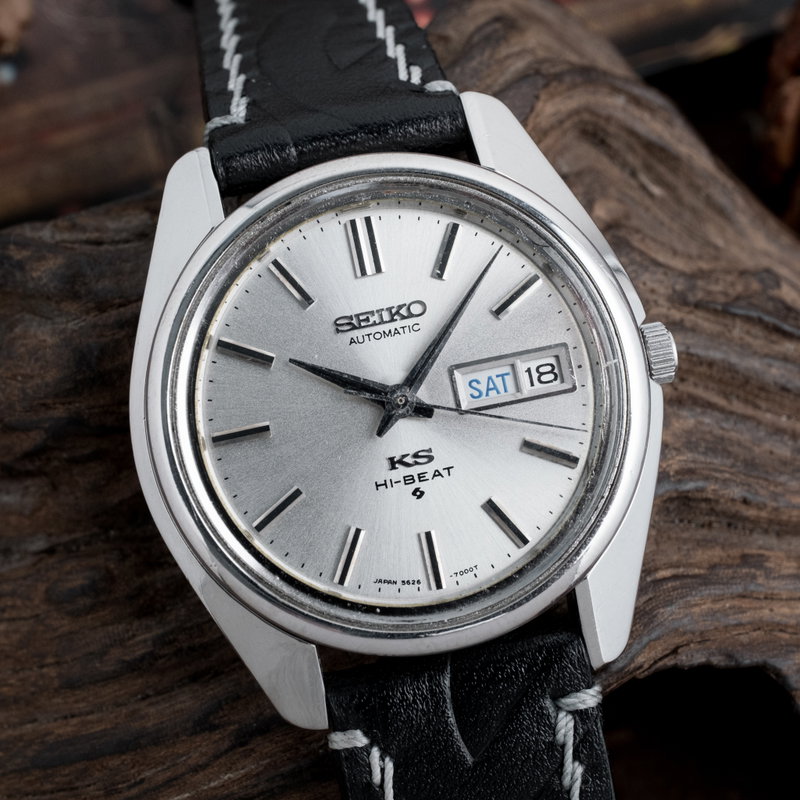
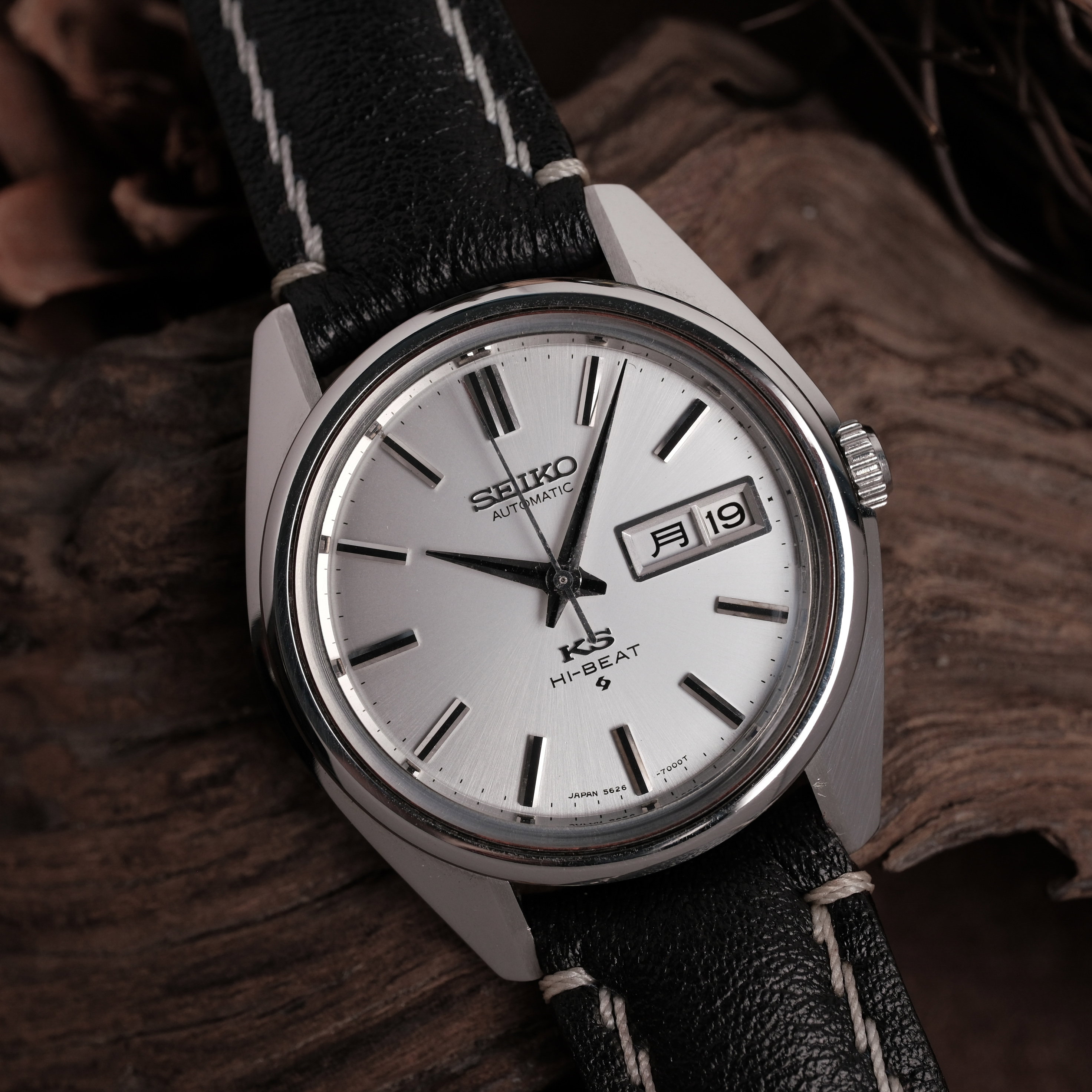
The King Seiko 5626-7000 is a 37 mm automatic Hi-Beat watch with a monocoque, gold-plated case and the caliber 5626. Examples handled from 1969 onward pair that architecture with a silver sunburst dial, giving the watch a formal appearance without making the case oversized.
The dial should decide the purchase. Plating wear is visible and irreversible, but a refinished silver sunburst dial can erase the surface and printing that carry much of a vintage Seiko King Seiko's value. Between a sharp dial with honest case wear and a brighter case with doubtful dial work, take the first watch.
Reference
5626-7000
Model
King Seiko
Known production years
1969-1978
Movement
Automatic caliber 5626 Hi-Beat
| Case size | 37 mm excluding the crown |
| Case material | Gold plated (SGP) |
| Case construction | Monocoque |
| Dial | Silver sunburst |
On the wrist
At 37 mm excluding the crown, the 5626-7000 has more presence than its formal dial suggests. The silver sunburst surface changes with direct light, while the gold-plated case pushes the watch toward tailoring rather than sportswear. Its exact thickness is not established by the watches described here, so cuff clearance should not be claimed from the reference alone.
The monocoque case gives the King Seiko Hi-Beat a compact, integrated profile. That construction also makes case condition unusually important: damage to the plated shell is part of the watch rather than a cosmetic issue a routine service can reverse.
Where the value sits
Value sits first in the dial, then in the case and its gold plating, and only after that in presentation language such as "serviced" or "near-NOS." Those labels do not establish what work was completed. Without an invoice or service record, the service history is unknown.
A correct caliber 5626 matters because a different movement would make the watch franken or married, depending on what had been combined. The original gold caseback medallion also contributes materially to the reference's identity. The market premium belongs with a clean sunburst dial and coherent parts, not with polish intended to make worn plating look newer.
What goes wrong
Plating wear is the first fault to price in. It can break through at exposed case edges, and no ordinary service puts the original plated surface back. Polishing creates a second permanent loss by softening the case geometry, while an incomplete or replaced caseback medallion removes a reference-specific detail.
The dial can be refinished, and that costs more than honest wear elsewhere when the silver sunburst surface or its printing has been altered. Movement swaps are another risk: the reference belongs with the automatic caliber 5626. Crown and hand geometry are not sufficiently established by the available evidence, so without documentation we prefer not to speculate about whether either component is original rather than merely period-correct.
Dating this watch
| Serial range / caliber | Year | Note |
|---|---|---|
| 5626 | 1968-1975 | caliber production window |
Dating data comes from our decoder tables; treat years as approximate.
What to check before you buy
- Dial and redial risk: Handled 5626-7000 examples include a silver sunburst dial. A flat or repainted surface, altered printing or inconsistent finish should be treated as a possible redial, not softened into "restored."
- Movement and franken risk: The reference belongs with the automatic caliber 5626 Hi-Beat. A different caliber is a direct warning that the watch may be franken or married, even when the external case looks convincing.
- Case and medallion: The documented configuration uses a 37 mm monocoque, gold-plated case with a gold caseback medallion. Plating loss and softened geometry must be disclosed, while a missing or replaced medallion reduces coherence.
- Hands and crown limits: The available evidence does not establish exact hand or crown geometry for the 5626-7000. Without documentation, neither component should be called original solely because it looks period-correct.
Other 5626-7000 examples we auctioned
10 Seiko 5626-7000 auctioned
We auction more than 100 vintage watches a week.
Get first access: new Seiko 5626-7000 drops and alerts before auctions end.
More Seiko references
Related pages
Frequently asked questions
Ready to hunt for your own?
More than 100 vintage watches go under the hammer every week.