Seiko 5626-5010 King Seiko Hi-Beat Reference Guide
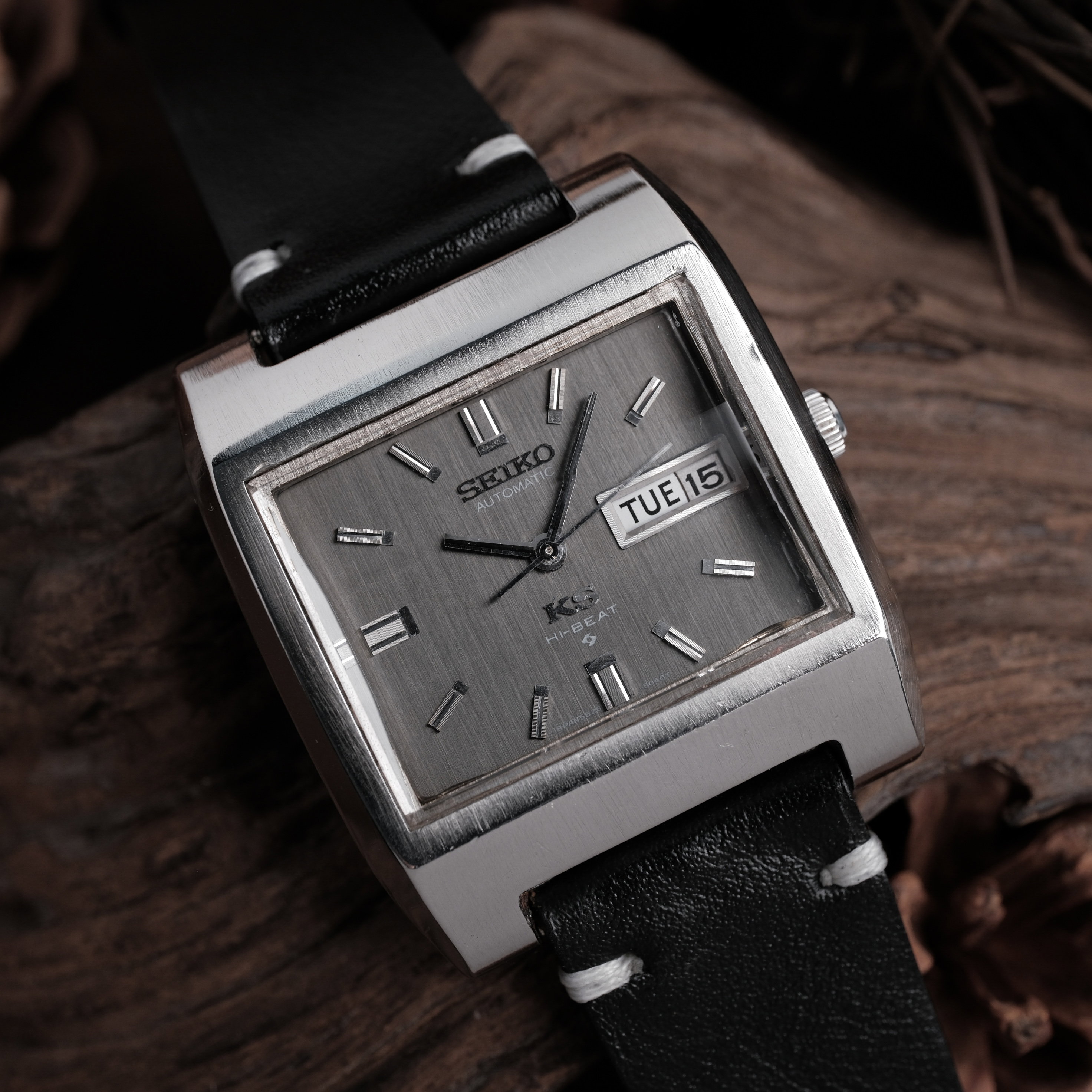
The Seiko 5626-5010 is a 35 mm steel King Seiko Hi-Beat with automatic caliber 5626, a square case and production documented from 1970 to 1972.
We auction more than 100 vintage watches a week.
Get first access: new Seiko 5626-5010 drops and alerts before auctions end.
Browse 14 live Seiko auctionsThe King Seiko Hi-Beat 5626-5010 is defined by a square stainless steel case, an automatic caliber 5626 and a 35 mm width excluding the crown. Produced from 1970 to 1972 among the watches handled, it belongs firmly to Seiko's geometric early 1970s work rather than its round dress-watch designs.
Silver examples occur with sunburst or vertical brushing, while charcoal grey adds greater contrast to the applied indices. Buy the dial first: a clean original surface is worth more than sharp case reflections created by polishing, and a redial costs more than ordinary case wear.
Brand
Seiko
Model
King Seiko Hi-Beat
Reference
5626-5010
Known production years
1970-1972
| Case material | Stainless steel |
| Case size | 35 mm excluding the crown |
| Movement | Automatic caliber 5626 |
| Documented dial finishes | Silver sunburst, silver vertically brushed and charcoal grey vertically brushed |
The model landscape
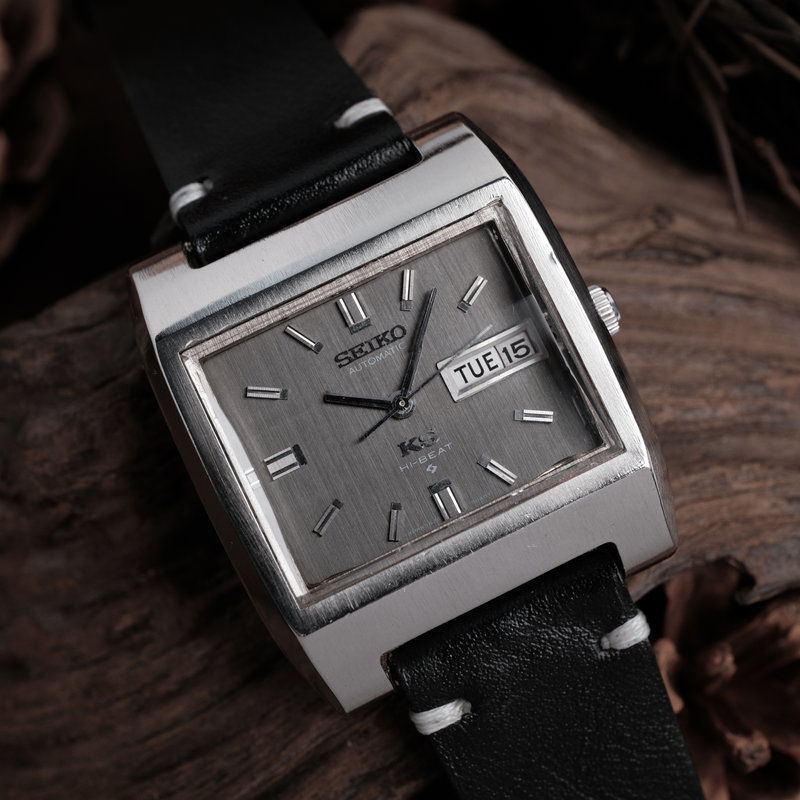
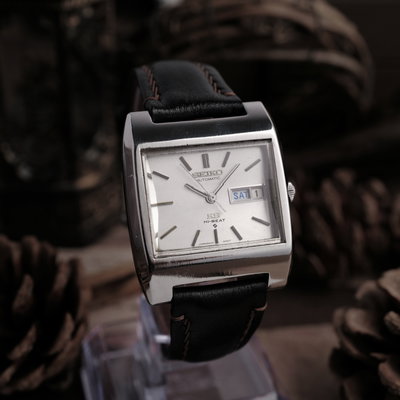
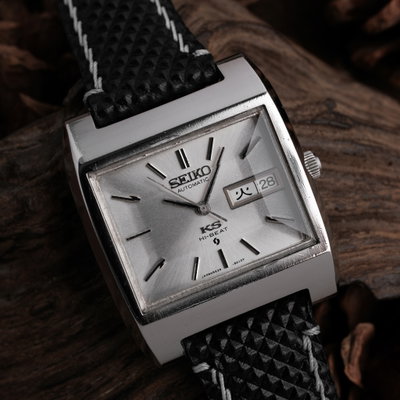
The meaningful choice within the 5626-5010 is the dial. Silver sunburst gives the broadest light play, silver vertical brushing makes the square architecture more linear, and charcoal grey puts stronger contrast behind the applied indices. An English and Kanji day wheel is documented on a 1970 example, but the available evidence does not establish that every watch left the factory with that configuration.
All handled examples share the useful core specification: stainless steel, a 35 mm square case and an automatic caliber 5626. Between a clean silver dial with ordinary case wear and a charcoal dial with uncertain refinishing, take the silver watch. Surface treatment is difficult to recreate convincingly, while honest scratches do not alter what the watch is.
On the wrist
At 35 mm excluding the crown, the 5626-5010 does not wear like a small round watch. Its square footprint carries visual width toward the corners, while the applied baton indices and dauphine hands keep the display legible. The case works with tailoring because the width stays controlled, although no thickness measurement is established here and cuff clearance should not be assumed.
The silver sunburst dial changes noticeably with wrist angle, while vertical brushing keeps the light running in one direction. Charcoal grey reduces glare and makes the polished furniture more prominent. The result is a compact used Seiko with more wrist presence than its stated width suggests, without relying on a larger case.
What goes wrong
The worst fault is a refinished dial because it removes the original sunburst or vertical brushing and resets the watch's value downward. Water staining, spotting around the dial edge and corrosion on the dauphine hands matter next. A genuine service dial is not a redial, but it is still a replacement and should be identified as such rather than described as original.
The square case loses definition when polished: corners soften, transitions blur and flat planes become rounded. Replacement crowns can also disturb the intended case profile, while a married movement and case or a franken assembly may look plausible until reference and caliber are compared together. Service history is unknown unless documentation accompanies the individual watch, and timekeeping from one example cannot establish the performance of another.
Dating this watch
| Serial range / caliber | Year | Note |
|---|---|---|
| 5626 | 1968-1975 | caliber production window |
Dating data comes from our decoder tables; treat years as approximate.
What to check before you buy
- Dial surface and printing: The documented dials are silver sunburst, silver vertically brushed and charcoal grey vertically brushed. Flat paint, lost brushing or printing sitting over surface damage points toward a redial rather than honest ageing.
- Hands and applied furniture: Documented examples use applied baton indices and dauphine hands, including black central accents on one silver sunburst watch. Mismatched finishes, corrosion hidden by relume or inconsistent hand styles can indicate substituted parts.
- Case geometry: The stainless steel case is square and measures 35 mm excluding the crown. Polishing first shows in softened corners, rounded flat planes and blurred transitions, all of which permanently reduce the architectural definition.
- Reference and movement pairing: A 5626-5010 should be paired with automatic caliber 5626. A different caliber, conflicting case identity or components that never belonged together indicate a married watch or a franken assembly.
- Day display: An English and Kanji day wheel is documented on a 1970 example, but universal fitment is not established. Treat the language pairing as supporting evidence only, not as proof of authenticity by itself.
Other 5626-5010 examples we auctioned
8 Seiko 5626-5010 auctioned
More Seiko references
Related pages
Frequently asked questions
Ready to hunt for your own?
More than 100 vintage watches go under the hammer every week.