Seiko 5626-7111 King Seiko Hi-Beat Reference Guide
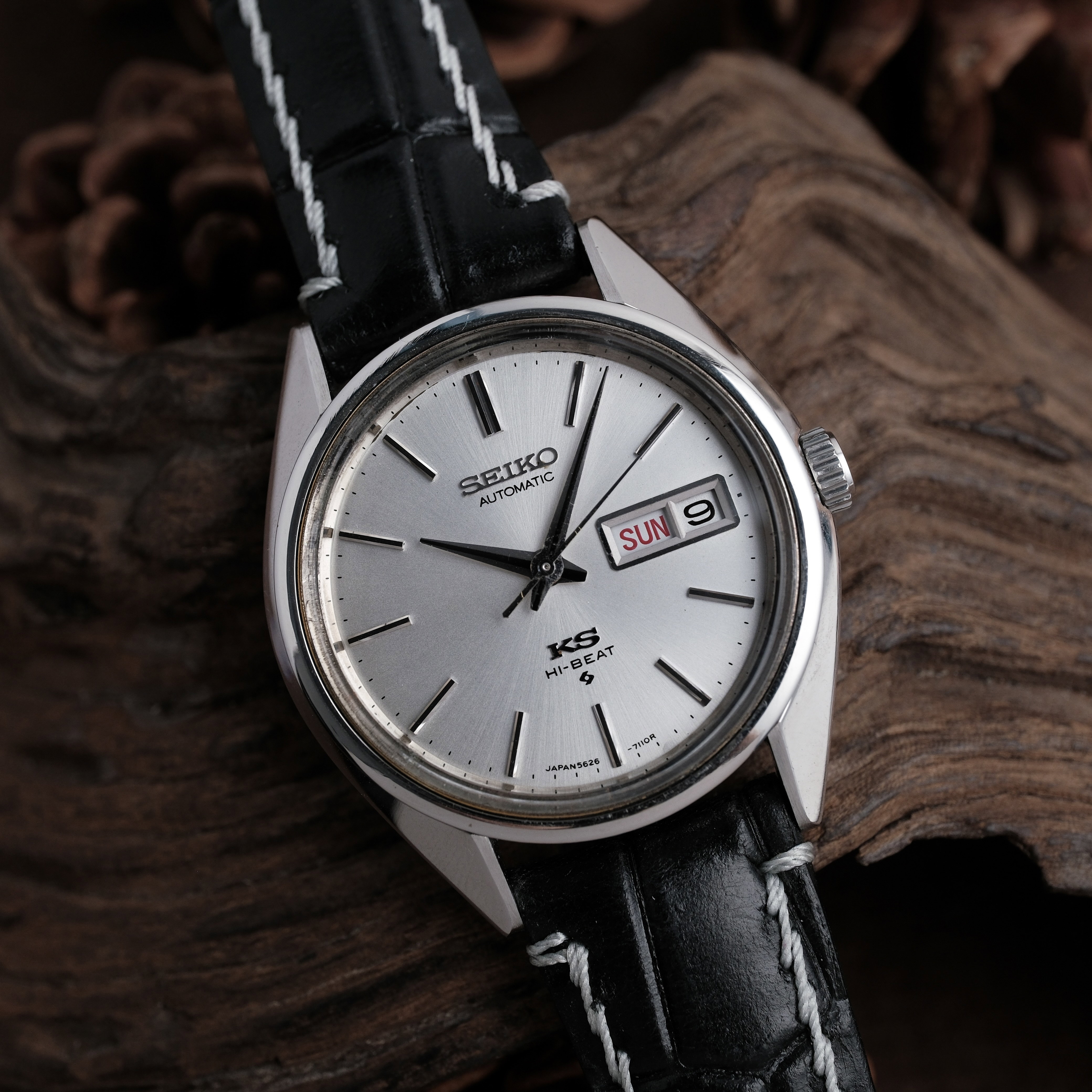
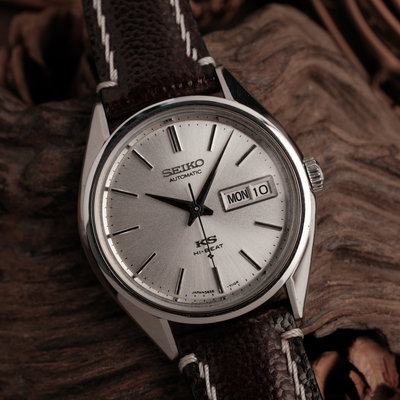
The Seiko 5626-7111 to buy pairs a clean silver dial with sharp case geometry and a correctly matched automatic caliber 5626A or 5626B.
Live now
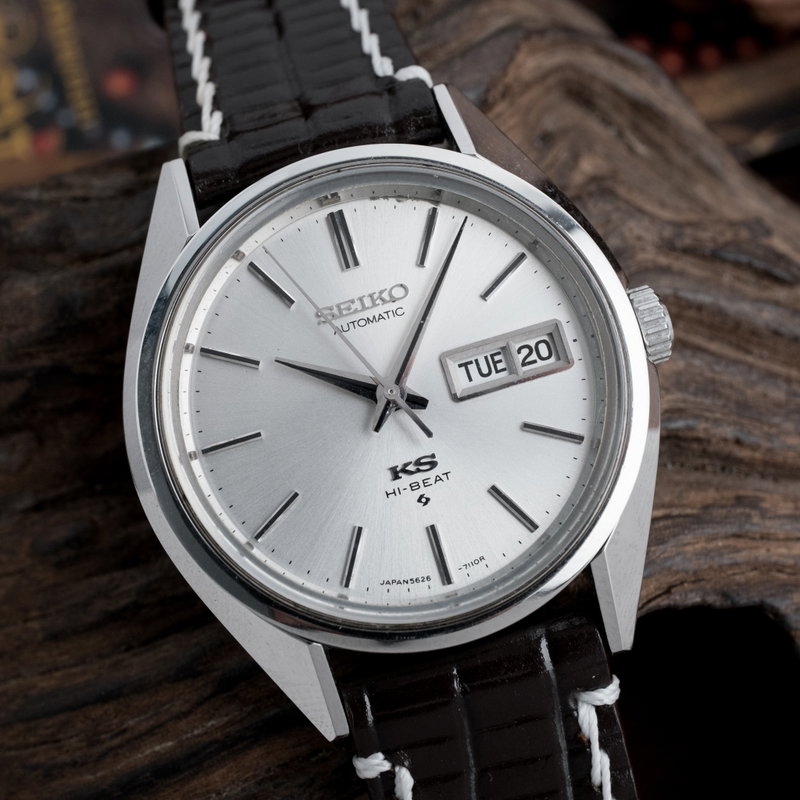
The King Seiko Hi-Beat 5626-7111 concentrates early 1970s Seiko design into a 36 mm stainless-steel case, with a silver dial and automatic caliber 5626A or 5626B. Known examples date from 1972 to 1973, making this a tightly defined reference rather than a loose family of similar watches.
The decisive choice is not between the two recorded calibers. It is between a sharp case with a clean, coherent dial and a watch compromised by refinishing or heavy polishing. Among the Seiko 5626-7111 watches we have handled, silver sunburst and vertical-brushed dials both occur, so texture alone does not settle authenticity.
Model
King Seiko Hi-Beat
Reference
5626-7111
Known production years
1972-1973
Case diameter
36 mm excluding the crown
| Case material | Stainless steel |
| Movement | Automatic caliber 5626A or 5626B |
| Jewel count | 25 jewels |
| Recorded dial finishes | Silver sunburst or silver vertical-brushed |
The model landscape
The 5626-7111 sits within King Seiko Hi-Beat and combines applied faceted indices with a silver dial in either sunburst or vertical-brushed form. Recorded movements include the automatic caliber 5626A and 5626B, both with 25 jewels. Neither dial texture nor caliber suffix should be treated as the sole preferred version.
Value sits first in the dial, then in the case geometry. A clean silver surface with crisp black printing carries a meaningful premium over a redial, while sharp transitions between brushed and polished surfaces matter more than superficial shine. Between a heavily polished sunburst example and a sharp vertical-brushed one at the same level, take the sharper watch.
On the wrist
At 36 mm excluding the crown, the stainless-steel 5626-7111 wears as a compact dress watch rather than an oversized sports model. The applied faceted indices and silver finish shift noticeably with the light, while the black dial printing keeps the display legible. The angular case does much of the visual work, which is why softened geometry changes the watch more than its diameter suggests.
This is the used Seiko 5626-7111 for a collector who wants a restrained case with visible early 1970s architecture. It suits a cuff and does not depend on a large footprint for presence. Thickness is not established by the watches available here, so no claim should be made about exact cuff clearance.
What goes wrong
The worst fault is a refinished dial because it removes the original silver texture and can alter the Seiko, Automatic, KS and Hi-Beat printing. Heavy polishing comes next: it softens the case planes and erases the contrast between brushed and polished surfaces. A franken assembly is another risk when the dial, case and movement are period-correct individually but never shipped together.
Movement identity needs to agree with the known automatic 5626A or 5626B configuration, but the suffix alone does not prove the watch is correctly assembled. A replacement crown or crystal may be a service part rather than evidence of deception, and neither should support an unqualified all-original claim. Service history is unknown unless documentation accompanies the individual watch.
Dating this watch
| Serial range / caliber | Year | Note |
|---|---|---|
| 5626 | 1968-1975 | caliber production window |
Dating data comes from our decoder tables; treat years as approximate.
What to check before you buy
- Dial print and finish: The dial may be silver sunburst or vertical-brushed, with applied faceted indices. Seiko, Automatic, KS and Hi-Beat printing should remain crisp; blurred or uneven printing can indicate a redial.
- Hands and dial coherence: The available evidence does not establish a definitive hand specification. Judge the hands against the silver dial and applied indices for coherent ageing, and do not call them original without stronger documentation.
- Case geometry: The stainless-steel case measures 36 mm excluding the crown. Brushed and polished planes should remain distinct; soft edges and blended surfaces diagnose polishing rather than honest case preservation.
- Movement identity: The movement should be an automatic caliber 5626A or 5626B with 25 jewels. A correct caliber is necessary but not sufficient, because a case and movement from different watches can still form a married example.
- Dial code and reference relationship: A handled 1973 example carries Japan 5626-7110R dial text with the 5626-7111 case reference. That exact relationship is recorded, so the differing final digit should not be rejected automatically.
- Crown and service parts: Exact factory crown geometry is not established by the available evidence. A replacement crown or crystal may be period-correct or a later service part, but either prevents a defensible all-original claim.
Other 5626-7111 examples we auctioned
6 Seiko 5626-7111 auctioned
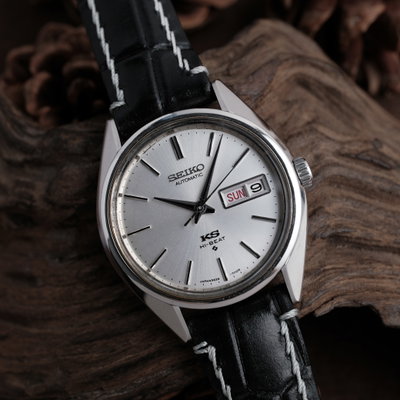
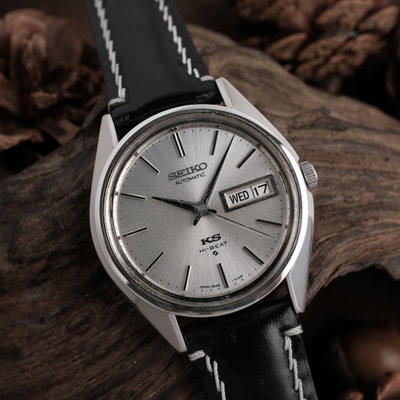
We auction more than 100 vintage watches a week.
Get first access: new Seiko 5626-7111 drops and alerts before auctions end.
More Seiko references
Related pages
Frequently asked questions
Ready to hunt for your own?
More than 100 vintage watches go under the hammer every week.