Seiko 5256-6000 King Seiko Vanac Special Reference Guide
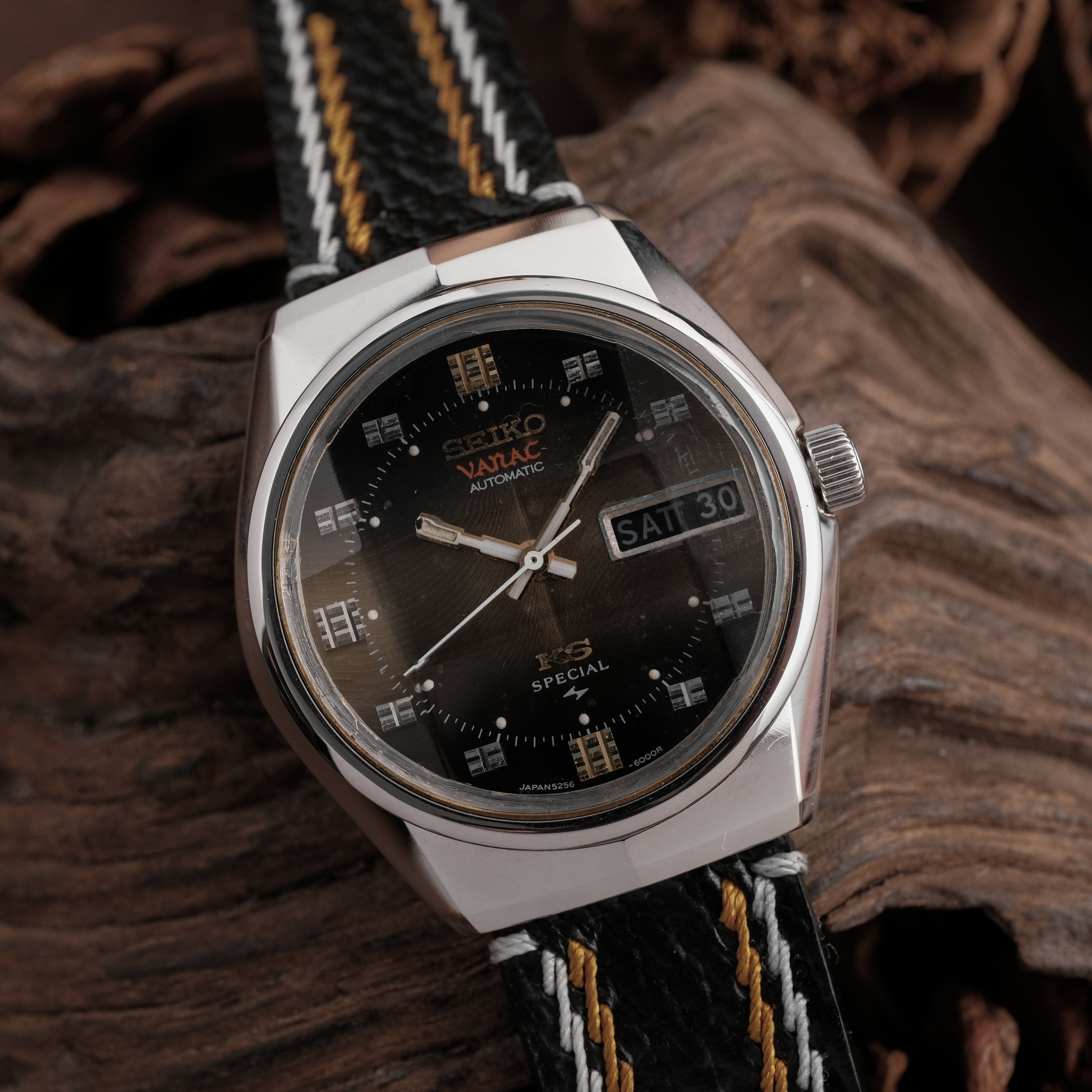
The Seiko 5256-6000 is a 1973 King Seiko Vanac Special best bought with an honest sunburst dial, a strongly faceted crystal and caliber 5256A.
We auction more than 100 vintage watches a week.
Get first access: new Seiko 5256-6000 drops and alerts before auctions end.
Browse 22 live Seiko auctionsReference 5256-6000 is a 1973 King Seiko Vanac Special powered by the automatic caliber 5256A. Its angular stainless-steel case and deeply faceted crystal place it firmly within the King Seiko Vanac design language produced by Daini Seikosha. This is a vintage Seiko bought for the complete architecture, not for the movement in isolation.
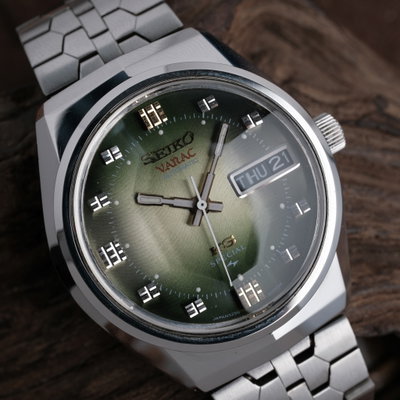
The same reference has surfaced with a green gradient sunburst dial and a brown sunburst dial. Applied faceted or ridged indices give each version a different face, while known brown examples add purple Vanac text and gold-tone applied Seiko and KS logos. Condition outranks colour because dark spotting across a sunburst dial cannot be reversed without creating a redial.
Brand
Seiko
Model
King Seiko Vanac Special
Reference
5256-6000
Production year
1973-1973
| Movement | Automatic caliber 5256A |
| Jewel count | 25 jewels |
| Case material | Stainless steel |
| Case size | 35 mm or 36 mm, excluding the crown |
| Crystal | Deeply faceted crystal |
| Known dial executions | Green gradient sunburst or brown sunburst |
The model landscape
The green version uses a gradient sunburst finish with applied faceted block indices. The brown version has a sunburst surface with applied ridged indices, purple Vanac printing and gold-tone applied Seiko and KS logos. The evidence does not establish whether either colour was produced in smaller numbers, so a rarity premium for one over the other would be speculation.
Value sits first in the dial, then in the faceted crystal and the sharpness of the case geometry. Between a clean green gradient dial and a brown dial with dark spotting at comparable completeness, take the green example. Between two equally honest dials, the stronger crystal facets and less softened case settle the choice.
On the wrist
Examples of the 5256-6000 have been measured at 35 mm and 36 mm excluding the crown. The available evidence does not establish separate case executions, so the one-millimetre difference should not decide a purchase. The angular case, broad dial furniture and deeply faceted crystal create the reference's visual scale, while the stainless-steel construction keeps the material straightforward.
Legibility depends heavily on surface condition. A clean sunburst dial separates the applied indices from the background, while widespread dark spotting reduces that contrast and interrupts the radial finish. Crystal scratches matter more here than on a plain crystal because they cut across the facets that define the Vanac profile.
What goes wrong
The worst established fault is dial damage. Brown examples can carry dark spotting and freckling across the surface, and refinishing that dial removes the original sunburst finish and printed Vanac identity. A redial costs more in credibility than visible, honestly disclosed spotting.
Crystal scratches are the next obvious weakness because polishing or replacement can alter the strong faceting. Case polishing rounds the angular transitions, leaving soft edges where this reference should retain clear changes of plane. The service history of a used Seiko 5256-6000 is often unknown, and without documentation no claim about recent movement work should influence the purchase.
A replacement crown, hands or crystal may be period-correct without being original to the watch. The available evidence does not establish a single crown or hand execution for this reference, so those parts should not be judged from confident guesswork. Buy the best honest dial and case against a cosmetically brighter watch with a redial or mushy geometry.
What to check before you buy
- Movement identity: The movement should be the automatic caliber 5256A with 25 jewels. Another caliber does not match reference 5256-6000, while the correct caliber still cannot by itself rule out a married or franken watch.
- Green dial execution: Known green examples use a gradient sunburst dial with applied faceted block indices. Flat paint, missing radial response or mismatched furniture warrants scrutiny for a redial or substituted dial.
- Brown dial execution: Known brown examples combine a sunburst surface with applied ridged indices, purple Vanac text and gold-tone applied Seiko and KS logos. Dark spotting can be genuine damage, but repainting it makes the dial refinished.
- Case and crystal geometry: The stainless-steel case should retain clear angular transitions, and the crystal should remain strongly faceted. Soft case edges indicate polishing, while a smooth replacement crystal changes the reference's defining profile.
- Crown and hands evidence limit: The available evidence does not establish one definitive crown or hand execution for 5256-6000. A component can be period-correct without being original, so no stronger claim should be made without documentation.
Other 5256-6000 examples we auctioned
4 Seiko 5256-6000 auctioned
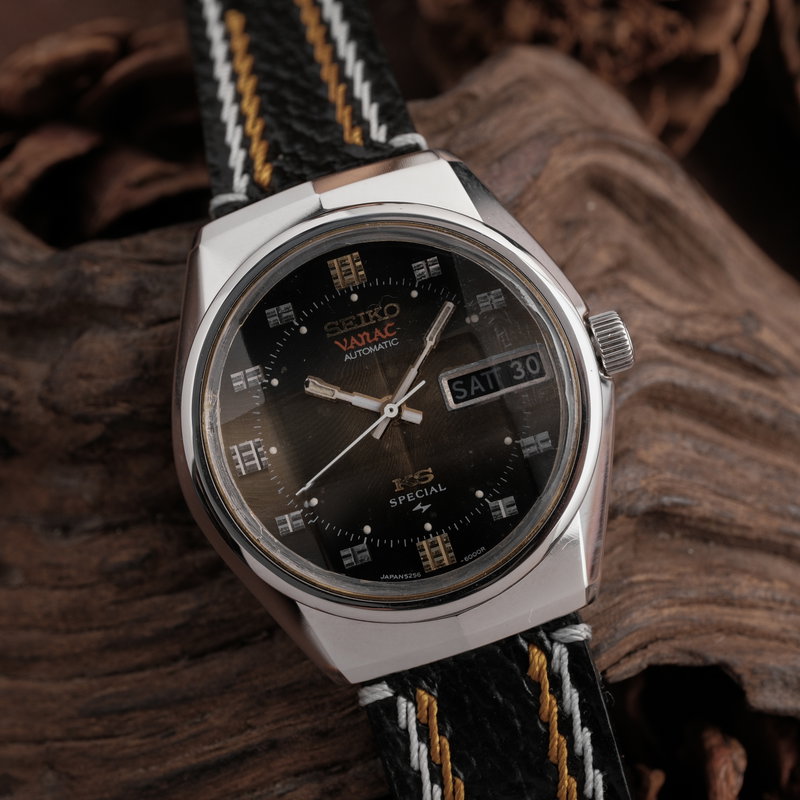
Seiko · King Seiko Vanac · 5256-6000 · 1973
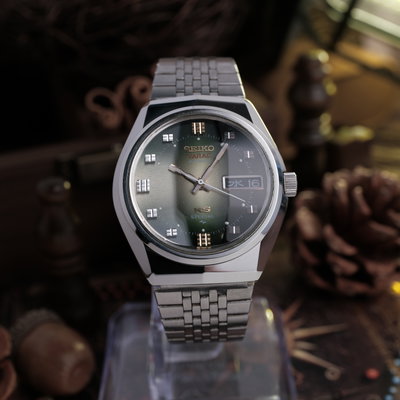
Seiko · King Seiko Vanac Special · 5256-6000 · 1973
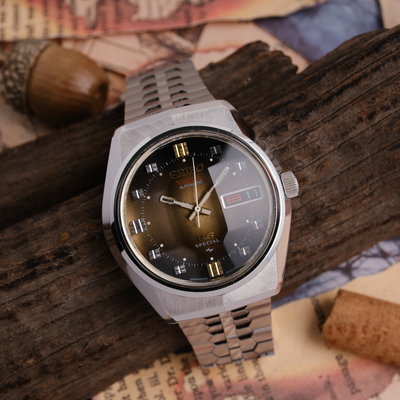
Seiko · King Seiko Vanac Special · 5256-6000 · 1973
Seiko · King Seiko Vanac Special · 5256-6000 · 1973
More Seiko references
Related pages
Frequently asked questions
Ready to hunt for your own?
More than 100 vintage watches go under the hammer every week.