Omega Genève 165.041: what to know before buying
Omega Genève reference 165.041 is a steel, no-date automatic from 1967-1971, valued most for an honest silver sunburst dial and sharp case.
Live now
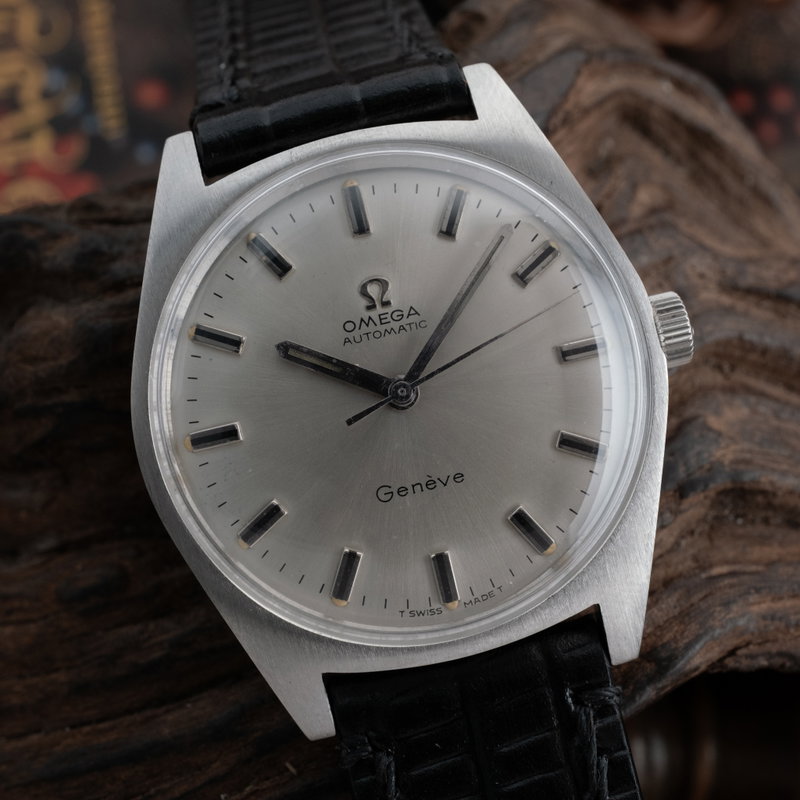
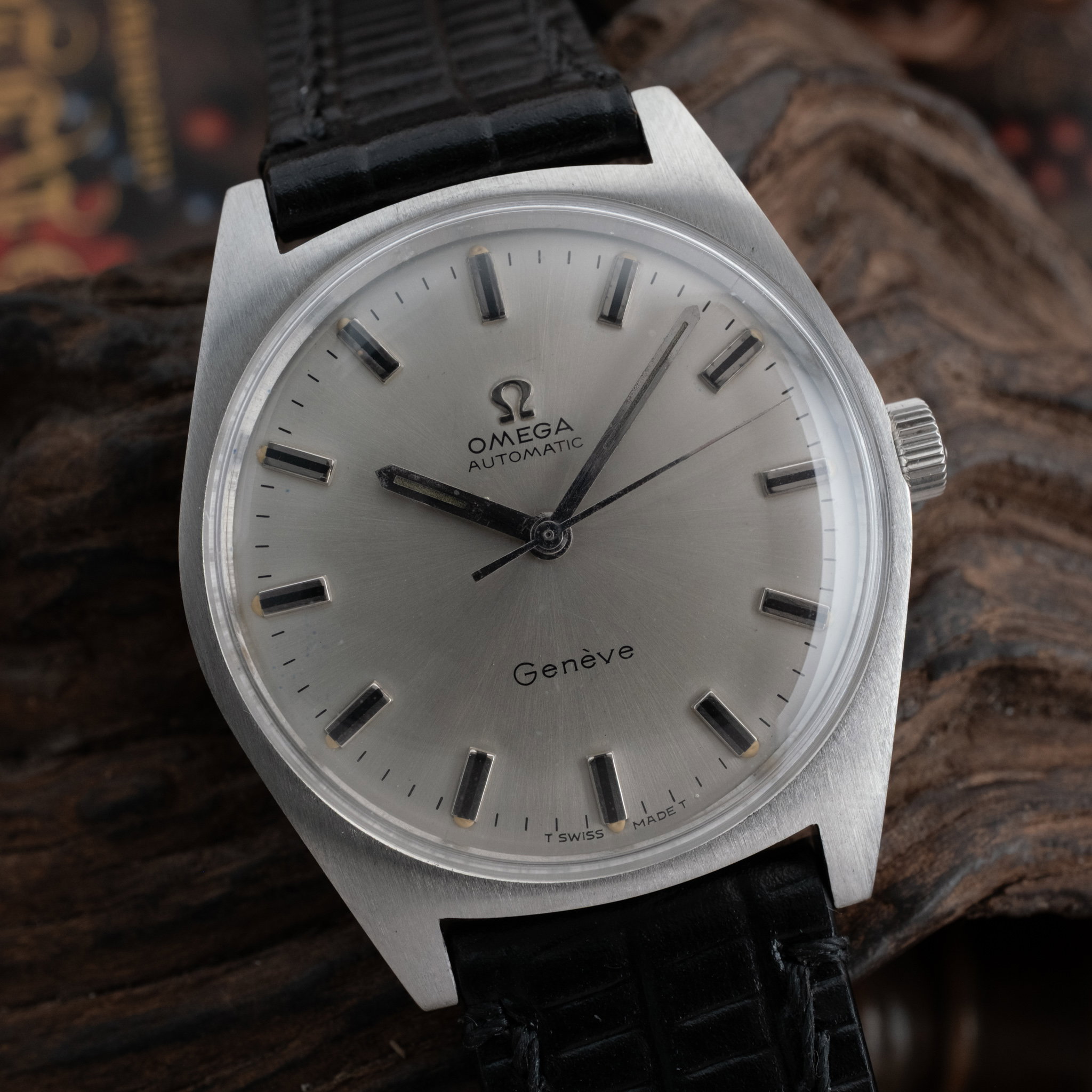
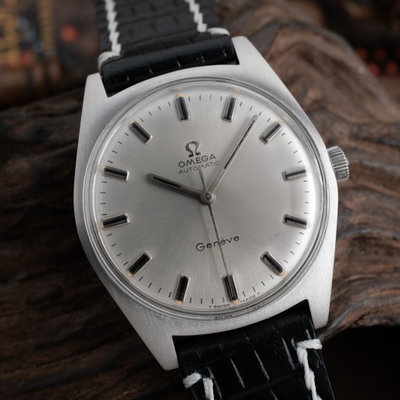
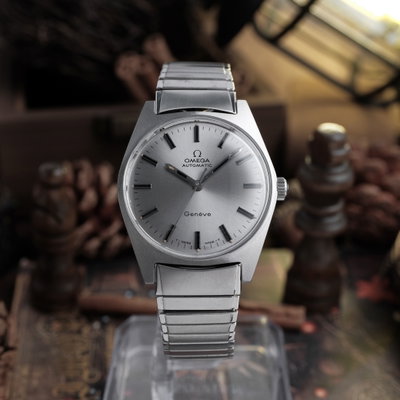
The Omega Genève 165.041 is a late-1960s and early-1970s steel automatic that works because it stays simple: no date, a silver sunburst dial and applied baton furniture.
The version to want has its original silver sunburst surface, crisp printing, intact black inserts and lume that ages consistently across the hands and dial. Examples handled from 1967 to 1971 measure 34 mm or 36 mm without the crown, so the case matters nearly as much as the dial when deciding how the watch will wear.
Reference
165.041
Model
Genève
Known production years
1967-1971
Case material
Stainless steel
| Case size | 34 mm or 36 mm, excluding crown |
| Movement | Automatic Omega caliber 552 |
| Dial | Silver sunburst, no date |
| Hour markers | Applied baton indices with black inserts |
The model landscape
The stainless steel case surrounds a silver sunburst dial with an applied Omega logo, applied baton indices, black inserts and luminous material. Caliber 552 is automatic and the dial has no date aperture, leaving the design symmetrical.
The meaningful choice is between the 34 mm examples and the 36 mm example recorded in 1971. The smaller case gives the Genève a restrained dress-watch proportion, while 36 mm adds visible wrist presence without changing the basic design. Between a sharp 34 mm case and a softened 36 mm case at the same level, take the sharper watch.
Where the value sits
The dial carries the premium. A clean silver sunburst surface with crisp print, intact black index inserts and evenly aged lume is worth choosing over a brighter case with a redial. A refinished dial costs more than every minor case mark combined, while scattered spots reduce the spread without making an honest dial unacceptable.
Case definition comes next. Brushed upper surfaces, polished flanks and distinct edges establish the intended contrast; repeated polishing softens those transitions permanently. Minor oxidation on the stick hands is less serious than replaced or mismatched hands, provided the black inserts and luminous material still correspond with the dial furniture.
What goes wrong
Dial damage is the costliest fault: scattered spotting, disturbed sunburst brushing or refinished printing cannot be corrected without changing the watch collectors are paying for. Lume also needs internal consistency. Bright replacement material on the hands beside warm dial plots signals relume or mixed parts rather than even ageing.
Over-polishing rounds the case edges and erases the division between brushed tops and polished flanks. Hand oxidation can remain minor under magnification, but heavy corrosion is damage, not patina. Crowns and crystals are consumable parts, so period-correct replacements should be described as such rather than folded into an unqualified claim of originality.
Caliber 552 should be assessed on current performance and documented work, not a seller's unsupported service language. Without receipts, the service history is unknown. A franken example may combine genuine Omega parts that never shipped together, so a correct movement alone does not establish that the dial, hands and case belong together.
Dating this watch
| Serial range / caliber | Year | Note |
|---|---|---|
| 1000000 | 1902 | approximate, ±1-3 years |
| 2000000 | 1908 | approximate, ±1-3 years |
| 3000000 | 1912 | approximate, ±1-3 years |
| 4000000 | 1916 | approximate, ±1-3 years |
| 5000000 | 1923 | approximate, ±1-3 years |
| 6000000 | 1925 | approximate, ±1-3 years |
| 7000000 | 1929 | approximate, ±1-3 years |
| 8000000 | 1935 | approximate, ±1-3 years |
| 9000000 | 1939 | approximate, ±1-3 years |
| 10000000 | 1944 | approximate, ±1-3 years |
| 11000000 | 1947 | approximate, ±1-3 years |
| 12000000 | 1950 | approximate, ±1-3 years |
| 13000000 | 1952 | approximate, ±1-3 years |
| 14000000 | 1954 | approximate, ±1-3 years |
| 15000000 | 1956 | approximate, ±1-3 years |
| 16000000 | 1958 | approximate, ±1-3 years |
| 17000000 | 1960 | approximate, ±1-3 years |
| 18000000 | 1961 | approximate, ±1-3 years |
| 19000000 | 1962 | approximate, ±1-3 years |
| 20000000 | 1963 | approximate, ±1-3 years |
| 21000000 | 1964 | approximate, ±1-3 years |
| 22000000 | 1965 | approximate, ±1-3 years |
| 24000000 | 1966 | approximate, ±1-3 years |
| 25000000 | 1967 | approximate, ±1-3 years |
| 26000000 | 1968 | approximate, ±1-3 years |
| 28000000 | 1969 | approximate, ±1-3 years |
| 31000000 | 1970 | approximate, ±1-3 years |
| 32000000 | 1971 | approximate, ±1-3 years |
| 33000000 | 1972 | approximate, ±1-3 years |
| 35000000 | 1973 | approximate, ±1-3 years |
| 37000000 | 1974 | approximate, ±1-3 years |
| 39000000 | 1975 | approximate, ±1-3 years |
| 40000000 | 1976 | approximate, ±1-3 years |
| 41000000 | 1977 | approximate, ±1-3 years |
| 42000000 | 1978 | approximate, ±1-3 years |
| 43000000 | 1979 | approximate, ±1-3 years |
| 44000000 | 1980 | approximate, ±1-3 years |
| 45000000 | 1982 | approximate, ±1-3 years |
| 46000000 | 1984 | approximate, ±1-3 years |
| 47000000 | 1985 | approximate, ±1-3 years |
| 48000000 | 1986 | approximate, ±1-3 years |
| 49000000 | 1988 | approximate, ±1-3 years |
| 50000000 | 1990 | approximate, ±1-3 years |
| 53000000 | 1993 | approximate, ±1-3 years |
| 54000000 | 1995 | approximate, ±1-3 years |
| 56000000 | 1996 | approximate, ±1-3 years |
| 58000000 | 1998 | approximate, ±1-3 years |
| 60000000 | 2000 | approximate, ±1-3 years |
Dating data comes from our decoder tables; treat years as approximate.
What to check before you buy
- Dial configuration: Reference 165.041 should have a silver sunburst, no-date dial with applied baton indices and black inserts. Crisp Omega and Genève printing should sit naturally on the brushed surface, not over freshly refinished metal.
- Hands and lume: The stick hands should repeat the black-insert treatment of the applied indices. Their luminous material should correspond in ageing with the dial plots; a marked mismatch is evidence of relume, replacement or mixed parts.
- Case finishing: The stainless steel case should retain a readable contrast between brushed upper surfaces and polished flanks. Rounded edges and blended finishes diagnose polishing, while sharp transitions support better preservation.
- Movement match: The movement should be the automatic Omega caliber 552, consistent with the reference's no-date dial. A correct caliber is necessary but not sufficient, because a married or franken watch can still contain genuine Omega components.
Other 165.041 examples we auctioned
5 Omega 165.041 auctioned
Omega · Genève · 165.041 · 1969
Omega · Genève · 165.041 · 1967
Omega · Genève · 165.041 · 1968
Omega · Genève · 165.041 · 1971
We auction more than 100 vintage watches a week.
Get first access: new Omega 165.041 drops and alerts before auctions end.
More Omega references
Related pages
Frequently asked questions
Ready to hunt for your own?
More than 100 vintage watches go under the hammer every week.