Vintage Seiko Crown J15003E - What to Know Before You Buy
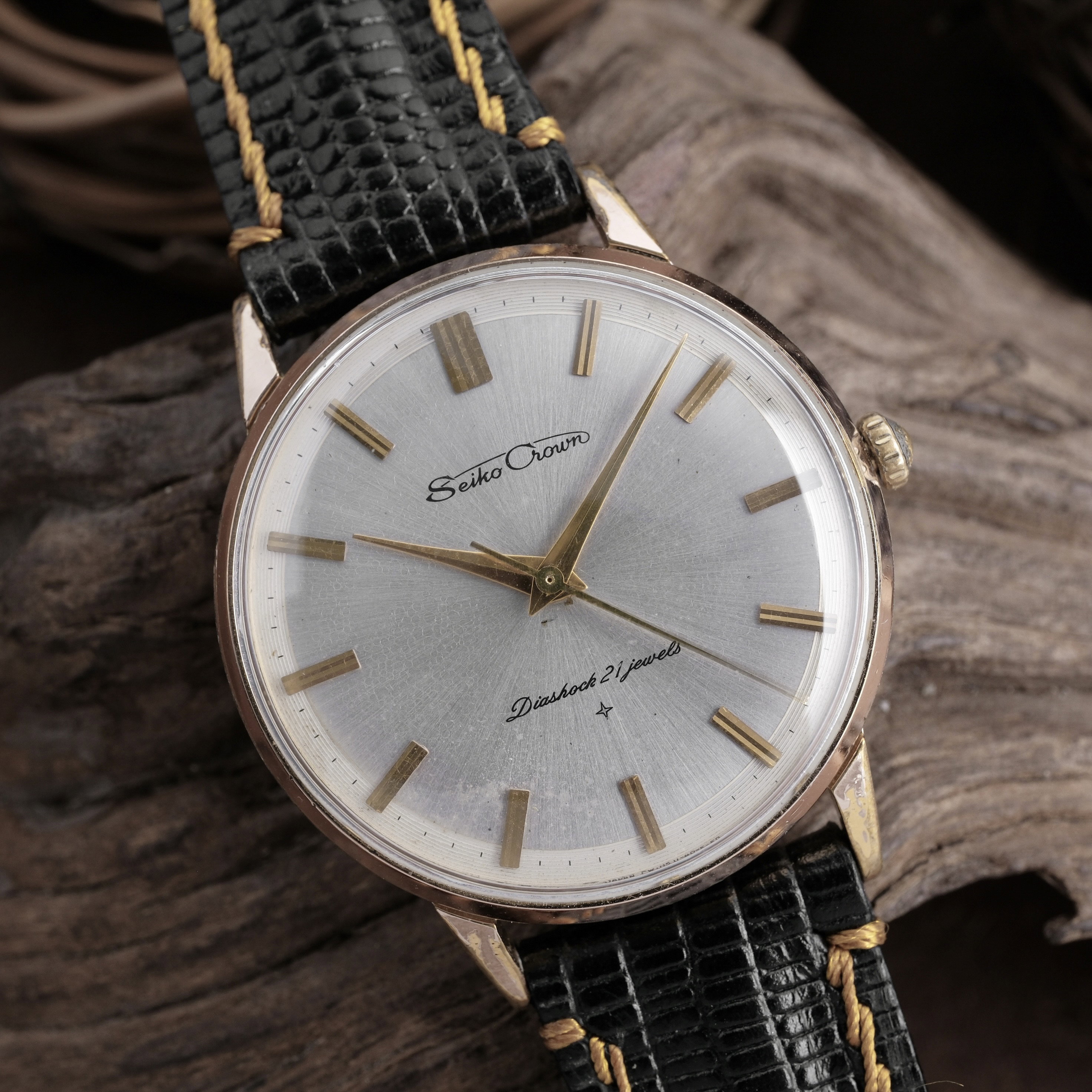
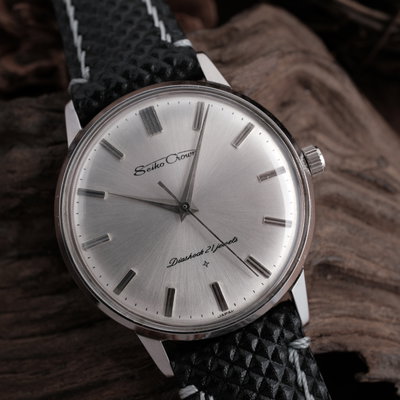
The Seiko Crown J15003E to buy has a clean silver sunburst dial, the correct caliber 560, and a case whose wear matches its steel or gold-filled construction.
We auction more than 100 vintage watches a week.
Get first access: new Seiko J15003E drops and alerts before auctions end.
Browse 32 live Seiko auctionsThe Crown J15003E is a manual-wind Seiko dress watch from 1960-1964, with a 36 mm case and caliber 560. Its broad silver sunburst dial, applied indices and restrained proportions place it firmly in Seiko's early-1960s dress-watch language, before the larger dimensions now common in modern watches.
The version to want is not decided by steel against gold-filled construction. Dial quality matters more. Across the J15003E examples we have handled, clean sunburst dials coexist with lightly spotted ones, while cases range from stainless steel to gold-filled and plated configurations. A refinished dial costs more in lost appeal than honest case wear, provided the caliber and case belong together.
Brand
Seiko
Model
Crown
Reference
J15003E
Known production years
1960-1964
| Case diameter | 36 mm excluding the crown |
| Movement | Seikosha caliber 560 |
| Winding | Manual wind |
| Jewels | 21 |
| Dial | Silver sunburst with applied indices |
| Known case materials | Stainless steel, gold-filled, and plated configurations |
The model landscape
The J15003E has a stable mechanical identity: manual winding, caliber 560 and 21 jewels. The visible variation sits in the case and dial furniture. Stainless-steel examples give the silver sunburst dial a cooler appearance, while gold-filled cases and applied gold-tone indices make the same 36 mm format read more formally. One handled gold-filled case was marked EGP 20 Microns, but that marking should not be assumed for every example.
Value sits first in an untouched-looking silver sunburst dial, then in a correctly paired caliber 560 and case. Steel avoids the irreversible wear-through that affects a gold surface, so it is the safer choice when two watches have equally strong dials. Between a sharp gold-filled case with light edge wear and polished steel with softened geometry, however, the gold-filled watch makes the better object. Case material alone does not settle the decision.
On the wrist
At 36 mm excluding the crown, the J15003E wears as a period dress watch rather than a reduced modern sports watch. The large silver dial supplies most of its visual size, and the applied faceted indices catch light without adding clutter. It suits a cuff and a narrow strap, while collectors accustomed to larger watches should judge the dial-to-case proportion rather than the diameter alone.
Caliber 560 requires manual winding, so the Crown asks for regular interaction rather than automatic convenience. That is part of the ownership proposition, but service condition cannot be read from a clean dial or an attractive case. One 1962 example was measured at +8 to +10 seconds per day, yet that isolated result is not a performance standard for the reference. Without service documentation, the service history remains unknown.
What goes wrong
The worst common fault is a redial because the silver sunburst finish and printed signature carry most of the watch's character. Spotting and moisture marks are damage, not patina, although light, even ageing is preferable to a flat modern refinish. A genuine service dial would be a factory replacement rather than a redial, but the evidence here does not establish a service-dial specification for J15003E, so claims require restraint.
Gold-filled and plated cases lose surface at exposed edges, and polishing can soften the case geometry without restoring that layer. Stainless steel avoids wear-through but still suffers rounded edges from repeated polishing. Replaced crowns are possible consumable changes, while a caliber other than 560 or a 560 installed in an unrelated case raises a married or franken concern. Buy the cleanest credible dial in the least-altered case, not the brightest case after refinishing.
What to check before you buy
- Dial and applied furniture: Handled J15003E examples use a silver sunburst dial with applied faceted indices, often gold-tone. A flat painted surface, lost sunburst effect or painted substitutes for applied furniture supports a redial or parts-swap concern.
- Movement identity: The movement should be the manual-wind Seikosha caliber 560 with 21 jewels. A different caliber conflicts with the handled J15003E configuration, while the correct caliber alone does not prove that the movement and case originally shipped together.
- Case size and construction: The case should measure 36 mm excluding the crown. Both stainless-steel and gold-filled examples are known, and one gold-filled example carries an EGP 20 Microns specification, so material must be checked on the individual case.
- Case wear and refinishing: Gold-surface loss at exposed edges is permanent evidence of wear, while polishing softens the case outline in both steel and gold-filled examples. Brightness is not proof of preservation, and refinishing can conceal the severity of earlier wear.
- Crown and assembled-watch risk: The crown is a replaceable component, so its presence cannot support a blanket all-original claim. More importantly, a correct-looking crown does not cure a caliber 560 fitted to an unrelated case, which would make the watch married or franken.
Other J15003E examples we auctioned
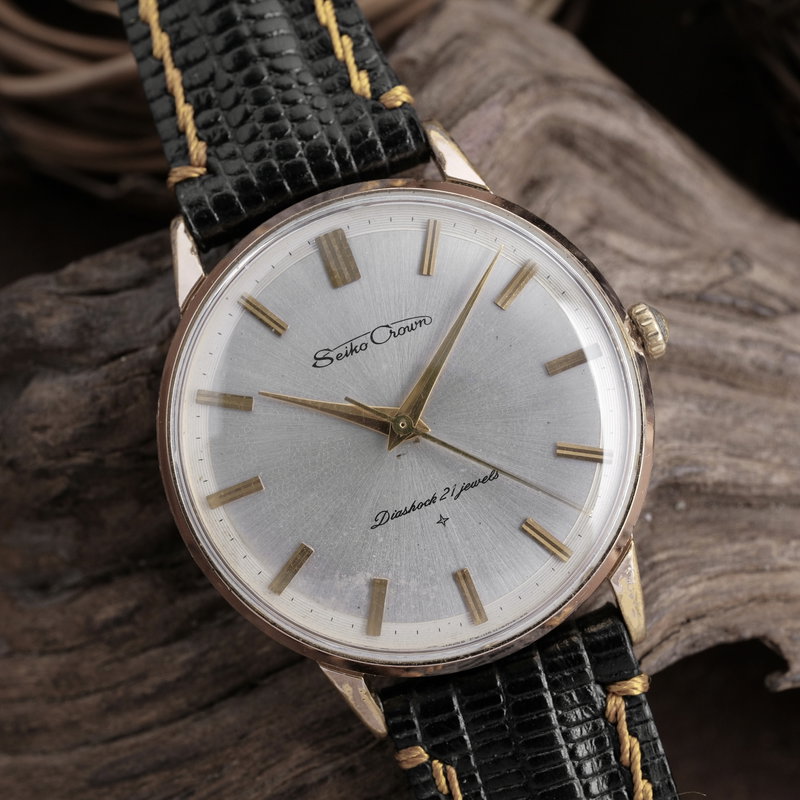
15 Seiko J15003E auctioned
More Seiko references
Related pages
Frequently asked questions
Ready to hunt for your own?
More than 100 vintage watches go under the hammer every week.