Seiko J14102 King Seiko - What to Know Before Buying
The Seiko J14102 is a 1963 manual-wind King Seiko whose value rests chiefly on its silver dial, sharp faceted case and intact gold-filled surfaces.
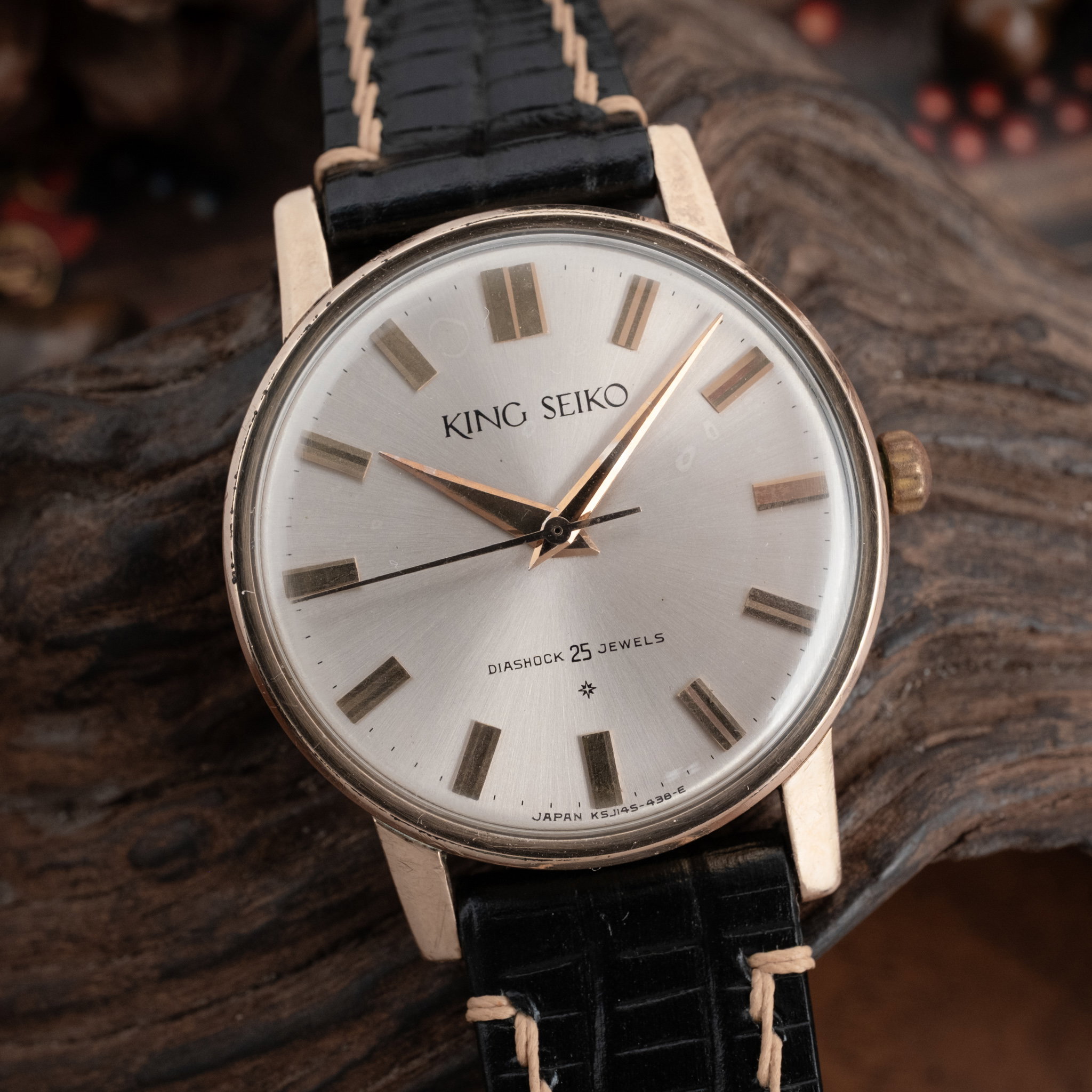
The J14102 is an early King Seiko from 1963, built as a restrained time-only dress watch rather than a sports watch. Its 35 mm gold-filled case, silver dial and manual-wind movement place the emphasis on proportion and finish, with no luminous material interrupting the dial or hands.
The version to want has a clean silver sunburst dial, bright applied gold-tone indices and clearly defined faceted lugs. Visible spotting is preferable to a redial only when the printing remains intact, because refinishing removes the surface and typography that carry most of this vintage Seiko's value.
Brand
Seiko
Model
King Seiko
Reference
J14102
Production year
1963-1963
| Case size | 35 mm excluding the crown |
| Case material | 14K gold-filled |
| Movement | Manual-wind |
| Jewel count | 25 |
| Dial | Silver sunburst or silvered dial with applied gold-tone indices |
| Luminous material | None on dial or hands |
What it was built for
The J14102 belongs to King Seiko's early 1963 dress-watch phase and was made for precise, discreet daily wear. The manual-wind movement has 25 jewels, while the dial uses applied faceted markers and dauphine hands rather than luminous furniture. That combination keeps the face formal and makes low-light legibility secondary.
The 14K gold-filled case gives the watch a richer surface than steel without making it a solid-gold watch. Gold filling is finite: scratches can remain honest wear, but exposed base metal at the lugs or case edges cannot be restored by routine servicing. The shield medallion on the caseback is also part of the reference's identity and should not be treated as expendable decoration.
On the wrist
At 35 mm excluding the crown, the J14102 wears as a compact dress watch, but the broad dial and sharp lugs keep it from looking vague. It slips under a cuff easily and suits a strap better than an oversized bracelet, while the double marker at twelve gives the otherwise spare dial a clear orientation.
The silver sunburst finish changes with direct light, and the gold-tone hands and markers provide contrast without lume. That makes the watch easy to read in daylight but unsuitable if night visibility is important. Daily ownership also means winding it by hand and accepting that service history is unknown unless the individual watch has supporting documentation.
What goes wrong
Dial damage costs the most. J14102 dials can develop visible spotting, and the gold-tone hands can oxidise; neither fault should be hidden behind the softer word patina. A redial is worse than even, limited spotting when it replaces the original sunburst surface or alters the printed text, while a genuine service dial is a different category and must not be confused with refinishing.
The gold-filled case can wear through at the lug tips and along exposed edges, scratches accumulate across the bezel, and polishing softens the faceted lug geometry. Caseback medallions also lose definition through abrasion. These losses are permanent, so a cleaner dial in a sharply defined case deserves a premium over a shinier watch with mushy lugs.
Movement condition cannot be judged from a seller's rate claim alone. The J14102 should contain a manual-wind 25-jewel movement, but the service history remains unknown without dated paperwork. A movement and case from different watches would be married, while period-correct hands or a crown are not automatically original to that particular watch.
What to check before you buy
- Dial and hands: The silver sunburst or silvered dial should have applied faceted gold-tone indices, including a double marker at twelve, with gold-tone dauphine hands and no luminous material. Uneven modern printing or added lume indicates alteration.
- Case and caseback: The 35 mm case should be 14K gold-filled with sharply faceted lugs and a King Seiko shield medallion on the back. Soft lug planes, worn-through filling or a weak medallion identify condition loss even when the case has been polished bright.
- Movement specification: The J14102 should contain a manual-wind movement with 25 jewels. A different movement specification, mismatched case fit or inconsistent wear between movement and case raises the possibility of a franken or married watch.
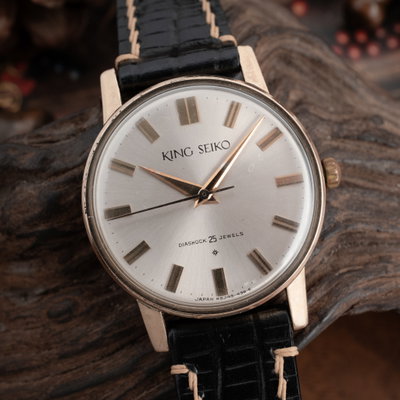
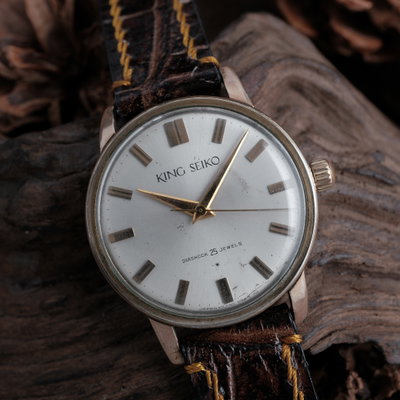
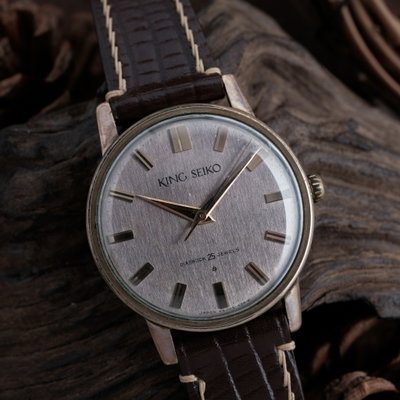
Other J14102 examples we auctioned
More Seiko references
Related pages
Frequently asked questions
Ready to hunt for your own?
More than 100 vintage watches go under the hammer every week.