Seiko Cronos J14021: What to Know Before Buying
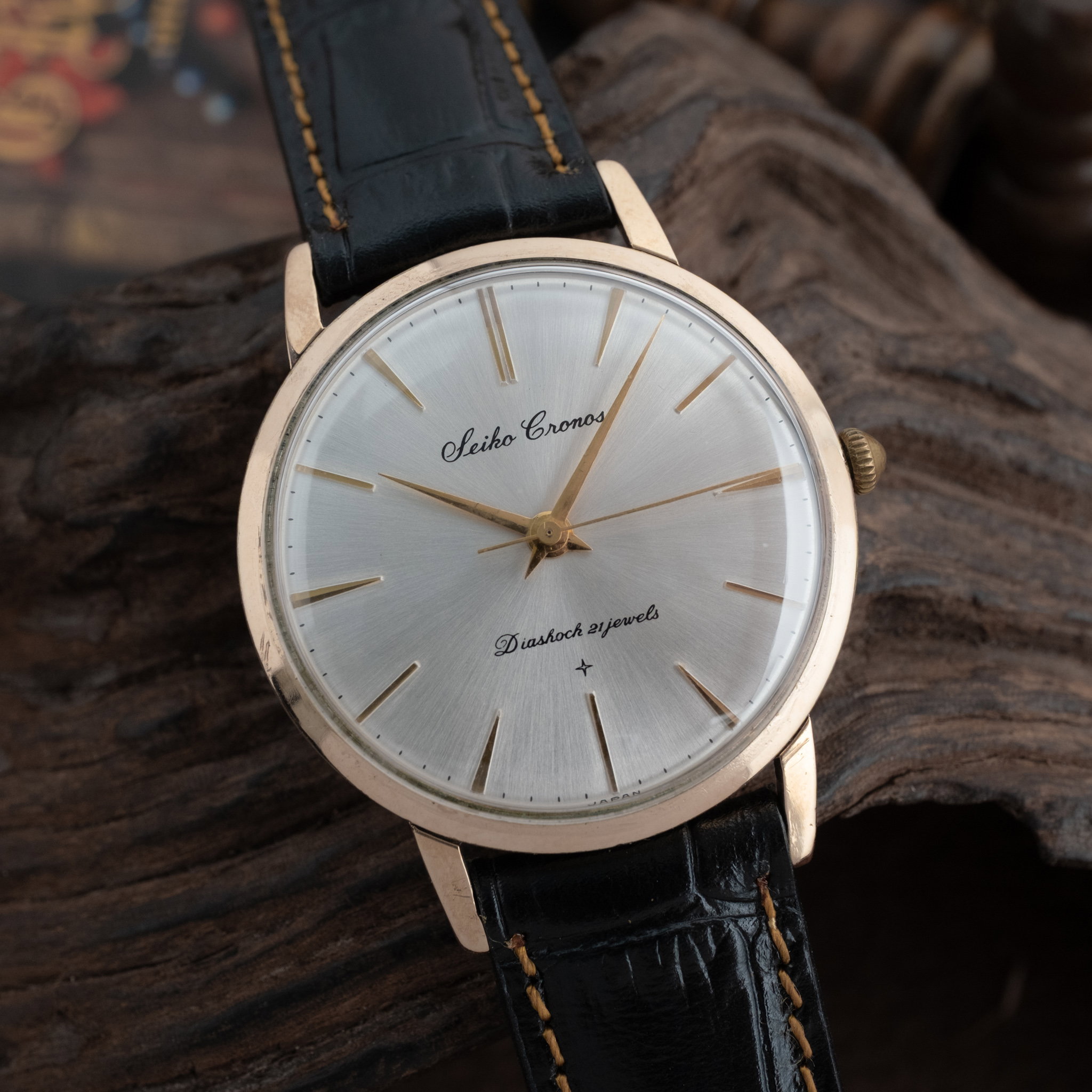
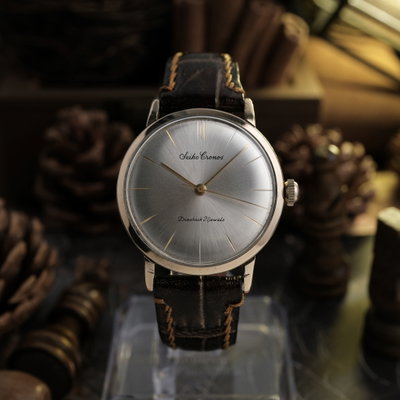
The Seiko Cronos J14021 is best bought with a clean silver dial, coherent gold-tone furniture and a gold-filled case that retains defined edges.
We auction more than 100 vintage watches a week.
Get first access: new Seiko J14021 drops and alerts before auctions end.
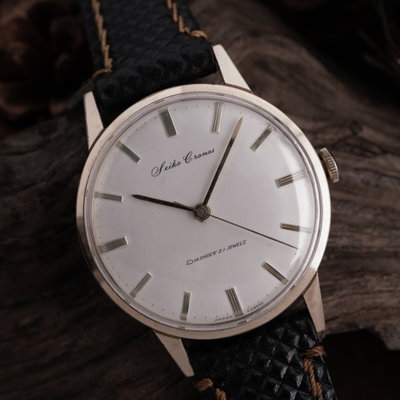
Browse 38 live Seiko auctionsThe J14021 is a gold-filled Seiko Cronos dress watch from 1959-1960, with a manual-wind movement and the restrained proportions expected of its period. Silver dials, faceted applied indices and dauphine hands give it a formal character, while the Cronos script supplies the visual signature. The dial decides the purchase: a clean original surface is worth more than brighter plating or a polished case.
Across the J14021 watches we have handled, case measurements run from 34 mm to 36 mm excluding the crown. That variation means the used Seiko Cronos J14021 should be judged as a complete object rather than bought by one quoted diameter. The version to want has crisp printing, compatible gold-tone furniture and enough definition left in the gold-filled case to show its original geometry.
Brand
Seiko
Model
Cronos
Reference
J14021
Known production years
1959-1960
| Case size | 34-36 mm, excluding crown |
| Movement | Seikosha manual wind |
| Jewel count | 21 jewels |
| Case material | Gold-filled, with stainless steel caseback on known versions |
| Dial | Silver sunburst or silvered satin |
| Hands | Gold-tone dauphine hands |
| Noted variant | SD star dial with solid gold applied indices |
The model landscape
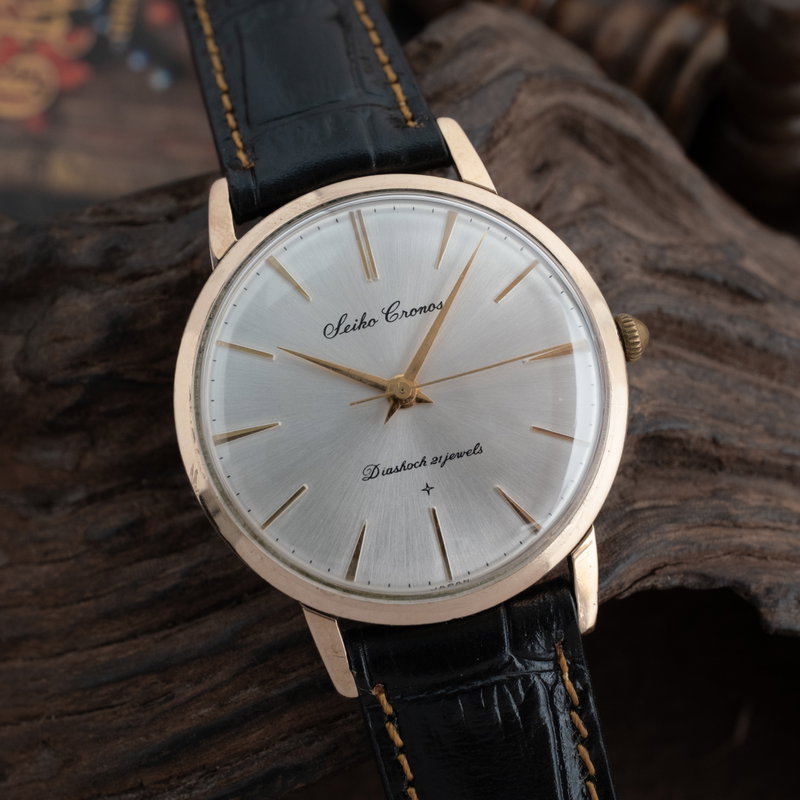
The J14021 landscape is narrow but not uniform. Silver sunburst and silvered satin dials both occur, usually with applied faceted indices and gold-tone dauphine hands. A 1959 version carries the SD star and solid gold applied indices, giving that dial a specific premium when the mark, furniture and surface remain coherent. The SD version is the one to choose over a comparable standard dial, but not when the star sits on a refinished surface.
Value sits first in the dial, then in the case. Clean script printing, an undisturbed silver finish and matching hands matter more than superficial shine on the gold-filled body. A presentation engraving dated 1960 can fit the production period, but it does not establish wider provenance. Without supporting documentation, the engraving proves only that the inscription is present and period-dated.
On the wrist
At 34-36 mm excluding the crown, the J14021 wears as a compact dress watch rather than a modern all-purpose piece. The integrated smooth bezel leaves much of the diameter to the silver dial, so the applied indices remain easy to read despite the modest case. Its thin dress-watch architecture keeps the profile restrained under a cuff, while the gold-filled case gives more warmth than a steel watch of similar proportions.
The 35 mm examples offer the clearest middle ground. They preserve the late-1950s proportions without feeling as reduced as a 34 mm case, while the 36 mm version has more visual presence. Diameter alone does not settle the choice because softened edges can make a larger case look less defined. Between a sharp 35 mm J14021 and a rounded 36 mm example with equal dials, take the 35 mm watch.
What goes wrong
Dial damage is the costliest fault. Central spotting, moisture staining, print loss and a refinished sunburst surface all reduce the case for buying, with a redial usually costing more in lost value than ordinary case wear. A genuine service dial must be described as such and should not be confused with a repainted original. On an SD dial, the star and solid gold indices need to belong with the surrounding printing and finish.
Gold fill can wear through at exposed edges, and no routine service replaces lost surface material. Polishing softens the case lines, while oxidation can mark the dauphine hands and replacement crowns can disturb an otherwise coherent watch. A stainless steel snap-on back is correct on known versions, but a correct material pairing does not prove that the case and movement began together. The service history is unknown unless paperwork states otherwise.
The manual-wind Seikosha movement has 21 jewels, but a running watch is not automatically a healthy one. Previous examples have shown materially different daily rates, so a snapshot reading should be treated as one observation rather than a service record. Buy the cleanest credible dial against the sharpest available case, then prefer movement coherence over cosmetic brightness. A polished case with a redial is the version to leave behind.
What to check before you buy
- Dial print and furniture: Cronos script should sit on a coherent silver sunburst or silvered satin surface with applied faceted indices and dauphine hands. Crisp text cannot rescue a dial whose finish shows repainting or incompatible ageing.
- SD dial configuration: A known 1959 J14021 uses the SD star with solid gold applied indices. The star, indices, printing and silver surface should age consistently, because an added emblem or refinished dial changes the watch materially.
- Case and caseback: Known J14021 versions use a gold-filled case, including examples with a stainless steel snap-on back. Check the exposed edges for wear-through and the case lines for rounding caused by polishing.
- Movement: The movement should be a 21-jewel manual-wind Seikosha unit. Correct markings alone do not exclude a married watch, so movement condition and its physical coherence with the case still matter.
- Hands, crown and replacement parts: Gold-tone dauphine hands should agree with the applied dial furniture in style and ageing. A replacement crown may be functional but must not be presented as original, and a genuine service dial is different from a redial.
Other J14021 examples we auctioned
11 Seiko J14021 auctioned
More Seiko references
Related pages
Frequently asked questions
Ready to hunt for your own?
More than 100 vintage watches go under the hammer every week.