Seiko 7619-9030 Sportsmatic Deluxe Reference Guide
The Seiko 7619-9030 is a 38 mm automatic worth buying in steel first, with dial originality and strong case lines taking priority over cosmetic shine.
We auction more than 100 vintage watches a week.
Get first access: new Seiko 7619-9030 drops and alerts before auctions end.
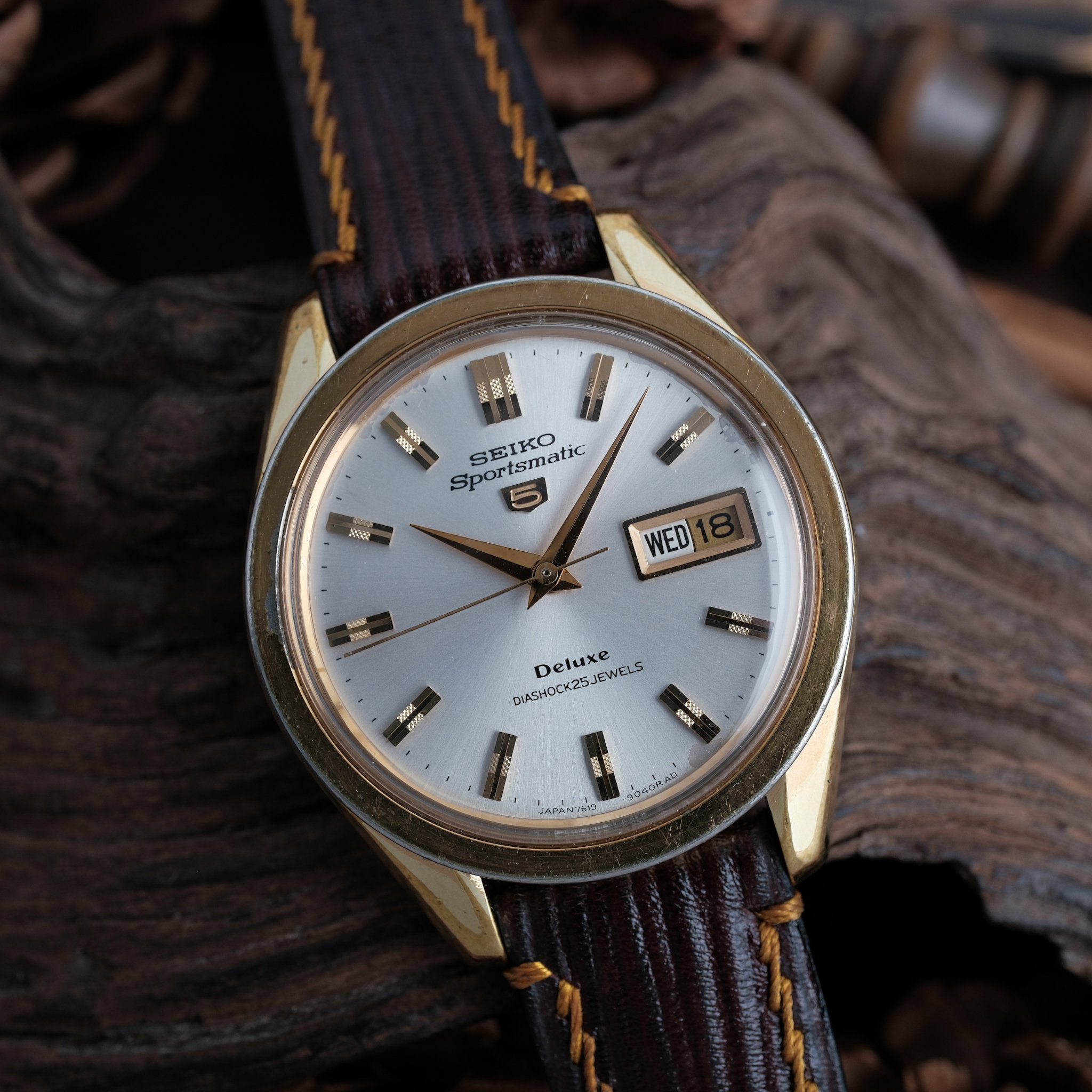
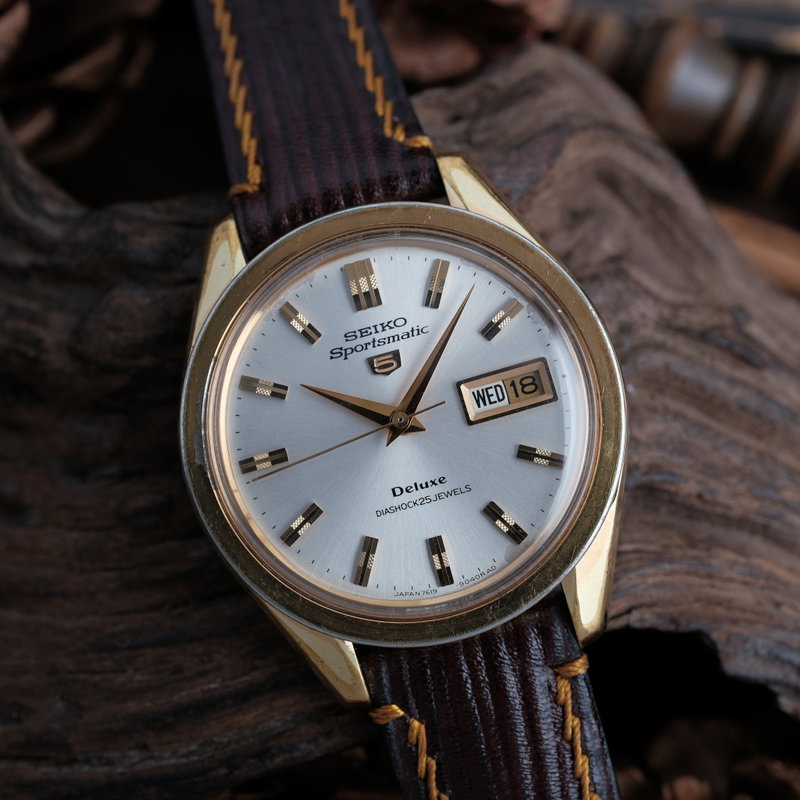
Browse 14 live Seiko auctionsThe Seiko 7619-9030 Sportsmatic Deluxe puts a 38 mm automatic case around the caliber 7619A, a silver sunburst dial and faceted applied indices. Produced across 1966-1967, it sits between a dress watch and a practical daily automatic. The recessed crown keeps the outline unusually clean, while the dedicated date pusher gives the case its most identifiable control.
Steel is the version to want first. Gold-plated examples have the same basic dial architecture and automatic movement, but wear through the plating cannot be reversed by servicing. On either version, the value sits chiefly in an honest sunburst dial, coherent furniture and well-defined case lines. A refinished dial costs more in collector appeal than ordinary surface wear.
Reference
7619-9030
Model
Sportsmatic Deluxe
Production years
1966-1967
Case diameter
38 mm excluding the crown
| Movement | Seiko caliber 7619A |
| Winding | Automatic |
| Jewels | 25 |
| Case materials | Stainless steel or gold-plated case with stainless steel caseback |
| Dial | Silver sunburst with applied faceted indices |
| Controls | Recessed crown and dedicated date pusher |
The model landscape
Reference 7619-9030 exists in stainless steel and in a gold-plated case with a stainless steel back. Both use the caliber 7619A automatic movement with 25 jewels and share the 38 mm diameter. Silver sunburst dials occur with faceted steel-tone or gold-tone indices, matching the case treatment. A red-accented day-date window is also known on a 1966 steel example, but it should not be treated as mandatory across every watch.
The steel case is the safer purchase against a gold-plated example at comparable money. Surface marks can remain honest on steel, while missing plating around exposed edges leaves base metal visible and no normal service replaces it. Gold plate still makes sense when the dial is stronger and the coating remains even. Among watches we have handled, dial preservation has varied less than case treatment, so the case still deserves a hard comparison.
On the wrist
At 38 mm excluding the crown, the Sportsmatic Deluxe has more wrist presence than its restrained dial suggests. The recessed crown removes the usual projection from the case side, keeping the silhouette tidy, while the broad silver sunburst surface changes noticeably with the light. Applied faceted indices provide definition without turning the dial into a sports-watch layout.
The watch suits a daily rotation when its mechanical state supports that use, but the service history of an individual used Seiko 7619-9030 is often unknown. Automatic winding removes the need for routine hand-winding, and the separate date pusher makes calendar adjustment distinctive to operate. Water resistance is not established by the available evidence, so ownership should not depend on exposure to water.
What goes wrong
A refinished dial is the most expensive mistake because the radial sunburst effect and applied furniture carry much of this reference's identity. Gold-plated cases then deserve the closest condition check: wear at the case edges is permanent, however clean the movement may be. Over-polishing creates a different loss by softening the case lines and making the transition into the lugs look rounded rather than defined.
Movement identity matters as much as cosmetic coherence. The watch should contain the automatic caliber 7619A with 25 jewels, while the case should retain its recessed crown and dedicated date pusher arrangement. A correct movement does not rule out a franken watch assembled from unrelated parts, and a period-correct dial is not proof that it left the factory in that case. Without documentation, the service history and the originality of consumable parts remain unknown.
What to check before you buy
- Dial print and furniture: The 7619-9030 is known with a silver sunburst dial and applied faceted indices in steel-tone or gold-tone treatment. A flat painted finish or incompatible furniture points toward a redial or parts substitution.
- Case shape and size: The case should measure 38 mm excluding the crown and retain well-defined lines into the lugs. Rounded transitions and soft edges indicate polishing, which removes metal and cannot be reversed.
- Crown and date control: The reference uses a recessed or hidden crown together with a dedicated date pusher. A conventional prominent crown or a case lacking the separate pusher conflicts with the known 7619-9030 architecture.
- Movement identity: The movement should be Seiko caliber 7619A, automatic and marked for 25 jewels. A different caliber makes the watch married or franken unless documentary evidence establishes an otherwise unknown factory configuration.
- Caseback: A dolphin-marked caseback is known on the 7619-9030, and gold-plated cases use a stainless steel back. The emblem alone proves nothing, so it must agree with the case, movement and controls.
- Variant coherence: Steel and gold-plated cases are both valid, as are matching steel-tone and gold-tone applied indices. A red-accented day-date is known on one 1966 example, but its presence or absence cannot authenticate the watch alone.
Other 7619-9030 examples we auctioned
6 Seiko 7619-9030 auctioned
More Seiko references
Related pages
Frequently asked questions
Ready to hunt for your own?
More than 100 vintage watches go under the hammer every week.