Seiko 7619-7060 Sportsmatic 5 Deluxe Reference Guide
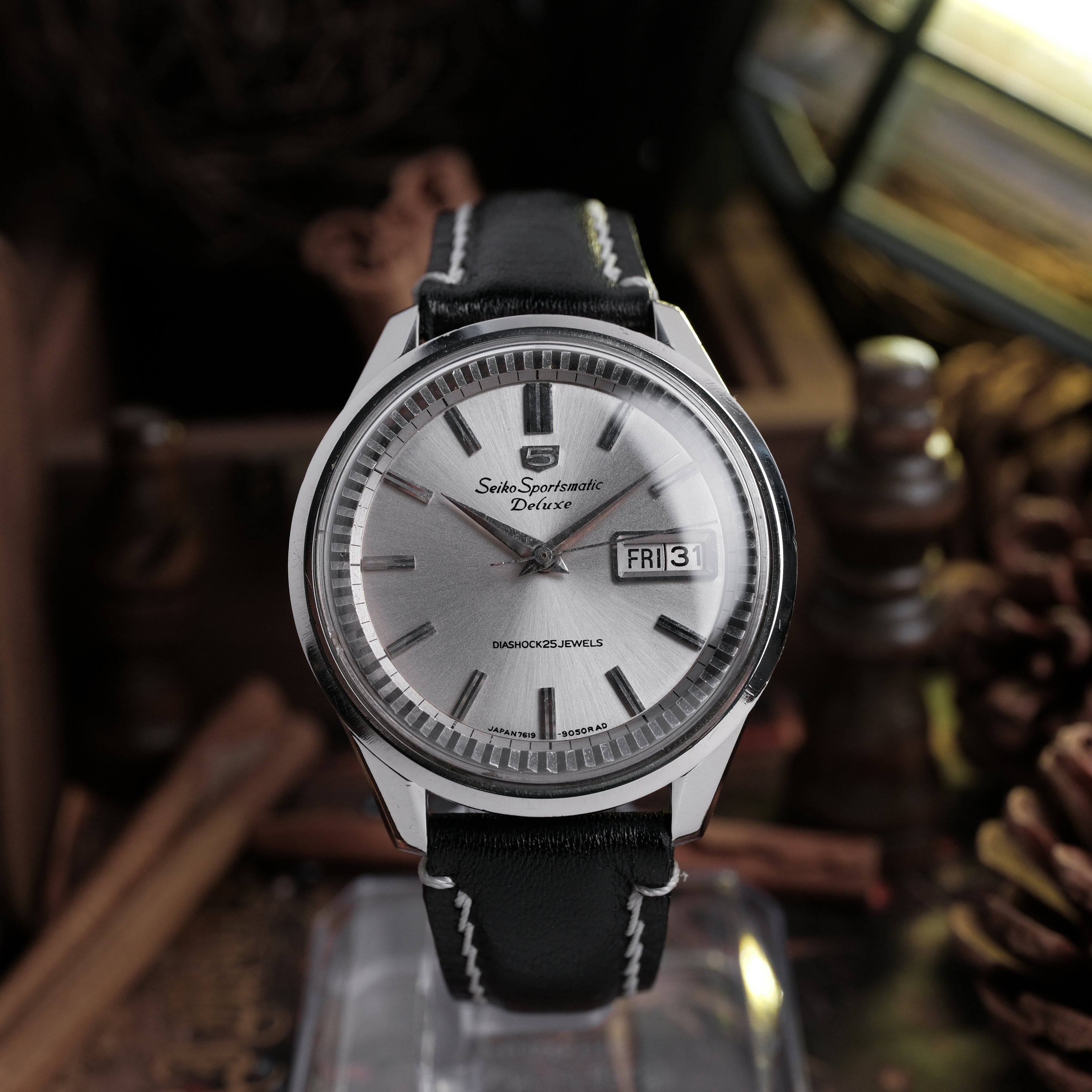
The Seiko 7619-7060 to buy is a stainless-steel example with an honest silver sunburst dial, crisp case lines and a correctly fitted caliber 7619A.
We auction more than 100 vintage watches a week.
Get first access: new Seiko 7619-7060 drops and alerts before auctions end.
Browse 14 live Seiko auctionsThe fluted inner bezel gives the Seiko 7619-7060 its identity, but the silver sunburst dial decides whether the watch is worth buying. Produced across 1965-1966, the Sportsmatic Deluxe combines applied faceted indices and a day-date display at 3 o'clock with automatic caliber 7619A.
Examples we have handled measure 37-38 mm excluding the crown, so this vintage Seiko has more wrist presence than its restrained dial suggests. Stainless-steel and gold-plated cases both exist. The used Seiko 7619-7060 market rewards a clean dial and sharp case lines more heavily than surface shine or an unsupported claim of originality.
Reference
7619-7060
Model
Sportsmatic 5 Deluxe
Known production years
1965-1966
Movement
Automatic caliber 7619A
| Handled case measurements | 37-38 mm excluding the crown |
| Case materials | Stainless steel or gold-plated stainless steel |
| Dial | Silver sunburst with applied faceted indices |
| Calendar display | Day-date at 3 o'clock |
| Inner bezel | Fluted |
| Known caseback detail | Dolphin motif |
What it was built for
The Sportsmatic 5 Deluxe was built as a mid-1960s automatic watch that could cover daily wear without abandoning dress-watch detail. Caliber 7619A drives a day-date display at 3 o'clock, while the fluted inner bezel and applied faceted indices give the silver dial depth that flat printing cannot produce.
At 37-38 mm excluding the crown, reference 7619-7060 carries enough diameter for the day-date window and applied furniture to remain legible. The size also makes case preservation unusually visible: softened edges change the whole outline, while crisp case lines keep the broad dial and bezel properly framed.
Where the value sits
The dial carries the widest value spread on the vintage Seiko 7619-7060. An honest silver sunburst surface with intact applied indices is worth prioritising over a brighter redial, because refinishing removes the factory surface and cannot be reversed. A discreet mark between 7 and 8 matters less than replaced printing across the entire dial.
Case material creates the next buying split. Stainless steel tolerates honest wear without exposing a different base colour, while gold plating can wear through at the lugs and edges, and no service returns lost factory plating. The available evidence does not establish either material as rarer, so a rarity premium is not justified from material alone.
The dolphin caseback and fluted inner bezel add reference-specific interest, but neither rescues a damaged dial or a heavily softened case. Value remains concentrated in the parts that cannot be renewed without changing the watch: dial surface, applied furniture, plating and sharp case geometry.
Where to start
Start with the worst fault. Reject a redial before worrying about a replaced crystal or gasket, then assess whether polishing has softened the case lines. On a gold-plated example, inspect the lug edges for exposed base metal; on either case, confirm that the fluted inner bezel remains present and evenly seated.
Movement identity comes after the watch has passed those larger tests. Reference 7619-7060 belongs with automatic caliber 7619A, but caliber correctness does not prove that the case and movement left the factory together. The service history is unknown unless supported by documentation, and without it we prefer not to speculate beyond what the watch itself establishes.
Between a stainless-steel example with a lightly marked original dial and a shinier gold-plated example with refinished printing, take the steel watch. The small dial mark is bounded damage. A redial changes the face collectors are paying for.
What to check before you buy
- Dial architecture: The established configuration is a silver sunburst surface with applied faceted indices and a day-date display at 3 o'clock. A flat painted finish or altered furniture is a redial or franken warning.
- Fluted inner bezel: Reference 7619-7060 is distinguished by a fluted inner bezel surrounding the dial. Its absence, poor seating or incompatible finish suggests replaced parts and requires the whole watch to be assessed for a franken assembly.
- Case geometry: Sharp case lines are visible on preserved examples. Polishing softens those boundaries first, while gold-plated cases can also expose base metal at the lug edges, a loss that polishing cannot reverse.
- Caseback motif: A dolphin caseback is established on a handled 7619-7060, but the evidence does not prove universal fitment. Use it as supporting evidence only, since a correct-looking back can be transferred from another watch.
- Movement identity: The movement should be automatic caliber 7619A. Any other caliber conflicts with the handled reference, although the correct caliber alone cannot exclude a married watch assembled from a separate case and movement.
- Crown and hands: The available evidence does not establish one crown profile or a sufficiently detailed hand specification for this reference. Claims that either part is original should therefore be treated as unproven rather than repeated as fact.
- Redial assessment: A discreet local mark between 7 and 8 is known on an otherwise clean dial and does not by itself imply refinishing. A replaced sunburst surface or altered applied furniture is more consequential than bounded ageing.
Other 7619-7060 examples we auctioned
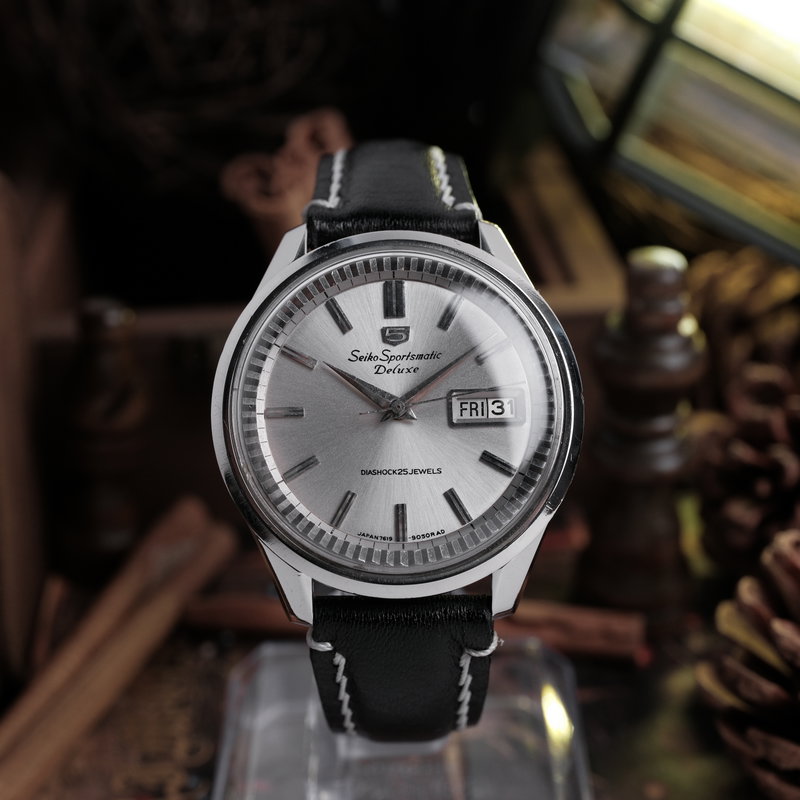
5 Seiko 7619-7060 auctioned
More Seiko references
Related pages
Frequently asked questions
Ready to hunt for your own?
More than 100 vintage watches go under the hammer every week.