Seiko 7619-7040 Sportmatic Deluxe Reference Guide
The Seiko 7619-7040 to buy has a clean silver sunburst dial, a sound quickset pusher and either honest steel or clearly disclosed plating wear.
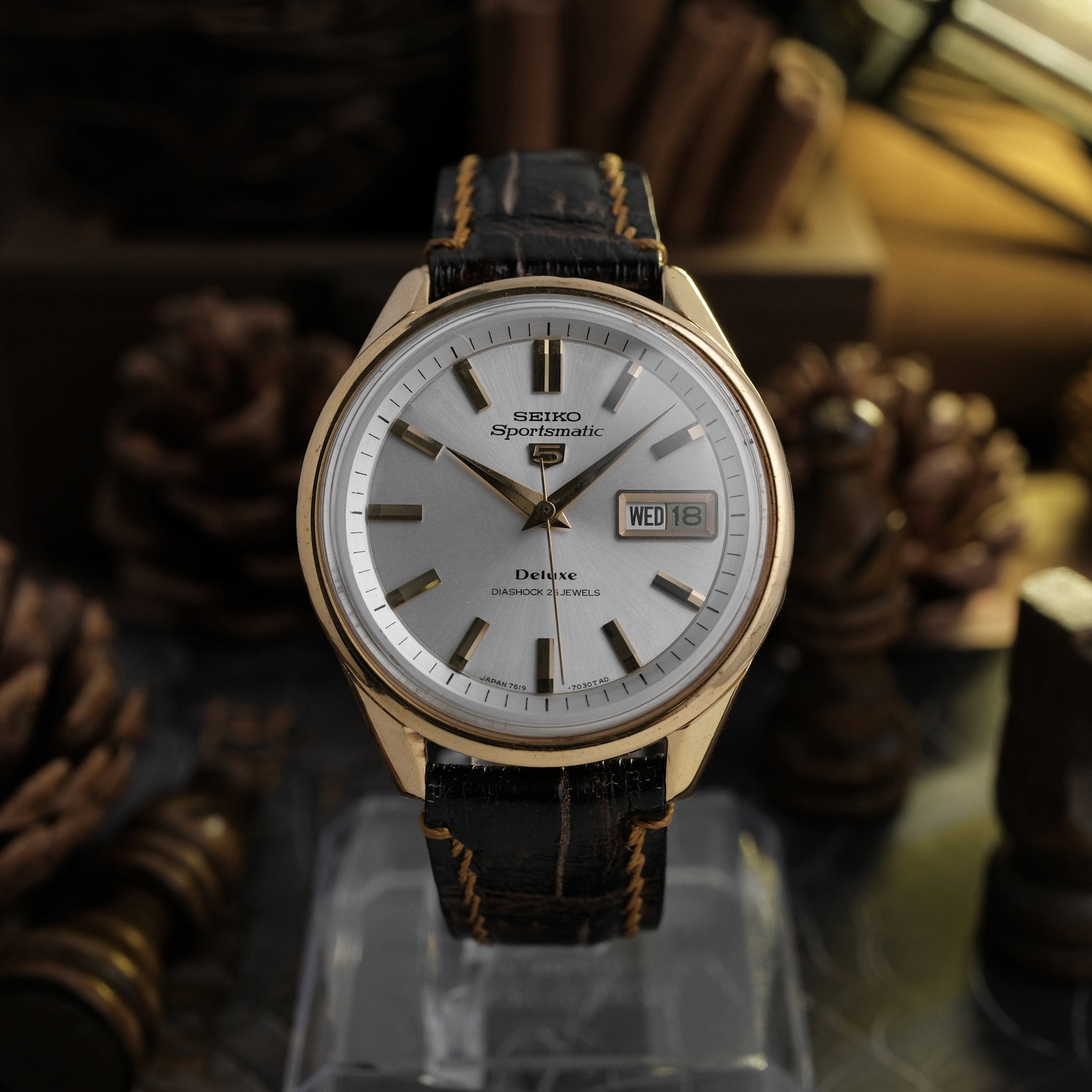
The Seiko 7619-7040 is a substantial mid-1960s automatic built around a silver sunburst dial, day-date display and an unusual dedicated date pusher. It appears as both Sportsmatic Deluxe and Sportsmatic 5 Deluxe, with the same reference spanning steel, gold-plated and white gold-plated cases.
The steel version is the safest place to start. Plated examples can have stronger colour contrast, but wear-through at the lugs cannot be reversed by servicing. Across the 1965-1967 production span, dial condition and correct operation of the pusher matter more than surface shine.
Reference
7619-7040
Model names
Sportmatic Deluxe and Sportsmatic 5 Deluxe
Known production years
1965-1967
Movement
Seiko caliber 7619A automatic
| Jewel count | 25 jewels |
| Case size | 38 mm excluding the crown |
| Known case materials | Stainless steel, gold-plated and white gold-plated |
| Calendar | Day-date at 3 o'clock with dedicated date-quickset pusher at 2 o'clock |
| Crown position | Recessed at 4 o'clock |
| Caseback motif | Dolphin engraving |
What it was built for
The 7619-7040 combines Seiko's automatic caliber 7619A with a day-date aperture at 3 o'clock and a separate date-quickset pusher at 2. The recessed crown at 4 o'clock keeps the case outline clean, while the pusher makes date correction less tedious than repeated cycling through the hands.
This is a calendar-led daily watch rather than a timing instrument. Its applied faceted indices, dauphine hands and fluted bezel place it on the dress side of Seiko's 1960s range, while the dolphin-engraved caseback supplies the period-specific identity collectors expect.
The model landscape
Reference 7619-7040 occurs under the Sportsmatic Deluxe and Sportsmatic 5 Deluxe names. The known cases include stainless steel, gold-plated and white gold-plated versions, all paired with the 38 mm format and caliber 7619A. A model-name difference alone is therefore not evidence of a different reference.
Steel is the strongest ownership choice because scratches and polishing can be judged directly. Gold-plated cases need closer scrutiny at lug tips, case edges and the pusher opening, where base metal can show through. White gold-plated examples retain a cooler appearance, but the same plating risk remains.
What goes wrong
The worst fault is a refinished silver sunburst dial because it removes more value than case wear or hand oxidation. Original dials can carry minor spotting, including marks confined to the day disc, but printed text, applied furniture and the sunburst surface should still agree in age. A genuine service dial is different from a redial and must be disclosed as a factory replacement.
The dedicated pusher introduces a reference-specific failure point: it must advance the date correctly without sticking or sitting proud. Caliber 7619A examples can also run materially fast, so operational status is not evidence of acceptable timekeeping. The service history is unknown unless paperwork establishes it.
Cases lose definition through polishing, with the fluted bezel and lug edges becoming soft. Plating can wear through permanently, dauphine hands can oxidise, and a replaced caseback can remove the expected dolphin motif. A watch assembled from period-correct Seiko parts that never shipped together is franken, even when every individual part is genuine.
What to check before you buy
- Dial and calendar layout: The silver sunburst dial should carry applied faceted indices and a framed day-date aperture at 3 o'clock. Uneven printing, an altered surface or furniture inconsistent with the dial's ageing points toward a redial or mixed parts.
- Quickset pusher and crown: Reference 7619-7040 uses a dedicated date-quickset pusher at 2 o'clock and a recessed crown at 4 o'clock. The pusher should advance the date and return cleanly without binding or remaining proud of the case.
- Movement identity: The movement should be the automatic Seiko caliber 7619A with 25 jewels. Another caliber makes the watch mechanically inconsistent with the handled examples and raises the possibility of a married case and movement.
- Case and caseback: The fluted bezel should retain defined ridges, and the lug edges should not be polished into soft curves. The expected dolphin engraving on the back must be assessed alongside the reference marking, not treated as proof by itself.
- Plated-case wear: On gold-plated and white gold-plated cases, inspect the lug tips, case edges and pusher opening for exposed base metal. Replating can disguise wear and alter edge definition, so uniform colour is not proof of an untouched case.
Other 7619-7040 examples we auctioned
Seiko · Sportsmatic 5 Deluxe · 7619-7040 · 1966
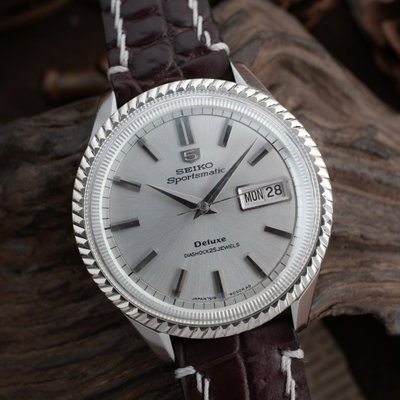
Seiko · Sportsmatic Deluxe · 7619-7040 · 1966
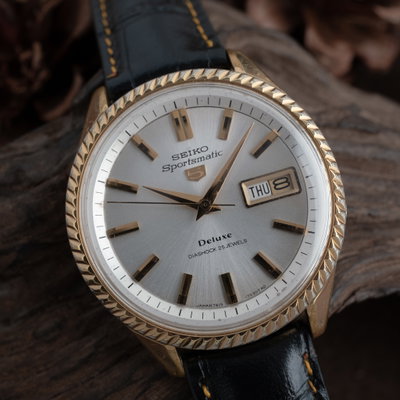
Seiko · Sportsmatic Deluxe · 7619-7040 · 1965
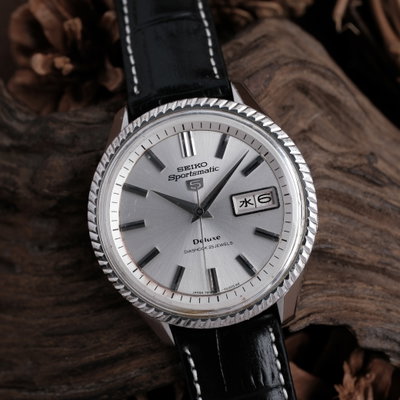
Seiko · Sportsmatic Deluxe · 7619-7040 · 1966
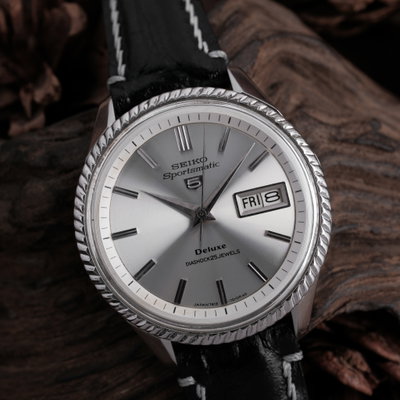
Seiko · Sportsmatic Deluxe · 7619-7040 · 1966
More Seiko references
Related pages
Frequently asked questions
Ready to hunt for your own?
More than 100 vintage watches go under the hammer every week.