Seiko 7619-9000: What Matters Before You Buy
Buy the Seiko 7619-9000 for its silver sunburst dial and caliber 7619A, favouring steel over worn plating and an honest dial over sharper shine.
We auction more than 100 vintage watches a week.
Get first access: new Seiko 7619-9000 drops and alerts before auctions end.
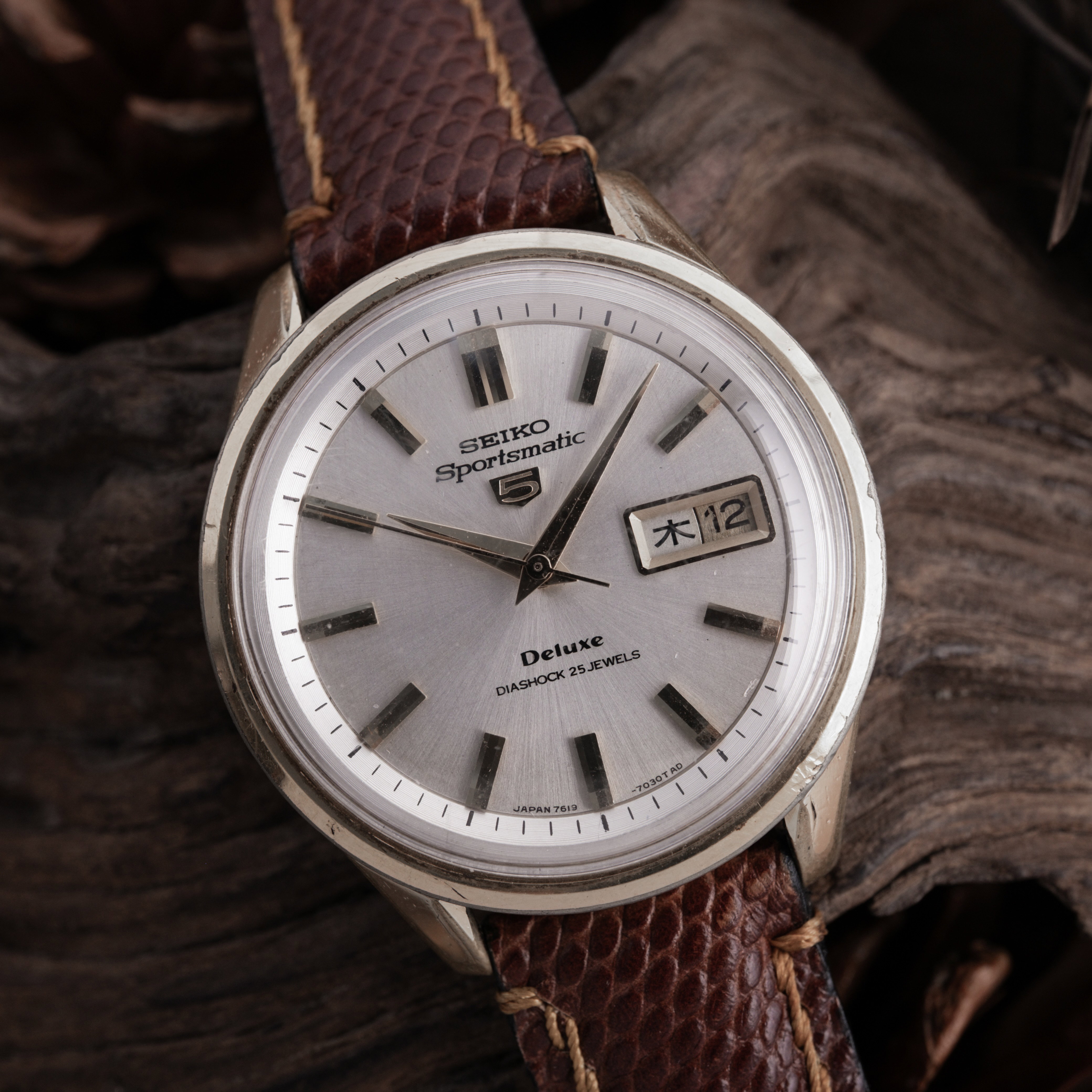
Browse 14 live Seiko auctionsThe 7619-9000 is a 1966 automatic built around Seiko caliber 7619A, with a dedicated date pusher and a recessed crown. The Sportsmatic 5 Deluxe shown here pairs those controls with a silver sunburst dial and applied faceted indices. Steel and gold-plated cases both occur. That combination makes case material, rather than movement choice, the first decision when buying this reference.
Handled examples measure either 37 mm or 38 mm excluding the crown, a variation small enough that case shape and prior polishing matter more on the wrist. Gold-plated versions use a stainless steel caseback, while steel examples avoid the irreversible brassing seen on worn plated cases. Buy the dial first. A refinished silver sunburst dial costs this reference more than honest case wear or an unknown service history.
Reference
7619-9000
Known production year
1966-1966
Movement
Seiko caliber 7619A automatic
Recorded jewel count
25 jewels
| Case diameter | 37-38 mm excluding the crown |
| Case materials | Stainless steel or gold-plated with stainless steel caseback |
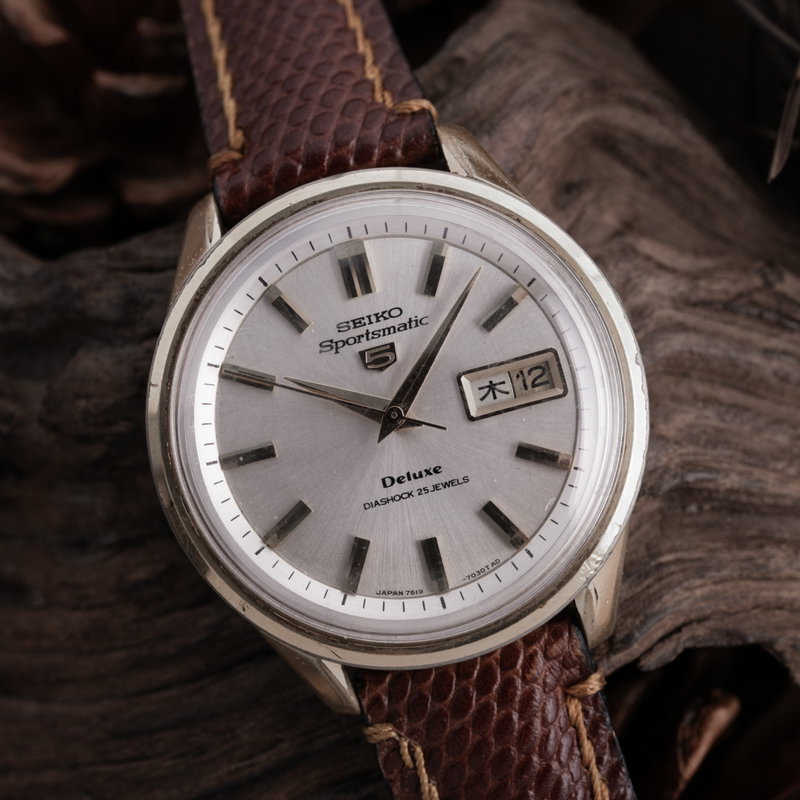
| Dial | Silver sunburst with applied faceted baton indices |
| Calendar control | Dedicated date pusher |
| Crown | Recessed |
What it was built for
The 7619-9000 combines an automatic caliber 7619A with a separate date pusher, so calendar correction does not depend solely on repeated crown operation. Its recessed crown reduces the visual interruption along the case side, while the applied indices and sunburst finish move the watch away from a plain utility dial. The arrangement belongs specifically to Seiko's 1966 Sportmatic Deluxe and Sportsmatic 5 Deluxe production.
The 25-jewel specification recorded on a steel Sportsmatic 5 Deluxe distinguishes the movement configuration without changing the central buying issue. The movement must be a caliber 7619A, and the date pusher must operate correctly without sticking or failing to advance the display. Service history is often unknown. Without documentation, the watch itself can establish function and configuration, but not when internal work was completed.
Where the value sits
The silver sunburst dial carries the largest share of value because spotting, edge wear and refinishing remain visible after the movement has been serviced. Light edge wear is less damaging than a redial that replaces the original print or alters the sunburst surface. Applied faceted baton indices should belong visually with the hands and dial finish. A genuine service dial is not the same as a redial, but neither should be sold as the watch's original dial.
Case material creates the next meaningful split. A steel 7619-9000 tolerates ordinary wear without exposing a base layer, while a gold-plated case can show brassing at the lugs and case edges that no polishing reverses. Sharp transitions around the lugs deserve a premium over softened geometry. Between a steel example with an honest dial and a brighter plated example with wear-through, take the steel watch.
Where to start
Start with a silver sunburst dial that remains even across the centre, accepting minor spotting before accepting refinishing. Then choose between the lower-maintenance steel case and the warmer gold-plated case with stainless steel back. At 37 mm to 38 mm excluding the crown, either version has enough presence for regular wear without relying on oversized proportions. The recessed crown also keeps the case profile cleaner against the wrist.
The worst faults are a refinished dial, brassing through the gold plating and lugs softened by repeated polishing. A sticking date pusher or a calendar that fails to advance adds a mechanical problem specific to the 7619-9000's useful complication. Replaced crowns and crystals may be service parts, so describe them as period-correct only when the evidence supports that conclusion. The strongest used Seiko 7619-9000 is steel, correctly configured and mechanically tested, with an honest dial ahead of cosmetic shine.
What to check before you buy
- Movement and calendar architecture: The watch should contain Seiko caliber 7619A and retain the dedicated date pusher. A different caliber, missing pusher or calendar that does not respond correctly can indicate incorrect parts or a mechanical fault.
- Dial configuration: Known 7619-9000 dials are silver sunburst with applied faceted baton indices. Flat refinishing, replaced printing or furniture that does not sit coherently with the dial can indicate a redial or franken assembly.
- Case material and wear: The reference occurs in stainless steel and in gold-plated cases with stainless steel casebacks. On plated examples, inspect the lug edges for brassing; on both versions, softened lug transitions disclose polishing.
- Crown and case controls: A recessed crown and separate date pusher belong to the known configuration. Replacement service parts may still be functional, but mismatched controls should not be described as original without supporting evidence.
Other 7619-9000 examples we auctioned
6 Seiko 7619-9000 auctioned
More Seiko references
Related pages
Frequently asked questions
Ready to hunt for your own?
More than 100 vintage watches go under the hammer every week.