Seiko 7619-7050 Sportmatic Deluxe Reference Guide
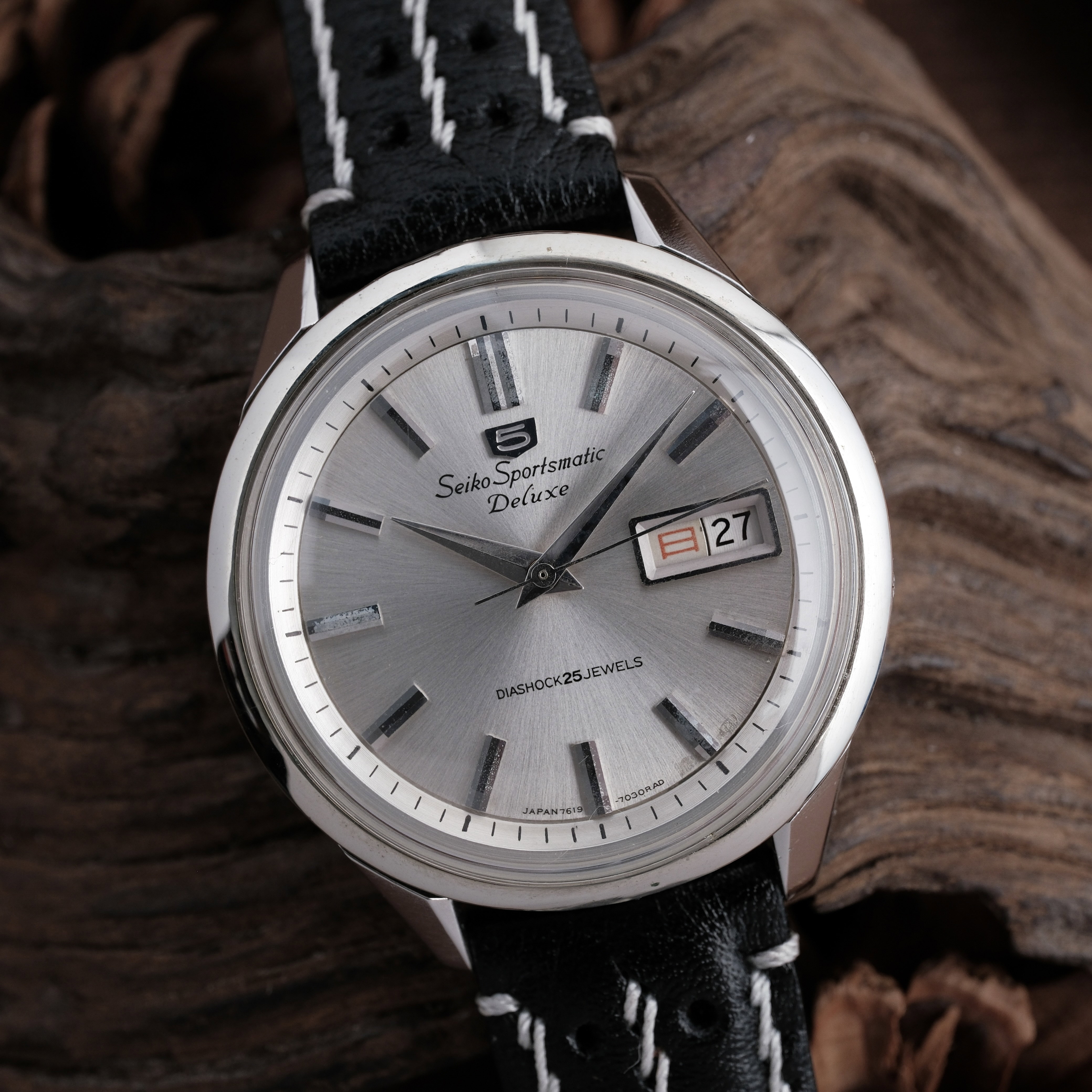
The Seiko 7619-7050 is a 1965-1967 Sportmatic Deluxe best bought with a clean sunburst dial, sharp case lines and a correct caliber 7619A.
We auction more than 100 vintage watches a week.
Get first access: new Seiko 7619-7050 drops and alerts before auctions end.
Browse 24 live Seiko auctionsThe Seiko Sportmatic Deluxe 7619-7050, also written Sportsmatic Deluxe in some listings, belongs to a narrow 1965-1967 production span. Its automatic caliber 7619A drives a framed day and date display, while a recessed crown and separate date pusher preserve the round case profile.
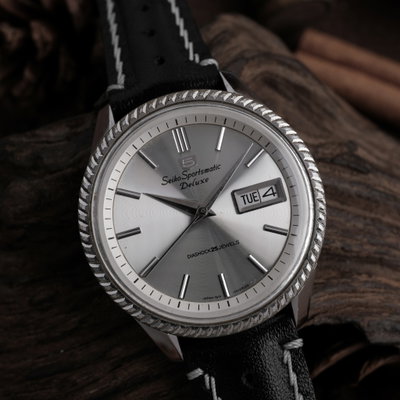
The version to want is the one with the cleanest credible sunburst dial and the least disturbed case, not automatically the brightest example. Cases encountered include stainless steel, gold-plated SGP with a steel back, and a white gold plated configuration with a fluted bezel. Across those variants, dial spotting, hand oxidation, worn plating and softened case lines matter more than superficial shine.
Reference
7619-7050
Model
Sportmatic Deluxe
Known production years
1965-1967
Movement
Automatic caliber 7619A
| Jewel count | 25 jewels |
| Observed case sizes | 37 mm and 38 mm |
| Observed case materials | Stainless steel, gold-plated SGP with stainless steel back, and white gold plated |
| Dial | Silver sunburst with applied faceted indices |
| Calendar | Framed day and date display at 3 o'clock |
| Case controls | Recessed crown and dedicated date pusher at 2 o'clock |
| Caseback detail | Engraved dolphin medallion |
The model landscape
The reference changed character substantially through its case treatment. Stainless steel gives the silver sunburst dial a cooler, plainer frame, while gold-plated SGP examples pair gold-tone applied indices and dauphine hands with a stainless steel caseback. The white gold plated version adds a fluted bezel, producing the most visibly elaborate configuration without changing the underlying caliber 7619A.
Case diameters encountered are 37 mm and 38 mm, a small numerical spread that does not create a genuinely different class of watch. The useful distinction is condition: crisp case lines and an intact fluted bezel outrank a nominal extra millimetre. Between a bright plated case with wear at the edges and an honest steel case with stronger geometry, take the steel watch.
On the wrist
At 37-38 mm, the 7619-7050 has more presence than many restrained 1960s dress watches, yet its recessed crown keeps the outline compact. The silver sunburst finish changes noticeably in direct light, while applied faceted indices and dauphine hands provide contrast without crowding the dial.
The separate date pusher at 2 o'clock is part of the reference's appeal because the main crown remains visually subdued. A clean pusher opening and a crown that sits correctly within the case profile therefore matter on the wrist as well as during authentication. The fluted bezel reads dressier; plain steel is the easier version to wear regularly.
What goes wrong
Dial damage is the expensive fault. Silver sunburst dials can develop spotting, and refinishing removes the surface character that gives this reference much of its identity. Minor oxidation on the dauphine hands is less serious when it remains confined to the metal and the dial printing stays crisp. A service dial is a genuine replacement, not a redial, but neither should be described as the original dial without evidence.
Plated cases demand equal caution. Wear through gold or white gold plating cannot be reversed by routine service, and polishing can soften the case lines or reduce definition on the fluted bezel. The dolphin caseback medallion should retain readable relief; a heavily flattened back loses a reference-specific detail. Service history is often unknown, so operating condition must not be confused with documented maintenance.
What to check before you buy
- Dial and calendar layout: A correct known layout has a silver sunburst dial, applied faceted indices and a framed day-date display at 3 o'clock. Flat paint, blurred printing or an absent sunburst effect points to a redial rather than normal ageing.
- Hands and case finish: Gold-plated cases can pair gold-tone applied indices with gold-tone dauphine hands. A steel, gold-plated SGP or white gold plated case must read as one coherent configuration, since mismatched finishes can indicate a franken watch.
- Crown and date pusher: The crown is recessed into the case profile, with a separate date pusher at 2 o'clock. A conventional exposed crown, a damaged pusher opening or poorly fitting replacement parts conflict with the reference's known architecture.
- Movement: The movement should be the automatic 25-jewel caliber 7619A. A different caliber makes the watch incorrect for reference 7619-7050 and can indicate a married case and movement even when the exterior looks convincing.
- Caseback: Known examples use a dolphin medallion on the caseback, including plated cases with a stainless steel back. Weak relief may result from wear or polishing, while an unrelated back requires closer scrutiny of the entire watch.
Other 7619-7050 examples we auctioned
16 Seiko 7619-7050 auctioned
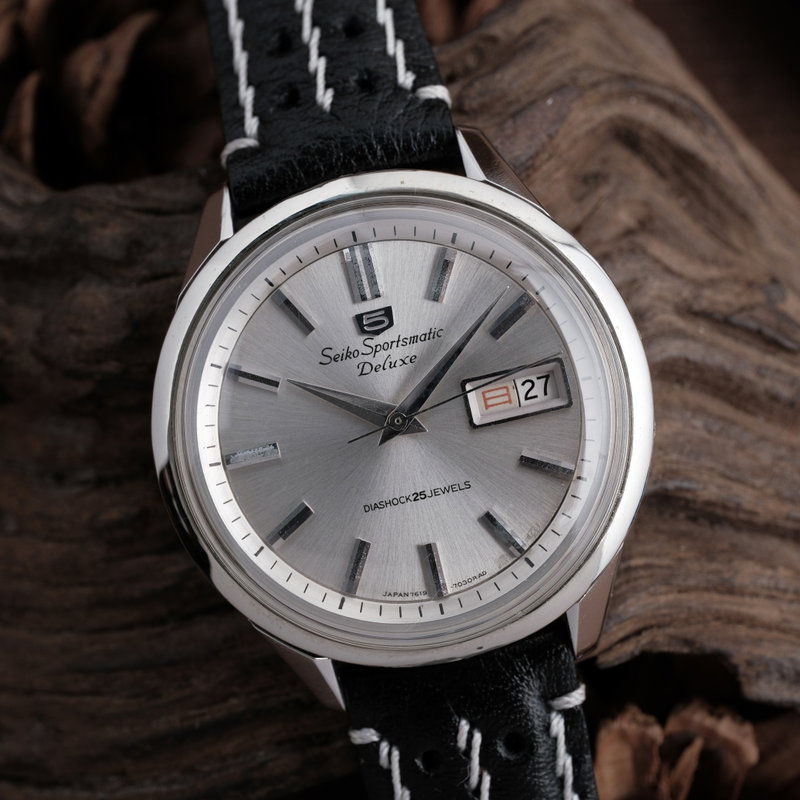
Seiko · Sportsmatic Deluxe · 7619-7050 · 1965
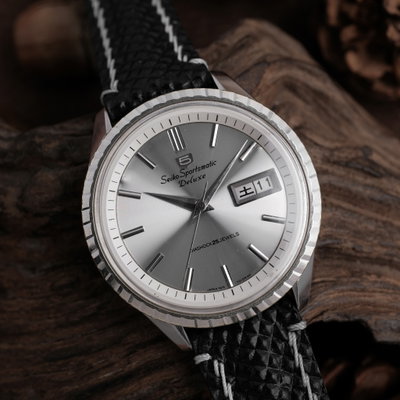
Seiko · Sportsmatic Deluxe · 7619-7050 · 1965
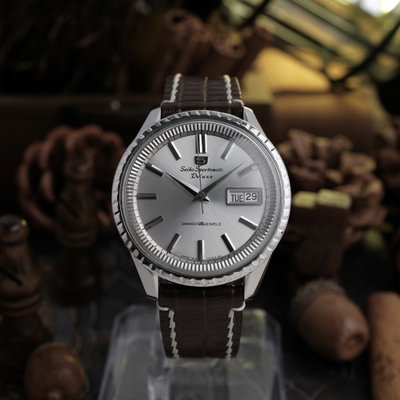
Seiko · Sportsmatic Deluxe · 7619-7050 · 1966
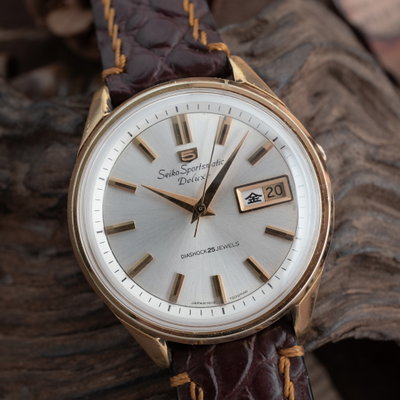
Seiko · Sportsmatic Deluxe · 7619-7050 · 1966
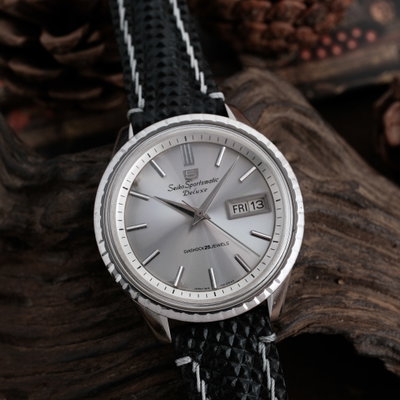
Seiko · Sportsmatic Deluxe · 7619-7050 · 1965
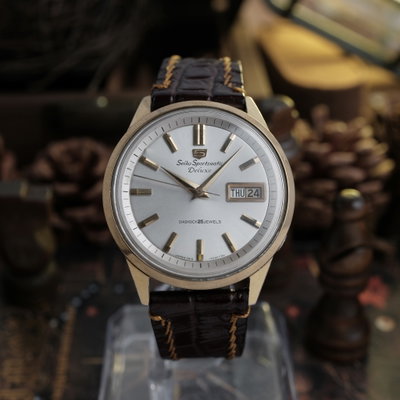
Seiko · Sportsmatic Deluxe · 7619-7050 · 1966
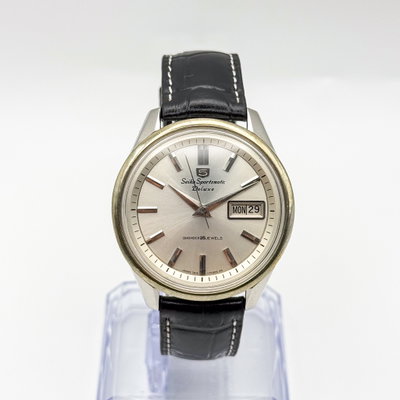
Seiko · Sportsmatic Deluxe · 7619-7050 · 1966
Seiko · Sportsmatic Deluxe · 7619-7050 · 1965
More Seiko references
Related pages
Frequently asked questions
Ready to hunt for your own?
More than 100 vintage watches go under the hammer every week.