Seiko Sportsmatic Deluxe 7619-7030 Reference Guide
The Seiko 7619-7030 is a 1965-1966 Sportsmatic Deluxe whose value rests on its silver sunburst dial, caliber 7619A and correct dolphin caseback.
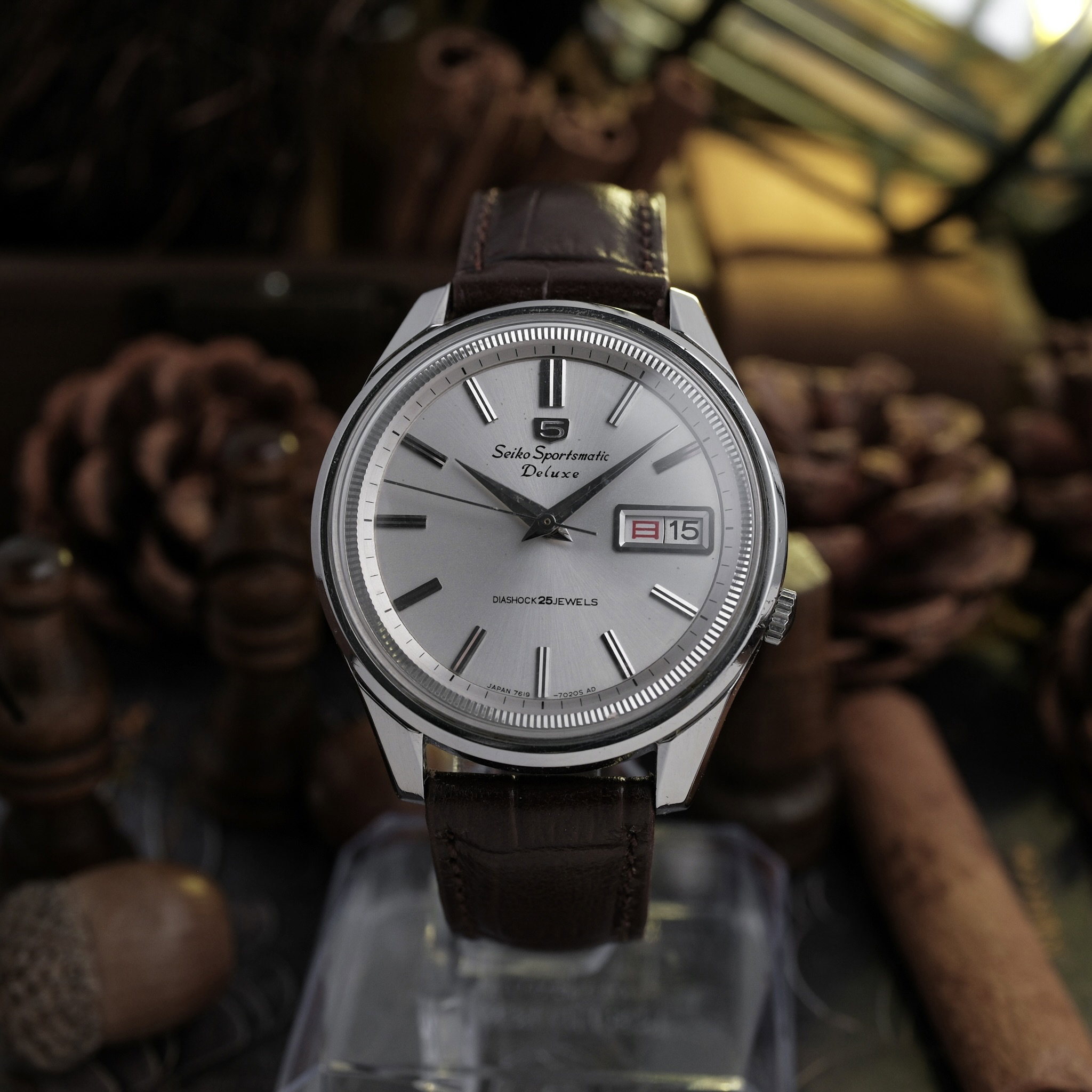
The Seiko Sportsmatic Deluxe 7619-7030 is a large, sharply detailed automatic dress watch from 1965-1966.
The version to want keeps those defining parts together: caliber 7619A, the date-setting pusher at 3 o'clock and the engraved dolphin caseback. A refinished dial costs more in lost value than light case wear, while localized spotting can be acceptable when the printing and sunburst finish remain intact.
Reference
7619-7030
Model
Sportsmatic Deluxe
Production years
1965-1966
Case material
Stainless steel
| Case size | 38 mm excluding the crown |
| Movement | Automatic caliber 7619A |
| Jewel count | 25 jewels |
| Dial | Silver sunburst with applied faceted indices |
| Calendar control | Dedicated date-setting pusher at 3 o'clock |
| Caseback | Engraved dolphin caseback |
What it was built for
The 7619-7030 combines dress-watch finishing with practical calendar controls. Its automatic caliber 7619A has 25 jewels, while the dedicated pusher at 3 o'clock advances the date without repeated crown cycling.
At 38 mm excluding the crown, the stainless-steel case has more wrist presence than many restrained 1960s dress watches. Dauphine-style hands and applied indices keep the silver dial legible, while the fluted inner bezel ring adds texture without turning the watch into a sports chronograph.
Where the value sits
The dial carries the largest share of value. A clean silver sunburst surface with intact applied furniture outranks a brighter case paired with a redial, and localized dark spotting should be judged by position and extent rather than hidden behind the word patina. The engraved dolphin caseback and correct calendar arrangement then support the reference as a coherent whole.
A service dial is a genuine factory replacement and is not the same as a redial, but neither should be priced as the dial that left the factory with the watch. The strongest 7619-7030 is therefore not the shiniest example. It is the one whose dial, caliber 7619A, pusher layout and caseback agree, with any replacements disclosed rather than disguised.
What goes wrong
Dark spotting on the silver dial is the first fault to price, because refinishing removes the surface collectors are paying for. Dauphine-style hands can develop surface oxidation, and dust becomes obvious under macro photography. Case wear matters less until polishing softens the edges or weakens the dolphin engraving.
The date-setting pusher must advance the date correctly, while the day display and automatic movement need functional assessment rather than assumptions based on appearance. A replaced crown or crystal can be period-correct without being original, and a franken example may combine genuine Seiko parts that never shipped together. The service history is unknown without documentation, so no service claim should be inferred from a clean case or strong running report.
What to check before you buy
- Dial and furniture: The reference should have a silver sunburst dial with applied faceted indices, applied logos and Sportsmatic Deluxe text. Flat repainting, altered printing or missing applied parts point to a redial or incompatible replacement.
- Calendar layout: The dedicated date-setting pusher sits at 3 o'clock, and handled examples include a Kanji day wheel. A different case control layout needs explanation because it conflicts with a defining feature of the 7619-7030.
- Movement: The movement should be the automatic caliber 7619A with 25 jewels. A different caliber makes the watch incorrect for this reference and may indicate a married movement or a franken assembly.
- Caseback: The stainless-steel caseback should carry the engraved dolphin. A faint engraving can result from wear or polishing, but an incompatible back breaks the expected relationship between reference, case and movement.
- Hands and inner bezel: Dauphine-style hands should sit against a fluted inner bezel ring. Surface oxidation on the hands is known, but mismatched shapes or finishes can indicate later replacements even when the parts are genuine Seiko.
Other 7619-7030 examples we auctioned
More Seiko references
Related pages
Frequently asked questions
Ready to hunt for your own?
More than 100 vintage watches go under the hammer every week.