Seiko 7606-7971 Sportsmatic Deluxe Reference Guide
The Seiko 7606-7971 is a 1964 automatic best bought with a clean silver sunburst dial, correct controls and the least case wear.
Live now
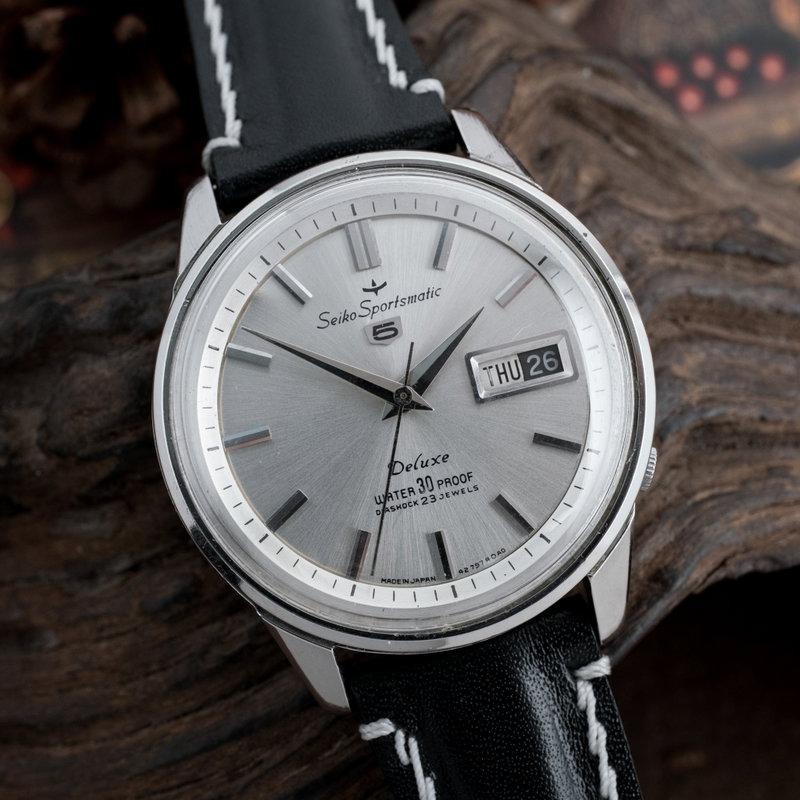
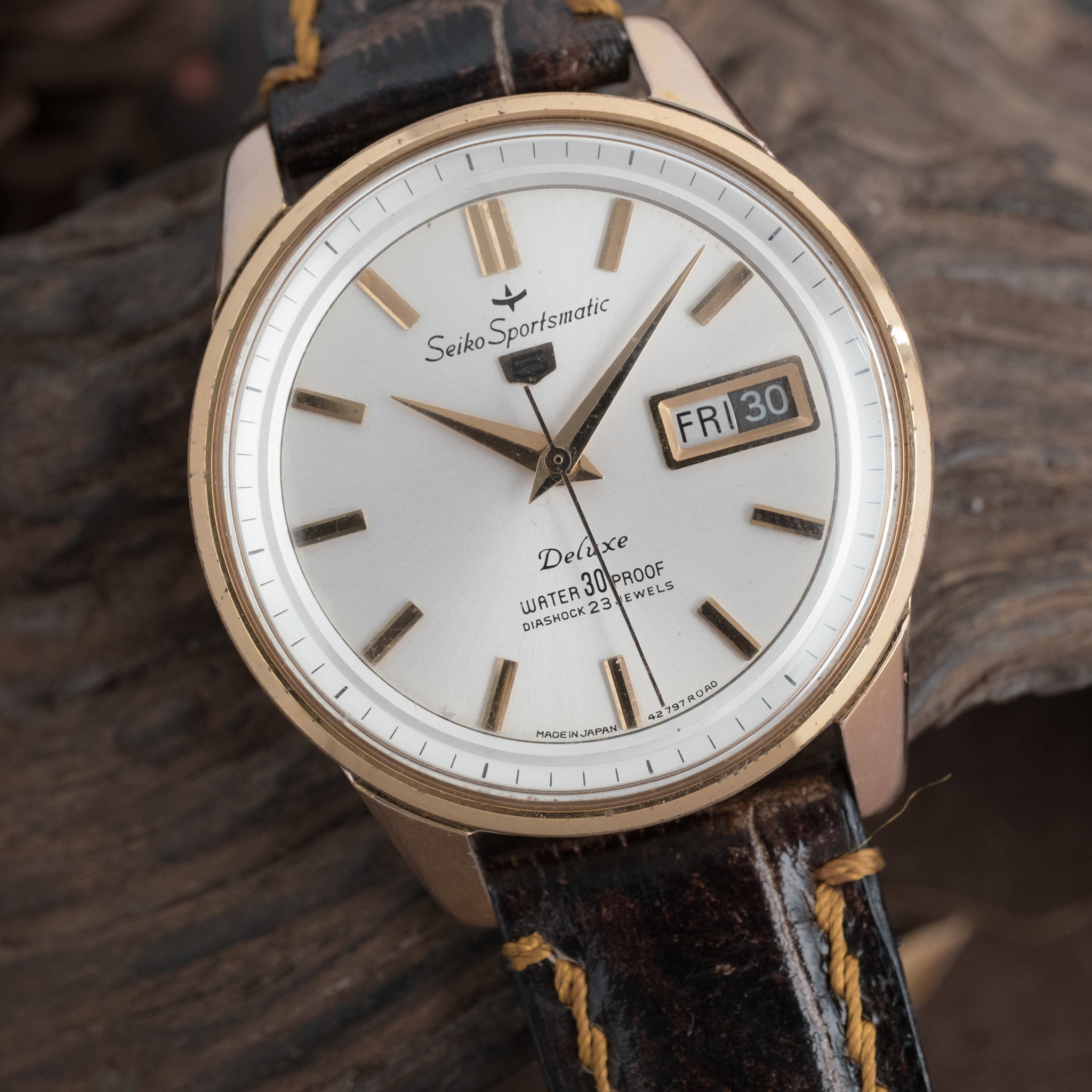
The Seiko 7606-7971 belongs to 1964 and combines an automatic movement with an unusually discreet control layout: a recessed crown at four o'clock and a separate date pusher at three. Both Sportsmatic Deluxe and Sportsmatic 5 Deluxe dial signatures occur on watches handled under this reference, so the extra shield logo should not decide the purchase by itself.
The strongest 7606-7971 is the one with the cleanest silver sunburst dial and the most coherent case, hands and movement. Stainless-steel examples measure 37 mm, while handled gold-plated watches measure 37 or 38 mm. The plated version brings warmer applied furniture, but wear through the coating cannot be reversed by routine servicing.
Brand
Seiko
Reference
7606-7971
Model names
Sportsmatic Deluxe; Sportsmatic 5 Deluxe
Known production year
1964-1964
| Movement | Automatic caliber 7606 or 7606A |
| Jewel count | 23 jewels |
| Case size | 37 mm stainless steel; 37 or 38 mm gold plated, excluding crown |
| Case materials | Stainless steel or electro gold plated |
| Dial | Silver sunburst with applied indices |
| Controls | Recessed crown at four o'clock; date pusher at three o'clock |
The model landscape
The reference divides most clearly by case finish. Stainless steel gives the 7606-7971 a cooler, plainer look, while electro gold-plated cases pair naturally with gold-tone applied indices and dauphine-style hands. Between a clean steel watch and a plated watch with exposed base metal at the lugs, take the steel one.
Movement markings require care rather than forced uniformity. Watches under 7606-7971 have carried caliber 7606 and 7606A, both automatic and marked with 23 jewels. Either marking can fit the reference, but a movement, case and dial assembled from incompatible watches is franken rather than merely serviced.
On the wrist
At 37 mm in stainless steel, the 7606-7971 has more dial presence than its recessed crown suggests because little visual width is added at four o'clock. The silver sunburst finish and applied indices remain legible in changing light, while the smooth integrated bezel keeps the face broad. A 38 mm gold-plated example reads warmer and slightly larger.
The separate date pusher at three o'clock is the practical distinction from a conventional crown-set date. Its placement leaves the recessed crown visually quiet, preserving the round case profile. That arrangement is attractive in daily use, but the pusher must operate correctly because replacement parts and previous repairs cannot be assessed from appearance alone.
What goes wrong
Gold plating wears through first at exposed edges and lugs, and no polish or service restores missing plating. Over-polishing softens the case transitions and can blur caseback markings, while scratched crystals can distort an otherwise clean silver sunburst dial. These faults matter differently: crystal damage is replaceable, but lost case definition and worn plating are permanent.
A refinished dial costs more than the usual hand oxidation or faint spotting because the dial carries the reference's visual identity. Printing should remain crisp, applied indices should sit cleanly, and any Seiko 5 shield must belong naturally to the dial rather than conceal later work. A genuine service dial is not a redial, although without documentation its installation date is unknown.
The movement can run yet still need attention. Examples we have timed have shown losses or gains approaching a minute per day, so operational status is not proof of healthy amplitude or completed servicing. The service history is unknown unless supported by records, and the date pusher, recessed crown and automatic winding should each be tested as separate functions.
What to check before you buy
- Dial and applied furniture: Handled examples use a silver sunburst dial with applied indices and crisp printed text. Uneven lettering, disturbed index seating or a flat repainted surface indicates a possible redial rather than honest ageing.
- Sportsmatic dial signature: Both Sportsmatic Deluxe and Sportsmatic 5 Deluxe signatures occur with 7606-7971. A Seiko 5 shield can be correct, but it must look integrated with the dial rather than added to justify a mismatched watch.
- Crown and date controls: The case uses a recessed crown at four o'clock and a dedicated date pusher at three. A conventional exposed crown layout or absent pusher conflicts with the configurations handled under 7606-7971.
- Movement marking: The automatic movement should be marked caliber 7606 or 7606A and 23 jewels. A different caliber creates a material franken or married-watch concern even when the movement fits and runs.
- Caseback and case material: The caseback should carry the exact reference 7606-7971 with legible exterior markings. Gold-plated examples can carry electro gold-plated identification inside, while steel cases should not be described as plated.
- Case wear and finishing: Inspect the lugs and case transitions for softened edges from polishing. On gold-plated cases, exposed base metal at the lugs is permanent coating loss, not patina and not a fault that servicing can reverse.
Other 7606-7971 examples we auctioned
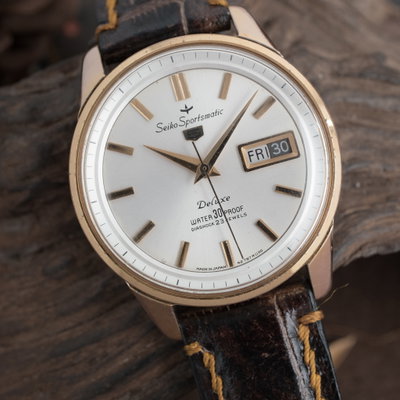
Seiko · Sportsmatic 5 Deluxe · 7606-7971 · 1964
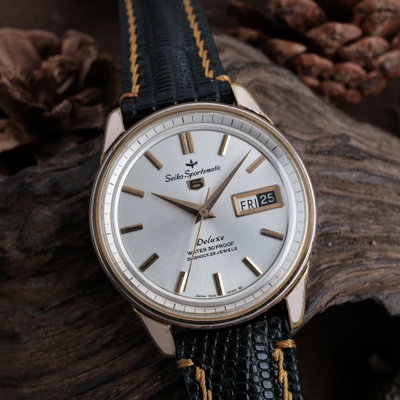
Seiko · Sportsmatic Deluxe · 7606-7971 · 1964
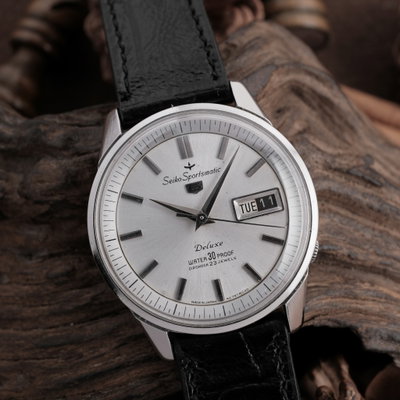
Seiko · Sportsmatic Deluxe · 7606-7971 · 1964
We auction more than 100 vintage watches a week.
Get first access: new Seiko 7606-7971 drops and alerts before auctions end.
More Seiko references
Related pages
Frequently asked questions
Ready to hunt for your own?
More than 100 vintage watches go under the hammer every week.