Seiko 6139-7020: A Collector's Guide to the 1971 Speed-Timer
The Seiko 6139-7020 is a 1971 automatic chronograph best bought with a clean matte dial, complete hands and sharp cushion-case lines.
We auction more than 100 vintage watches a week.
Get first access: new Seiko 6139-7020 drops and alerts before auctions end.
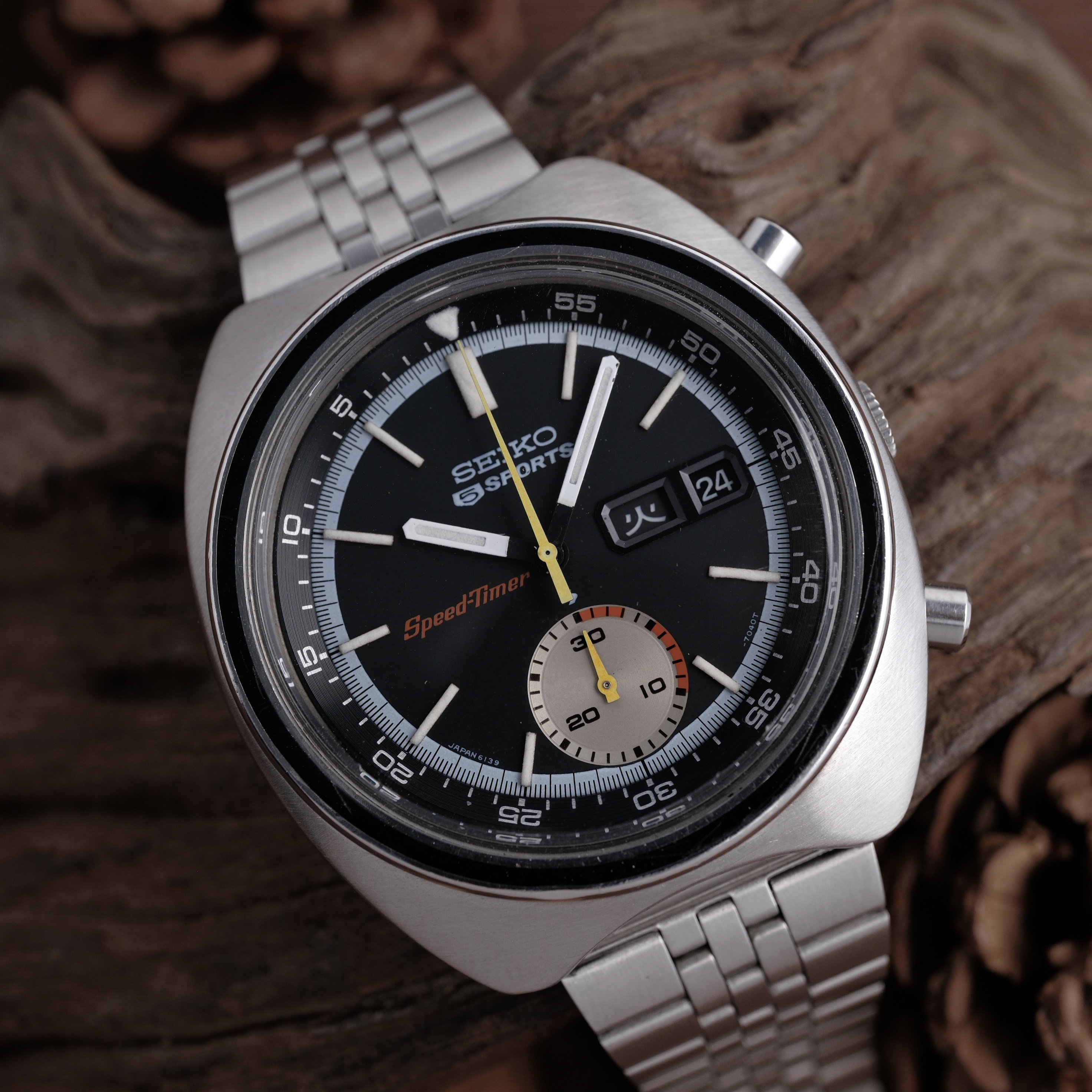
Browse 33 live Seiko auctionsThe Seiko 6139-7020 puts an automatic chronograph into the broad cushion case and high-contrast dial language of 1971. The 5 Sports Speed-Timer and 5 Sports Speed-Timer Chronograph names both occur on examples of this reference, while the watches handled share a matte black dial and a register at six o'clock.
The version to want is not defined by the cleanest case alone. A complete central chronograph hand, legible orange Speed-Timer script and intact luminous material matter more, because one handled example combined strong case lines with heavy dial wear and a missing chronograph hand. Buy the dial and completeness first.
Reference
6139-7020
Known production year
1971-1971
Model names encountered
Seiko 5 Sports Speed-Timer; Seiko 5 Sports Speed-Timer Chronograph
Movement
Automatic chronograph caliber 6139B
| Jewel counts encountered | 17 or 21 jewels |
| Case material | Stainless steel |
| Case size | 40-41 mm excluding the crown |
| Dial | Matte black with contrasting register at six o'clock |
| Register treatments encountered | Silver; two-tone blue and black |
The model landscape
Every 6139-7020 handled dates to 1971 and uses a stainless-steel cushion case with an automatic 6139B chronograph movement. Case measurements run from 40 to 41 mm excluding the crown, while recorded movements carry either 17 or 21 jewels. That jewel-count difference should be disclosed rather than used alone to declare a watch correct, because the available evidence does not establish why both configurations occur.
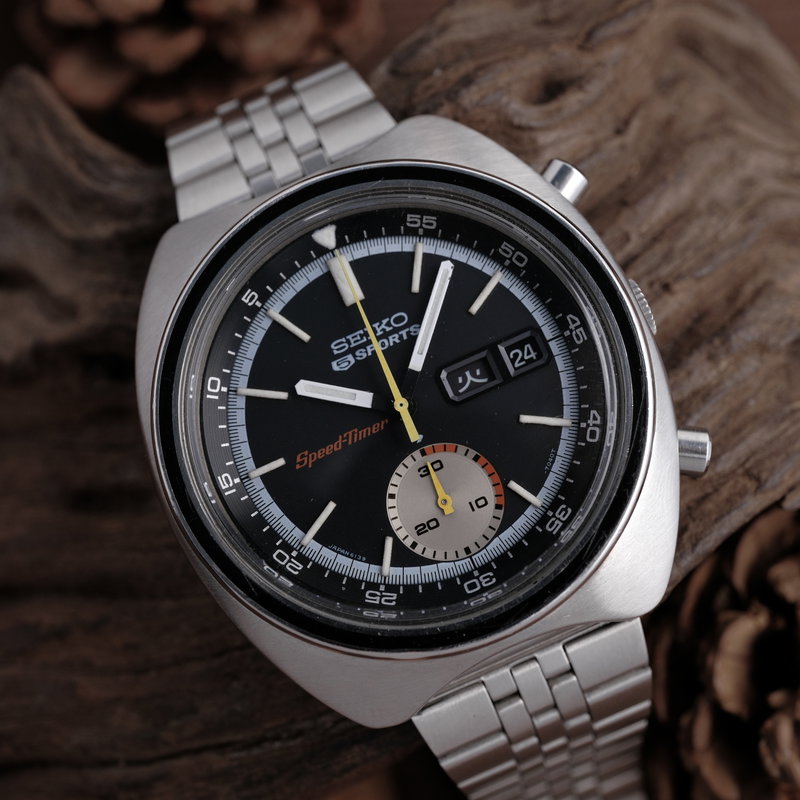
The stable visual formula is a matte black dial, a contrasting register at six and orange Speed-Timer script. Silver registers occur, as does a two-tone blue and black register. The evidence is not broad enough to rank one register treatment as scarcer, so condition should decide between them. A clean silver-register dial outranks a damaged alternative with more colour.
Value sits most heavily in the dial, hands and case geometry. Crisp printing, intact lume and a present central chronograph hand create a wider quality gap than the one-millimetre spread in measured case size. Sharp cushion-case lines add a premium, but they do not compensate for crusty lume or missing chronograph parts.
On the wrist
At 40 to 41 mm excluding the crown, the 6139-7020 has more wrist presence than its single-register layout suggests. The cushion case carries its width through the middle rather than concentrating it in a narrow round body, so the watch reads as a full 1970s sports chronograph rather than a compact dress watch.
Legibility depends on contrast that survives. The matte black field separates the applied baton indices from the silver or blue and black register, while orange accents make the chronograph display easier to parse. Heavily darkened luminous material reduces that clarity, even when the dial printing remains readable.
What goes wrong
The worst faults are dial damage and missing chronograph parts. Handled examples include heavily darkened or crusty luminous markers, notable dial wear and an absent central chronograph hand. None should be softened into patina: even ageing is patina, while crusted lume, loss and missing components are damage.
Case condition is the next dividing line. Sharp lines and strong geometry survive on better examples; polishing softens the cushion case and removes definition that no service can replace. A clean-looking case cannot rescue a compromised dial, and refinishing the dial would erase the printing and surfaces that carry most of the watch's vintage value.
Movement correctness needs a bounded judgement. The reference has appeared with 6139B movements marked 17 and 21 jewels, but the current evidence does not establish the reason for that difference. The service history of any individual watch is unknown without documentation, and a claimed jewel count should agree with the movement actually fitted.
Dating this watch
| Serial range / caliber | Year | Note |
|---|---|---|
| 6139 | 1969-1979 | caliber production window |
Dating data comes from our decoder tables; treat years as approximate.
What to check before you buy
- Dial layout and printing: The 6139-7020 dial should be matte black with a contrasting register at six o'clock and orange Speed-Timer script. Blurred printing or a changed surface points to a redial rather than honest ageing.
- Case shape: The stainless-steel cushion case should retain defined lines across its broad profile. Rounded transitions and softened edges indicate polishing, while sharp geometry must still be judged alongside dial condition.
- Movement identification: The fitted movement should be an automatic chronograph caliber 6139B. Handled examples are marked 17 or 21 jewels, so the actual marking should be reported rather than replaced by a blanket specification.
- Hand completeness: Confirm that the central chronograph hand is present and visually coherent with the dial. A missing hand is a documented fault on this reference and materially affects completeness even when the case remains sharp.
Other 6139-7020 examples we auctioned
More Seiko references
Related pages
Frequently asked questions
Ready to hunt for your own?
More than 100 vintage watches go under the hammer every week.