Grand Seiko 5646-7010: What to Know Before You Buy
The Grand Seiko 5646-7010 is a 1971-1972 automatic reference best bought in steel, with a clean silver dial, crisp case geometry and an intact caseback medallion.
We auction more than 100 vintage watches a week.
Get first access: new Seiko 5646-7010 drops and alerts before auctions end.
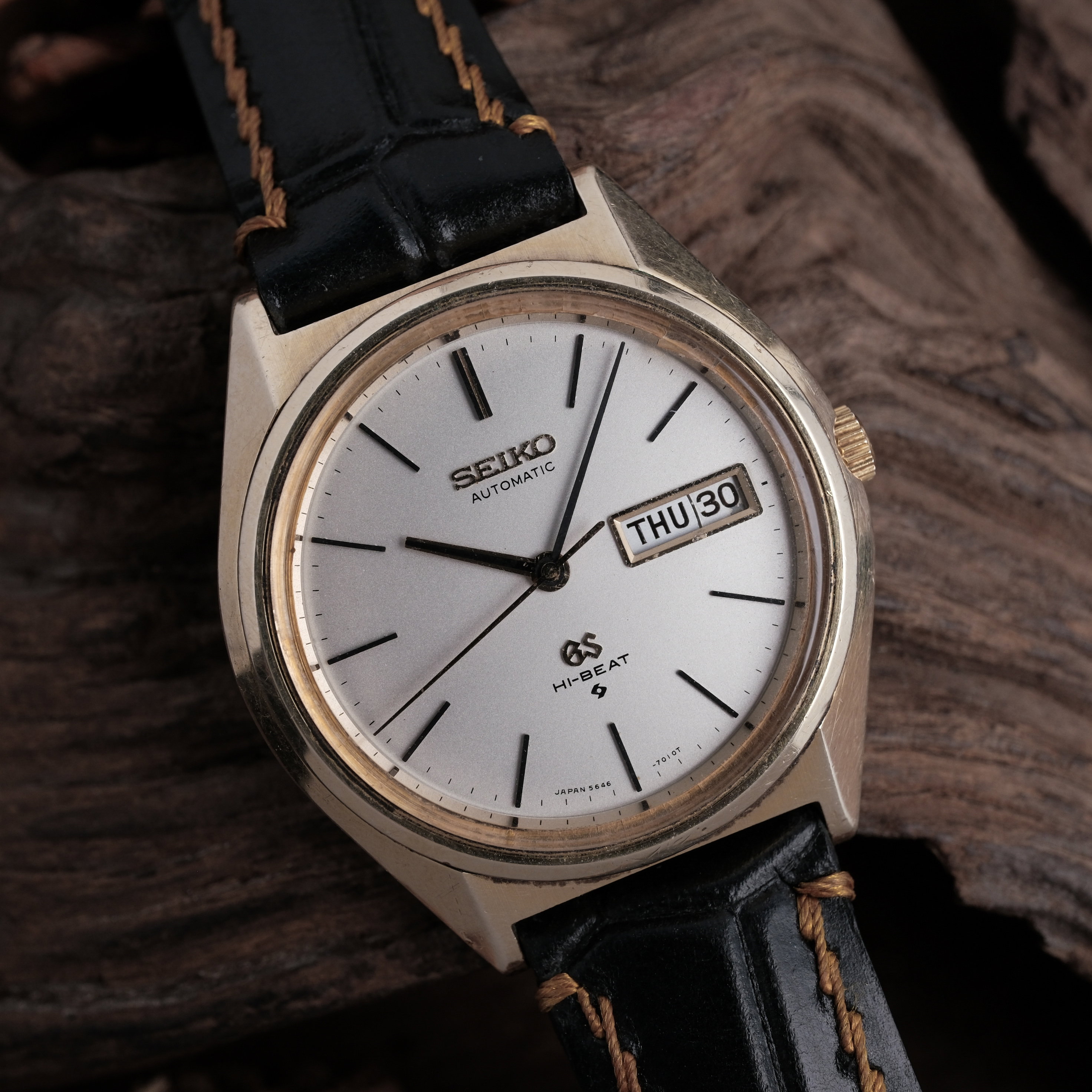
Browse 15 live Seiko auctionsThe Grand Seiko 5646-7010 is a compact automatic watch from 1971-1972, built around caliber 5646A with a day-date display. At 36 mm excluding the crown, it wears as a restrained dress watch rather than a modern sports watch, while the faceted case and applied indices give it more structure than the diameter suggests.
Steel is the version to want. Cap Gold can look warmer and more formal, but wear-through at the case edges cannot be corrected without altering the watch. On either version, a clean silver dial and crisp case geometry matter more than superficial shine, and an intact gold GS medallion strengthens the case for an otherwise honest example.
Reference
5646-7010
Model
Grand Seiko
Known production years
1971-1972
Movement
Automatic caliber 5646A
| Jewel count | 25 jewels |
| Case size | 36 mm excluding the crown |
| Known case materials | Stainless steel and Cap Gold |
| Known dial finishes | White-silver and silver sunburst |
| Display | Day-date |
| Caseback detail | Gold GS medallion |
The model landscape
The 5646-7010 exists in stainless steel and Cap Gold among the watches we have handled. Both use the automatic caliber 5646A with 25 jewels, and the known dials are white-silver or silver sunburst with applied faceted indices. Some day wheels display English and Kanji, a useful configuration detail rather than proof of authenticity by itself.
Between an evenly worn steel case and a brighter Cap Gold case with exposed base metal, take the steel watch. Cap Gold earns its place when the coating remains continuous around the lugs and case edges, but its condition spread is wider because polishing and ordinary wear can permanently expose the metal beneath.
On the wrist
The 36 mm case excludes the crown, so the 5646-7010 sits compactly and works easily under a cuff. Its applied indices and pale dial keep the day-date display legible without making the watch visually heavy. Crisp facets matter on the wrist because reflected light defines the case; once polishing softens those planes, the watch looks smaller and less deliberate.
This is the vintage Grand Seiko for a collector who wants an automatic daily dress watch rather than a large contemporary presence. The steel version tolerates regular wear better, while Cap Gold suits lighter use because abrasion concentrates at the lugs and case edges.
What goes wrong
Dial damage costs more than ordinary case wear. Silver sunburst dials can develop spotting, while a redial loses the factory printing and finish that carry much of the reference's value. A genuine service dial is different from a redial, but it is still a replacement and should be described as such.
Over-polishing rounds the case facets, Cap Gold wears through at exposed edges, and the gold GS medallion can become worn or lost. Day-date operation also deserves a functional check because caliber 5646A drives both displays. The service history of an undocumented watch is unknown, and without paperwork it is safer to judge only current operation and visible condition.
A franken example may combine period-correct Seiko parts that never shipped together, while a married watch joins a case and movement from different watches. Neither problem is disproved by a clean dial. The dial, case geometry, medallion and caliber marking must agree as a group before fine printing details add useful confirmation.
What to check before you buy
- Dial and day-date layout: The pale dial should have applied faceted indices and a day-date window at three o'clock. Known examples use white-silver or silver sunburst finishes, and some day wheels display English and Kanji.
- Case geometry and material: The case should measure 36 mm excluding the crown and retain defined facets rather than rounded, mushy transitions. On Cap Gold examples, exposed base metal at the lugs or edges confirms coating loss.
- Caseback medallion: The caseback should carry the gold GS medallion associated with this configuration. Wear must be judged against the rest of the case because a sharp medallion on a heavily softened case can indicate a replacement.
- Movement identity: The movement should be marked caliber 5646A and have 25 jewels. That marking must agree with the day-date display and case reference, since a correct movement alone does not exclude a married or franken watch.
Other 5646-7010 examples we auctioned
4 Seiko 5646-7010 auctioned

More Seiko references
Related pages
Frequently asked questions
Ready to hunt for your own?
More than 100 vintage watches go under the hammer every week.