Vintage Seiko Crown: Which Version Deserves Your Money
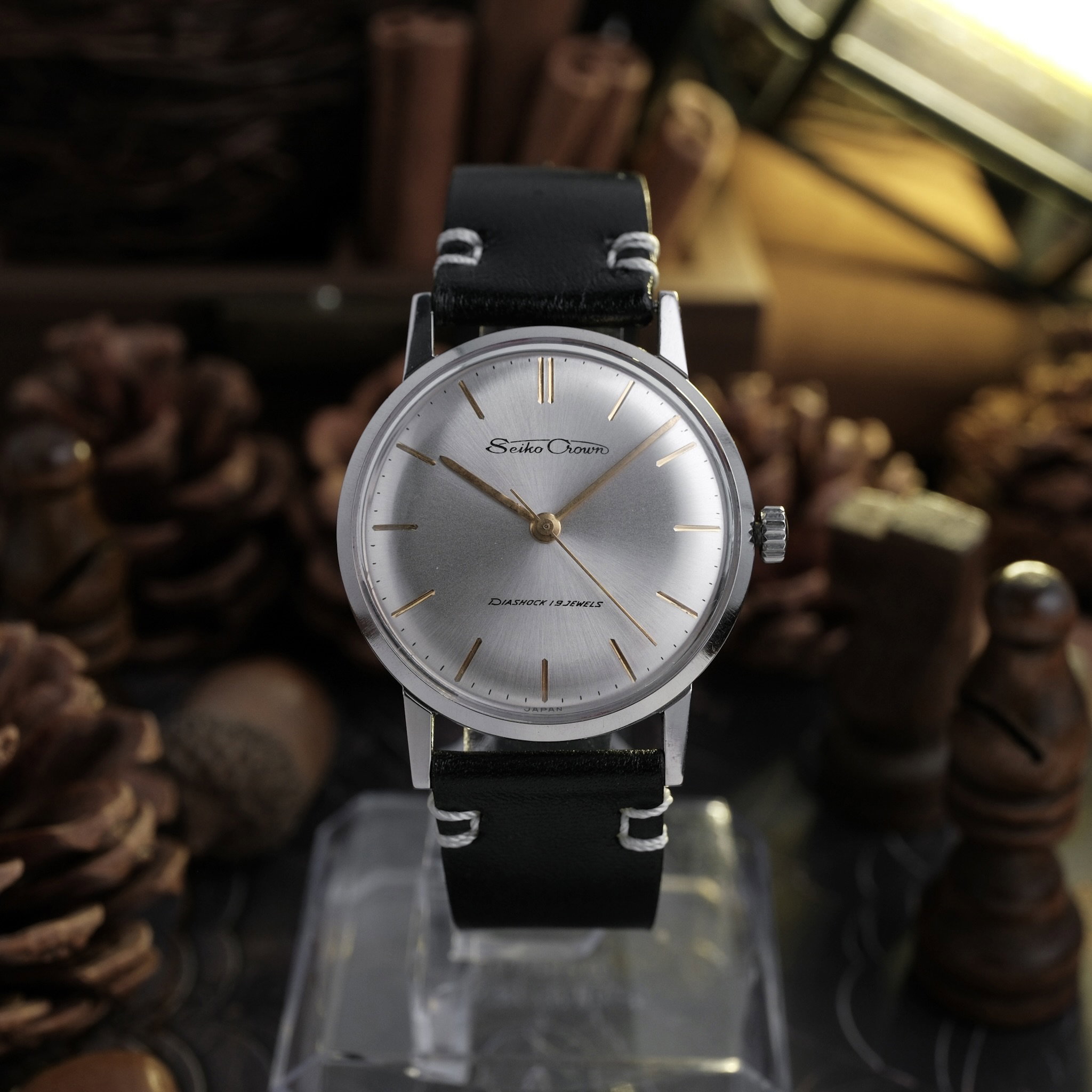
The vintage Seiko Crown to buy has an honest silver dial, a coherent caliber 560 configuration and case lines that have not been polished soft.
Live now
The Seiko Crown was a premier manual-wind dress watch and the mechanical foundation beneath the first Grand Seiko. Examples handled from 1959 through 1969 place it firmly in Seiko's mid-century push toward larger, clearer dials and more ambitious movements.
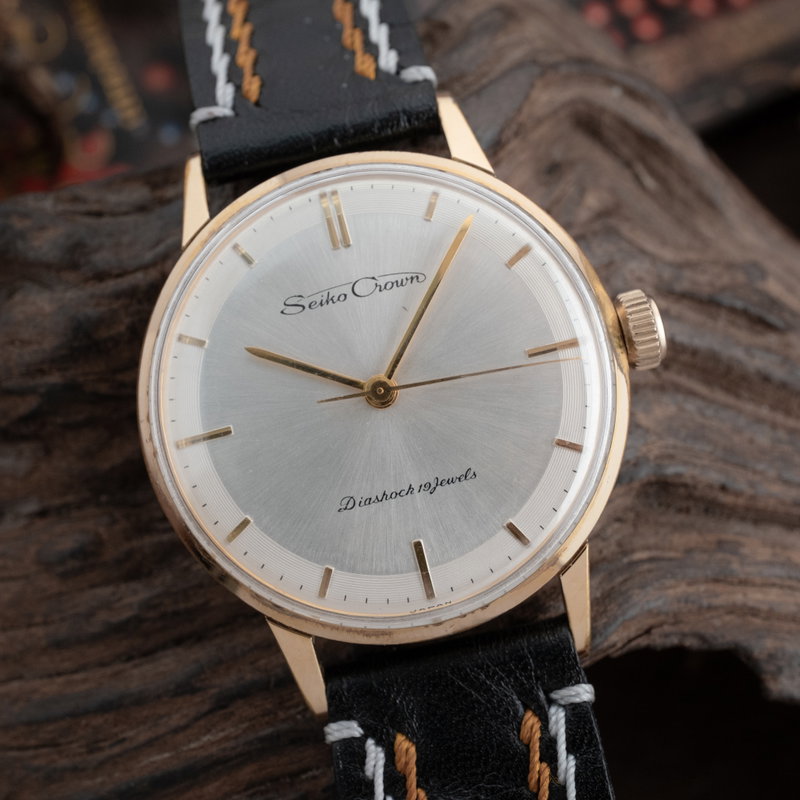
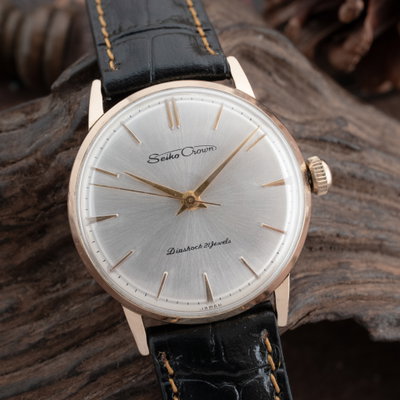
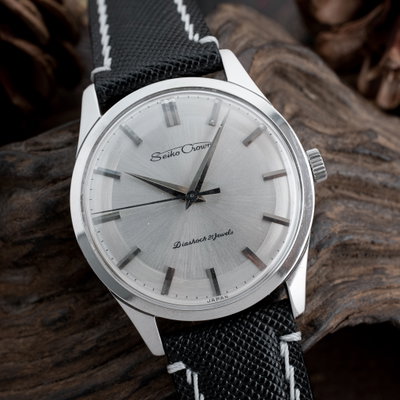
The strongest used Seiko Crown is not necessarily the earliest. Silver sunburst dials form the familiar baseline, while a concentric-textured dial gives the watch a materially different presence. The Crown shown in the gallery also reminds you to treat the winding crown as a replaceable component, not proof that the rest of the watch left the factory together.
Known production-year span
1959-1969
Movement
Seikosha caliber 560, manual wind
Known jewel counts
19 or 21 jewels
Known case sizes
34 mm or 35 mm, excluding the crown
| Known case material | Stainless steel |
| Known dial finishes | Silver sunburst or silver concentric texture |
| Hour markers | Applied faceted indices |
| Example references | J15003E, J14036, J14065, J14096, 15002 |
What it was built for
The Crown was built as an upper-tier Seiko dress watch, powered by the manually wound Seikosha caliber 560. Known examples pair that movement with either 19 or 21 jewels, so jewel count alone cannot separate a correct watch from a franken. Its importance is mechanical as well as stylistic: the Crown supplied the foundation for the first Grand Seiko.
At 34 or 35 mm excluding the crown, the steel case wears as a restrained mid-century watch rather than a reduced modern one. Applied faceted indices give the broad silver dial enough structure, and the manual-wind movement keeps the proposition simple. Choose it for formal proportion and Japanese watchmaking history, not for contemporary wrist presence.
Where the value sits
Most of the value sits above the movement. A clean silver sunburst dial with intact printing and aligned applied markers is the safest choice, while the concentric-textured version earns its premium through a visibly different surface rather than a minor reference suffix. A refinished dial costs more than ordinary case wear because it removes the part you see every time the watch is worn.
Reference alone is a weak buying strategy across a model spanning 1959-1969. J15003E, J14036, J14065, J14096 and 15002 all occur within the Crown landscape, but dial honesty and coherent movement specification matter more than chasing a particular code. Between a sharper 34 mm case with an honest dial and a softer 35 mm example with a redial, take the smaller watch.
What goes wrong
The costliest fault is a redial. Sunburst brushing that runs through printed text, heavy lettering or markers sitting against disturbed dial feet all demand caution, while a genuine service dial must be identified as a factory replacement rather than passed off as original. Concentric texture is especially unforgiving because refinishing can flatten or interrupt its circular pattern.
Over-polishing softens lug edges and changes the balance of these compact cases. Replacement crowns are less serious, but the crown cannot authenticate a Crown by itself. A 19-jewel movement paired with text claiming 21 jewels may indicate swapped components, although jewel-count variation across caliber 560 examples means the entire configuration must be judged together. The service history is unknown without supporting documentation.
What to check before you buy
- Dial surface and printing: A Crown may have a silver sunburst or concentric-textured dial. Brushing or circular texture should remain coherent around the printing and applied faceted indices; flattened texture or heavy text points toward a redial.
- Movement configuration: The watch should contain a manually wound Seikosha caliber 560. Both 19-jewel and 21-jewel versions are known, so the jewel count must agree with the dial wording rather than being used alone to condemn the movement.
- Case profile: Known stainless-steel cases measure 34 or 35 mm excluding the crown. Soft lug edges indicate polishing, while a measurement outside those known sizes requires more evidence before the watch can be accepted as a coherent Crown.
- Crown and assembled-watch risk: The winding crown is replaceable and does not authenticate the complete watch. Judge it alongside the dial, case and caliber 560 because a plausible crown can still sit on a married or franken example.
Recent Seiko results
107 Seiko watches auctioned
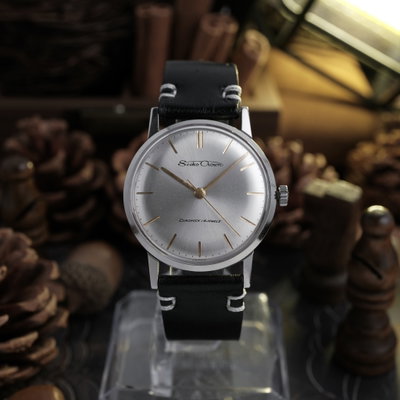
Seiko · Crown · 14036
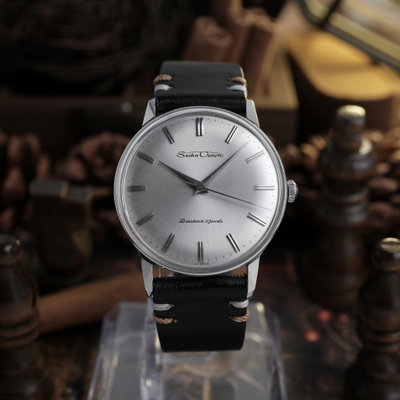
Seiko · Crown · 15013E · 1961
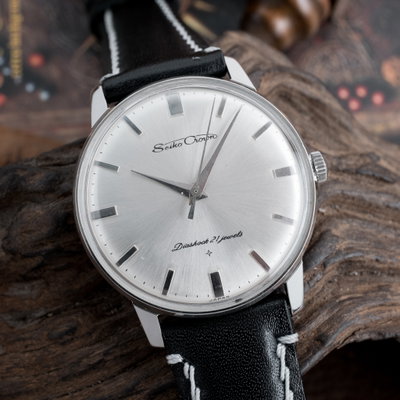
Seiko · Crown · J15011 · 1963
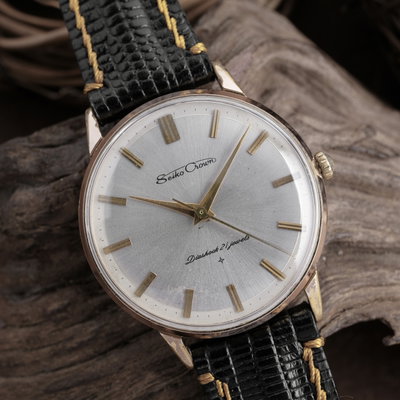
Seiko · Crown · J15003E · 1963
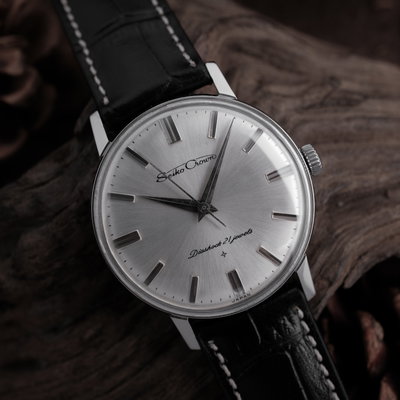
Seiko · Crown · J14085 · 1964
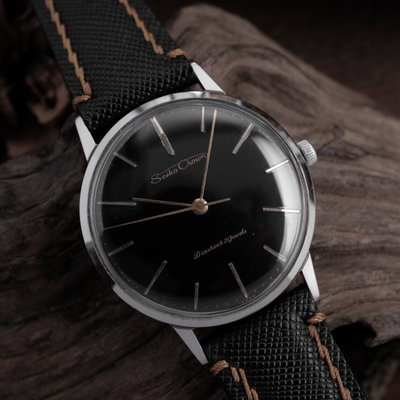
Seiko · Crown · 15002 · 1959
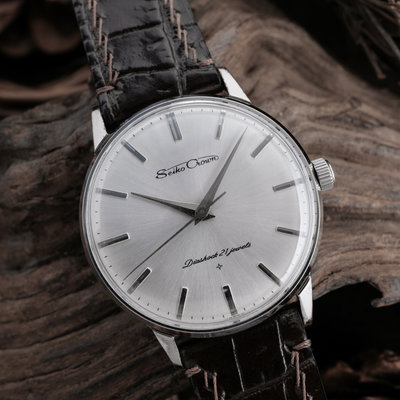
Seiko · Crown · 4400658
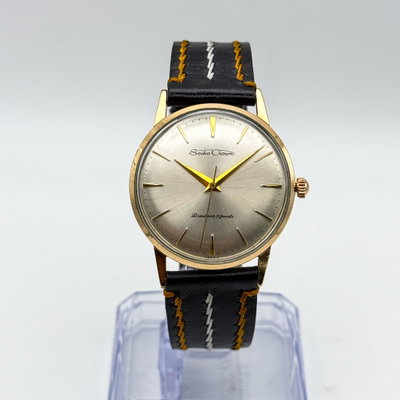
Seiko · Crown · J14036 · 1959
We auction more than 100 vintage watches a week.
Get first access: new Seiko watch drops and alerts before auctions end.
More Seiko references
Related pages
Frequently asked questions
Ready to hunt for your own?
More than 100 vintage watches go under the hammer every week.