Seiko King Seiko Hi-Beat 5625-7111 Reference Guide
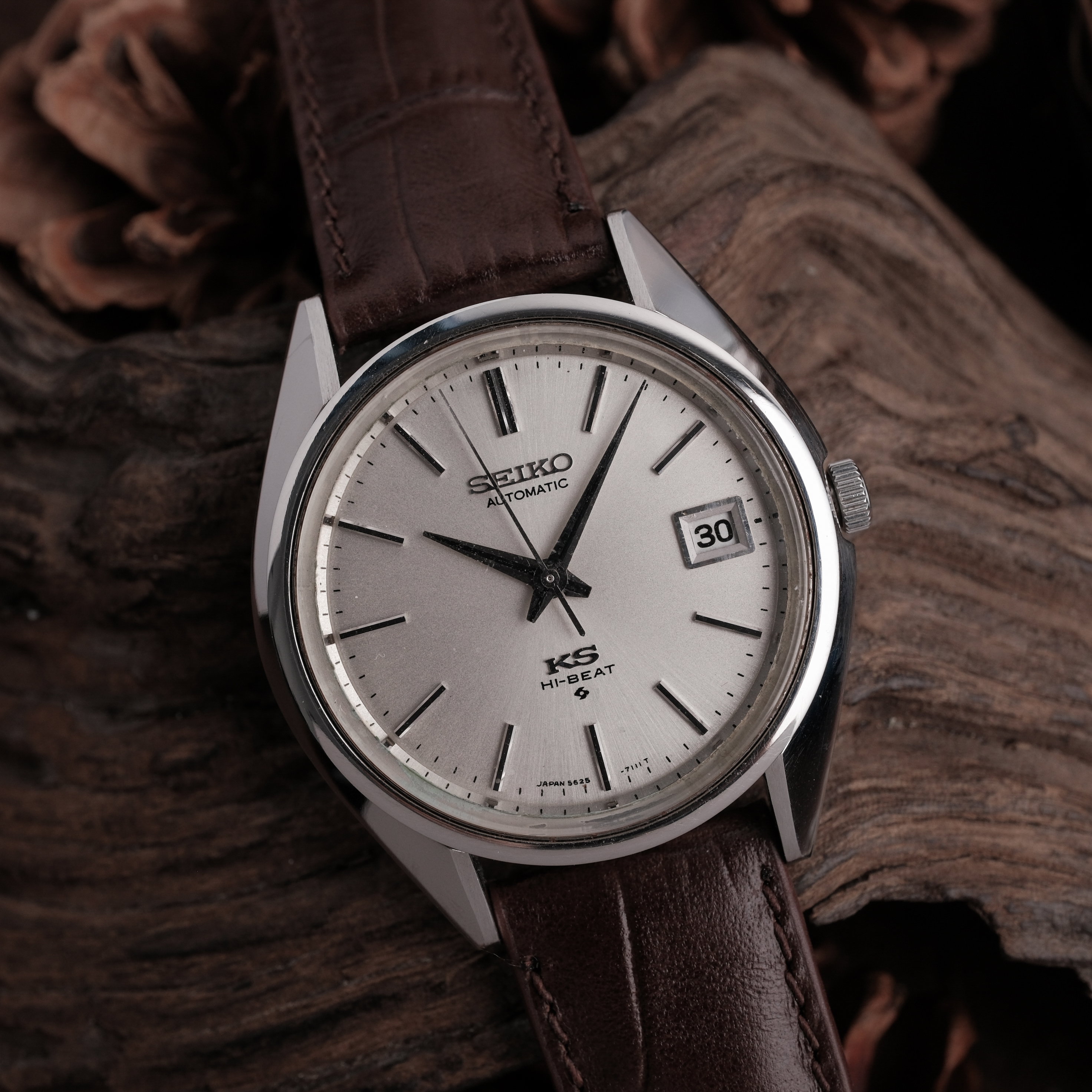
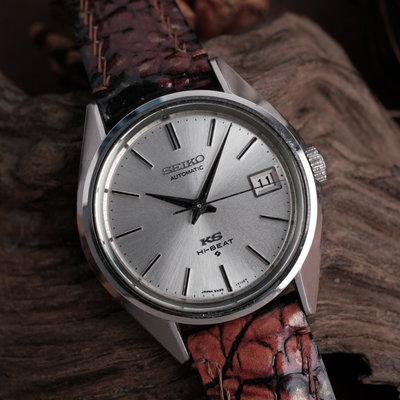
The Seiko 5625-7111 is a 36 mm steel King Seiko Hi-Beat whose value rests chiefly on its silver sunburst dial and sharp faceted case.
Live now
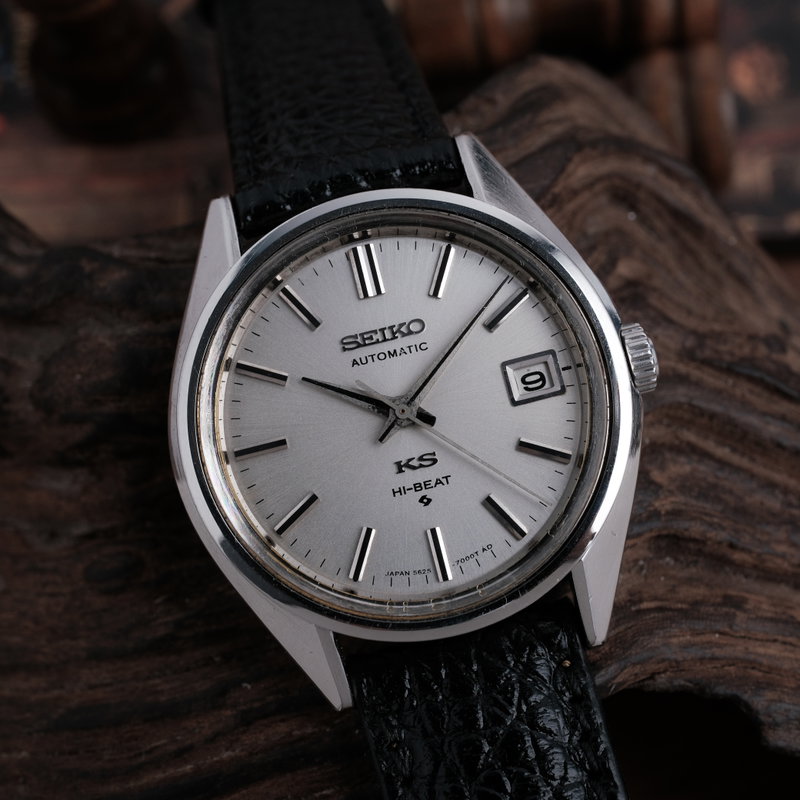
The King Seiko Hi-Beat 5625-7111 is an early 1970s automatic dress watch built around contrast: a restrained silver dial inside a sharply faceted steel case. Known examples date from 1972-1973, placing the reference in a narrow period even though the broader 5625 caliber window runs longer.
The version to want keeps the silver sunburst dial clean and the case planes clearly separated. A refinished dial costs more than ordinary surface wear, while rounded facets remove the architecture that distinguishes this reference from a generic dress watch. The automatic 5625B and 36 mm case make it practical, but service history is often unknown and should never be inferred from a bright exterior.
Brand
Seiko
Model
King Seiko Hi-Beat
Reference
5625-7111
Production years
1972-1973
| Case material | Stainless steel |
| Case size | 36 mm excluding the crown |
| Movement | Automatic caliber 5625B |
| Jewels | 25 |
| Dial | Silver sunburst with applied faceted baton indices |
The model landscape
The 5625-7111 has a stainless steel case, a silver sunburst dial and applied faceted baton indices. Its automatic caliber 5625B carries 25 jewels, while the Hi-Beat name identifies its place within King Seiko. No other dial material, case metal or movement variant is established by the watches handled here, so claims about alternatives should not be attached to this reference without stronger evidence.
Value concentrates in the dial and case rather than in cosmetic freshness. A clean sunburst surface with coherent printing sits above a redial, and crisp transitions between the flat case planes sit above a heavily polished example. Between a bright polished case and a less glossy case retaining its facets, take the latter. Replacement consumables may be acceptable, but a married movement or franken assembly changes the watch fundamentally.
On the wrist
At 36 mm excluding the crown, the 5625-7111 wears as a compact dress watch rather than a modern sports watch. The silver sunburst surface and applied faceted indices catch changing light, while the angular steel case gives the watch more visual structure than its diameter suggests. It suits a cuff and remains legible without turning the dial into a field of extra scales or complications.
Broad flat surfaces show scratches, and polishing softens the boundaries between adjoining facets before it changes the nominal dimensions. That makes case geometry more important here than a spotless shine. Buyers accustomed to larger used Seiko watches should judge the full 36 mm proportion, not treat the measurement alone as a defect.
What goes wrong
The worst fault is a refinished silver dial, because lost sunburst texture or inaccurate printing cannot be corrected by routine servicing. Heavy polishing comes next: once the faceted case lines become soft, no ordinary service returns the removed metal. Scratches across a flat plane matter less when the adjacent edges remain crisp, and honest marks are preferable to geometry polished away.
Movement condition cannot be read from the dial. The 5625B is automatic and has 25 jewels, but the service history of an undocumented example is unknown. Caliber markings must agree with the reference, while mismatched aging between the dial, hands and applied indices can signal replacement parts or a franken assembly. Without documentation, originality beyond what the watch itself establishes should not be claimed.
Where to start
Start with a 5625-7111 that retains a clean silver sunburst dial and distinct faceted case planes, even if the steel carries visible wear. Choose that watch over a shinier example with a redial or rounded edges. The 1972-1973 production span is narrow enough that the case, dial and caliber should tell one coherent story, while the longer 5625 caliber window alone cannot prove the watch is correctly assembled.
Dating this watch
| Serial range / caliber | Year | Note |
|---|---|---|
| 5625 | 1968-1975 | caliber production window |
Dating data comes from our decoder tables; treat years as approximate.
What to check before you buy
- Dial surface and printing: The dial should have a silver sunburst finish with coherent printing and applied faceted baton indices. Flat paint, lost radial texture or visibly inaccurate text supports a redial diagnosis.
- Hands and dial furniture: The hands should sit convincingly with the applied faceted indices in finish and aging. A conspicuous mismatch is a replacement warning, although it does not prove a franken watch by itself.
- Case geometry: The 36 mm stainless steel case should retain distinct transitions between its flat facets. Rounded boundaries and uniformly soft edges diagnose heavy polishing rather than ordinary wrist wear.
- Caseback reference: The caseback reference must match 5625-7111 exactly. A different reference creates a married-case concern even when the dial and movement look appropriate for a King Seiko Hi-Beat.
- Crown evidence: No crown specification is established by the handled examples, so crown originality cannot be confirmed from the reference alone. A replacement crown should be disclosed rather than guessed period-correct.
- Movement identity: The movement should be an automatic caliber 5625B marked for 25 jewels. A different caliber, conflicting markings or incompatible case components indicate a franken or married assembly.
Other 5625-7111 examples we auctioned
6 Seiko 5625-7111 auctioned
We auction more than 100 vintage watches a week.
Get first access: new Seiko 5625-7111 drops and alerts before auctions end.
More Seiko references
Related pages
Frequently asked questions
Ready to hunt for your own?
More than 100 vintage watches go under the hammer every week.