Seiko King Seiko 5625-7000 - a buyer's guide
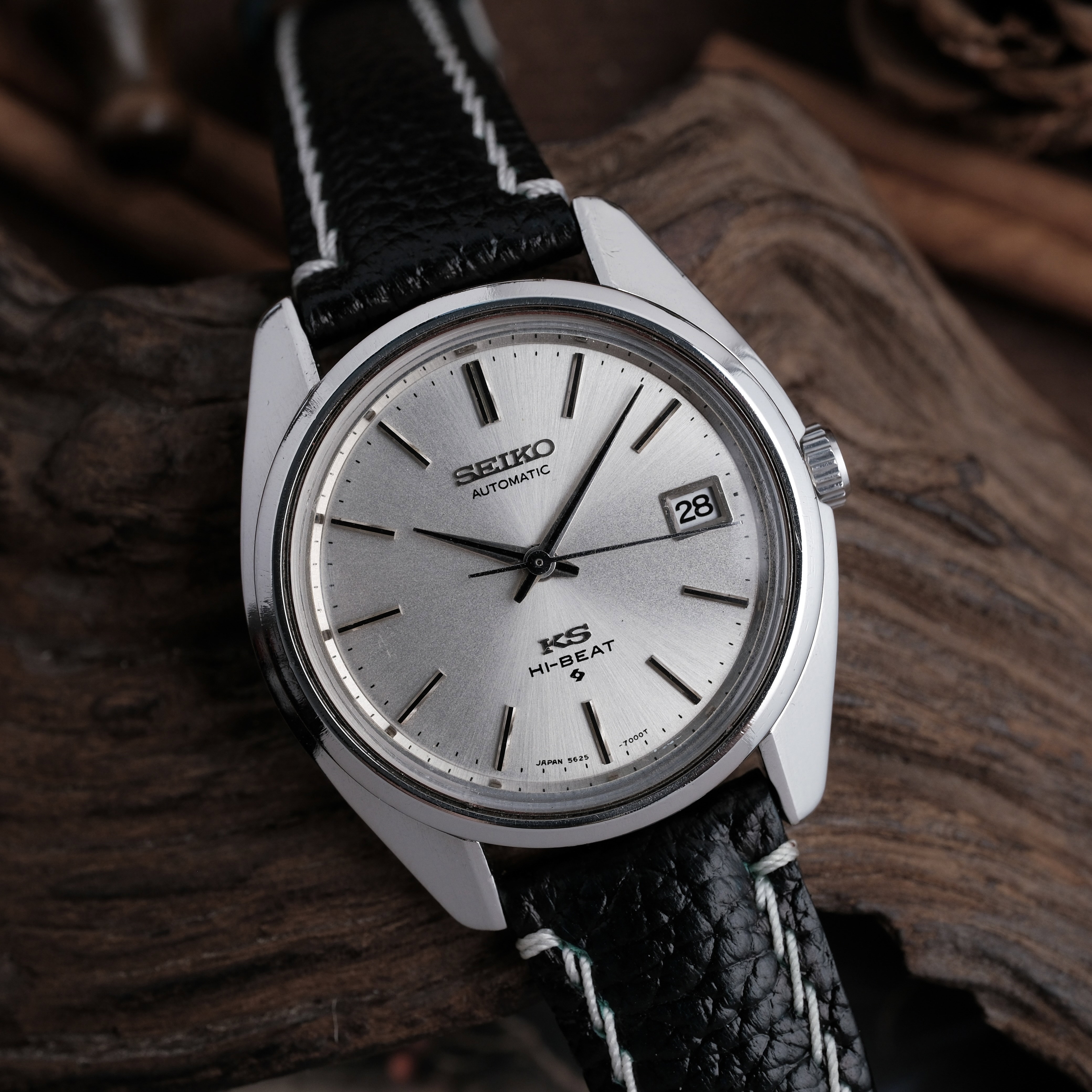
The Seiko King Seiko 5625-7000 to buy has a clean silver sunburst dial, sharp angular case surfaces and an intact gold medallion.
We auction more than 100 vintage watches a week.
Get first access: new Seiko 5625-7000 drops and alerts before auctions end.
Browse 32 live Seiko auctionsThe King Seiko Hi-Beat 5625-7000 turns a silver sunburst dial, an angular stainless-steel case and automatic caliber 5625 into a distinctly late-1960s Seiko. Known examples run from 1969 to 1971, placing the reference in a tight production period rather than across several design generations.
The version to want is straightforward: a clean dial, crisp case geometry and a surviving gold caseback medallion. Dial damage or refinishing costs more in appeal than ordinary case wear, while heavy polishing removes the flat surfaces and sharp transitions that give this used King Seiko its character.
Brand
Seiko
Model
King Seiko Hi-Beat
Reference
5625-7000
Known production years
1969-1971
| Movement | Automatic caliber 5625 |
| Case material | Stainless steel |
| Case size | 36-37 mm excluding the crown |
| Dial | Silver sunburst with applied faceted baton indices |
| Caseback detail | Gold medallion |
The model landscape
Reference 5625-7000 is consistent where it matters. The watches use stainless-steel cases, silver sunburst dials with applied faceted baton indices and automatic caliber 5625. Reported case measurements vary between 36 and 37 mm excluding the crown, so a one-millimetre listing difference should not be treated as a separate version.
Value sits first in the dial, then in the case geometry and gold medallion. A clean original dial deserves a premium over a redial, while sharp flat surfaces carry more weight than a uniformly bright case polished until its transitions are soft. Between a polished example with a cleaner medallion and a sharper watch with honest medallion wear, take the sharper case.
On the wrist
At 36 to 37 mm excluding the crown, the 5625-7000 wears as a compact dress watch rather than a small modern sports watch. The silver sunburst finish and faceted indices change with the light, while the angular case gives the watch more visual structure than the diameter suggests.
The proportions work best with tailoring, knitwear and restrained everyday clothing. Automatic caliber 5625 removes the need for daily hand-winding, but the service history of any individual vintage Seiko remains unknown without dated documentation. A strong running claim without a receipt does not establish what work was completed.
What goes wrong
The worst fault is a refinished dial. Incorrect printing, disturbed sunburst texture or mismatched hands can turn an otherwise coherent 5625-7000 into a redial or franken watch, and a clean case does not compensate for that loss. A genuine service dial is different from a redial, but without documentation we prefer not to speculate beyond what the watch itself establishes.
Heavy polishing softens the angular case surfaces and rounds the transitions around the lugs. The gold medallion can also lose detail through wear, and replacement crowns or hands may be period-correct without being original to the watch. None of those faults should be hidden under an unqualified claim that the watch is all original.
Dating this watch
| Serial range / caliber | Year | Note |
|---|---|---|
| 5625 | 1968-1975 | caliber production window |
Dating data comes from our decoder tables; treat years as approximate.
What to check before you buy
- Dial and furniture: The 5625-7000 should have a silver sunburst dial with applied faceted baton indices. Flat paint, disturbed brushing or inconsistent furniture can indicate a redial or parts assembled from different watches.
- Case geometry: The stainless-steel case relies on angular flat surfaces and defined transitions around the lugs. Rounded edges and blurred planes identify heavy polishing, not desirable patina.
- Caseback medallion: The caseback should carry the gold medallion associated with this reference. Wear can reduce its detail and is not proof of a false watch, but absence or an inconsistent caseback needs to be reconciled with the rest of the watch.
- Movement and reference coherence: Automatic caliber 5625 must agree with reference 5625-7000 and the watch's 1969-1971 known range. A correct caliber does not by itself rule out a married case and movement or a franken assembly.
- Hands, crown and service parts: Replacement hands or a crown may be period-correct without being original to that watch. Their finish and proportions should make sense beside the faceted indices, and any factory service dial should be identified separately from a redial.
Other 5625-7000 examples we auctioned
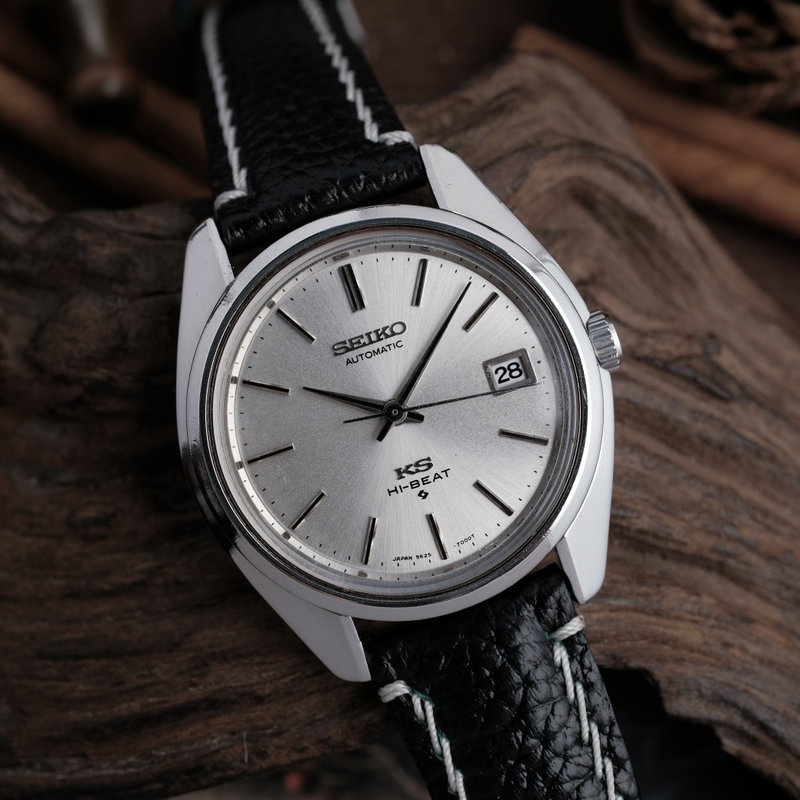
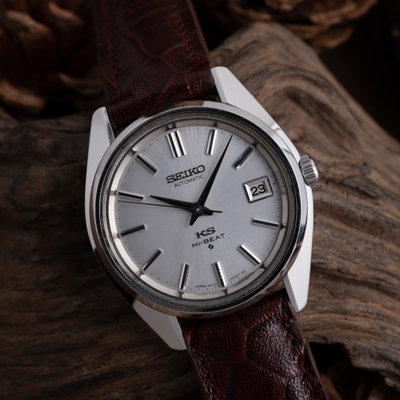
13 Seiko 5625-7000 auctioned
More Seiko references
Related pages
Frequently asked questions
Ready to hunt for your own?
More than 100 vintage watches go under the hammer every week.