Seiko Lord Matic 5605-7020 Reference Guide
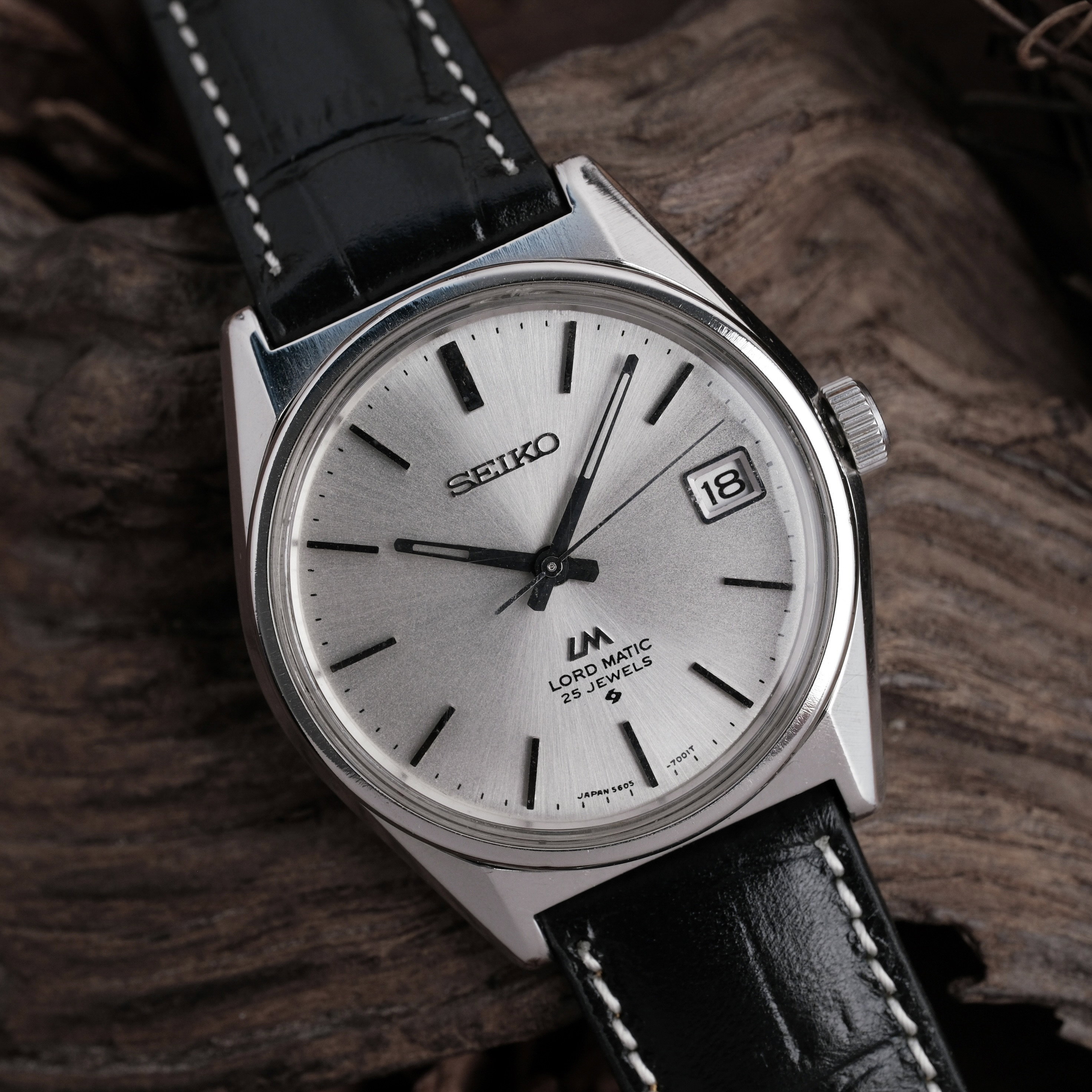
The Seiko Lord Matic 5605-7020 is a compact automatic dress watch whose value rests on its brushed silver dial and sharp steel case.
We auction more than 100 vintage watches a week.
Get first access: new Seiko 5605-7020 drops and alerts before auctions end.
Browse 27 live Seiko auctionsThe vintage Seiko Lord Matic 5605-7020 puts a vertically brushed silver dial inside a compact stainless steel case, driven by the automatic caliber 5605. Examples span 34 to 35 mm without the crown, so the watch reads as a restrained dress model rather than a scaled-down modern sports watch.
The version to want has an honest silver dial and case lines that remain clearly defined between the brushed upper surfaces and polished flanks. A refinished dial costs more in lost appeal than light case scratches, while heavy polishing removes the geometry that gives this reference its character. A used Seiko Lord Matic 5605-7020 should therefore be judged as a complete object before its movement is considered.
Reference
5605-7020
Model
Lord Matic
Known catalogue years
1968-1979
Case diameter
34-35 mm without the crown
| Case material | Stainless steel |
| Movement type | Automatic |
| Caliber | 5605 |
| Dial | Vertically brushed silver |
| Display | Date-only |
| Case construction | Front-loading |
The model landscape
The 5605-7020 is the date-only Lord Matic with an automatic caliber 5605, a silver dial with vertical brushing and a stainless steel front-loading case. Watches handled from 1968 and 1969 carry the compact proportions associated with this reference, while a 1970 example measures 35 mm without the crown. The known reference remains 5605-7020 throughout, so a different case reference is not a harmless variation.
Dial execution makes the larger difference between examples. The correct visual language is a vertically brushed silver surface, applied baton furniture and dark hands that preserve clear contrast. An evenly aged original dial ranks ahead of a cleaner redial, because refinishing can flatten the vertical texture and alter the printed text. A genuine service dial is a different category from a redial, but the available evidence does not establish a service-dial specification for this reference.
On the wrist
At 34 to 35 mm without the crown, the 5605-7020 wears compactly and leaves the angular steel case visible around the dial. The front-loading construction supports a slim visual profile, while the silver surface changes tone as its vertical brushing catches light. Black details keep the baton display legible, and the date makes the watch practical enough for regular office wear.
The better choice is the sharper 34 mm watch over a heavily polished 35 mm example at the same level. A millimetre matters less than intact transitions between the brushed top and polished flanks, because softened case lines make the whole watch look smaller and less deliberate. It suits a cuff and leather strap naturally, though no original strap or bracelet specification is established by the watches available here.
What goes wrong
The most expensive fault is a refinished silver dial, especially when the vertical brushing has been replaced by a flat or uneven finish. Heavy polishing comes next: it softens the case lines and blurs the boundary between brushed upper surfaces and polished flanks. Scratched crystals and replaced crowns matter less when they are disclosed, since both are service parts rather than grounds for an unsupported claim that a watch is all original.
Movement condition cannot be judged from appearance alone. One 1970 watch ran around a minute slow per day, while a 1969 example performed much closer to zero, which shows why the caliber number does not establish present health. The service history is unknown unless paperwork accompanies the watch, and historical Water Proof wording does not provide a current water-resistance rating. Avoid water until the case has been tested.
Dating this watch
| Serial range / caliber | Year | Note |
|---|---|---|
| 5605 | 1968-1975 | caliber production window |
Dating data comes from our decoder tables; treat years as approximate.
What to check before you buy
- Dial finish and furniture: The silver dial should retain a coherent vertical brushed texture with applied baton furniture and dark contrasting details. Flat refinishing, uneven brushing or disturbed printing points toward a redial rather than normal ageing.
- Case and movement pairing: The case reference must be 5605-7020 and the automatic movement must be caliber 5605. A correct movement alone does not authenticate the watch if the case and dial form a married or franken assembly.
- Case geometry: The steel case should preserve a readable division between brushed upper surfaces and polished flanks. Soft or mushy transitions indicate polishing and reduce value, even when the dial and movement are period-correct.
- Construction and wording: The reference uses a front-loading case, and early examples can carry historical Water Proof wording. That wording belongs to the period but does not establish present water resistance or prove that every component is original.
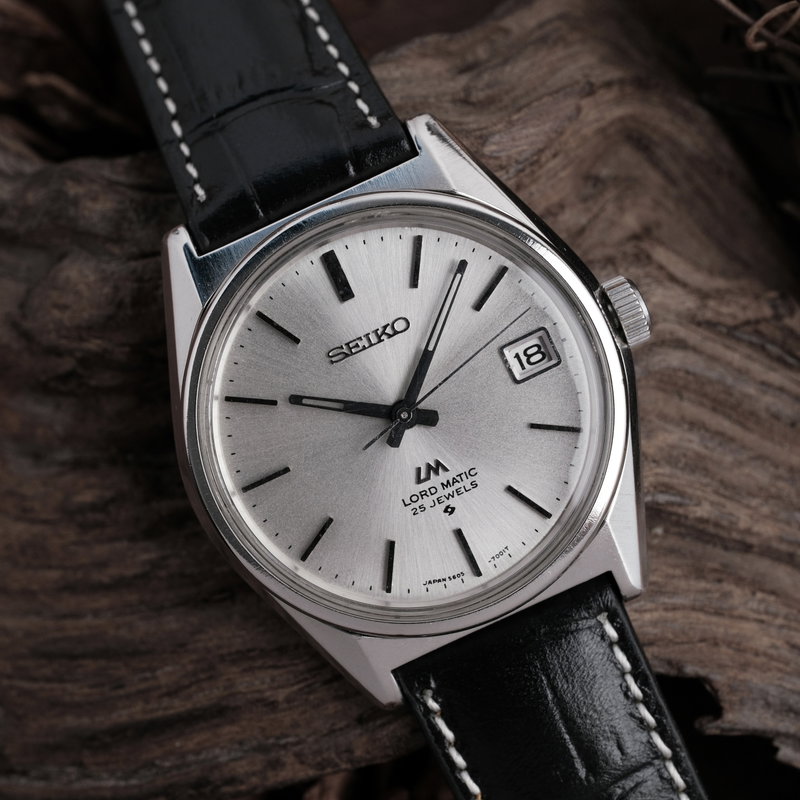
Other 5605-7020 examples we auctioned
10 Seiko 5605-7020 auctioned
More Seiko references
Related pages
Frequently asked questions
Ready to hunt for your own?
More than 100 vintage watches go under the hammer every week.