Seiko Lord Matic 5601-9000 Reference Guide
The Seiko Lord Matic 5601-9000 is a 36 mm steel automatic whose value depends chiefly on an honest silver dial and sharp case lines.
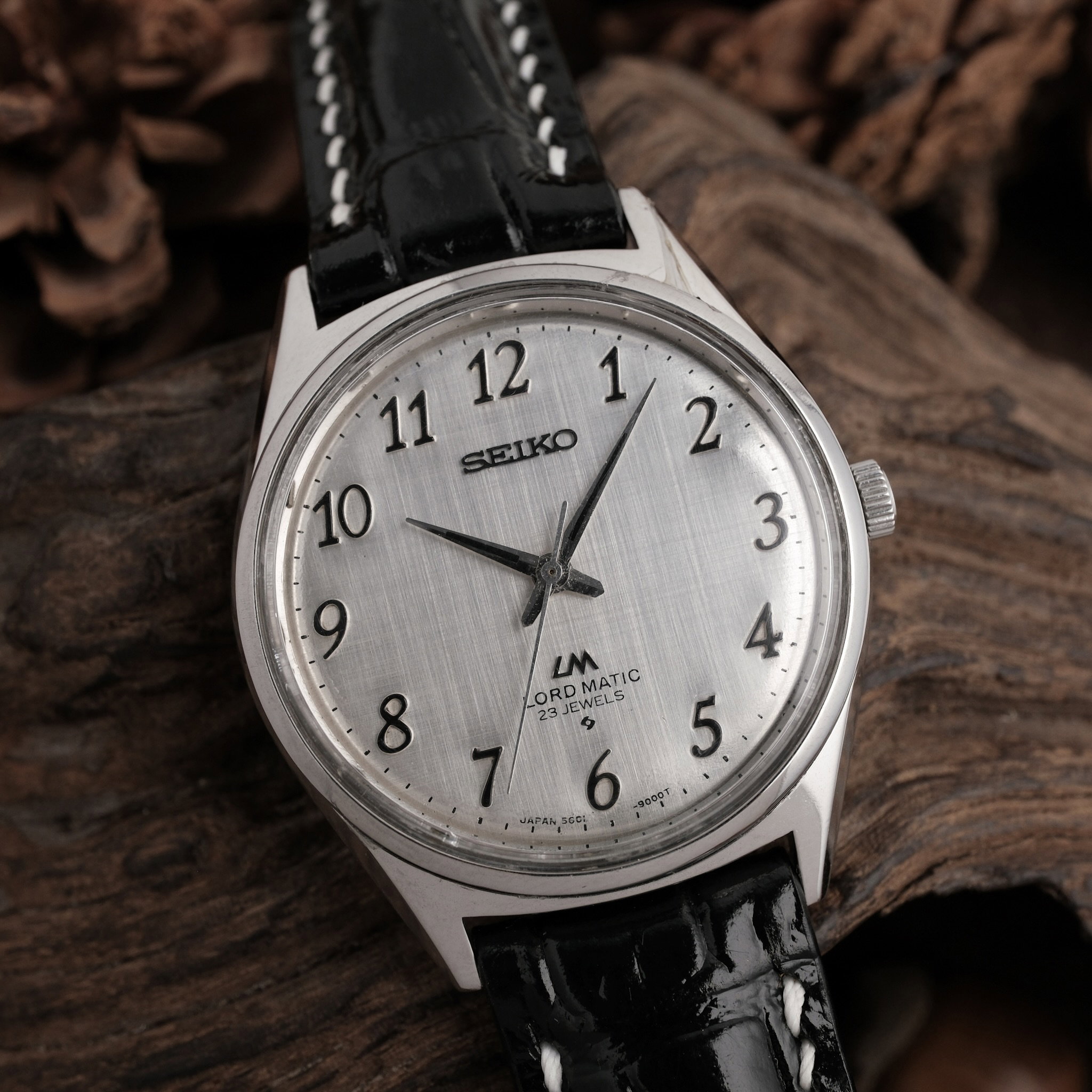
The Lord Matic 5601-9000 is an early 1970s Seiko built around a 36 mm stainless-steel case, an automatic movement and a silver dial. Known examples run from 1970 through 1976, placing the reference firmly in Seiko's dress-watch language of that period rather than among its sports models.
The decision is mainly between the silver sunburst dial and the less common-looking silver linen-textured execution, both found with applied Arabic numerals. Buy the dial before the movement claim: a convincing original dial carries more of this vintage Seiko's value than a vague service description, while a redial cannot be corrected by routine maintenance.
Brand
Seiko
Model
Lord Matic
Reference
5601-9000
Known production years
1970-1976
| Case diameter | 36 mm excluding the crown |
| Case material | Stainless steel |
| Movement | Seiko 5601A automatic on a handled 1973 example |
| Jewel count | 23 jewels |
| Known dial variants | Silver sunburst and silver linen-textured |
| Hour markers | Applied Arabic numerals |
What it was built for
The 5601-9000 was built as a compact automatic dress watch, with applied Arabic numerals and a signed lower dial rather than a timing bezel or additional registers. Its stainless-steel case makes it more forgiving than a plated dress watch, although the polished and brushed surfaces still depend on retained edges for their shape.
At 36 mm excluding the crown, the watch wears with the compact footprint expected of a 1970s Lord Matic. The silver sunburst version changes character as light moves across it, while the linen-textured dial breaks up reflections and reads with more visual density. Both work under a cuff, but the linen dial is the version to choose against a comparable sunburst example when the printing and case are equally honest.
Where the value sits
The largest spread lies between an honest dial and a refinished one. On the linen execution, the texture, applied black Arabic numerals and lower signature must agree as one period object; repainting can leave the surface convincing from a distance while making the printing too heavy. A genuine service dial is different from a redial, but neither should be represented as the dial that left the factory without supporting evidence.
Case definition comes next. Sharp transitions around the lugs support the original geometry, whereas repeated polishing leaves soft or mushy edges and changes how the 36 mm case catches light. An original Seiko bracelet adds coherence when its fit is correct, but excessive stretch and mismatched end links should reduce the premium. The service history is unknown without documentation, so running condition must not be mistaken for proof of recent work.
What goes wrong
A redial is the costliest fault because it removes the surface that distinguishes the reference, especially on the linen-textured version. Over-polishing follows: rounded lug edges cannot be returned by servicing, and aggressive refinishing can make the compact case look smaller. Bracelet stretch, replacement crowns and married case-and-movement combinations are separate risks, not harmless details.
Movement claims also need precision. A handled 1973 example carried the Seiko 5601A automatic with 23 jewels, while another known watch was described only as a Seiko automatic with the same jewel count. Without the movement exposed, the caliber should not be assumed from dial text alone. Likewise, an auction word such as serviced proves nothing without dated paperwork, and the watch itself cannot establish when prior work was done.
What to check before you buy
- Dial printing and surface: The lower dial should carry LM Lord Matic 23 Jewels with applied Arabic numerals above it. On a linen dial, the texture must remain visible beneath the finish; clogged texture or heavy printing points toward a redial.
- Dial code: A handled 1973 linen example was printed Japan 5601-901T at the outer edge. Treat that code as supporting evidence for that execution, not as proof by itself and not as a universal requirement for every known dial variant.
- Case geometry: The 36 mm stainless-steel case should retain clear transitions around the lugs. Soft or mushy edges indicate polishing, while uneven lug shapes can signal heavier metal removal rather than ordinary surface wear.
- Movement identity: A handled 1973 watch contained a Seiko 5601A automatic with 23 jewels. Confirm the movement marking directly because dial text alone cannot exclude a married watch or a caliber assembled from unrelated parts.
- Bracelet and crown: A Seiko bracelet should meet the case cleanly and should be assessed for stretch and mismatched end links. A signed or period-correct crown can still be a replacement, since crowns are consumable parts and cannot prove overall originality.
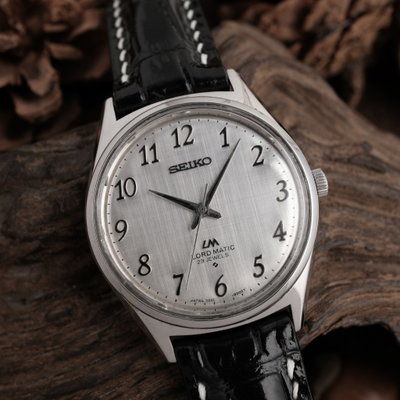
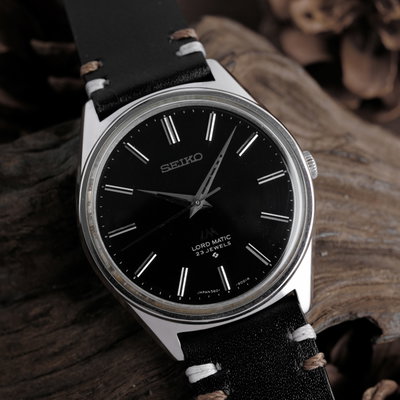
Other 5601-9000 examples we auctioned
More Seiko references
Related pages
Frequently asked questions
Ready to hunt for your own?
More than 100 vintage watches go under the hammer every week.