Seiko Crown 15013ED - Dial, Caliber 560 and Buying Priorities
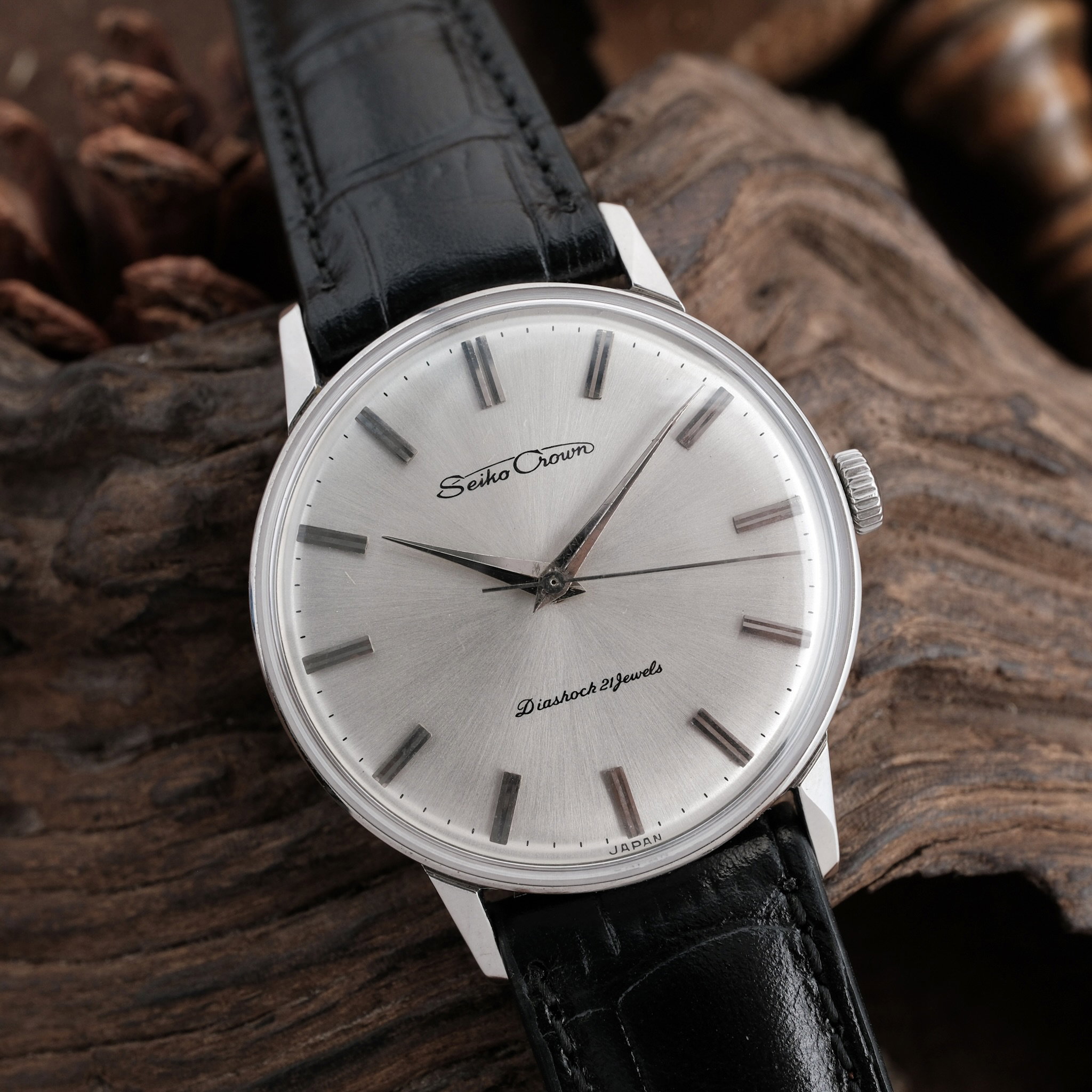
Buy the Seiko Crown 15013ED for its original silver sunburst dial and sharp steel case, accepting light hand oxidation before a redial or softened geometry.
Live now
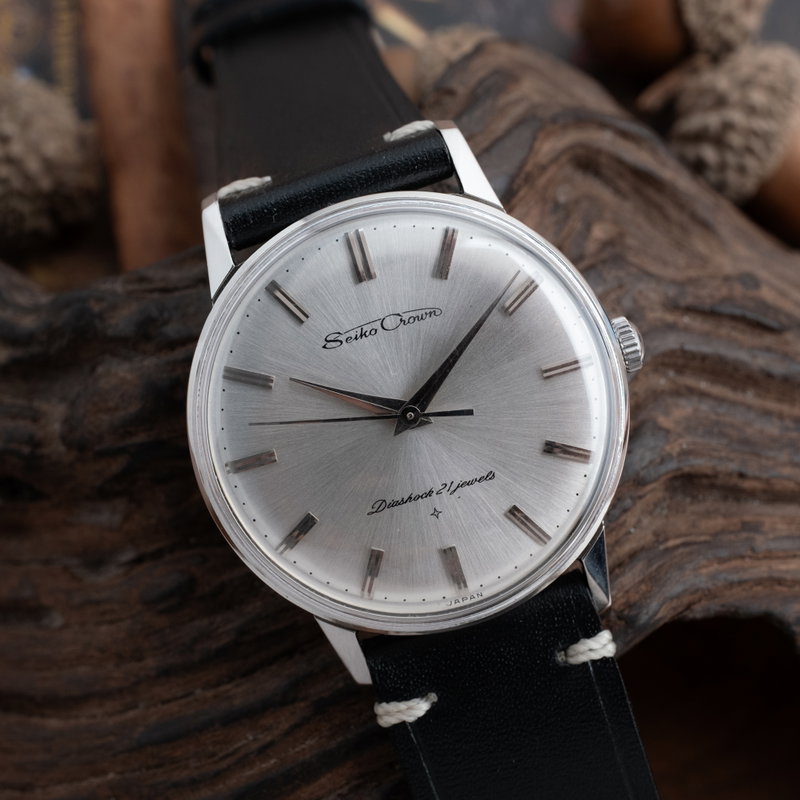
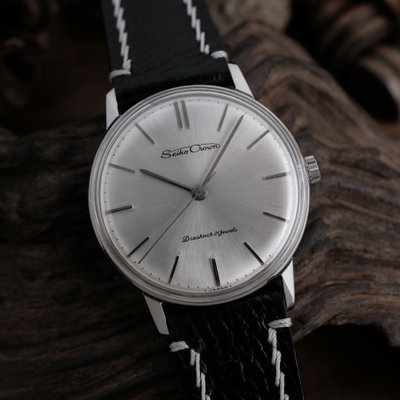
The vintage Seiko Crown 15013ED is a manual-wind steel dress watch from 1961-1964, powered by the Seikosha caliber 560. Its defining configuration is a silver sunburst dial with applied faceted baton indices and dauphine hands, all arranged within a case recorded at either 34 or 35 mm excluding the winding crown.
A clean original sunburst surface carries more of this reference's appeal than a small difference in measured diameter, while a redial permanently removes the finish you are buying the watch for. The Crown examples we have handled also show that light oxidation on the hands can coexist with a clean dial and sharply defined steel case.
Brand
Seiko
Model
Crown
Reference
15013ED
Known production years
1961-1964
| Case material | Stainless steel |
| Recorded case diameter | 34-35 mm excluding the crown |
| Movement | Seikosha caliber 560 |
| Winding | Manual wind |
| Jewel count | 21 jewels |
| Dial | Silver sunburst with applied faceted baton indices |
| Hands | Dauphine hands |
The model landscape
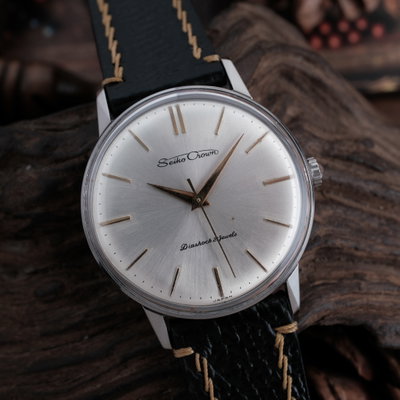
Reference 15013ED is consistent in its basic architecture: stainless steel, manual winding and a silver sunburst dial with applied faceted baton markers. The furniture can read as silver-tone or gold-tone, and the matching dauphine hands may follow that treatment. No supplied evidence establishes one colour as earlier, later or scarcer, so condition should outrank the colour of the indices.
The Seikosha caliber 560 has 21 jewels and belongs in this reference. That pairing matters because a correct dial in a plausible case is not enough when the movement comes from another watch. A mismatched movement makes the watch franken or married depending on the parts involved, while a replacement winding crown alone is a lesser issue and should be judged as a disclosed consumable part.
Where the value sits
The silver sunburst dial carries the largest condition spread on the Crown 15013ED. Original examples retain a directional finish, applied faceted batons and crisp black printing, including Seiko Crown, Diashock 21 Jewels and JAPAN on the dials examined. A refinished dial can imitate the layout but replaces the original surface, so it should trade below an honestly aged dial with minor dust or isolated spotting.
Case geometry comes next. Polishing softens the transitions around the lugs and blurs the steel case profile, while repeated crown replacement can leave mismatched wear or fit. Dauphine hands are also prone to oxidation and spotting, especially along the minute hand, but stable hand wear is less damaging to value than a redial or a case whose lines have been rounded away.
Where to start
Choose the cleanest original dial and the sharpest case before choosing between a stated 34 or 35 mm diameter. Both measurements occur on handled 15013ED examples, each excluding the crown, and the available evidence does not establish separate case executions. Paying a premium for the extra stated millimetre is therefore harder to justify than paying for stronger dial preservation.
A used Seiko Crown 15013ED should also be assessed as a mechanical watch, not only as a dial and case. Caliber 560 examples have produced positive timegrapher readings, including rates between +26 and +50 seconds per day, but those observations do not establish present service condition. Unless paperwork accompanies the watch, the service history is unknown and winding feel, rate and power delivery need to be priced accordingly.
What to check before you buy
- Dial surface and printing: The correct dial architecture is silver sunburst with applied faceted baton indices. Confirm crisp Seiko Crown, Diashock 21 Jewels and JAPAN printing, while treating flat paint or rebuilt sunburst brushing as redial warnings.
- Hands and applied furniture: Dauphine hands should visually agree with the applied baton indices, with silver-tone and gold-tone sets both documented. Mixed colours, incompatible ageing or crude relume can indicate exchanged parts rather than a coherent set.
- Movement identity: Reference 15013ED should contain the manual-wind Seikosha caliber 560 with 21 jewels. A different caliber is a material mismatch and may indicate a franken watch or a movement married to a case from another watch.
- Steel case geometry: Recorded cases are stainless steel and measure 34 or 35 mm excluding the crown. Judge the remaining definition at the lugs and case transitions, because polishing first turns those lines soft and cannot be reversed by service.
- Winding crown fit: The winding crown should sit and operate coherently with a manual-wind caliber 560 case. A crown with sharply different wear, colour or fit may be a replacement, although that fact alone does not make the entire watch franken.
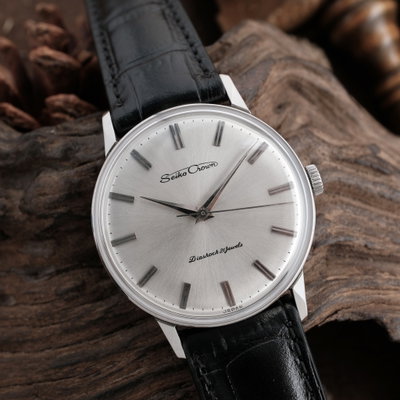
Other 15013ED examples we auctioned
5 Seiko 15013ED auctioned
We auction more than 100 vintage watches a week.
Get first access: new Seiko 15013ED drops and alerts before auctions end.
More Seiko references
Related pages
Frequently asked questions
Ready to hunt for your own?
More than 100 vintage watches go under the hammer every week.