Omega De Ville 511.0413 - what to check before buying
The Omega De Ville 511.0413 is a compact 1977-1979 manual-wind dress watch best bought for its dial, case geometry and honest plating.
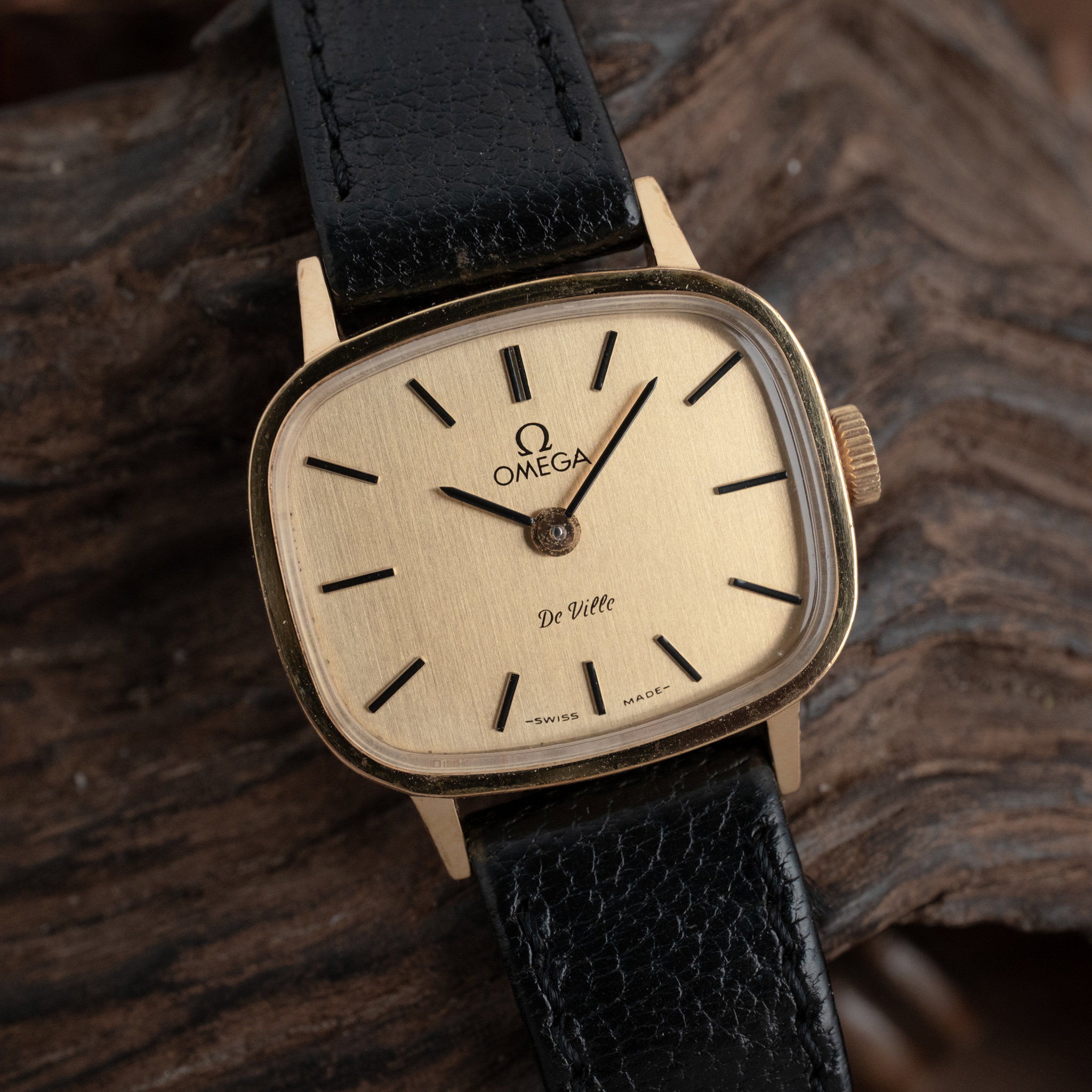
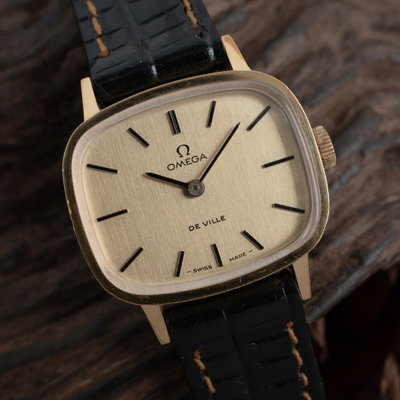
The Omega De Ville 511.0413 compresses late-1970s dress-watch design into a 24-25 mm cushion-shaped case. Its vertically brushed dial supplies the character, while the gold-plated case and stainless steel back keep the construction straightforward. For a vintage Omega De Ville this small, the black hands and baton furniture matter because they preserve legibility without crowding the dial.
A clean dial is the buying priority. Gold-tone and silvered versions are known, both with vertical brushing and black details, and neither deserves an automatic premium without comparable condition. Between a sharp brushed dial with visible plating wear and a bright case containing a redial, take the worn case. A refinished dial costs more than every other flaw on this reference combined.
Reference
511.0413
Model
De Ville
Known production years
1977-1979
Movement
Manual-winding Omega Caliber 625
| Jewel count | 17 jewels |
| Case size | 24-25 mm excluding the crown |
| Case construction | Gold-plated case with stainless steel caseback |
| Case shape | Cushion-shaped or TV-case profile |
| Known dial finishes | Vertically brushed gold-tone or silvered dial with black details |
What it was built for
Reference 511.0413 is a compact dress watch rather than a reduced sports model. The cushion-shaped, sometimes described as TV-case, profile places the dial inside a distinctly 1970s outline, while the gold plating gives it a formal surface over a stainless steel caseback. At 24-25 mm excluding the crown, it occupies little wrist width and works best when that deliberate scale suits the wearer.
The manual-winding Caliber 625 has 17 jewels and requires regular winding, which is part of owning this De Ville rather than a defect to excuse. Black stick hands against a vertically brushed gold-tone or silvered dial keep the display readable despite the compact case. The service history of an individual watch is often unknown, so timing performance should never substitute for documented maintenance.
Where the value sits
The worst fault is a redial. Vertical brushing is central to reference 511.0413, and refinishing can flatten that texture or replace crisp black printing with an approximation. A genuine service dial would be a factory replacement, not a redial, but the available evidence does not establish a service-dial specification for this reference. Without documentation, the dial itself must carry the judgement.
Gold plating is the next dividing line. Visible wear is permanent unless the case is replated, which changes the surviving finish, while polishing can soften the cushion-shaped edges that define the watch. Crown replacements also occur on vintage watches, and a signed crown is useful supporting evidence rather than proof of originality. Signed buckles survive on some examples, but straps and buckles remain detachable parts.
Value concentrates in a clean vertically brushed dial, coherent black hands and furniture, and a case that still reads clearly as a TV shape. A married watch can combine a correct Caliber 625 with a case from elsewhere, while a franken can use individually genuine parts that never shipped together. The reference, case construction and movement must agree before cosmetic condition earns a premium.
Dating and serials
The known production span for reference 511.0413 runs from 1977 through 1979. Omega serial guidance places 41000000 around 1977 and 42000000 around 1978, but those dates remain approximate rather than exact production certificates. A serial should support the watch, not overrule conflicting components.
A 43000000 serial aligns approximately with 1979, which fits the later end of the known range. The table carries a tolerance of plus or minus one to three years, so it cannot prove the exact date of an individual watch. Without period paperwork, we prefer not to narrow the date beyond what the serial, reference and components establish together.
Dating this watch
| Serial range / caliber | Year | Note |
|---|---|---|
| 41000000 | 1977 | approximate, ±1-3 years |
| 42000000 | 1978 | approximate, ±1-3 years |
| 43000000 | 1979 | approximate, ±1-3 years |
Dating data comes from our decoder tables; treat years as approximate.
What to check before you buy
- Dial finish and furniture: Known dials have a vertical brushed finish in gold-tone or silvered form, with black hands, baton furniture and black printing. Flat refinishing, blurred text or mismatched hands needs explanation.
- Case construction and shape: Reference 511.0413 uses a 24-25 mm gold-plated cushion or TV-shaped case with a stainless steel caseback. Softened edges indicate polishing, while plating wear must be described rather than hidden.
- Movement agreement: The movement should be the manual-winding Omega Caliber 625 with 17 jewels. A correct caliber is necessary but not sufficient, because a case and movement from different watches would make the watch married.
- Crown and buckle signatures: Signed Omega crowns and buckles occur on handled examples, but both are replaceable parts. Treat a correct signature as supporting evidence and distinguish period-correct replacement parts from demonstrably original ones.
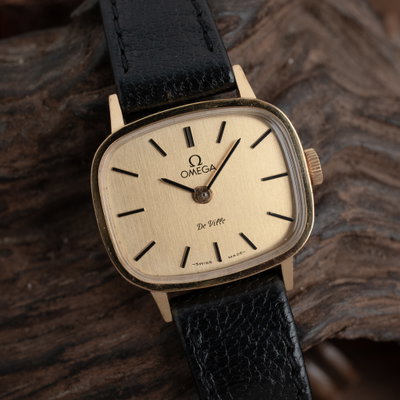
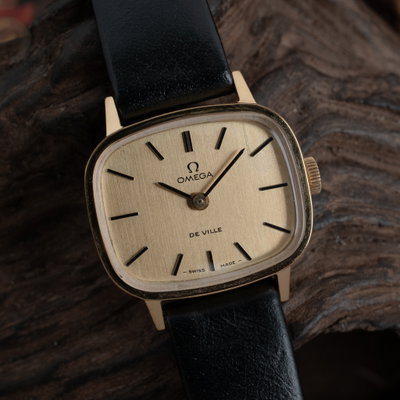
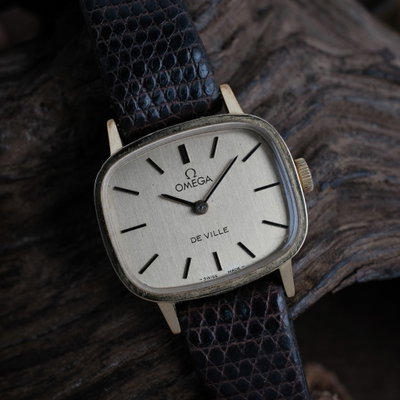
Other 5110413 examples we auctioned
More Omega references
Related pages
Frequently asked questions
Ready to hunt for your own?
More than 100 vintage watches go under the hammer every week.