Omega De Ville 511.0371: Caliber 625, Dials and Buying Priorities
The Omega De Ville 511.0371 is a 20 mm manual-wind dress watch whose strongest examples pair an honest dial with the caliber 625.
Live now
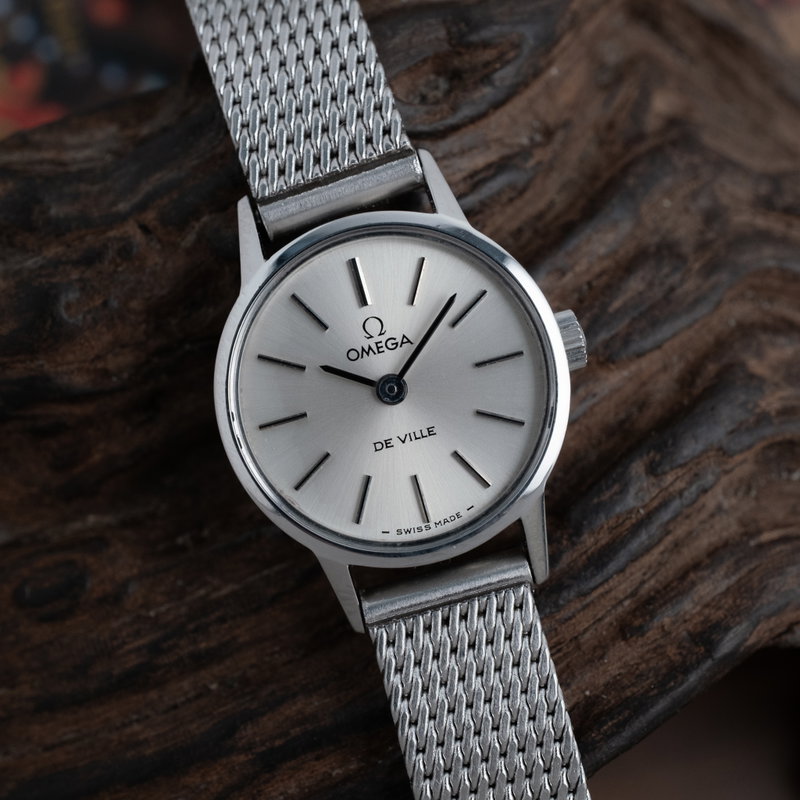
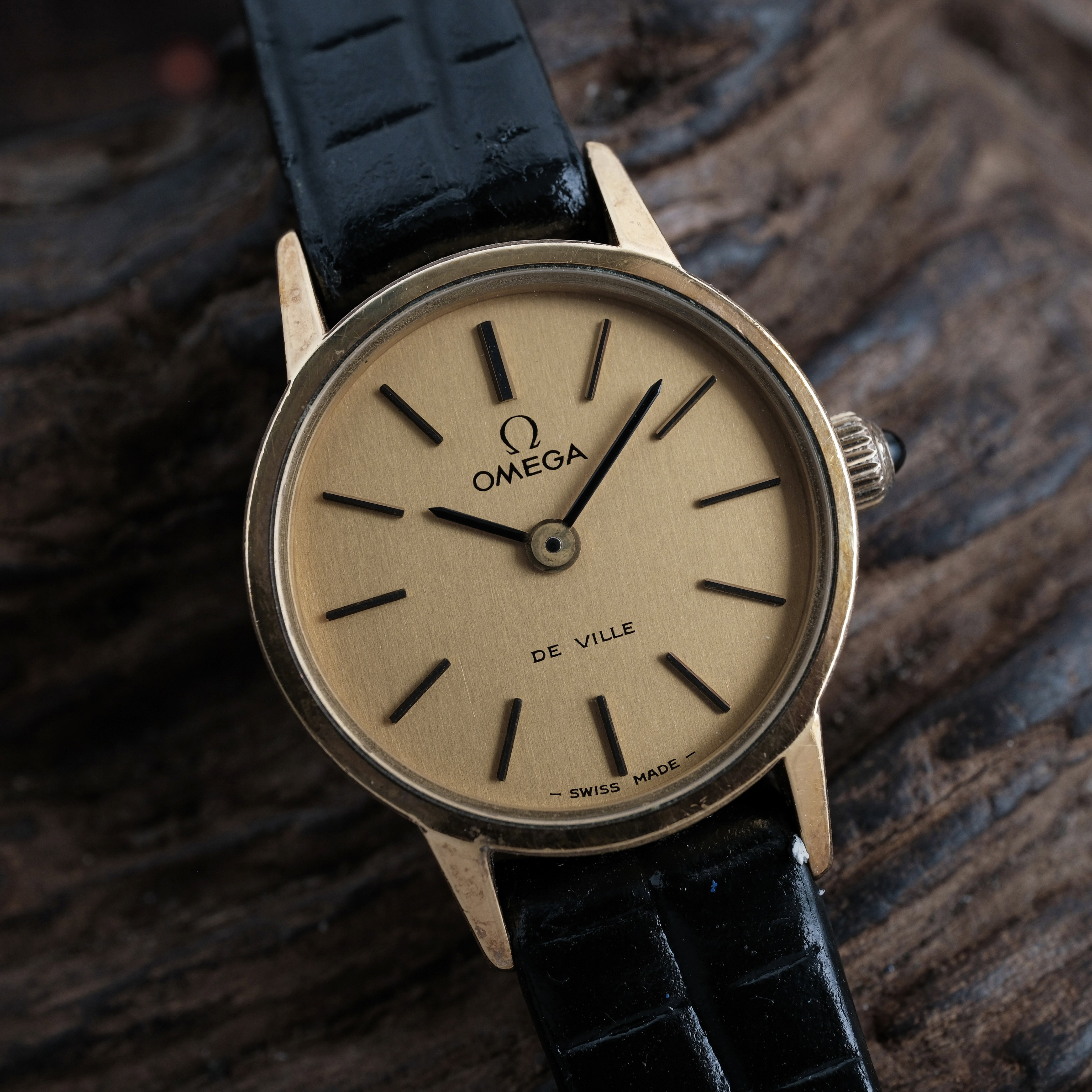
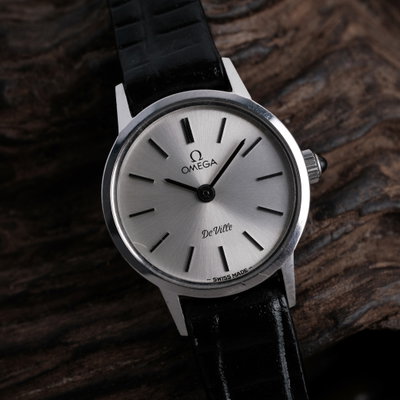
The De Ville 511.0371 reduces a 1970s Omega dress watch to a 20 mm case, black baton hands and a manually wound caliber 625. Examples handled from 1973 through 1979 establish a compact reference with enough dial variation to make the choice consequential.
Silver dials occur with either sunburst or vertical brushing, while a gold-tone vertically brushed version is also known. The silver sunburst dial with crisp black printing is the safest purchase against a gold-tone case showing plating wear, but an honest vertically brushed dial should take priority over a cleaner-looking redial.
Reference
511.0371
Known production years
1973-1979
Movement
Omega caliber 625
Winding
Manual wind
| Jewels | 17 |
| Case size | 20 mm excluding the crown |
| Known case materials | Stainless steel; gold-tone with stainless steel caseback |
| Known dial finishes | Silver sunburst; silver vertically brushed; gold-tone vertically brushed |
On the wrist
At 20 mm excluding the crown, the 511.0371 wears as a small rectangular dress watch rather than a reduced round watch. Its black baton hands provide useful contrast against the silver dial, and manual winding avoids the extra bulk associated with a rotor. The scale is deliberate and visually formal.
The case works best when its compact proportions are treated as the point, not disguised with an oversized strap. A silver dial and stainless steel case make the reference easier to combine with daily clothing, while the gold-tone version reads more emphatically as a 1970s dress watch. Neither should be bought expecting modern wrist presence.
Where the value sits
The dial carries the largest share of value. Silver sunburst examples need crisp black text and a clean minute track, while vertically brushed dials should retain an uninterrupted grain; minor edge wear and light surface specks are preferable to refinishing. A redial costs more than case wear because the original surface cannot be recovered.
Case material creates the next divide. Stainless steel tolerates wear without exposing a different base colour, whereas a gold-tone case can lose plating at corners and lugs, and no routine service reverses that loss. Soft case edges, a replaced crown and scratched crystal matter, but they sit behind the dial and plating in the buying order.
Caliber 625 performance must be judged from current testing and service documentation, not from the movement's reputation. One handled example ran materially fast, while another showed a much smaller daily deviation, so reference identity alone says nothing about present regulation. When service history is unknown, it remains unknown.
Dating and serials
Known 511.0371 examples run from 1973 to 1979, with caliber 625 throughout the handled watches. Omega serial ranges place a movement approximately rather than proving the production date of the complete watch, and the guidance carries a margin of plus or minus one to three years.
A movement serial that resolves well outside the known 1973-1979 span deserves scrutiny because the watch may be married or assembled from period-correct parts. A serial within the window supports coherence but does not establish that the dial, crown and case left the factory together. Without documentation, we prefer not to speculate beyond the components themselves.
Dating this watch
| Serial range / caliber | Year | Note |
|---|---|---|
| 1,000,000 | 1895 | approximate, ±1-3 years |
| 2,000,000 | 1902 | approximate, ±1-3 years |
| 3,000,000 | 1908 | approximate, ±1-3 years |
| 4,000,000 | 1912 | approximate, ±1-3 years |
| 5,000,000 | 1916 | approximate, ±1-3 years |
| 6,000,000 | 1923 | approximate, ±1-3 years |
| 7,000,000 | 1929 | approximate, ±1-3 years |
| 8,000,000 | 1935 | approximate, ±1-3 years |
| 9,000,000 | 1939 | approximate, ±1-3 years |
| 10,000,000 | 1944 | approximate, ±1-3 years |
| 11,000,000 | 1947 | approximate, ±1-3 years |
| 12,000,000 | 1950 | approximate, ±1-3 years |
| 13,500,000 | 1952 | approximate, ±1-3 years |
| 14,000,000 | 1954 | approximate, ±1-3 years |
| 15,000,000 | 1956 | approximate, ±1-3 years |
| 16,000,000 | 1958 | approximate, ±1-3 years |
| 17,000,000 | 1960 | approximate, ±1-3 years |
| 18,000,000 | 1961 | approximate, ±1-3 years |
| 19,000,000 | 1962 | approximate, ±1-3 years |
| 20,000,000 | 1963 | approximate, ±1-3 years |
| 21,000,000 | 1964 | approximate, ±1-3 years |
| 22,000,000 | 1965 | approximate, ±1-3 years |
| 23,000,000 | 1966 | approximate, ±1-3 years |
| 25,000,000 | 1967 | approximate, ±1-3 years |
| 26,000,000 | 1968 | approximate, ±1-3 years |
| 28,000,000 | 1969 | approximate, ±1-3 years |
| 29,000,000 | 1970 | approximate, ±1-3 years |
| 33,000,000 | 1971 | approximate, ±1-3 years |
| 34,000,000 | 1972 | approximate, ±1-3 years |
| 36,000,000 | 1973 | approximate, ±1-3 years |
| 38,000,000 | 1974 | approximate, ±1-3 years |
| 39,000,000 | 1975 | approximate, ±1-3 years |
| 40,000,000 | 1977 | approximate, ±1-3 years |
| 41,000,000 | 1978 | approximate, ±1-3 years |
| 42,000,000 | 1979 | approximate, ±1-3 years |
| 44,000,000 | 1980 | approximate, ±1-3 years |
| 45,000,000 | 1982 | approximate, ±1-3 years |
| 46,000,000 | 1984 | approximate, ±1-3 years |
| 48,000,000 | 1985 | approximate, ±1-3 years |
| 49,000,000 | 1986 | approximate, ±1-3 years |
| 51,000,000 | 1989 | approximate, ±1-3 years |
| 53,000,000 | 1991 | approximate, ±1-3 years |
| 54,000,000 | 1993 | approximate, ±1-3 years |
| 55,000,000 | 1995 | approximate, ±1-3 years |
Dating data comes from our decoder tables; treat years as approximate.
What to check before you buy
- Movement identity: The known configuration uses the manually wound Omega caliber 625 with 17 jewels. Any different caliber conflicts with the handled reference and raises the possibility of a married watch.
- Dial configuration: Known dials are silver sunburst, silver vertically brushed or gold-tone vertically brushed, with black hands and printing or applied baton indices. Recreated brushing and fresh print indicate a redial.
- Case and crown coherence: Stainless steel and gold-tone cases with a stainless steel caseback are established, and cabochon crowns occur on handled examples. A replacement crown is possible and should be described rather than folded into an all-original claim.
- Movement date fit: Compare the movement serial with Omega's approximate table and the known 1973-1979 span. A distant mismatch can indicate a married movement, although an in-range result alone does not prove originality.
Other 511.0371 examples we auctioned
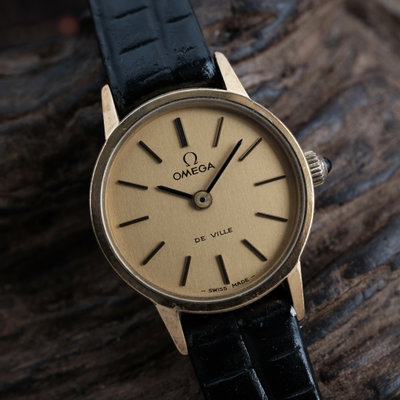
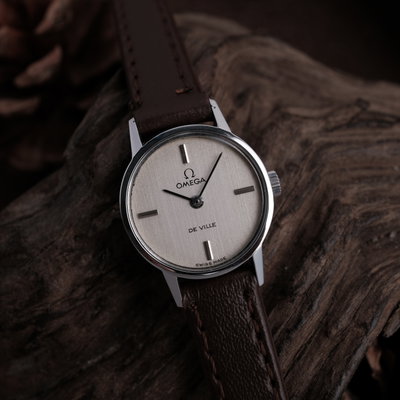
3 Omega 511.0371 auctioned
We auction more than 100 vintage watches a week.
Get first access: new Omega 511.0371 drops and alerts before auctions end.
More Omega references
Related pages
Frequently asked questions
Ready to hunt for your own?
More than 100 vintage watches go under the hammer every week.