Seiko Advan 7019-7150: what to know before buying
The Seiko Advan 7019-7150 is a bold 1972-1973 automatic whose value rests on its two-tone dial, faceted crystal and correct bracelet.
We auction more than 100 vintage watches a week.
Get first access: new Seiko 7019-7150 drops and alerts before auctions end.
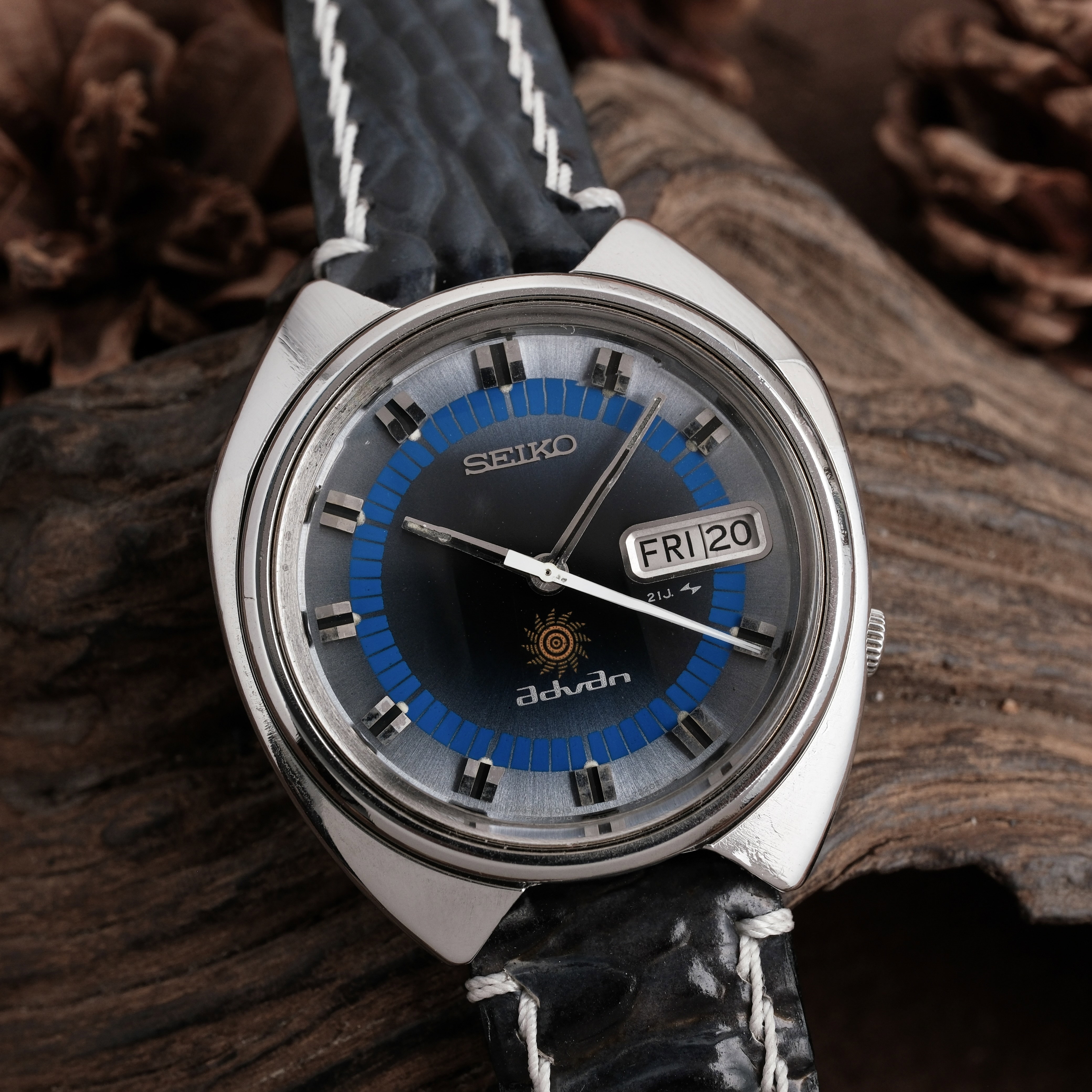
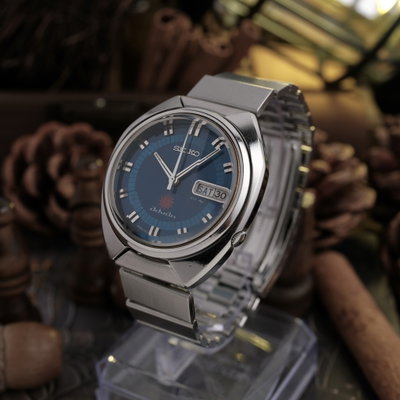
Browse 32 live Seiko auctionsThe Seiko Advan 7019-7150 belongs unmistakably to 1972-1973: a stainless-steel cushion case, two-tone blue and grey dial, faceted crystal and automatic day-date movement. It was aimed at a youthful market, and its angular surfaces still make more sense as deliberate fashion than as a conventional everyday watch.
The version to want keeps the red or orange Advan sun logo legible, the applied faceted indices clean and the original multi-faceted crystal intact. Buy the dial first. Local oxidation, fading around the logo and replacement crystals alter the character more than ordinary case wear does.
Reference
7019-7150
Model
Advan
Known production years
1972-1973
Case material
Stainless steel
| Handled case sizes | 36 mm, 37 mm and 38 mm excluding the crown |
| Movement | Automatic caliber 7019 or 7019A |
| Jewel count | 21 jewels |
| Display | Day-date at three o'clock |
| Dial | Two-tone blue, grey or charcoal with applied faceted indices |
| Crystal | Multi-faceted crystal |
What it was built for
The Advan 7019-7150 was built as an expressive automatic rather than a restrained office watch. Its slate, charcoal and blue dial sections shift under the faceted crystal, while the day-date display at three o'clock keeps it practical. The automatic caliber 7019A uses 21 jewels, placing everyday calendar utility inside a case designed to catch light.
Case measurements differ among examples, but the meaningful point is proportion: at 36 mm, 37 mm or 38 mm excluding the crown, the cushion outline occupies more wrist than a round case of the same width. The crystal adds visual height and angularity, so the watch reads as a compact piece of 1970s design rather than a small dress watch.
Where the value sits
The premium sits in a clean two-tone dial with intact blue track, strong sunburst centre and an unfaded Advan sun logo. A refinished dial costs more than every other flaw combined because the segmented colour layout, applied furniture and logo are the reference's identity. A genuine service dial is different from a redial, but neither should be priced as the dial that left the factory with that watch.
An original multi-faceted crystal and a matching signed bracelet add another layer of value because both complete the intended geometry. Bracelet stretch and surface wear are acceptable within reason; a mismatched bracelet loses the integrated look. Between a sharper watch with honest dial spotting and a polished watch with a cleaner redial, take the spotted original dial.
What goes wrong
Dial damage is the first financial risk. Known examples show spotting and oxidation across the blue or slate surface, plus local fading and degradation around the orange sun logo. Hands can oxidise as well, and moisture damage should be named directly rather than sold as patina.
Faceted crystals collect scratches, and replacement crystals can flatten the optical effect that defines the 7019-7150. Polishing softens the cushion case's transitions, while wear and stretch reduce the fit of the signed bracelet. The day-date mechanism must change correctly, and running alone does not establish mechanical health - observed rates of roughly plus 38 to plus 53 seconds per day show why service history matters. Without documentation, the service history is unknown.
What to check before you buy
- Dial layout and print: The correct layout uses a two-tone blue, grey or charcoal composition, applied faceted indices, a segmented outer track and an Advan sun logo. Soft printing, incorrect colour boundaries or a missing logo can indicate a redial or incompatible dial.
- Hands and calendar: Baton hands with white central inserts should suit the applied hour furniture, and the day-date window belongs at three o'clock. Oxidation is possible, but mismatched hand shapes or a poorly aligned calendar warrant scrutiny for replaced parts.
- Case and crystal: The stainless-steel cushion case should retain distinct transitions around its broad upper surface, while the multi-faceted crystal should produce angular reflections. Soft case edges indicate polishing, and a plain replacement crystal changes the reference's intended appearance.
- Caseback and reference: The caseback must carry the reference 7019-7150. A different reference points to an incorrect caseback or a franken assembly, and the watch should not be described as a coherent 7019-7150 until that mismatch is resolved.
- Movement: The movement should be automatic caliber 7019 or 7019A with 21 jewels and should operate the day-date display. A different caliber can mean the movement is married to the case, while running condition alone says nothing about service history.
- Bracelet fit: A period-correct signed bracelet may read "SEIKO advan" and should meet the cushion case cleanly at the end links. A signature does not excuse excessive stretch, poor fitment or components that never shipped together.
Other 7019-7150 examples we auctioned
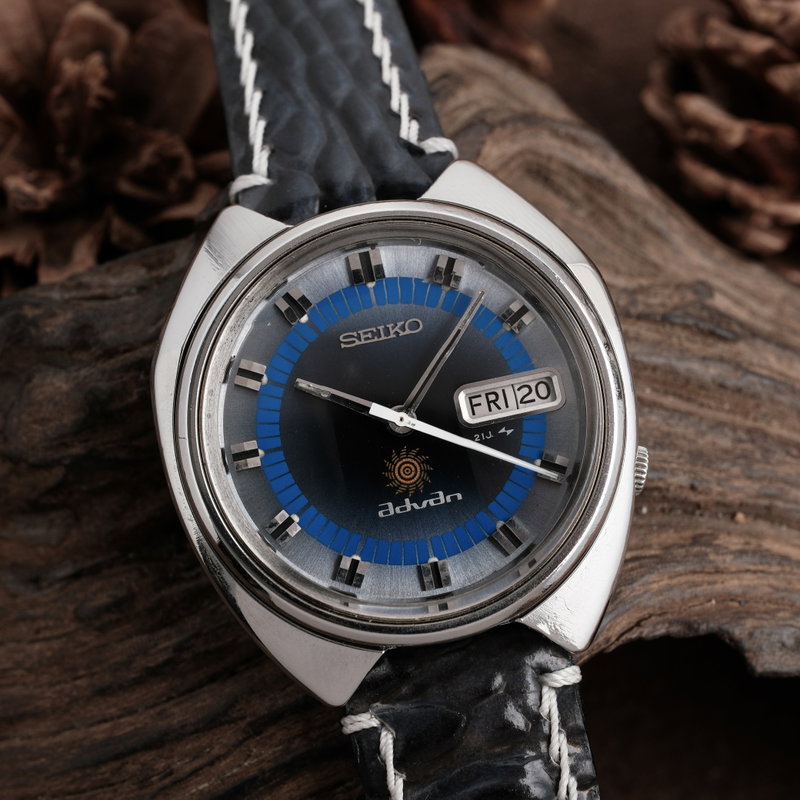
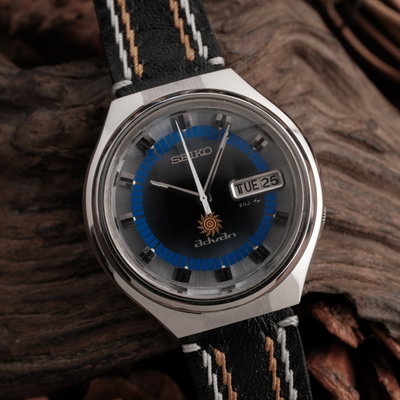
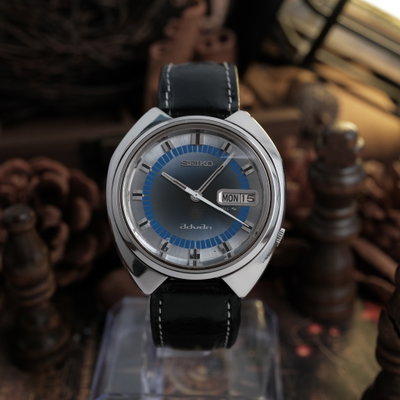
11 Seiko 7019-7150 auctioned
More Seiko references
Related pages
Frequently asked questions
Ready to hunt for your own?
More than 100 vintage watches go under the hammer every week.