Vintage Seiko Seikomatic: What to Buy and What to Avoid
Buy a vintage Seikomatic for its clean dial and coherent reference-specific configuration, not for polished case shine or an unsupported originality claim.
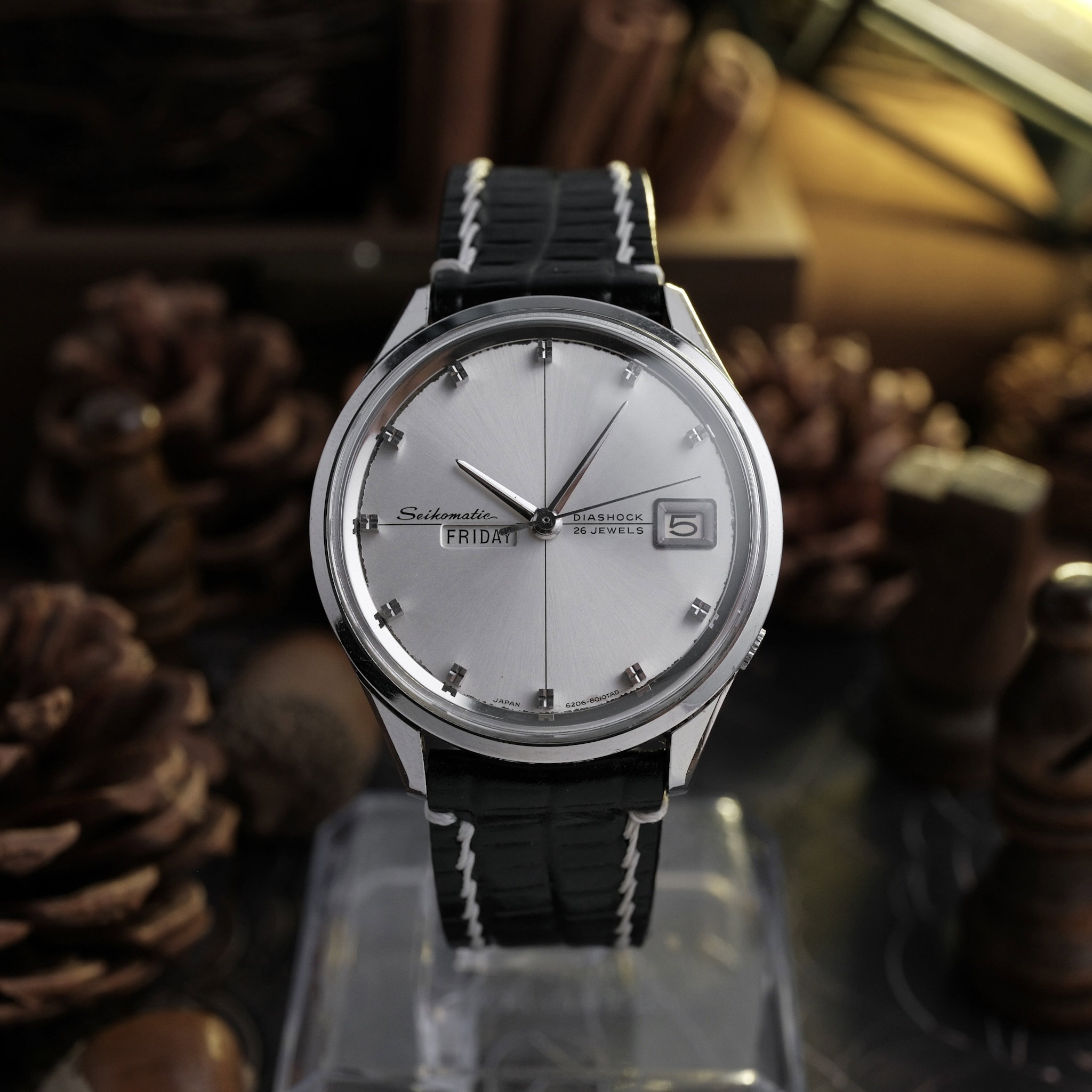
The Seikomatic was Seiko's automatic dress watch of the 1960s, with production examples in our handling spanning 1960 to 1968. Its recessed crown made automatic winding part of the design rather than merely a movement specification, while sunburst dials and applied faceted indices kept the watch formal.
There is no single Seikomatic look. A 35 mm gold-filled J14074DE with caliber 603 is a different proposition from a 37 mm steel 6206-8080 with caliber 6206B and its day display at six. For a used Seikomatic, the right choice starts with a coherent reference, dial layout and movement, then turns to the dial's condition.
Known production years
1960-1968
Known case-size range
35 mm-37 mm, excluding the crown
Known case materials
Stainless steel, gold-filled and gold-plated
Known automatic calibers
603, 6206A and 6206B
| Known jewel counts | 26 jewels and 30 jewels |
| 6206-8010 configuration | 36 mm steel case, caliber 6206A, separated day and date displays |
| 6206-8080 configuration | 37 mm steel case, caliber 6206B, day display at six |
| J14074DE configuration | 35 mm or 36 mm gold-tone case, caliber 603, recessed crown at four |
The model landscape
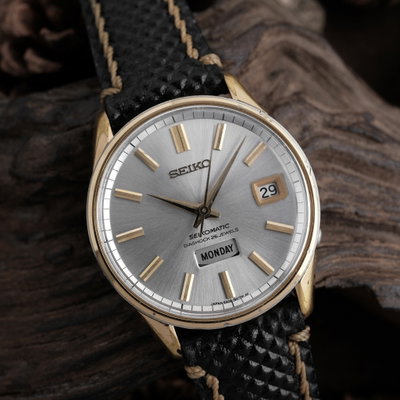
The earlier dress-watch formula is clearest in the J14074DE, found in 35 mm and 36 mm gold-filled or gold-plated cases with caliber 603 and 30 jewels. Its recessed crown sits at four, and known dials include grey or silver sunburst finishes with applied gold-tone indices. Plating wear matters more here than superficial shine because exposed base metal at the lugs cannot be returned by routine servicing.
The steel 6206 family is the easier place to start. The 36 mm 6206-8010 uses caliber 6206A and separates its day and date displays, while the 37 mm 6206-8080 uses caliber 6206B and places the day at six within a more elaborate calendar arrangement. Between a spotted 6206-8010 dial and a clean 6206-8080 at comparable overall condition, take the cleaner dial - refinishing or widespread moisture damage costs more than an extra millimetre gains.
On the wrist
At 35 mm, the J14074DE reads as a compact dress watch, and its recessed crown keeps the case outline tidy. Gold-tone accents and a sunburst dial suit a cuff, but the plated or filled case makes regular contact wear more consequential. The larger steel options change the balance without turning the Seikomatic into a modern-sized watch.
The 36 mm 6206-8010 gives the separated calendar displays enough room without losing the restrained proportions of a 1960s Seiko. At 37 mm, the 6206-8080 has more dial area and a stronger bezel presence, so its day-at-six layout carries greater visual weight. Choose that version when calendar legibility matters; choose the smaller steel reference when a quieter dress-watch profile matters more.
What goes wrong
Gold plating can wear through at the lugs, sunburst dials can develop spotting or edge wear, and polishing can soften the case geometry. Those faults do not carry equal weight. A clean dial in a case with honest contact marks is the stronger purchase than a bright, rounded case surrounding a refinished or moisture-damaged dial.
Calendar configuration is also a franken risk because the 6206-8010 and 6206-8080 do not share the same dial layout. The movement must agree with the reference-specific configuration: caliber 6206A for the former, caliber 6206B for the latter, and caliber 603 for the J14074DE examples described here. Crowns and crystals are consumable parts, so period-correct is not proof of factory originality; without documentation, the service history remains unknown.
Dating this watch
| Serial range / caliber | Year | Note |
|---|---|---|
| 6206 | 1963-1968 | caliber production window |
Dating data comes from our decoder tables; treat years as approximate.
What to check before you buy
- Match the calendar layout to the reference: A 6206-8010 has separated day and date displays, while a 6206-8080 places the day at six. A dial with the wrong arrangement is evidence of a replacement or a franken assembly.
- Confirm the movement family: The 6206-8010 configuration belongs with caliber 6206A, the 6206-8080 with 6206B, and the J14074DE examples here with caliber 603. A mismatch matters more than a replaced consumable crown.
- Judge the sunburst dial before case shine: Silver and grey sunburst dials should retain a coherent radial finish around the applied faceted indices and calendar apertures. Flat paint, disturbed printing or covered spotting points toward a redial.
- Read the case material honestly: On gold-filled or gold-plated J14074DE cases, inspect the lug edges for plating worn through to base metal. On steel examples, softened edges and rounded geometry disclose polishing more reliably than surface brightness.
- Treat the recessed crown as supporting evidence: The four-o'clock recessed crown belongs to the Seikomatic design language described here, but crowns are consumable. Correct placement supports the configuration, while shape alone cannot establish factory originality.
Recent Seiko results
Seiko · Seikomatic · 6206-8010 · 1965
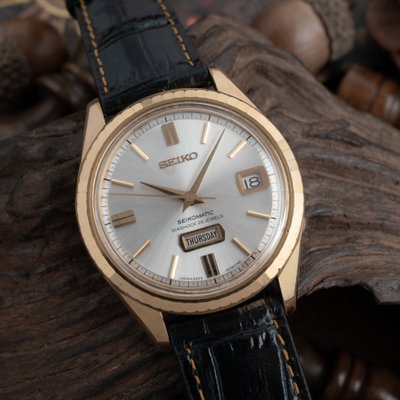
Seiko · Seikomatic · 6206-8100 · 1966
Seiko · Seikomatic · 6206-8040 · 1965
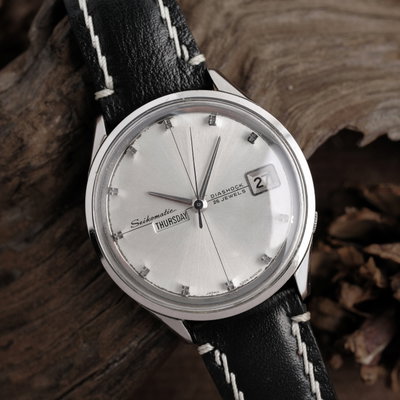
Seiko · Seikomatic · 6206-8010 · 1965
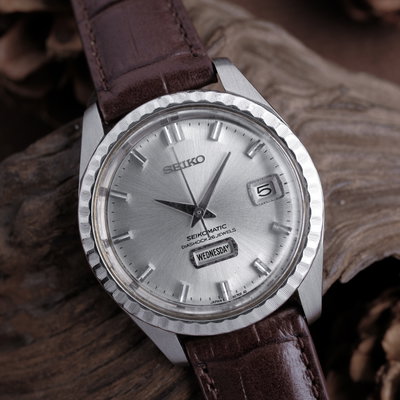
Seiko · Seikomatic · 6206-8160 · 1966
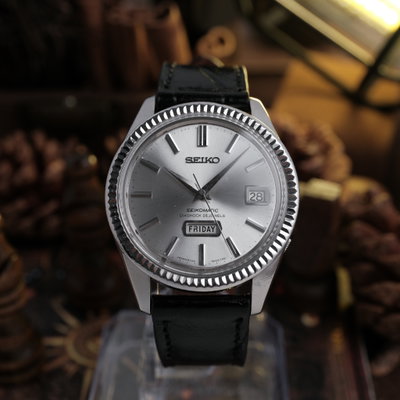
Seiko · Seikomatic · 6206-8080 · 1966
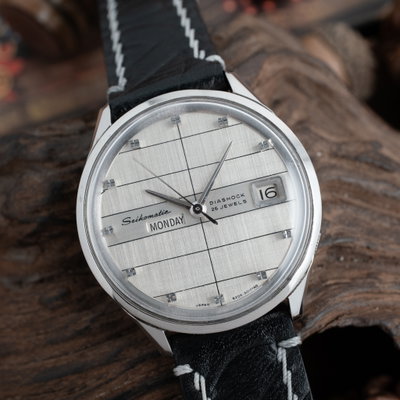
Seiko · Seikomatic · 6206-8010 · 1965
Seiko · Seikomatic · 6206-8040 · 1965
More Seiko references
Related pages
Frequently asked questions
Ready to hunt for your own?
More than 100 vintage watches go under the hammer every week.