Seiko Lord Marvel: choosing the right vintage example
The Seiko Lord Marvel is a compact manual-wind dress watch, with the 5740C-powered 36000 version carrying the clearest mechanical distinction.
Live now
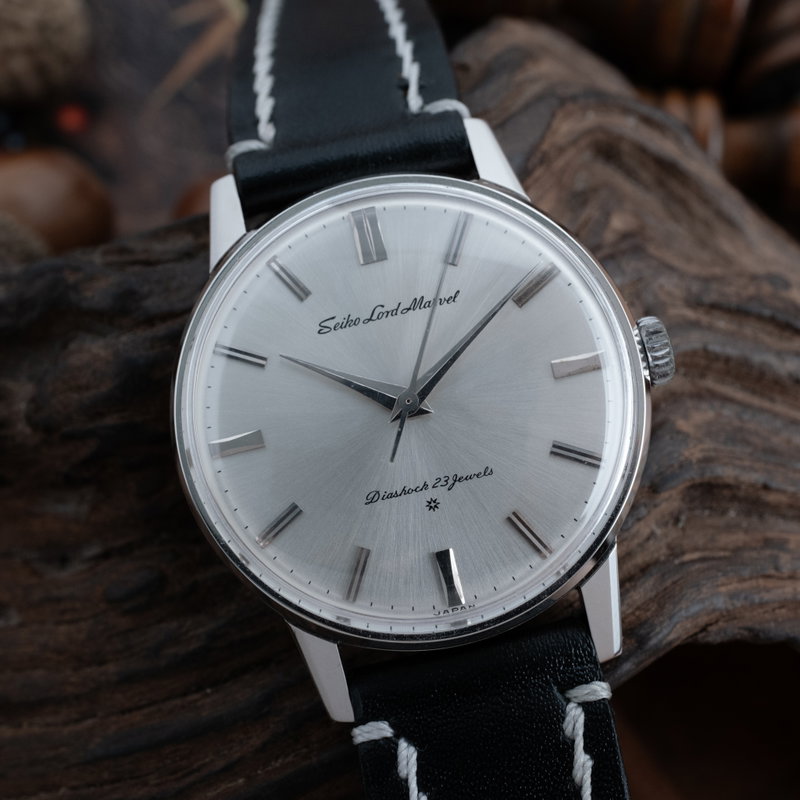
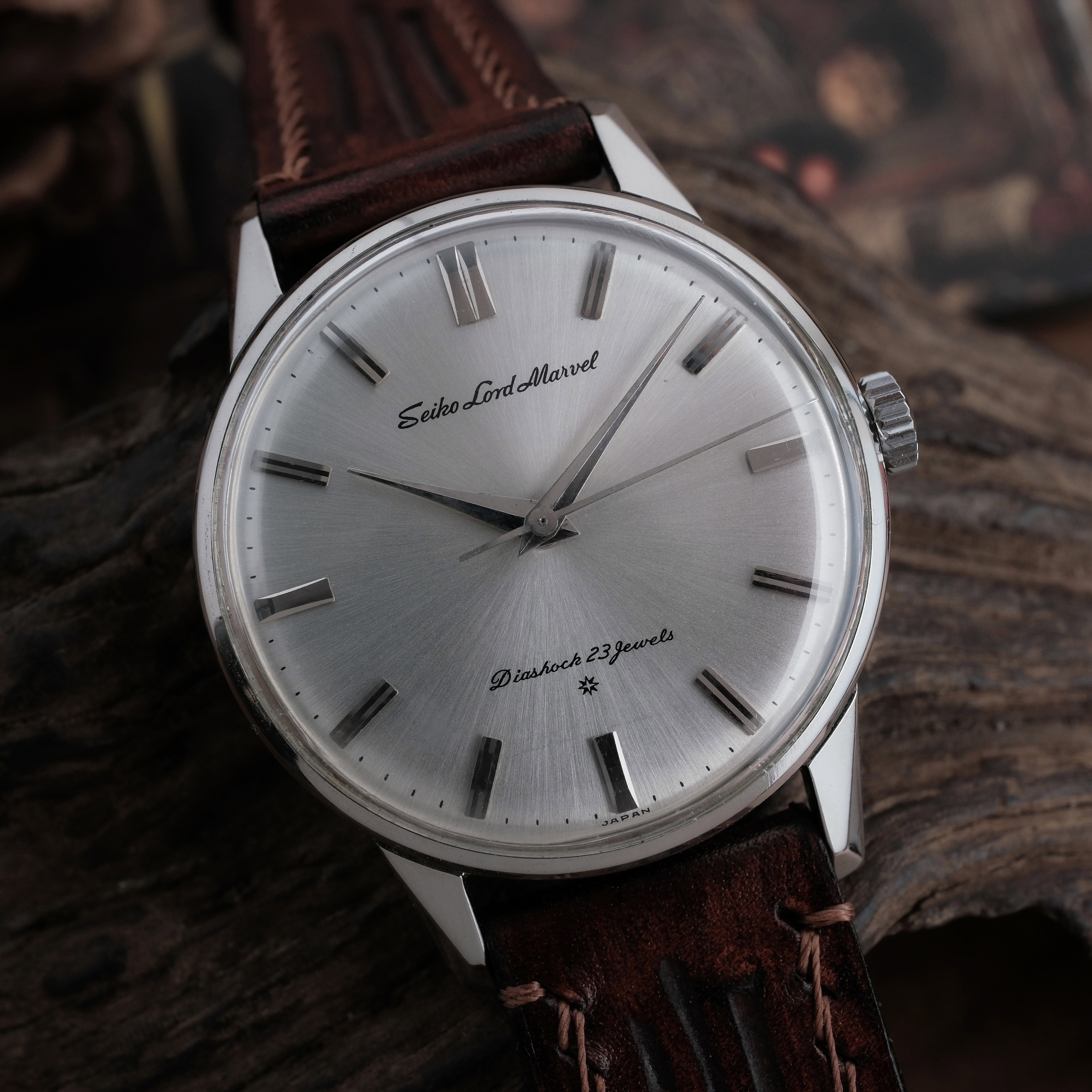
The Lord Marvel began as a high-grade Seiko dress watch, then became the platform for Seiko's first 36,000 beats-per-hour wristwatch. That makes the Lord Marvel 36000 more than a different line of dial text: its manual-wind 5740C movement is the mechanical reason most buyers enter this model.
The range is broader than the 36000 name suggests. A steel 1961 Lord Marvel with a 35 mm case sits at the early end, while later watches include 5740B and 5740C movements in steel or gold-plated cases. The useful buying decision is therefore not simply early against late. It is restrained early dress watch against high-beat 5740C, with dial condition deciding between comparable examples.
Known production span
1961-1978
Case diameter
34-36 mm, excluding crown
Winding system
Manual winding
Known calibers
5740B and 5740C
| 5740C frequency | 36,000 beats per hour |
| 5740C jewel count | 23 jewels |
| Case materials | Stainless steel or gold-plated with stainless steel caseback |
| Known dial format | Silver sunburst with applied indices |
What it was built for
The early Lord Marvel was Seiko's upper-level manual-wind dress watch before the later 36000 established its separate technical identity. A 1961 steel example has a 35 mm case, silver sunburst dial, applied faceted indices and dauphine hands. By 1966, the 5740B appeared in a 36 mm gold-plated case with a stainless steel back, retaining the same formal purpose while changing the movement and case execution.
The 5740C moved the model into high-beat territory at 36,000 beats per hour. It remained manually wound and used 23 jewels, so the engineering change did not turn the Lord Marvel into a sports watch. It remained a compact dress watch with applied markers and a silver sunburst dial. The faster caliber is the point of the Lord Marvel 36000, not a claim of modern robustness or known service history.
Where the value sits
The widest value gap lies between a clean dial and a refinished one. Silver sunburst surfaces should retain their radial finish, applied indices should agree with the hands and case tone, and black printing should remain crisp. A redial costs more than ordinary case wear because it removes the surface that defines the watch. A genuine service dial is a different category, but without documentation or a confirmed factory specification, it should not be labelled as one.
Case material creates the next important spread. Stainless steel tolerates regular wear better, while gold plating can wear through at the lug tips and case edges, and no service replaces lost factory plating without altering the case. Over-polishing rounds the lugs and softens their transitions. Moisture spotting on the dial, oxidation on the dauphine hands and a married movement-case combination matter more than light surface marks.
Where to start
For the clearest expression of the model, take a 5740C Lord Marvel 36000 over a 5740B example when dial and case condition are equal. The 5740-8000 is the practical reference to learn because handled examples include both a 34 mm steel case and a 35 mm gold-plated case. The steel version is easier to wear frequently. The plated version makes sense only when its lug tips and case edges retain continuous coverage.
For an earlier Lord Marvel watch, the 5740-0010 pairs the manual-wind 5740B with a 36 mm gold-plated case, while the 15023E establishes the simpler 1961 steel format at 35 mm. Choose the early watch against the 36000 for its dress-watch character, not because it is mechanically equivalent. On any used Seiko Lord Marvel for sale, buy the dial first, then case geometry, then movement agreement. The service history is unknown unless supported by documentation.
What to check before you buy
- Movement specification: The 5740C is a manual-wind, 23-jewel movement running at 36,000 beats per hour. A watch sold as a Lord Marvel 36000 should agree with all three points, not merely carry 36000 wording on the dial.
- Reference and case agreement: The 5740-8000 is known in both 34 mm steel and 35 mm gold-plated cases, so material is not a standalone test. The case, stainless steel back, dial furniture and 5740C movement must form a coherent configuration.
- Earlier 5740 format: The 5740-0010 is established with a 36 mm gold-plated case, stainless steel back and manual-wind 5740B with 23 jewels. A different movement requires evidence before the watch can be treated as coherent rather than franken.
- Dial and hand consistency: Known examples use silver sunburst dials with applied faceted indices and dauphine hands. Flat paint, blurred black printing or furniture that conflicts in tone may indicate a redial or parts assembled from different watches.
- Case surface evidence: Gold plating should be checked at the lug tips and case edges, where base metal becomes visible first. On steel cases, rounded lugs and softened transitions establish polishing more reliably than claims that a case is untouched.
Recent Seiko results
56 Seiko watches auctioned
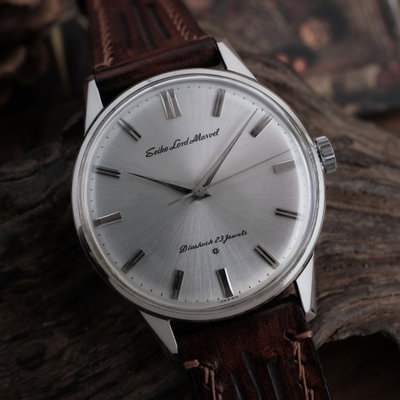
Seiko · Lord Marvel · 15023E · 1961
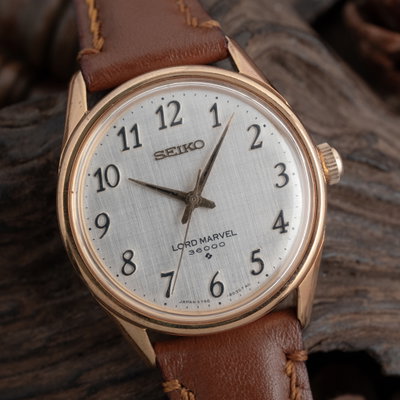
Seiko · Lord Marvel · 5740-8000 · 1975
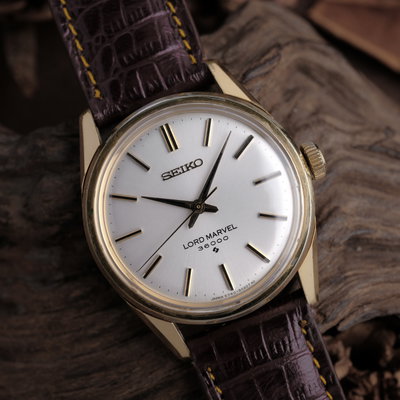
Seiko · Lord Marvel · 5740-8000 · 1970
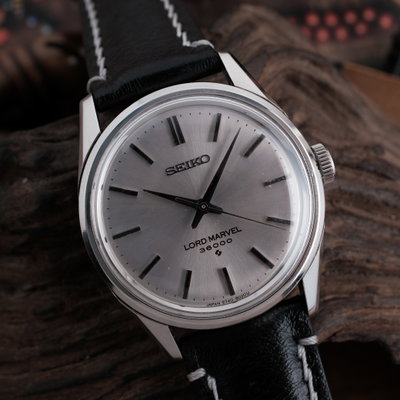
Seiko · Lord Marvel · 5740-8000 · 1968
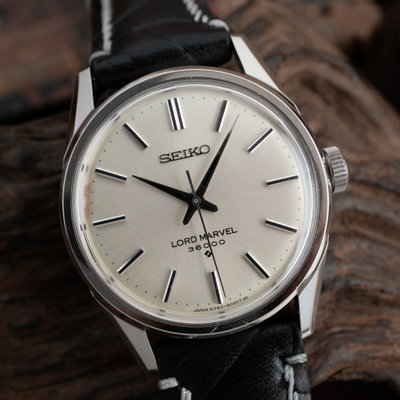
Seiko · Lord Marvel · 5740-8000 · 1969
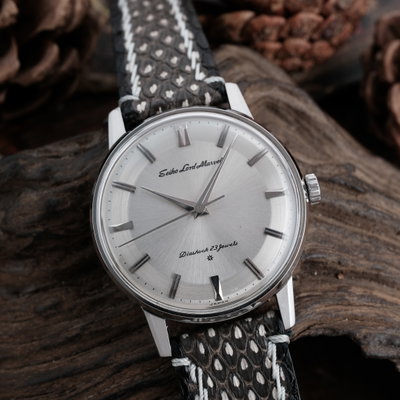
Seiko · Lord Marvel · 15027E · 1962
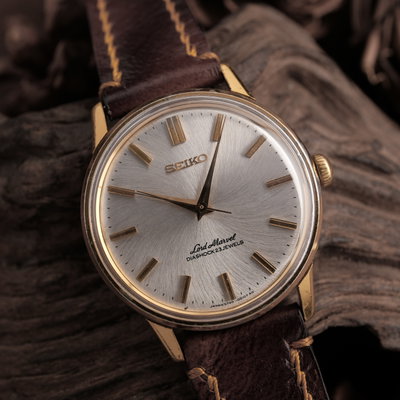
Seiko · Lord Marvel · 5740-0010 · 1966
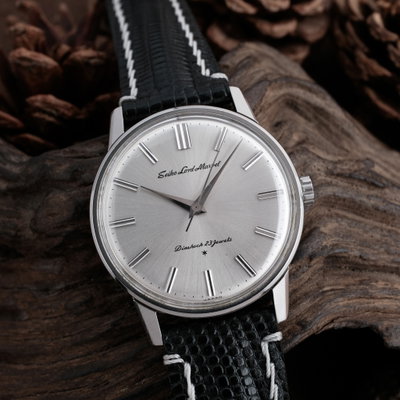
Seiko · Lord Marvel · 5740-1990 · 1965
We auction more than 100 vintage watches a week.
Get first access: new Seiko watch drops and alerts before auctions end.
More Seiko references
Related pages
Frequently asked questions
Ready to hunt for your own?
More than 100 vintage watches go under the hammer every week.