Vintage Omega Seamaster 600: What to Buy and What to Avoid
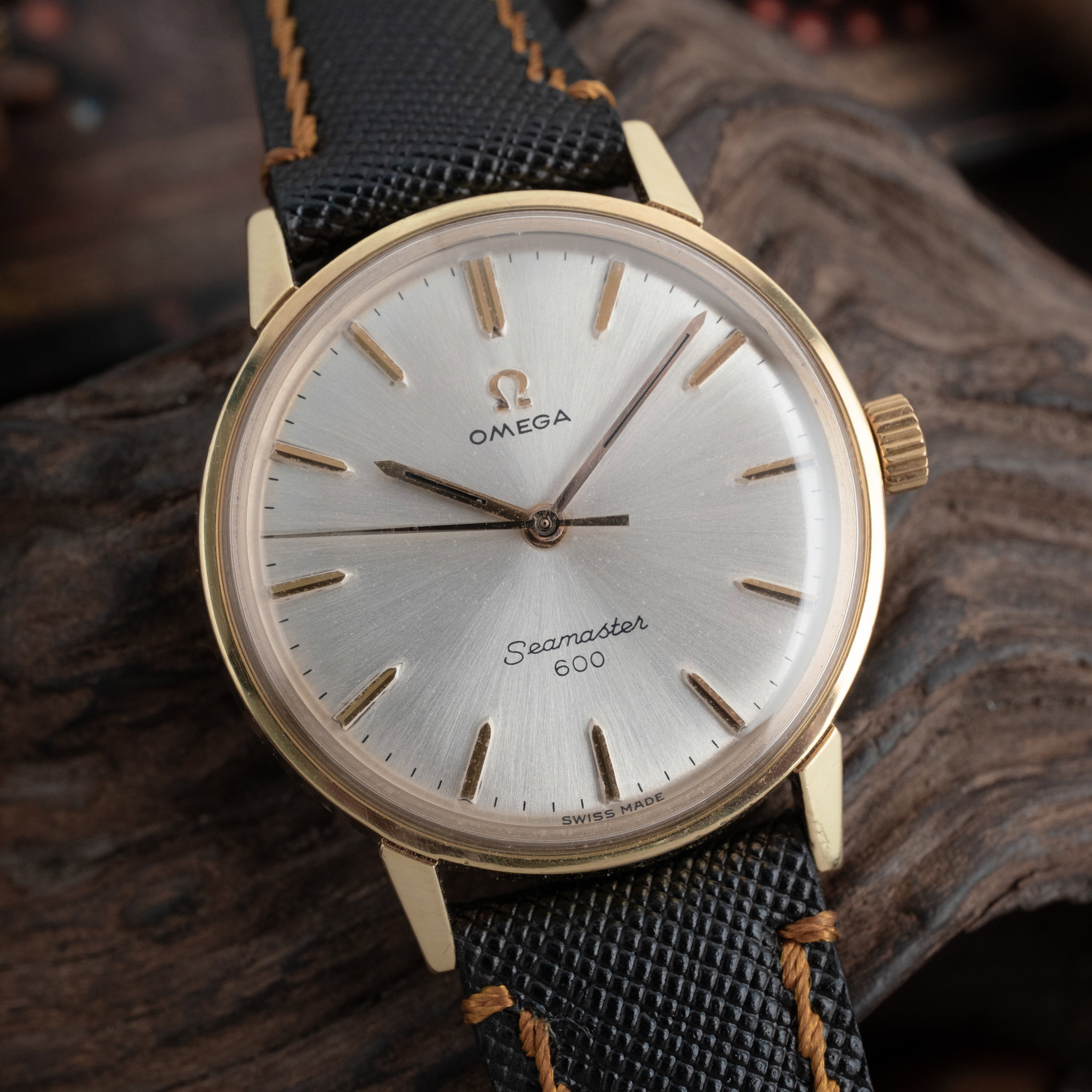
The vintage Omega Seamaster 600 is best bought in steel with a clean original dial, a coherent caliber and case, and no serious loss of lug definition.
We auction more than 100 vintage watches a week.
Get first access: new Omega watch drops and alerts before auctions end.
Browse 53 live Omega auctionsThe Seamaster 600 is a compact manual-wind Omega from 1961-1969, built around simple silver dials, applied indices and 34-35 mm cases. The examples shown here place its character exactly: restrained enough for a cuff, but with enough brushed or sunburst texture to keep the dial from looking flat.
The safest target is a 34 mm steel example with a clean silver dial and caliber 601, rather than a gold-plated case with thinning surfaces or a caliber 611 date example carrying heavy spotting. The date version adds utility, but the dial still decides the watch: broad reddish staining or dense speckling narrows its market more severely than hand oxidation or a replaced crystal.
Production years
1961-1969
Winding
Manual-wind
Known calibers
Omega 601 and Omega 611
Jewel count
17 jewels
| Case sizes | 34 mm and 35 mm, excluding the crown |
| Case materials | Stainless steel or gold-plated with stainless steel caseback |
| Dial finishes | Silver sunburst or vertical-brushed silver |
| Display | No-date and date configurations |
What it was built for
The Seamaster 600 belongs to Omega's manual-wind dress-watch output of the 1960s. Caliber 601 drives the no-date configuration, while caliber 611 accompanies the date display; both movements have 17 jewels in the watches examined. The absence or presence of a date is therefore a structural choice, not merely a dial variation.
At 34 mm or 35 mm excluding the crown, the case wears compactly and leaves the dial in control of the proportions. Applied baton indices and straight hands keep the silver surface legible, while a vertical brush produces a quieter effect than a sunburst finish. Manual winding also keeps the ownership routine direct: crown feel matters, and a gritty or slipping action requires mechanical attention rather than cosmetic explanation.
Where the value sits
Dial preservation creates the largest spread. A clean silver sunburst or vertical-brushed dial retains crisp printing and uninterrupted texture; heavy reddish spotting, dense speckling and oxidation on the applied furniture move the watch into condition-led territory. Of the Seamaster 600s we have handled, a damaged dial has been harder to overlook than minor oxidation confined to the hands.
Steel is the safer case material when two examples have comparable dials. Gold plating gives warmer contrast with gold-tone indices, but wear-through cannot be reversed by ordinary polishing, and further polishing only removes more plating. Between a sharp steel case with an honest clean dial and a brighter plated case with softened lugs, take the steel watch. The intact hippocampus on the caseback supports the case assessment, but it does not rescue a compromised dial.
What goes wrong
The worst recurring fault is dial damage. Broad reddish spotting across the surface is damage, not patina; dense, even speckling may look coherent, but it still carries a discount against an undamaged dial. Oxidation can also spread across the hands, applied indices and logo, while darkened lume may indicate age without proving that the hands and dial left the factory together.
Cases fail differently. Polishing softens the lug profile and weakens the caseback emblem, while gold plating thins first on exposed edges and cannot be rebuilt through routine service. A replacement crown or crystal can be practical, but neither should support an unqualified claim of originality. Movement condition is separate: timing figures describe performance during one test, not the date or quality of the last service, and without documentation the service history is unknown.
Dating this watch
| Serial range / caliber | Year | Note |
|---|---|---|
| 1000000 | 1902 | approximate, ±1-3 years |
| 2000000 | 1908 | approximate, ±1-3 years |
| 3000000 | 1912 | approximate, ±1-3 years |
| 4000000 | 1916 | approximate, ±1-3 years |
| 5000000 | 1923 | approximate, ±1-3 years |
| 6000000 | 1925 | approximate, ±1-3 years |
| 7000000 | 1929 | approximate, ±1-3 years |
| 8000000 | 1935 | approximate, ±1-3 years |
| 9000000 | 1939 | approximate, ±1-3 years |
| 10000000 | 1944 | approximate, ±1-3 years |
| 11000000 | 1947 | approximate, ±1-3 years |
| 12000000 | 1950 | approximate, ±1-3 years |
| 13000000 | 1952 | approximate, ±1-3 years |
| 14000000 | 1954 | approximate, ±1-3 years |
| 15000000 | 1956 | approximate, ±1-3 years |
| 16000000 | 1958 | approximate, ±1-3 years |
| 17000000 | 1960 | approximate, ±1-3 years |
| 18000000 | 1961 | approximate, ±1-3 years |
| 19000000 | 1962 | approximate, ±1-3 years |
| 20000000 | 1963 | approximate, ±1-3 years |
| 21000000 | 1964 | approximate, ±1-3 years |
| 22000000 | 1965 | approximate, ±1-3 years |
| 24000000 | 1966 | approximate, ±1-3 years |
| 25000000 | 1967 | approximate, ±1-3 years |
| 26000000 | 1968 | approximate, ±1-3 years |
| 28000000 | 1969 | approximate, ±1-3 years |
| 31000000 | 1970 | approximate, ±1-3 years |
| 32000000 | 1971 | approximate, ±1-3 years |
| 33000000 | 1972 | approximate, ±1-3 years |
| 35000000 | 1973 | approximate, ±1-3 years |
| 37000000 | 1974 | approximate, ±1-3 years |
| 39000000 | 1975 | approximate, ±1-3 years |
| 40000000 | 1976 | approximate, ±1-3 years |
| 41000000 | 1977 | approximate, ±1-3 years |
| 42000000 | 1978 | approximate, ±1-3 years |
| 43000000 | 1979 | approximate, ±1-3 years |
| 44000000 | 1980 | approximate, ±1-3 years |
| 45000000 | 1982 | approximate, ±1-3 years |
| 46000000 | 1984 | approximate, ±1-3 years |
| 47000000 | 1985 | approximate, ±1-3 years |
| 48000000 | 1986 | approximate, ±1-3 years |
| 49000000 | 1988 | approximate, ±1-3 years |
| 50000000 | 1990 | approximate, ±1-3 years |
| 53000000 | 1993 | approximate, ±1-3 years |
| 54000000 | 1995 | approximate, ±1-3 years |
| 56000000 | 1996 | approximate, ±1-3 years |
| 58000000 | 1998 | approximate, ±1-3 years |
| 60000000 | 2000 | approximate, ±1-3 years |
Dating data comes from our decoder tables; treat years as approximate.
What to check before you buy
- Dial and caliber pairing: A no-date dial should be paired with caliber 601, while the date configuration should contain caliber 611 in the examples examined. Reversing that relationship points to a franken assembly or an incorrectly replaced dial.
- Dial surface and printing: Silver sunburst and vertical-brushed dials should retain a continuous finish beneath crisp Omega and Seamaster printing. A flat repaint, disturbed texture or printing laid over corrosion indicates a redial rather than honest ageing.
- Hands, indices and lume: Stick hands and applied baton indices should agree in tone and ageing with the dial. Bright replacement hands against oxidised furniture, or lume with sharply different colour between hands and plots, requires explanation and may indicate a relume.
- Case and caseback: The lug profile should remain defined, and the hippocampus on the caseback should be legible. Soft lugs and a weak emblem diagnose polishing; on gold-plated cases, exposed base metal at edges is permanent wear rather than removable grime.
- Movement identity and coherence: The movement should be clearly identified as Omega caliber 601 or 611 and should match the dial layout. Correct caliber markings alone do not prove the case and movement began together, so a married watch remains possible.
Recent Omega results
9 Omega watches auctioned
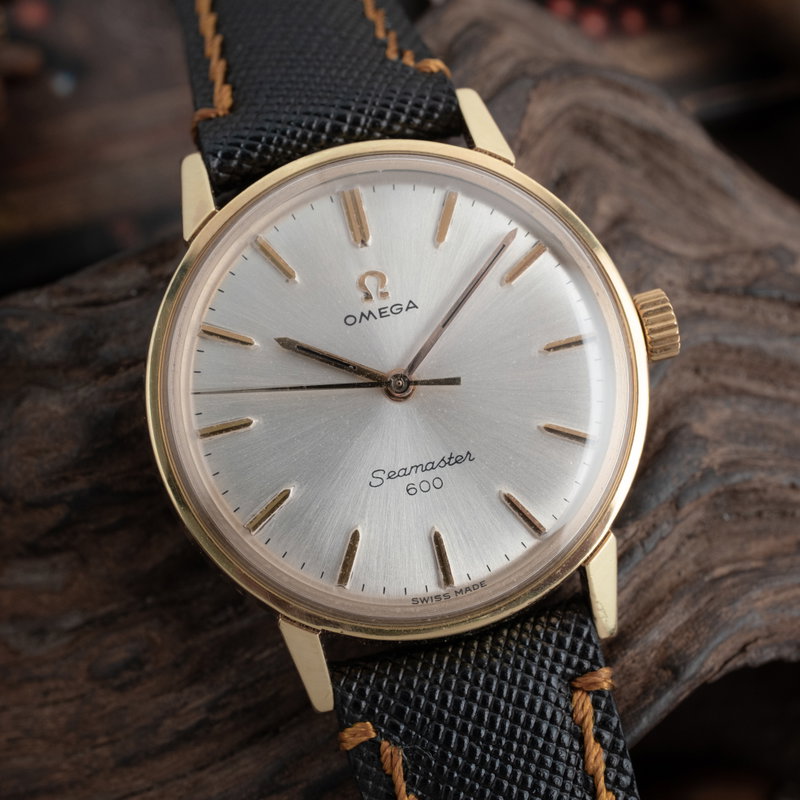
Omega · Seamaster 600 · 135.011 · 1967
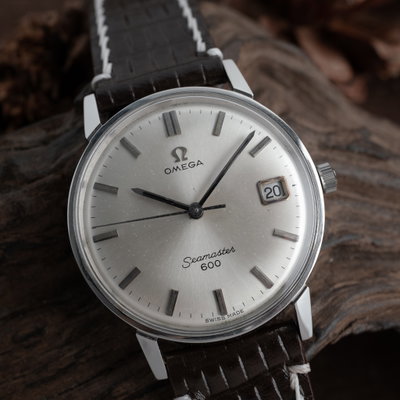
Omega · Seamaster 600 · 136.011 · 1967
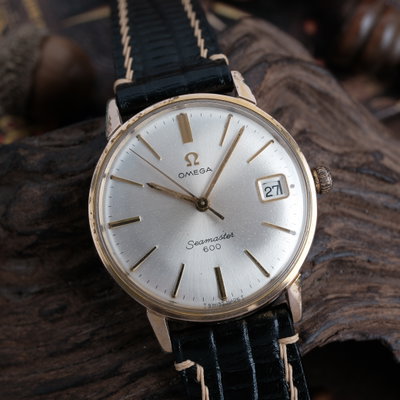
Omega · Seamaster 600 · 136.011 · 1966
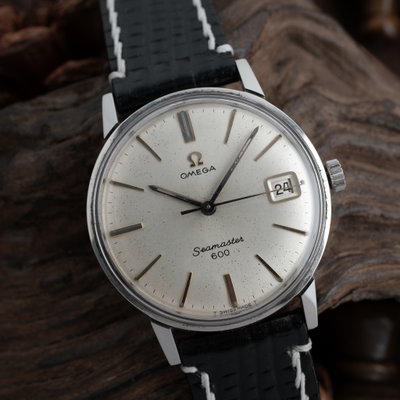
Omega · Seamaster 600 · 136.011 · 1966
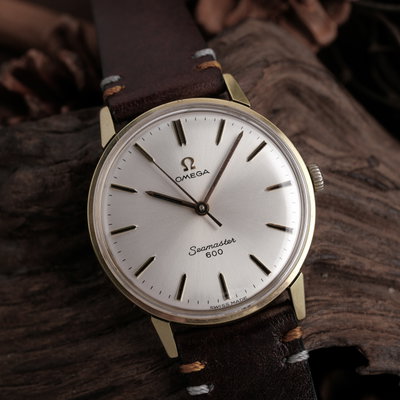
Omega · Seamaster 600 · 135.011 · 1967
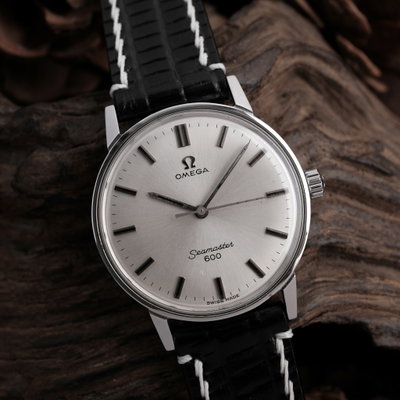
Omega · Seamaster 600 · 135.011 · 1964
More Omega references
Related pages
Frequently asked questions
Ready to hunt for your own?
More than 100 vintage watches go under the hammer every week.